

Audi RS3 Sportback Review

 Share
Share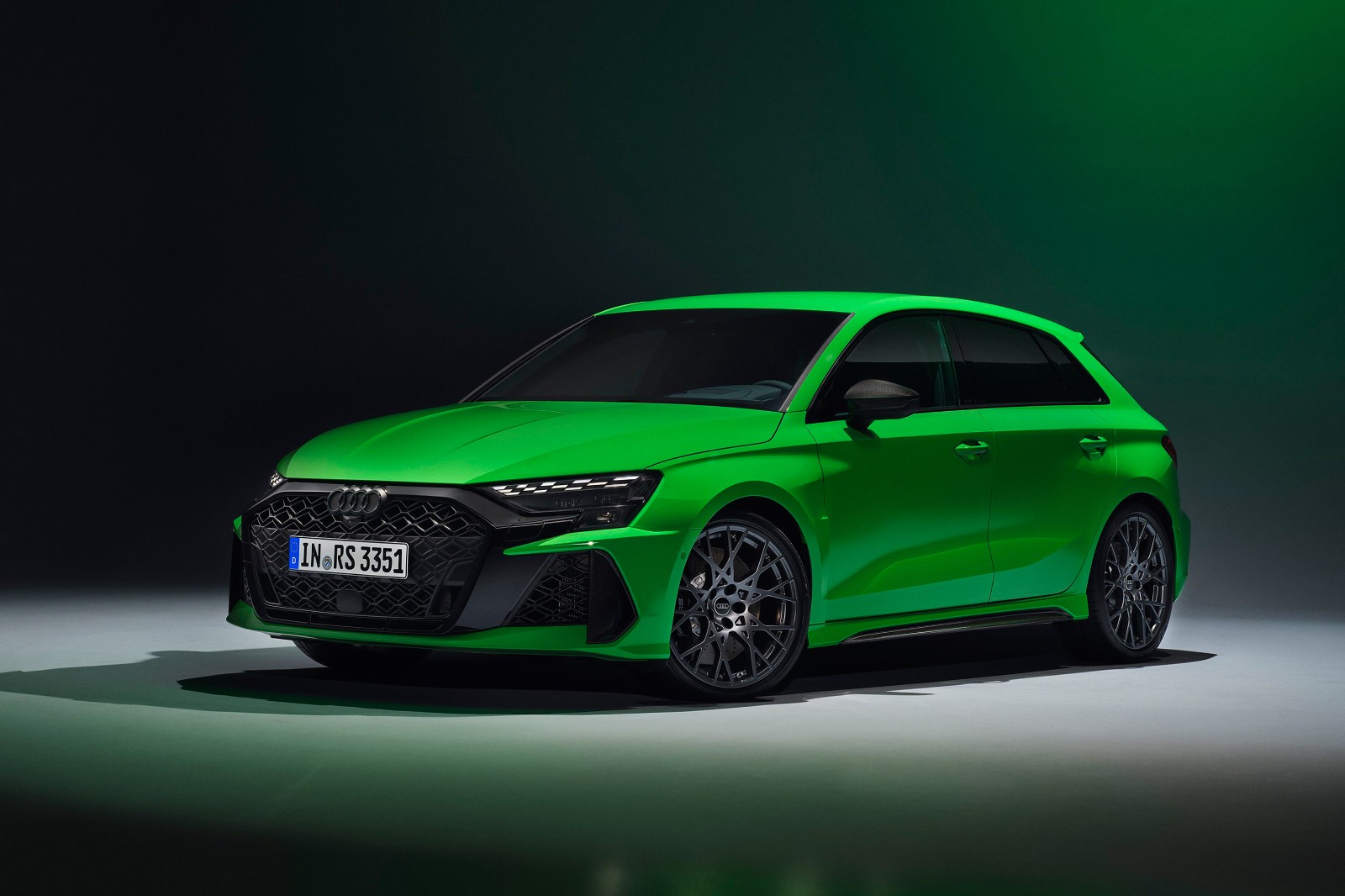
 Segment
 Body Type
 Engine Power(PS)
 Engine Torque(Nm)
 Capacity(L)
 Transmission
In recent years, the luxury compact performance car market in Malaysia has been heating up continuously. Consumers not only pursue the sense of identity brought by the brand's characteristics but also value the dual adaptability of daily commuting and track experience. As one of the benchmark models in this niche market, the Audi RS3 Sportback has always been a focus of attention for performance car enthusiasts due to its unique five-cylinder engine, 3.8-second 0-100 km/h acceleration performance, and hatchback design more suitable for urban maneuvering. This time, we had an early test drive of the 2024 RS3 Sportback, which is about to hit the market. The main goal was to evaluate its performance in terms of power response, daily practicality, and luxury features, and see if this "pocket rocket" can continue the market advantage of its predecessors.
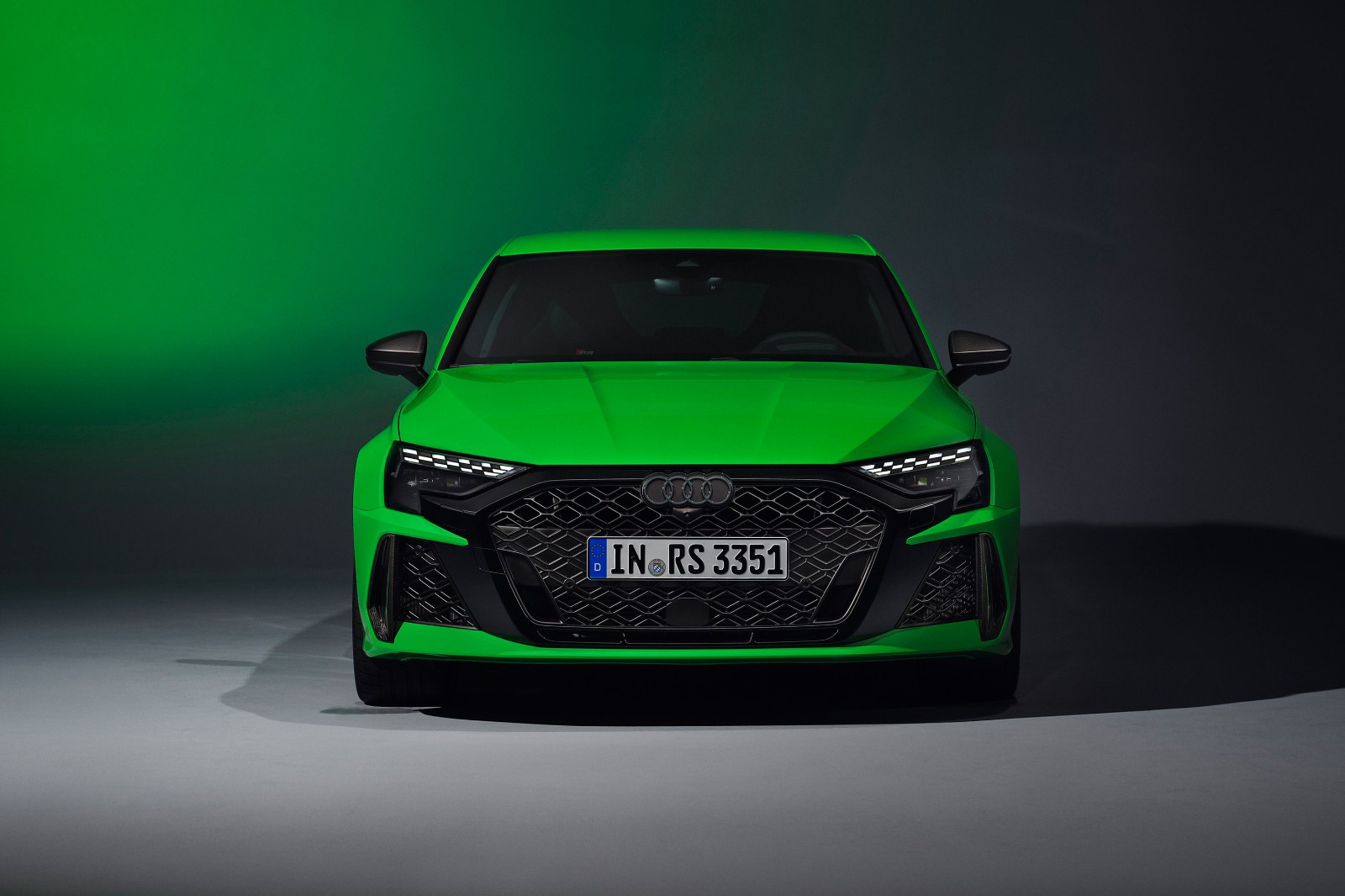
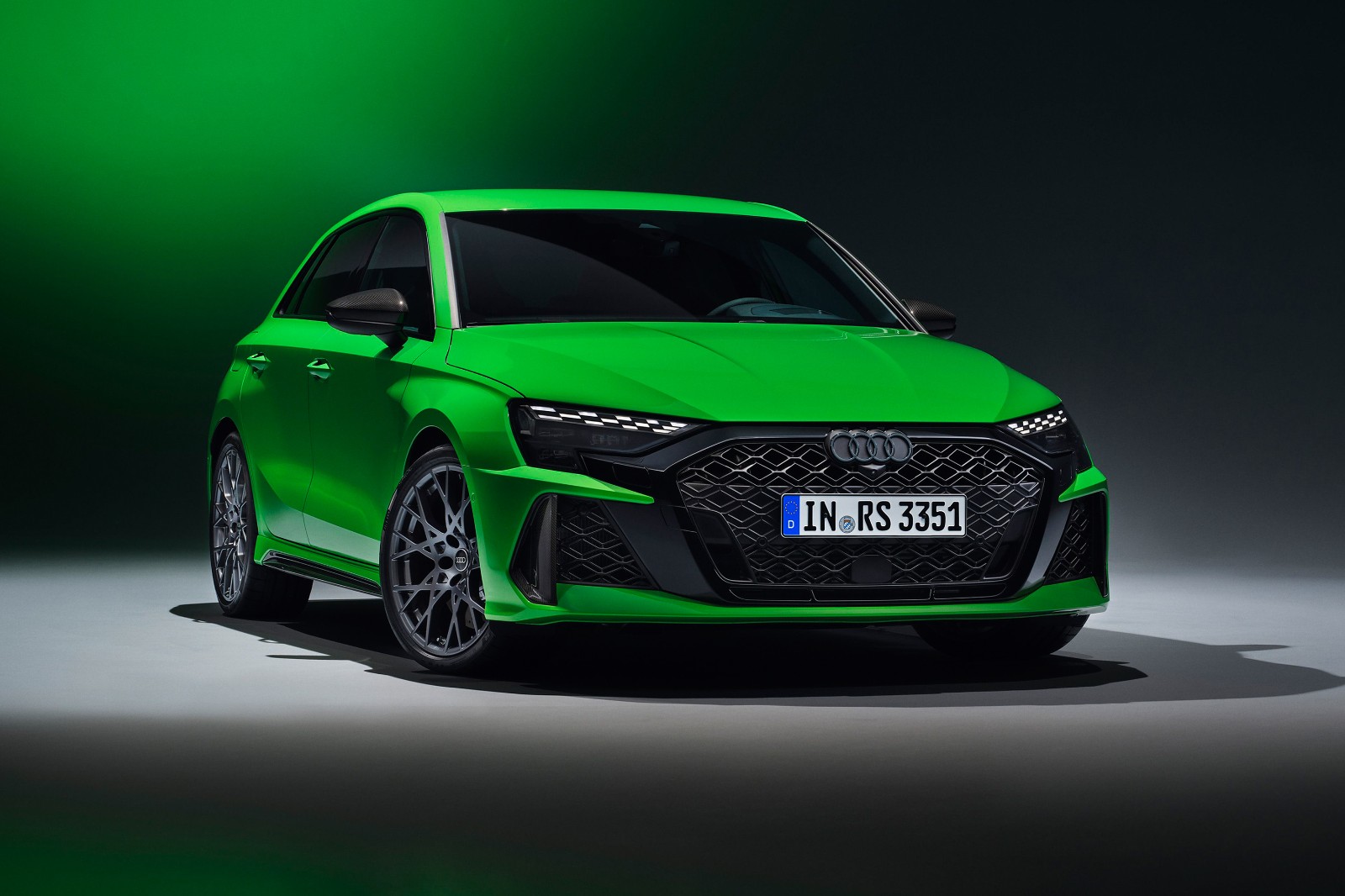
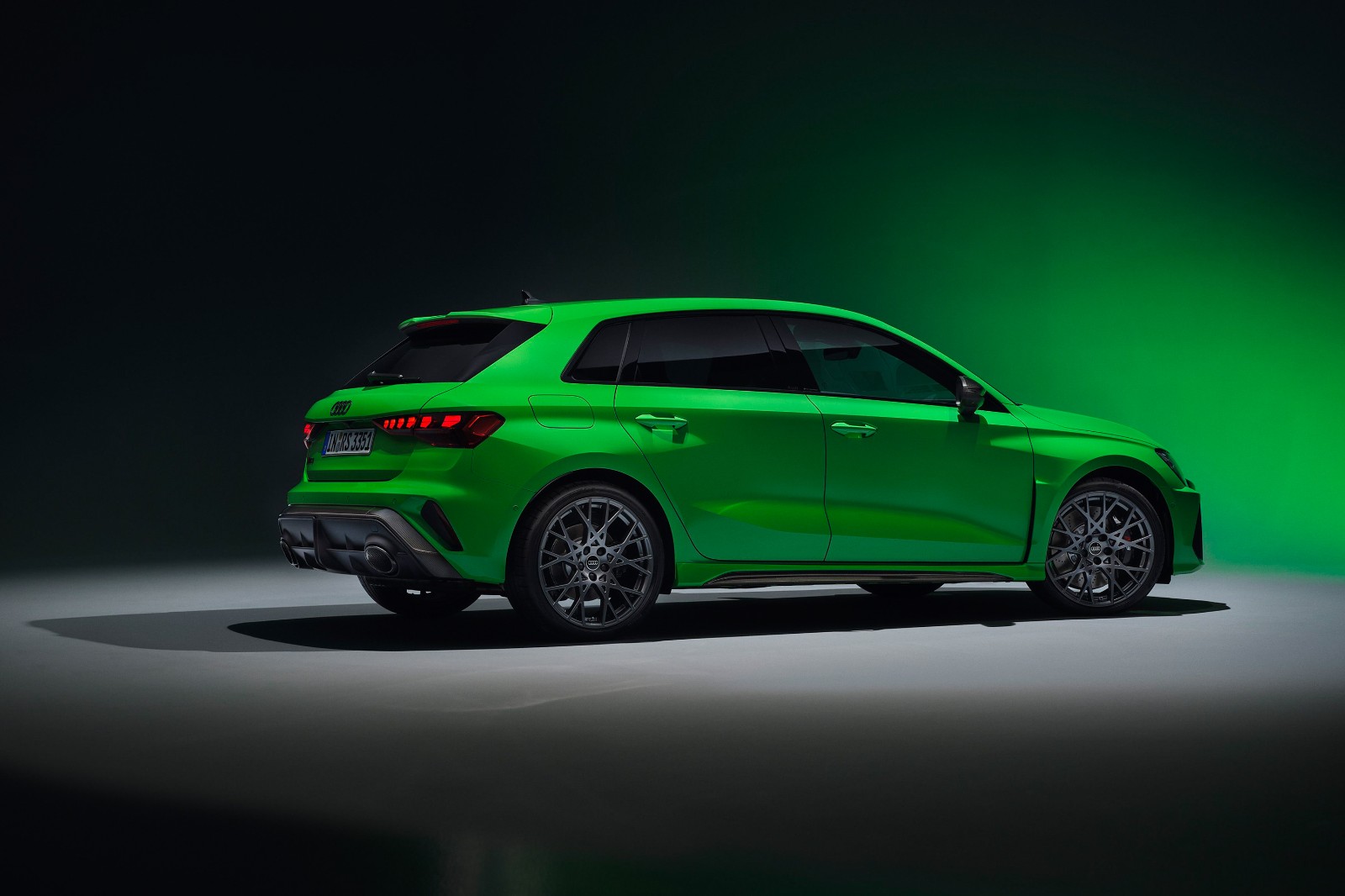
The exterior of the 2024 RS3 Sportback continues the aggressive styling of the Audi RS series, with compact and dynamic overall lines. The front features the signature hexagonal honeycomb grille, paired with matte black RS-specific front bumpers. The side air inlets have been further enlarged, enhancing aerodynamic performance and visually amplifying aggressiveness. On the side of the body, the 19-inch Y-shaped five-spoke sports wheels paired with red brake calipers are particularly eye-catching. The black roof spoiler echoes the body-colored side skirts, and the smooth, flowing fastback lines from the C-pillar to the rear preserve the practicality of the hatchback while enhancing its sportiness. At the rear, the dual oval exhaust layout (with an optional sports exhaust system) contrasts sharply with the smoked LED taillights. The dynamic turn signal within the taillights has a high level of recognition when lit, and the overall design aligns well with the positioning of a luxury performance car, while not appearing overly ostentatious.
Stepping inside, the interior of the RS3 Sportback continues Audi’s family blend of technology and luxury. The dashboard is made with soft-touch materials combined with Alcantara fabric and carbon fiber trim, accented by red stitching, instantly enhancing the sporty vibe. The 12.3-inch fully digital instrument cluster supports an RS-specific sports interface, capable of displaying real-time track data such as torque distribution and G-force. The 10.1-inch central touch screen incorporates the MMI intelligent system, supporting wireless CarPlay and Android Auto, with outstanding operational smoothness and response speed. The seats are designed with exclusive RS sport bucket styling, offering excellent support and adjustable features, including lumbar support, ensuring comfort even during long drives. The rear row is equipped with independent air vents and USB-C charging ports, although legroom for passengers over 180 cm may feel somewhat cramped. However, for a compact performance car, it meets acceptable standards. As for storage space, the trunk offers a standard capacity of 335 liters, which can be expanded to 1,145 liters with the rear seats folded down, sufficient to meet daily shopping or short trip needs.
The RS3 Sportback tested this time is equipped with a 2.5T inline five-cylinder turbocharged engine, delivering a maximum power of 294 kW (400 PS) and a peak torque of 500 Nm. It is paired with a 7-speed S tronic dual-clutch transmission and quattro all-wheel-drive system. In Comfort mode, the power output is linear and smooth, with moderate throttle response, making it suitable for daily urban commuting. When switched to Dynamic mode, the engine sound becomes deeper and more robust (the unique tonal identity of the five-cylinder engine is highly distinctive), and the throttle response becomes noticeably sharper. A strong push-back force is immediately felt when the throttle is pressed deeply, achieving a 0-100 km/h acceleration time of 3.9 seconds as tested, which aligns closely with the official specifications. In Dynamic mode, the transmission’s shift logic is clear, with proactive downshifting. When overtaking, it only takes a light flick of the paddle shifters to instantly transfer power.
In terms of handling, the RS3 Sportback’s steering is precise with minimal slack, providing clear feedback from the road during cornering; the suspension system adopts a front MacPherson strut and rear multi-link independent suspension, tuned on the firmer side but offering significant support. The body roll is well-controlled when cornering, maintaining stability even at higher speeds through consecutive bends. When driving on bumpy city roads, the suspension effectively filters out minor vibrations, but passengers in the rear may feel slight jolts when passing over speed bumps, which is a common characteristic of sporty cars. The all-wheel-drive system primarily drives the front wheels during everyday use but can quickly distribute power to the rear wheels when slipping is detected, providing better traction on slippery roads or during cornering. In terms of fuel consumption, the car consumes approximately 10.5L per 100km in congested urban conditions, and about 7.2L during highway cruising, which is a fairly standard performance for a 2.5T performance vehicle.
In terms of ride comfort, the RS3 Sportback performs excellently in noise control, effectively suppressing wind and tire noise during highway cruising. The five-cylinder engine’s roar is only audible in sport mode, ensuring a quiet environment for daily commuting while providing a sporty atmosphere when desired. The seats offer strong support and wrap-around comfort, with cushioning that is moderately soft, ensuring long drives don’t lead to discomfort. The air conditioning system cools quickly, and the independent rear air conditioning allows for satisfaction of varying passenger needs.
Overall, the 2024 Audi RS3 Sportback’s core strengths lie in its unique five-cylinder engine, exceptional handling performance, and luxurious interior features. Compared to competitors in its class (such as the Mercedes-AMG A45 S and the BMW M235i xDrive), the RS3 Sportback’s five-cylinder engine sound is more distinctive, the quattro all-wheel-drive system provides superior stability on slippery surfaces, and its interior delivers slightly better technological and luxurious appeal. However, its rear-seat space and fuel consumption are slightly inferior to some of its competitors. Nevertheless, as a compact performance car, these shortcomings are not particularly prominent compared to its core advantages.
This car is most suited for two groups of people: first, young consumers who value brand prestige and driving enjoyment, requiring both everyday commuting practicality and the occasional ability to unleash driving passion; and second, enthusiasts of niche performance cars, for whom the unique charm of the five-cylinder engine and the RS series’ racing DNA are reason enough to make a purchase. If you’re looking for a luxurious, performance-oriented hatchback that can handle daily commuting and dominate the track, the RS3 Sportback is definitely worth consideration—it may not be a perfect car, but it’s one of the most distinctive and fun-to-drive choices in its class.
Audi RS3 Car Compare
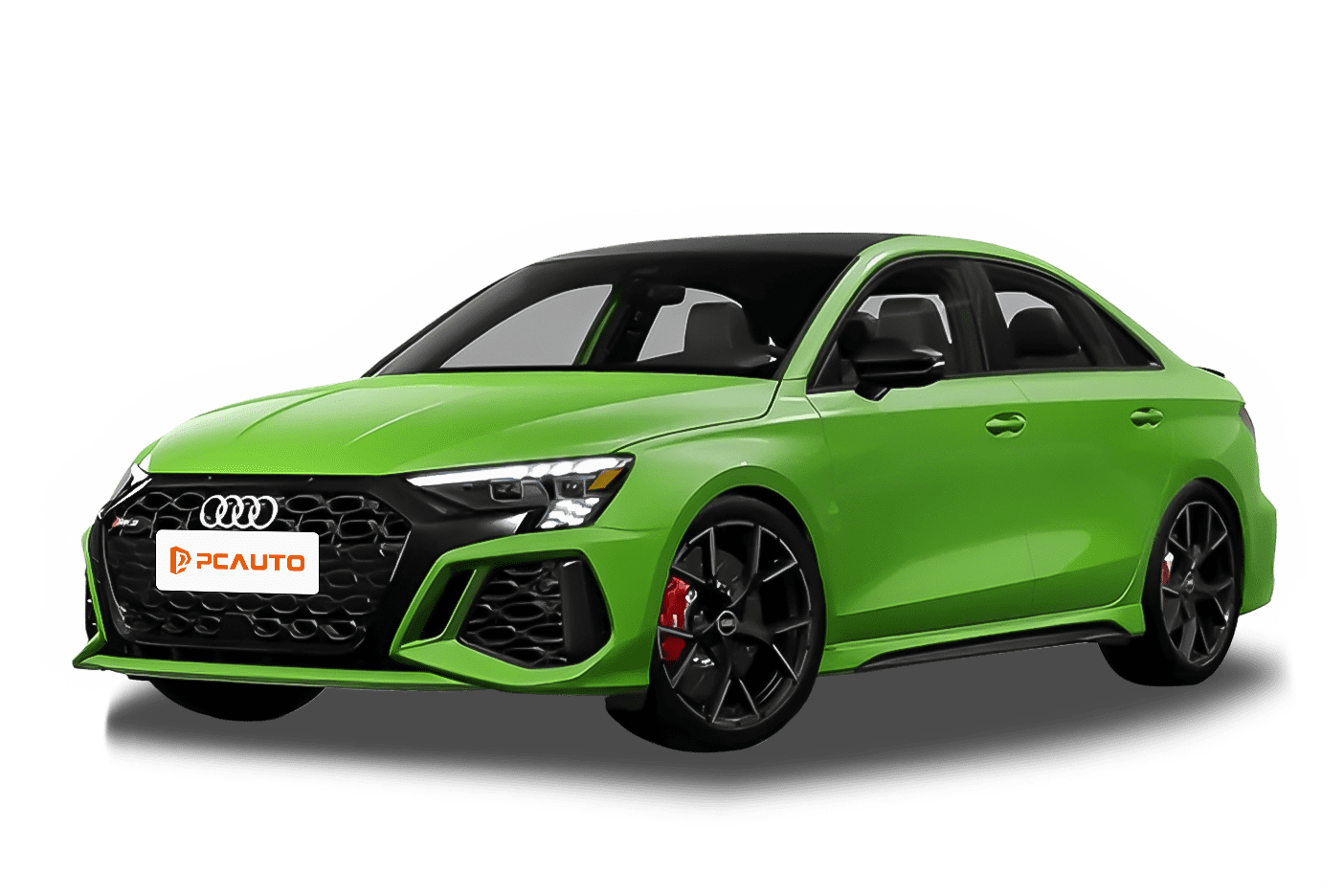
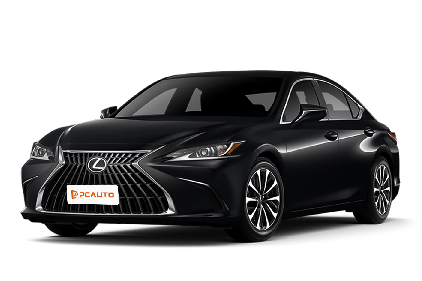
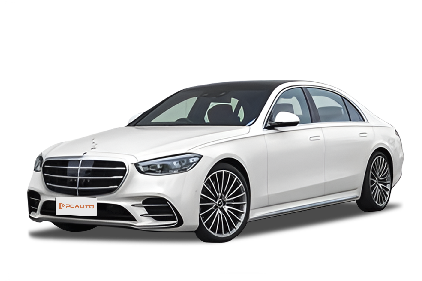
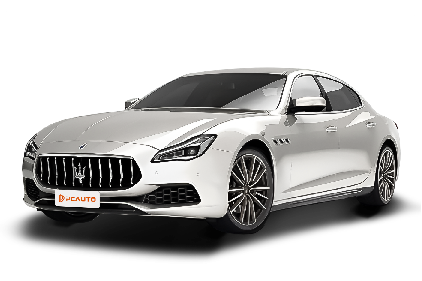
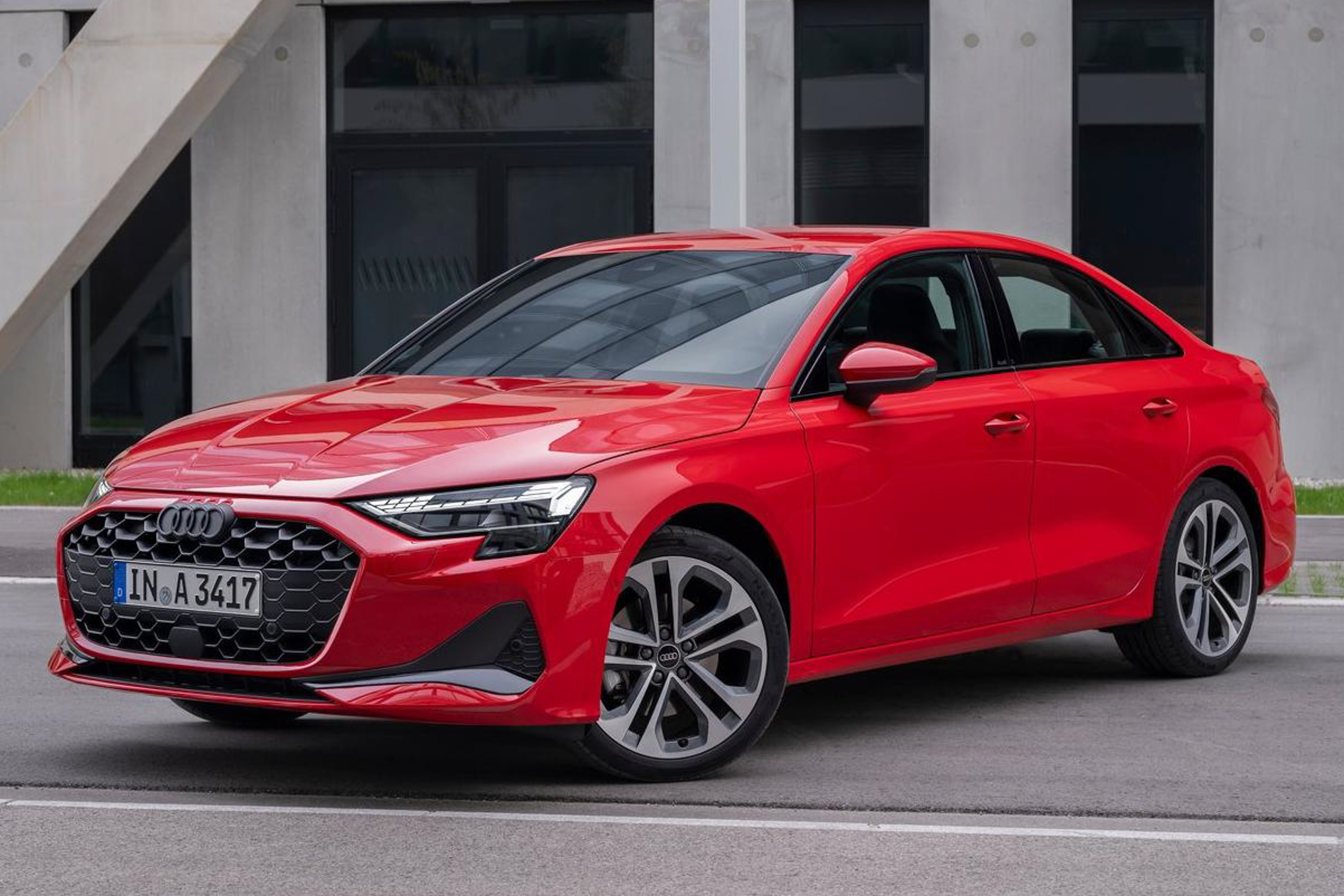
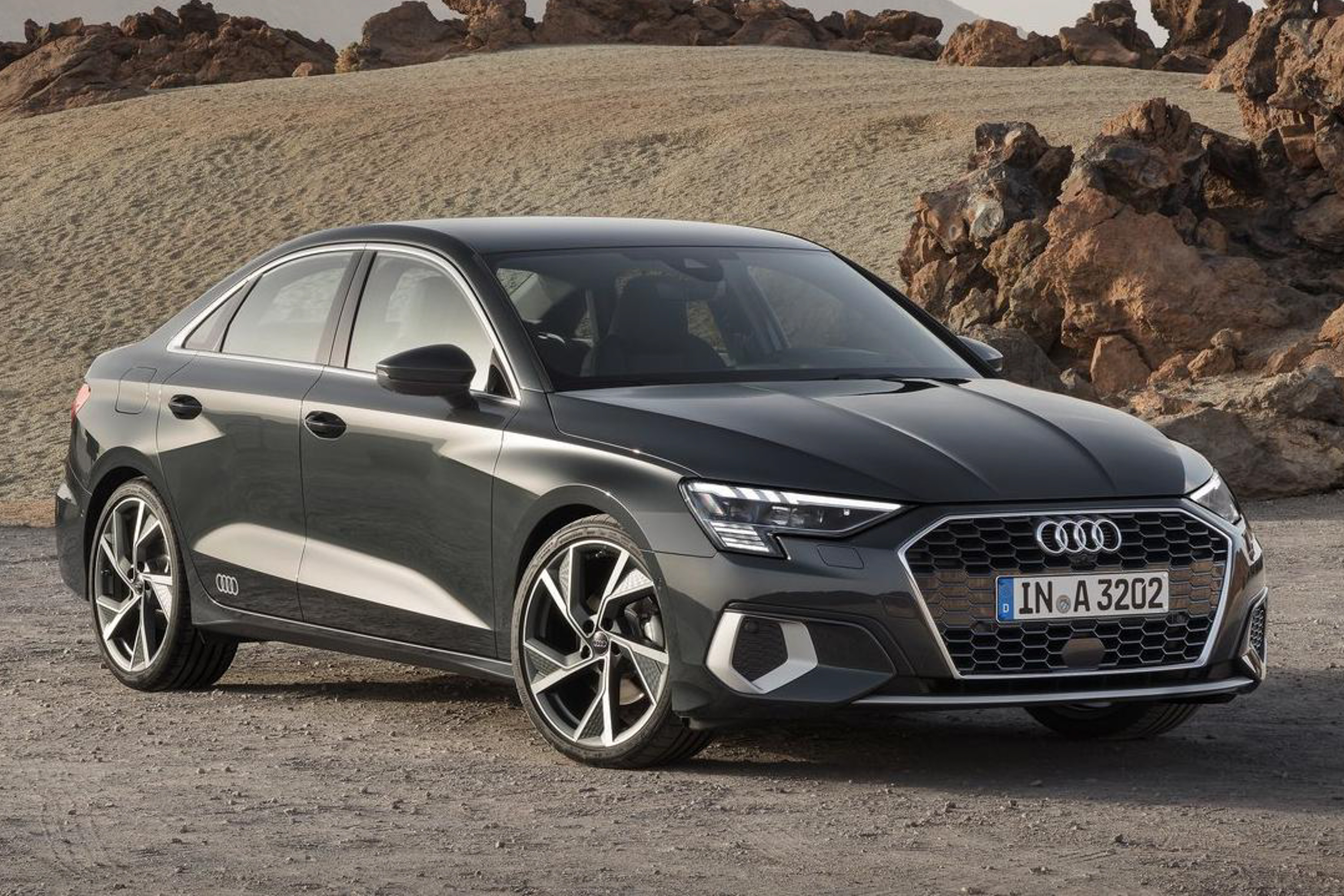
Cars With Similar Price And Features

2024 Lexus ES as a practical choice in the luxury mid-size sedan market, with a balanced and comfortable driving experience, rich safety features, and a reliable brand reputation, precisely catering to the needs of family users and young elites.

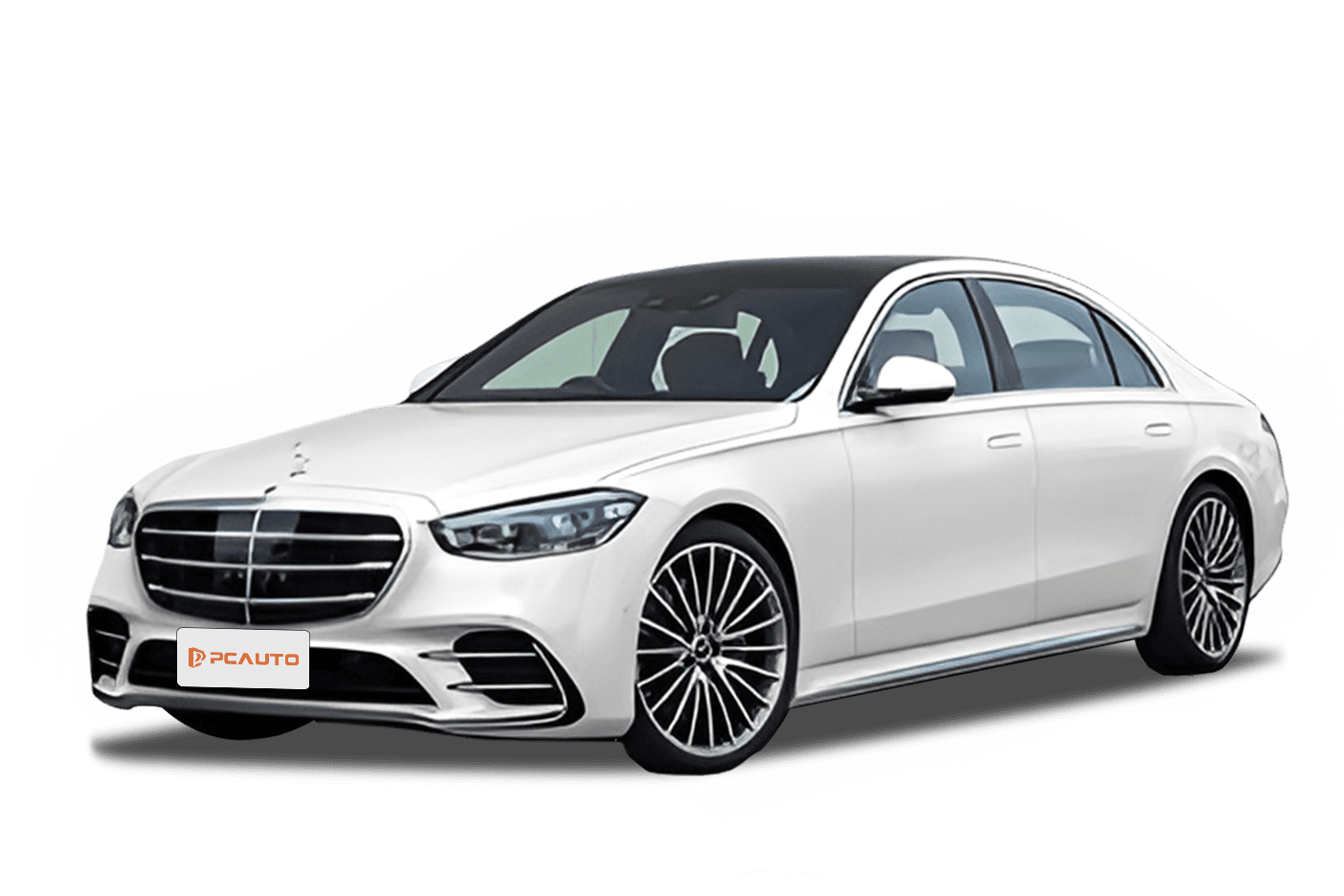
2022 Mercedes-Benz S-Class S 580 e, as the flagship plug-in hybrid model, offers a luxurious rear-seat experience with its extended wheelbase, a practical 100km pure electric range, and advanced intelligent features, balancing luxury and the practicality of new energy.

2019 Maserati Quattroporte GranSport is a luxury sedan that combines Italian sporty design with executive-level space. With a powerful 3.0T engine and precise handling, it balances the needs of passionate driving and business travel.
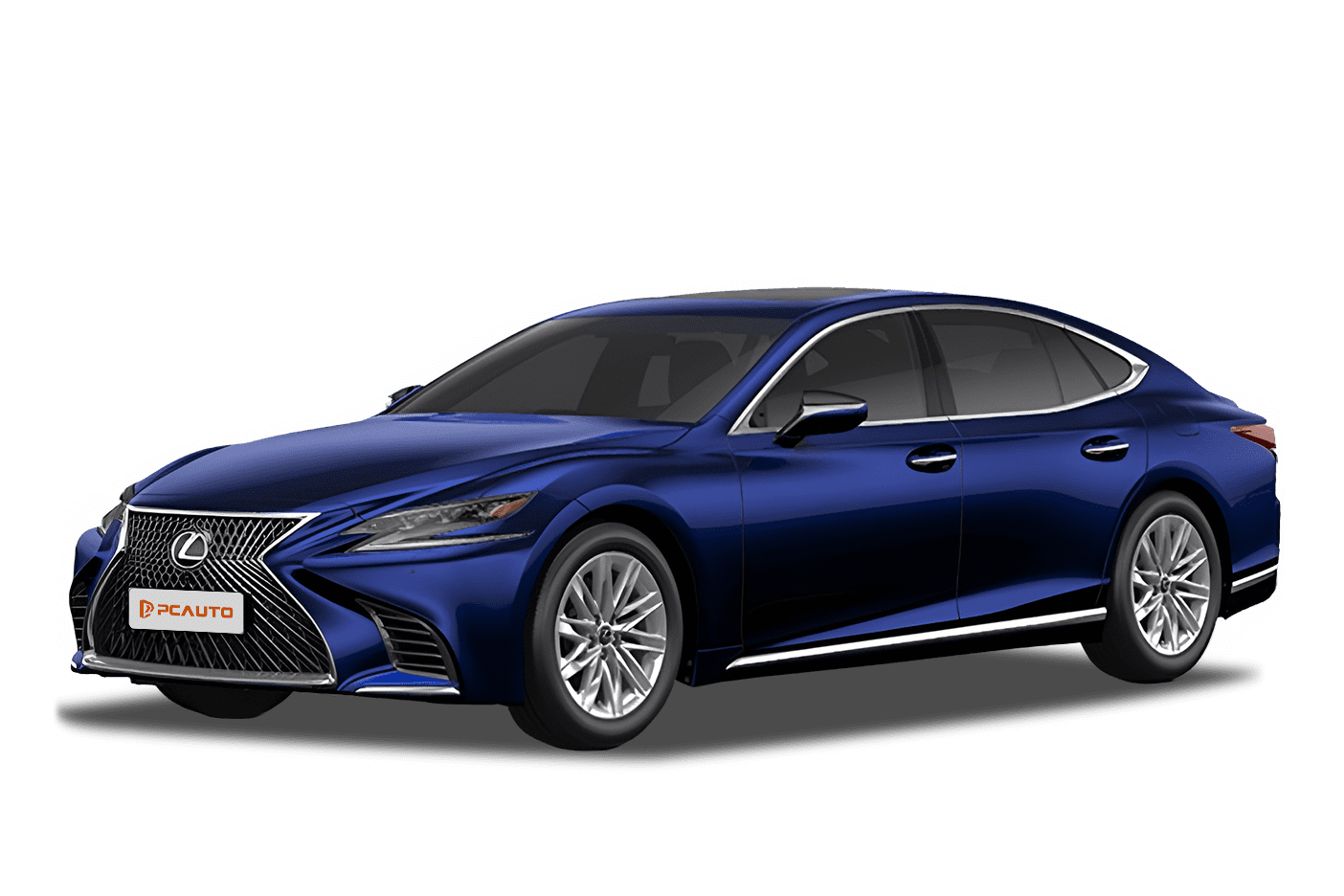
2021 Lexus LS 500 Luxury built with the concept of Oriental luxury, 28-way power-adjustable massage seats + 3.4T powerful performance, high cost-effectiveness competing with German counterparts.