
Q
Does Perodua Aruz Have Apple Carplay?
 WildwoodJul 09, 2025, 06:15 PM
As a seven-seater SUV that emphasizes practicality, the Perodua Aruz doesn't currently come with Apple CarPlay as a factory configuration. Its infotainment system features a basic 6.8-inch touchscreen head unit, supporting basic functions such as Bluetooth, USB, and a reversing camera. If car owners want CarPlay, they can upgrade the head unit through third - party modification. However, it's important to note that this might affect the original factory warranty terms.
In recent years, the demand for smart in - vehicle connectivity in the Malaysian market has increased significantly. Many new cars, like the Proton X50 and Toyota Corolla Cross, already come standard with CarPlay/Android Auto. These systems can seamlessly integrate mobile phone navigation, music, and calling functions, greatly enhancing driving convenience.
It is recommended that consumers clarify their own needs before purchasing a car. If CarPlay is a must - have option, they can consider models that support this function from the factory or consult authorized dealers about the possibility of official upgrade plans. At the same time, they need to understand the risks and costs of modification and make a trade - off.
Special Disclaimer: This content is published by users and does not represent the views or position of PCauto.
Related Q&A
Q
What are the colors of Aruz 2019?
The 2019 Perodua Aruz comes with a variety of color options, including Solid White, Metallic Silver, Metallic Dark Grey, Metallic Delima Red, and Pearl Delima White. These choices should cater to different consumers' aesthetic preferences. As a 7-seater SUV, the Aruz doesn't just offer plenty of colors – its design also focuses on practicality and family needs, with a spacious interior and flexible seating arrangement that's perfect for family trips. Color isn't just about looks; it also affects resale value and daily maintenance. For example, lighter colors reflect more sunlight in hot weather, keeping the interior cooler, while darker shades might need more frequent cleaning to stay looking good. Plus, the Aruz's metallic and pearl paint finishes are generally more durable and visually appealing than regular solid paint, though they might cost more to maintain. When picking a color, besides personal taste, it's worth considering the local climate and how you'll use the car to keep it in great shape for years to come.
 YogaGuruMasterNov 19, 2025
Q
How many km per liter is Aruz?
The actual measured fuel consumption of the Aruz is 22 liters per 100 kilometers. After conversion, the vehicle can travel approximately 4.55 kilometers per liter. Its official combined fuel consumption is 6.41 liters per 100 kilometers, meaning it can travel about 15.6 kilometers per liter.
In actual driving, the vehicle's fuel consumption is affected by various factors such as driving style, road conditions, and vehicle load. The specific kilometers traveled per liter may vary. For example, situations like rapid acceleration, sudden braking, and long-term traffic jams will increase fuel consumption, and the kilometers traveled per liter will decrease accordingly. On the other hand, good driving habits such as smooth driving and maintaining an appropriate speed can help improve fuel economy and increase the kilometers traveled per liter.
 FrostyWinterWhispersAug 22, 2025
Q
Is Aruz ladder frame?
The Perodua Aruz features a monocoque chassis instead of a ladder frame. This design, commonly found in modern SUVs, offers better road-driving stability and riding comfort. At the same time, it reduces the vehicle's weight to improve fuel efficiency. As a 7-seat SUV targeting family users, the Aruz's monocoque structure is more suitable for daily urban commuting and long-distance travel, balancing spatial practicality and handling flexibility.
It's worth noting that ladder frames are mostly used in hardcore SUVs or pickups that emphasize off-road capabilities, such as the Toyota Hilux. These vehicles are characterized by strong torsional resistance and easy maintenance, but they offer poor comfort on the road. When Malaysian consumers choose a vehicle, they can make a decision based on their own needs. If the vehicle is mainly for urban use, a monocoque chassis is more appropriate. If they often encounter rough terrains, ladder-frame vehicles have more advantages.
As a local brand, Perodua has fully considered the road conditions in Malaysia and users' habits in the design of the Aruz. Its chassis tuning not only ensures comfort but also allows it to handle light unpaved roads.
 BreezySummerBreezeAug 22, 2025
Q
What kind of engine is in Perodua Aruz?
The Perodua Aruz is equipped with a 1.5-liter Dual VVT-i naturally aspirated gasoline engine, coded as 2NR-VE. This engine is provided by Perodua's partner, Toyota. It adopts the Dual Variable Valve Timing-intelligent (Dual VVT-i) technology, which can optimize fuel efficiency and power output. The maximum power is 77 kilowatts (104 horsepower), and the peak torque is 136 Nm. It is paired with a 4-speed automatic transmission or a 5-speed manual transmission, suitable for daily urban driving and light off-road needs. This engine has shown stable performance in the Malaysian market and is favored by consumers for its reliability and low maintenance cost. The Dual VVT-i technology improves combustion efficiency, reduces fuel consumption, and at the same time cuts emissions by adjusting the opening times of the intake and exhaust valves, meeting environmental protection standards. For Malaysian consumers, the engine configuration of the Aruz offers high cost-effectiveness among similar models, especially suitable for family use, balancing power and economy. Moreover, compared with turbocharged engines, naturally aspirated engines have a simpler structure and lower maintenance costs, making them a great choice for users who value practicality.
 StarryNightWandererAug 22, 2025
Q
How much is a Perodua Aruz battery?
The battery price of the Perodua Aruz usually ranges between RM200 and RM400, specifically depending on the battery brand, model, and where you purchase it. The price of the original-factory battery will be slightly higher, while third-party brands like Bosch, Amaron, or Century may offer more cost-effective options. It is recommended that car owners choose a battery with specifications that match their vehicle when replacing the battery. For example, common models such as 44B20L or 55D23L can ensure compatibility and performance.
In addition, regularly checking the battery status and keeping the charging system operating normally can extend the battery life. Generally, the lifespan of a car battery is around 2 to 3 years, but the actual usage time will be affected by driving habits and climatic conditions. If you find it difficult to start the vehicle or the lights are dimming, it may be a sign of battery aging, and you should check or replace it in time.
In Malaysia, many car repair centers or battery specialty stores offer free testing and installation services. Before making a purchase, you can compare the prices and services of several stores to get the most suitable solution.
 TwilightMysticGlimmerAug 22, 2025
Q
Which country made Perodua Aruz?
The Perodua Aruz is manufactured by Perodua, a local Malaysian automotive brand. It's a seven-seat SUV specifically designed for the Malaysian market. Since its launch in 2019, it has won the favor of many family users thanks to its spacious interior and practicality. As a Made-in-Malaysia vehicle, the Perodua Aruz is assembled locally, which shows Perodua's emphasis on meeting the needs of Malaysian consumers. Its design and functions are optimized for Malaysian road conditions and family use. For instance, the high ground clearance makes it suitable for rural roads, and the fuel-efficient 1.5L Dual VVT-i engine takes into account daily economy.
It's worth mentioning that Perodua, as the second-largest car manufacturer in Malaysia, has long-term partnerships with Japanese automakers Toyota and Daihatsu. So, it has advantages in technology sharing and quality control. The Aruz incorporates some proven technologies from its partners. For example, it shares the platform with the Toyota Rush, but the configuration and pricing strategies are adjusted for the Malaysian market, making it a highly cost-effective choice.
For Malaysian consumers who value practicality and budget, the Aruz offers a solution that meets local needs. At the same time, it also demonstrates the progress of local cars in R & D and manufacturing.
 FunnyJokeLaughterAug 22, 2025
Q
Is Aruz 6 seater?
The Perodua Aruz is a 7-seater SUV designed for family use, featuring a 2+3+2 seat layout. So, strictly speaking, it's not a 6-seater model. However, if you fold the third-row seats, it can be transformed into a 5-seater configuration. This vehicle is equipped with a 1.5L Dual VVT-i engine paired with a 4-speed automatic transmission, focusing on economic practicality and high cost-effectiveness. Its width of 2,025mm and length of 4,075mm offer relatively spacious seating space, which is especially suitable for the medium-and short-distance travel needs of multi-member families in Malaysia.
It's worth noting that 7-seater models are quite popular in the Malaysian market, mainly due to the local family structure and usage habits. Compact SUVs like the Aruz combine the flexibility of urban commuting and the convenience of occasional passenger-carrying. When consumers are making a purchase, they can compare the space utilization differences with similar models in the same class, such as the Proton X70 or the Toyota Rush. At the same time, it is recommended to take a test drive to experience whether the legroom in the third row meets your needs, as the vehicle's size directly affects the comfort during long-distance rides.
 BlueyAug 22, 2025
Q
Is Perodua Aruz an MPV?
The Perodua Aruz is indeed classified as a compact MPV (Multi-Purpose Vehicle). It's built on the Toyota Rush platform and features a three-row, seven-seat layout, making it suitable for families or consumers who need more passenger space. The Aruz's body dimensions and relatively high ground clearance also endow it with certain SUV characteristics. However, its official positioning still focuses on MPV functionality, emphasizing practicality and space flexibility.
In the Malaysian market, the Aruz has become the top choice for many families, thanks to Perodua's brand advantage of high cost-effectiveness and low maintenance costs. MPV models are particularly popular locally because they can meet both daily commuting and weekend family travel needs. The Aruz is also equipped with safety features such as the ASA (Advanced Safety Assist) driving assistance system, which further enhances its competitiveness.
If users are considering an MPV but occasionally need to tackle light unpaved roads, the Aruz's crossover design is a better fit than traditional MPVs. However, it should be noted that the third-row space is more suitable for children or short-distance rides. When Malaysian consumers are choosing a car, they can comprehensively consider factors like the number of seats, fuel consumption (the Aruz is powered by a 1.5L Dual VVT-i engine), and their budget. They can also compare it with models in the same class, such as the Proton Exora or Toyota Avanza. Ultimately, the choice depends on personal needs and preferences.
 ObsidianBladeAug 22, 2025
Q
What kind of gearbox is Perodua Aruz?
The transmission types of Perodua Aruz vary across different model years. For models produced between 2019 and 2021, the transmission type is AT (4-speed electronically controlled automatic transmission system E-AT). This type of transmission has a relatively complex internal structure. It uses planetary gears to achieve speed changes and torque conversion, which results in higher R & D and production costs. However, it offers good shifting comfort, reliability, and durability.
As for the 2023 Aruz model, the transmission type has been upgraded to CVT. A CVT transmission enables the vehicle to shift gears smoothly during driving, providing a better driving experience. Moreover, it can help improve fuel economy to a certain extent.
 QuantumLeapAug 22, 2025
Q
When was Aruz launched?
The Perodua Aruz is a seven-seater SUV officially launched in the Malaysian market on January 15, 2019. As the first model of the Perodua brand built on the DNGA (Daihatsu New Global Architecture) platform, it targets the family user market, offering spacious seating and practical functionality.
The Aruz is equipped with a 1.5-liter dual VVT-i naturally aspirated engine, paired with a 4-speed automatic transmission, delivering affordable fuel performance. At the same time, it comes with advanced safety features such as the ASA 2.0 (Advanced Safety Assist) system, which includes functions like pre-collision warning and lane departure warning, making it suitable for family users who prioritize safety.
The launch of this vehicle has enriched Perodua's product line in the SUV market. It competes with models like the Honda BR-V and Proton X70 but attracts consumers with a more affordable price and lower maintenance costs.
The Aruz has received a positive response in the Malaysian market and has become one of the top choices for many families. Its durability and practicality are widely recognized, making it suitable for Malaysia's diverse road conditions and family travel needs.
 HelixTwistAug 22, 2025
Popular Cars
Model Year
Car Compare
Car Photo
Related Models
 Cars
CarsLatest Q&A
Q
What does a driving recorder do?
A dash cam is an electronic device installed in a vehicle, primarily used to record real-time video and audio during driving, providing drivers with safety assurance and accident evidence. Its core functions include high-definition recording, typically supporting 4K resolution to ensure clear and sharp images. Particularly in nighttime or low-light conditions, it can capture details through night vision functionality. The device features loop recording, automatically overwriting older files when the memory card reaches capacity to maintain continuous recording. Some high-end models also incorporate GPS tracking, enabling the recording of the vehicle's route, speed, and location data, thereby providing valuable information for accident analysis. The collision detection function automatically secures critical video segments upon impact, preventing vital evidence from being overwritten. Additionally, many dash cams offer parking assistance, utilizing a rear camera to help drivers gauge the distance to rear obstacles, enhancing reversing safety. Advanced models may support voice commands, Wi-Fi, or Bluetooth connectivity, allowing users to conveniently view and manage footage via smartphones, and may even include driver assistance features such as speed trap alerts and lane departure warnings. For motorcycle enthusiasts, waterproof dash cams are available, with some models integrating navigation and tire pressure monitoring systems. Price-wise, basic models range from RM200 to RM400, while feature-rich premium models can exceed RM1000. Regular maintenance, including memory card care and lens cleaning, is essential for ensuring the device's reliable performance.
 FlameMar 17, 2026
Q
What is a driver recorder?
A dash cam is an electronic device installed in a vehicle, primarily used to record video and audio information in real-time during driving. Its core function is to capture road conditions from the front or both front and rear perspectives via a high-definition camera (such as 1080P or 4K resolution). Some models also feature night vision, waterproofing, GPS positioning, parking monitoring, and other functions.
In terms of technical parameters, attention should be paid to the lens angle (150° or more is recommended), frame rate (60fps for smoother footage), memory card capacity (at least 32GB Class 10), and additional features like Wi-Fi connectivity and ADAS driving assistance.
The price range of mainstream products on the current market varies from RM100 to RM3000. For example, the 70Mai A500S (around RM589) supports 1944P resolution and 24-hour parking monitoring, while budget models like the Digital Dove screenless dash cam (around RM169) meet basic needs. For motorcycle users, dual-lens waterproof models (such as the Moto咖 M8T, around RM572) can record front and rear footage simultaneously, making them suitable for complex road conditions.
When choosing a dash cam, it is recommended to prioritize local official channels to ensure after-sales support, and pay attention to the compatibility between the device and the vehicle model (e.g., Mazda-specific models require a wire-free design). A dash cam is not only key evidence for determining accident liability but also enhances driving safety through loop recording and emergency lock functions.
 RoseMar 17, 2026
Q
What is the difference between a dashcam and a DVR?
The core difference between a dashcam and a vehicle-mounted DVR (Digital Video Recorder) lies in functional integration and application scenarios. Dashcams primarily focus on real-time recording of road images ahead of the vehicle. Basic models typically feature 1080P to 4K resolution, 120-170 degree wide-angle lenses, and loop recording functionality. Some models support G-sensor collision locking and basic night vision capabilities, making them suitable for individual vehicle owners for accident evidence collection or travel documentation.
As multifunctional integrated devices, vehicle-mounted DVRs incorporate professional features beyond basic driving recording, including GPS trajectory tracking, 3G/4G remote monitoring, multi-camera synchronous recording (such as interior bus surveillance), media playback, and even passenger flow analytics. These systems are predominantly used in commercial fleet management or specialized vehicles.
Technologically, high-end DVRs predominantly utilize H.265 compression technology to minimize storage requirements, support dual SD card redundancy or vehicle-mounted hard drives, and incorporate electronic vibration damping technology for challenging road conditions. In contrast, conventional dashcams generally rely on single memory card storage and offer more limited functionality.
Price-wise, basic dashcams range approximately from 200 to 800 Ringgit, whereas commercial-grade DVR systems may exceed 2000 Ringgit. Consumers should evaluate functionality against budget based on actual needs - dashcams suffice for daily commuting, while logistics fleets require DVRs' comprehensive data management capabilities.
LilyMar 17, 2026Q
Is it legal to use a dash cam?
Currently, the use of dashcams is legal in Malaysia. Although the government does not mandate their installation, it explicitly encourages the public to use them voluntarily to enhance road safety. Transport Minister Loke Siew Fook stated that the relevant policies are still under study, and it is necessary to balance social acceptance and implementation costs.
Videos recorded by dashcams can serve as key evidence for determining liability in traffic accidents and insurance claims. However, attention must be paid to privacy protection: avoid disseminating clips containing others' portraits or sensitive information, and ensure that the device is installed in a position that does not obstruct the driver's view.
When purchasing a dashcam, it is recommended to prioritize products with high-definition image quality, night vision functionality, and G-Sensor. For example, models with a resolution of 1080P or higher and an aperture of F1.6-2.2 can ensure clear footage in nighttime or emergency situations.
It is particularly important to note that if a mobile phone is used instead of a professional device, the recording must be done via a compliant app and the original video must be saved in its entirety to avoid the invalidation of evidence due to editing.
 DoveMar 17, 2026
Q
Do all dashcams record when the car is off?
Whether a dash cam continues to work after the vehicle is turned off depends on its functions and power supply method. Dash cams with parking monitoring function can still record after the vehicle is turned off, usually through a built-in battery or connection to constant power (such as taking power from the fuse ACC). The parking monitoring mode is divided into two types: continuous recording and motion-triggered recording. The former keeps recording until storage is full or the battery is depleted, while the latter only initiates short-term recording when motion is detected. It should be noted that single-camera or dual-camera dash cams have a limited field of view (covering only the front or front and rear), while 360-degree panoramic dash cams can provide comprehensive monitoring. Prolonged use of parking monitoring may drain the car battery. It is recommended to select models with high-capacity built-in batteries and park the vehicle in monitored areas to enhance security. Additionally, the time-lapse recording function can compress video duration, enabling round-the-clock surveillance while reducing storage consumption.
WolfMar 17, 2026Related News
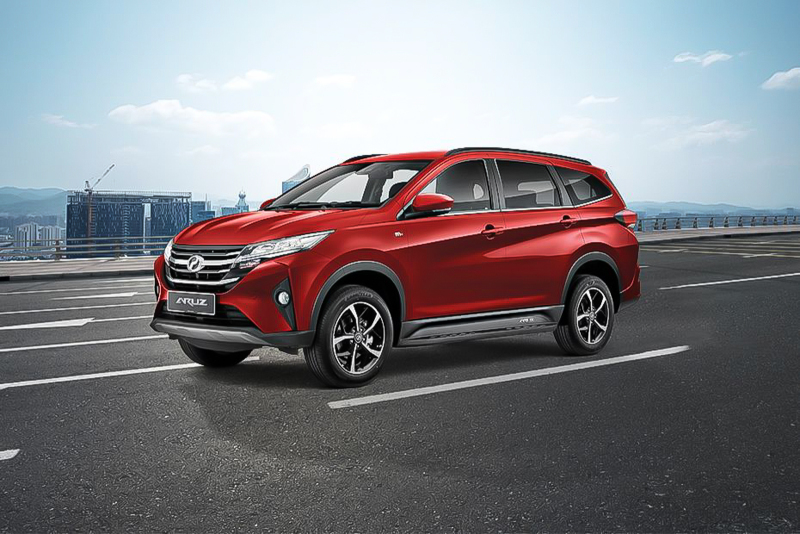
Perodua Aruz Review: A Practical and Safe SUV That Won’t Break the Bank
JamesJul 25, 2025
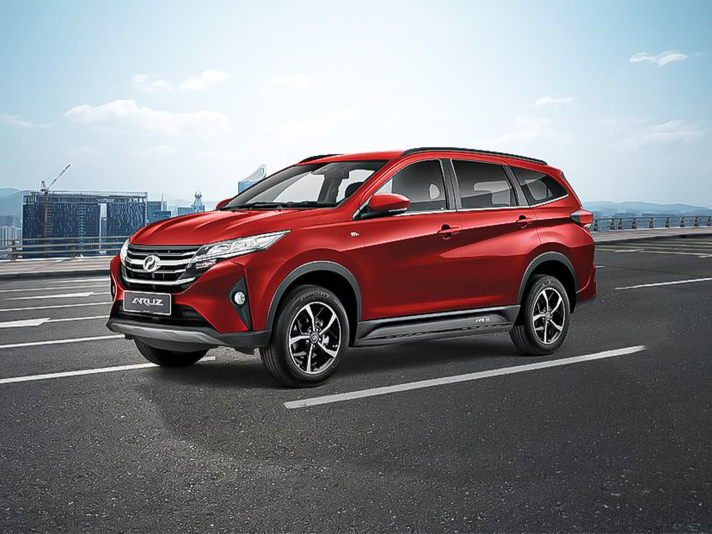
Perodua Aruz Interior Review: A Practical Cabin Despite Basic Materials
JamesJul 23, 2025
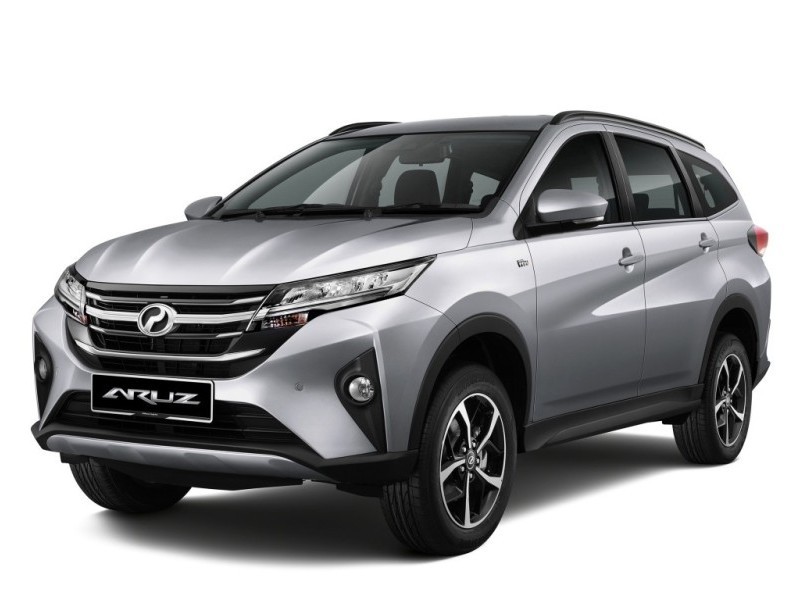
Review: Whether the fashionable exterior and flexible space of Perodua Aruz can become your ideal vehicle?
LienApr 9, 2025
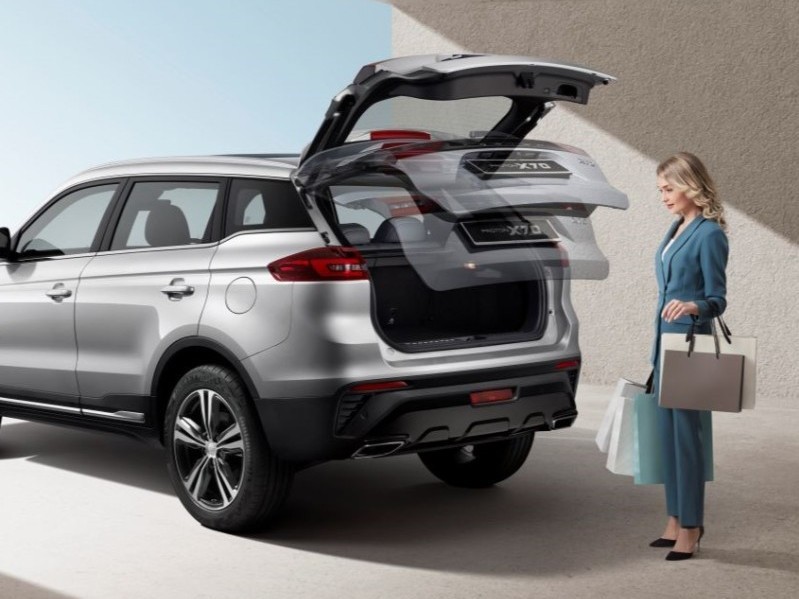
How large is the boot space of the Proton X70? How does it compare with other cars?
MichaelMar 3, 2025
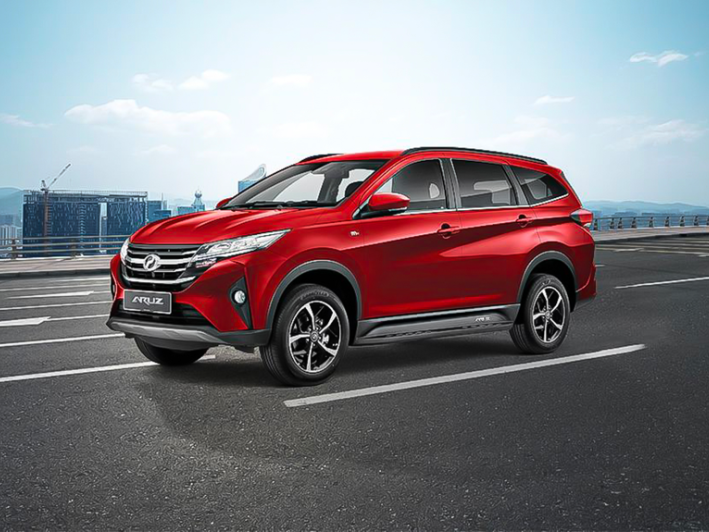
The starting price for the 2021 Perodua Aruz is RM 72,900, and there are two models available
LienJun 14, 2024
View More
Pros
Cons