
Q
How fast is the Cayenne Coupe?
 SolverProblemAug 06, 2025, 09:51 AM
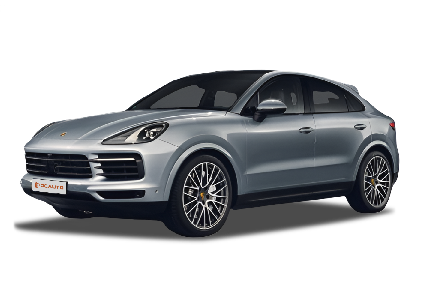
The performance of the Porsche Cayenne Coupe is quite excellent. The specific acceleration ability depends on the powertrain version you choose. Take the top - of - the - line Cayenne Turbo Coupe as an example. It is equipped with a 4.0 - liter V8 twin - turbocharged engine, with a maximum horsepower of 550. It can accelerate from 0 to 100 km/h in just 3.9 seconds, and has a top speed of up to 286 km/h. Even the entry - level Cayenne Coupe has good power performance, with a 0 - 100 km/h acceleration time of about 6 seconds. For drivers in Malaysia, this kind of performance allows them to handle both city roads and highways with ease. At the same time, Porsche's chassis tuning and four - wheel drive system can also ensure the vehicle's stability during aggressive driving.
It's worth mentioning that the Cayenne Coupe not only has strong performance but also takes into account daily practicality. Although its sloping roof design sacrifices some rear - seat headroom, it still retains the practicality of an SUV, making it suitable for Malaysian consumers who pursue a sporty feel without sacrificing practicality. In addition, Porsche also offers a rich range of optional configurations, such as adaptive air suspension and rear - wheel steering, which can further enhance the vehicle's handling and comfort to meet the needs of different drivers.
Special Disclaimer: This content is published by users and does not represent the views or position of PCauto.
Related Q&A
Q
How heavy is a Porsche Cayenne Coupe?
The weight of the Porsche Cayenne Coupe varies depending on the specific model and configuration. Generally speaking, its curb weight is approximately between 2,000 and 2,200 kilograms. For example, the base - model Cayenne Coupe equipped with a 3.0 - liter V6 turbocharged engine weighs around 2,050 kilograms, while the more powerful Cayenne Coupe Turbo GT is a bit heavier due to its more sporty configuration and powertrain.
For Malaysian consumers, the vehicle weight not only affects the driving experience but also has an impact on fuel economy and road tax calculation. In Malaysia, the road tax is calculated based on the engine displacement and vehicle weight.
Moreover, the Cayenne Coupe uses a large amount of lightweight materials such as aluminum alloy body components to optimize weight distribution and handling performance. This design can provide more stable performance when driving on the winding mountain roads or at high - speed in Malaysia.
It's worth mentioning that despite the relatively heavy vehicle weight, the powertrain and chassis tuning of the Cayenne Coupe can still offer excellent acceleration and agility, which is also the consistent engineering advantage of Porsche models.
 FlutterAug 5, 2025
Q
Does the Cayenne Coupe have air suspension?
The Porsche Cayenne Coupe does offer the air suspension (PASM) as an optional configuration. This system can automatically adjust the vehicle's body height and damping strength according to the road conditions and driving mode, enhancing comfort and handling performance. It's especially suitable for Malaysia's diverse road conditions, such as bumpy urban roads or high - speed cruising. In addition, the vehicle owner can manually lower the body to facilitate getting in and out of the car or to enhance the sporty style. It's worth noting that the air suspension usually works in conjunction with the adaptive damping system, which is a common high - tech configuration in high - end SUVs. If your budget allows and you're after a more refined driving and riding experience, choosing this option is worth considering. Similar solutions are also offered by luxury SUVs of the same class from German or Japanese brands, like the BMW X6 or the Mercedes - Benz GLE Coupe. Consumers can make a choice based on personal preferences after test - driving and comparing these vehicles.
 WhisperingAug 5, 2025
Q
How safe is a Porsche Cayenne Coupe?
As a luxury SUV, the Porsche Cayenne Coupe excels in safety. It is equipped with a number of advanced safety technologies, such as adaptive cruise control, lane - keeping assist, and automatic emergency braking. These features can effectively enhance driving safety on Malaysia's complex road conditions. The vehicle also adopts a high - strength body structure and multiple airbags, and has achieved excellent results in crash tests, providing comprehensive protection for passengers.
In addition, the Porsche Cayenne Coupe is equipped with an advanced four - wheel drive system, which can maintain stable handling even on rainy or slippery roads, making it highly suitable for Malaysia's changeable climate conditions. For safety - conscious consumers, this car not only offers the high - quality of a luxury brand but also provides reliable safety assurance.
It's worth mentioning that when Malaysian car users choose luxury SUVs, apart from focusing on the brand and performance, they should also consider the vehicle's active and passive safety configurations to ensure peace of mind and comfort during daily driving.
 SunshinyAug 5, 2025
Q
Does the Cayenne Coupe have launch control?
Yes, the Porsche Cayenne Coupe is indeed equipped with the Launch Control function. This technology optimizes the cooperation between the engine and the gearbox to unleash maximum power in a short time, achieving faster acceleration performance. It's especially suitable for owners who pursue driving pleasure. In the hot and humid climate of Malaysia, when using the Launch Control, it's recommended to ensure that the vehicle is at its normal operating temperature to avoid placing additional stress on the power system.
The Launch Control function usually requires the vehicle to be in Sport or Sport Plus mode, and it can be activated only when specific operating sequences of the brake pedal and the accelerator pedal are met. Besides the Cayenne Coupe, many high - performance SUVs and sports cars are equipped with similar systems. However, the tuning styles of different brands vary. Porsche's Launch Control is well - known for its smoothness and controllability.
For Malaysian car owners, it's a great choice to occasionally experience the fun of Launch Control on a legal closed track. However, frequent use in daily driving may increase vehicle wear.
 MoonlitPathAug 5, 2025
Q
What size engine is in the Porsche Cayenne Coupe?
The Porsche Cayenne Coupe offers a variety of engine options in the Malaysian market to meet different driving needs. The entry - level model is equipped with a 3.0 - liter V6 turbocharged engine, which can output 340 horsepower and 450 Nm of torque. It is suitable for daily driving and mild performance requirements.
The higher - performance Cayenne S Coupe comes with a 2.9 - liter V6 twin - turbocharged engine, with a maximum horsepower of 440 and a torque of 550 Nm, providing more powerful performance. For consumers who pursue ultimate performance, the Cayenne Turbo Coupe is powered by a 4.0 - liter V8 twin - turbocharged engine, which can unleash 550 horsepower and 770 Nm of torque. It can accelerate from 0 to 100 km/h in just 3.9 seconds.
In addition, Porsche also offers a plug - in hybrid version, which combines the technology of a high - efficiency fuel engine and an electric motor, taking both environmental protection and performance into account.
In the hot climate of Malaysia, it is recommended to regularly check the cooling system and the condition of the engine oil to ensure the long - term stable operation of the engine. At the same time, using high - quality fuel and lubricants certified by Porsche can better exert the engine's performance and extend its service life.
 TwilightShadeAug 5, 2025
Q
Is the Porsche Cayenne Coupe all wheel drive?
Yes, the Porsche Cayenne Coupe comes standard with an all - wheel drive system, which is Porsche's Porsche Traction Management (PTM) system. This system can intelligently distribute the power between the front and rear axles according to the road conditions and driving needs, ensuring that the vehicle provides excellent grip and stability in various road conditions. It's very practical for Malaysia's rainy and humid climate and occasionally rough roads.
The all - wheel drive system of the Cayenne Coupe not only enhances safety but also optimizes the driving experience, especially when taking high - speed turns or on slippery roads.
In addition, Porsche offers multiple driving mode options for the Cayenne Coupe, including Normal, Sport, Sport Plus, and Individual modes, allowing drivers to adjust the vehicle's dynamic performance according to different needs.
It's worth mentioning that although the Cayenne Coupe features a sloping roof design, its all - wheel drive system doesn't affect its off - road capability. It still has a certain ability to get out of trouble, making it suitable for Malaysia's diverse driving environments.
If you have higher performance requirements, you can also consider the high - performance version of the Cayenne Coupe, such as the Turbo GT. It further enhances the power output and handling performance on the basis of the all - wheel drive system.
 HealerzzAug 5, 2025
Q
How many seats are in the Porsche Cayenne Coupe?
As a luxury sports SUV, the Porsche Cayenne Coupe offers a standard 5 - seat layout in the Malaysian market, meeting the needs of families or group travel. Its sporty fastback design doesn't compromise the headroom in the rear seats. The engineers have optimized the roofline ingeniously to ensure the seating comfort. It's worth noting that all Cayenne Coupe models come standard with sports seats, and 18 - way adjustable comfort seats are available as an option. The high - performance Turbo GT version features fixed carbon - fiber racing bucket seats and is reduced to a 4 - seat layout to emphasize its track - focused nature.
For Malaysian consumers, the seat ventilation function in the hot climate and the rear - seat independent air - conditioning offered in high - end models are particularly practical. Additionally, the rear seats of this car can be folded in a 4:2:4 split, and the luggage compartment volume can be expanded from 625 liters to 1540 liters, which also meets the daily cargo - carrying needs. Among its competitors in the same class, this kind of coupe - style SUV usually provides more personalized options for seat configuration. It is recommended to visit the Porsche Centre Malaysia to experience the actual space of the vehicle before purchasing, especially if you plan to install a child safety seat, you need to test the rear - seat width in person.
 SolverzzAug 5, 2025
Q
How much horsepower does a 2025 Cayenne Coupe have?
The powertrain configurations of the 2025 Porsche Cayenne Coupe vary depending on the model. The base - model Cayenne Coupe is equipped with a 3.0 - liter V6 turbocharged engine, which can deliver approximately 353 horsepower. The high - performance Cayenne S Coupe is fitted with a 4.0 - liter V8 twin - turbocharged engine, reaching a maximum horsepower of about 474. The top - of - the - line Cayenne Turbo Coupe also uses a 4.0 - liter V8 twin - turbocharged engine, but with a more aggressive tuning, capable of outputting around 659 horsepower, offering a powerful option for owners seeking the ultimate driving experience.
In the Malaysian market, the Cayenne Coupe is highly popular thanks to its sporty design and outstanding performance. It is particularly suitable for the local winding roads and elevated sections. The standard - equipped active suspension system and multiple driving modes can also meet the needs of different road conditions.
It's worth mentioning that Porsche's hybrid technology has developed rapidly in recent years. In the future, more electrified options may be introduced for the Cayenne Coupe, which can improve the power performance while considering fuel economy. This is a trend that Malaysian consumers should pay attention to.
 ModelzzAug 5, 2025
Q
How much luggage can fit in the Porsche Cayenne Coupe?
As a luxury sports SUV, the Porsche Cayenne Coupe is popular in the Malaysian market for its combination of performance and practicality. Its luggage compartment has a standard capacity of approximately 625 liters, which is sufficient to hold multiple large suitcases or golf bags. If you fold down the rear seats, the capacity can be expanded to about 1540 liters, making it suitable for long - distance family trips or carrying larger items.
It's worth mentioning that although the Cayenne Coupe's fastback design leans towards a sporty style, the engineers have optimized the roofline to ensure the vertical height of the luggage compartment. As a result, the actual loading capacity is not significantly affected. For Malaysian users, the space of this car is sufficient to meet the needs of daily use or weekend getaways. Moreover, the standard electric tailgate and the optional air suspension (which can lower the rear axle for easier loading and unloading) further enhance the convenience.
If you need more extreme cargo space, the traditional SUV - shaped versions among models in the same class may have a slight edge. However, the Cayenne Coupe strikes a good balance between design aesthetics and functionality.
 HappyThoughtsSunshineAug 5, 2025
Q
What is the best color for the Porsche Cayenne Coupe?
For Malaysian consumers, when choosing the best color for the Porsche Cayenne Coupe, it is necessary to comprehensively consider the climate, personal preferences, and practicality. Classic black or white is a safe and value - retaining choice. Black shows a sense of sportiness and is dirt - resistant, while white reflects sunlight, which is suitable for hot climates. If you want to be unique, you can consider special colors exclusive to Porsche, such as Carmine Red or Miami Blue. However, it should be noted that special colors may increase the cost of touch - up painting later. In Malaysia's rainy weather, it is recommended to give priority to metallic paint, as it is more resistant to corrosion and ultraviolet rays than ordinary paint. At the same time, in Malaysia's high - humidity environment, car owners should regularly wax the car to protect the paint. No matter what color you choose, regular maintenance is the key to keeping the Cayenne Coupe in its best appearance.
 DiverDepthAug 5, 2025
Popular Cars
Model Year
Car Compare
Car Photo
Related Models
 Cars
CarsLatest Q&A
Q
Is AMT similar to automatic?
There are significant differences between AMT transmissions and automatic transmissions (AT) in terms of core structure and driving experience. AMT is essentially an electronically automated version of a manual transmission, simulating manual clutch operation and gear shifting through a computerized control system while retaining the gear set structure of manual transmissions. As a result, it offers higher transmission efficiency, with fuel consumption approximately 8%-12% lower than AT, making it particularly suitable for highway or long-distance driving. However, it may exhibit jerking similar to manual transmissions during low-speed gear shifts, especially noticeable in congested traffic conditions.
AT transmissions rely on torque converters for power transfer, delivering smooth and seamless gear shifts that appeal to comfort-oriented users. However, their complex structure (incorporating planetary gear sets, hydraulic systems, etc.) results in higher maintenance costs. A single service may cost between 800 to 1,500 ringgit, whereas AMT only requires gear oil replacement at approximately 400 ringgit.
From a market perspective, AMT is predominantly used in budget vehicles or commercial models priced below 80,000 ringgit, while AT is typically featured in mid-to-high-end vehicles. Consumers should select based on actual needs: AMT suits those prioritizing fuel efficiency and low maintenance costs, while AT better serves those valuing comfort. Notably, recent advancements in AMT electronic control technology have significantly mitigated jerking issues, though test drives should still emphasize low-speed performance evaluation.
 AriaMar 26, 2026
Q
Which is better, DCT or AT?
DCT (Dual-Clutch Transmission) and AT (Automatic Transmission) each have their own advantages and disadvantages, and the choice should be based on personal driving needs. AT transmissions transfer power through a torque converter, offering excellent shift smoothness, making them suitable for urban commuting or novice drivers. However, they tend to have higher fuel consumption, and vehicles equipped with them are usually more expensive. DCT transmissions utilize a dual-clutch structure, featuring fast shift speeds and high power transmission efficiency, which provides a more direct driving experience—particularly suitable for users seeking a sporty feel. However, they may exhibit jerking at low speeds and have relatively high maintenance costs. If durability and comfort are priorities, AT is the more reliable choice; if power responsiveness and driving pleasure are preferred, wet DCT (such as Volkswagen DSG) performs better, though dry DCT models should be avoided in prolonged stop-and-go traffic conditions. Additionally, CVT transmissions excel in smoothness and fuel efficiency, making them ideal for daily commuting, but they lack driving excitement. It is recommended to test-drive before purchasing, as tuning varies significantly across brands, and real-world experience is more important than theoretical specifications.
FlutteringMar 26, 2026Q
Is Amt good or bad?
AMT gearboxes have a significant cost advantage in the local market, typically being around 5,000 Ringgit cheaper than models equipped with conventional automatic transmissions. Their fuel efficiency is comparable to manual transmissions, resulting in long-term fuel savings. Featuring a straightforward design, they achieve transmission efficiency exceeding 90% with relatively low maintenance costs, making them ideal for practicality-oriented consumers. However, their shifting logic contains inherent limitations: gear changes between 1st and 2nd cause 0.3-0.5 second power interruptions, while unintended upshifts on inclines may reduce engine speed by 15%-20%, compromising driving smoothness. For urban commuters or budget-conscious buyers, AMT offers excellent value, though those prioritizing premium driving dynamics should consider alternative transmission types. Some domestic models like the Perodua Axia employ enhanced AMT systems, where optimized shift programming has reduced gearshift shock by approximately 30%.
 RainbowsMar 26, 2026
Q
Which gives better mileage, CVT or AMT?
From the perspective of fuel economy, CVT transmissions generally perform better under urban driving conditions. Their continuously variable design allows the engine to consistently operate within the optimal speed range, significantly reducing fuel consumption during frequent starts and stops. Test data shows that their fuel consumption in urban driving conditions is 10% to 15% lower than that of comparable models. AMT transmissions, on the other hand, inherit the high transmission efficiency of manual transmissions, delivering fuel efficiency close to manual transmissions during high-speed cruising. This makes them particularly suitable for long-distance driving in large-displacement vehicles. However, due to power interruption during gear shifts, their overall fuel consumption may be 5% to 8% higher than CVTs.
The difference in fuel-saving characteristics between the two transmissions stems from their technical principles: CVTs achieve continuous variability through steel belts and pulleys, eliminating the fixed gear ratio limitations of traditional transmissions; AMTs simulate manual gear changes via electronic control systems while maintaining the mechanical efficiency of gear transmission. Notably, actual fuel consumption is also influenced by driving habits. Smooth acceleration and anticipatory deceleration can maximize the transmissions' fuel-saving potential. If the vehicle budget permits and urban commuting is the primary use, CVTs offer a more economical choice. For frequent highway driving with an emphasis on cost-effectiveness, AMTs are equally worth considering.
 RubyBlazeMar 26, 2026
Q
Which is cheaper, AMT or CVT?
In terms of gearbox cost, AMT is usually more economical than CVT. Essentially, AMT is a manual transmission equipped with an electronic control unit, featuring a simple structure and low maintenance costs. The unit price ranges from approximately 5,000 to 8,000 ringgit, making it suitable for budget-conscious consumers or those who prioritize long-term operating costs. CVT incurs higher manufacturing costs due to its precision steel belt transmission system and continuous variable transmission technology, with a unit price of about 7,000 to 10,000 ringgit. However, it delivers a smoother driving experience and superior fuel efficiency. The primary differences between the two lie in technical complexity: AMT retains the gear-shifting mechanism, resulting in noticeable shift shock; CVT achieves linear power output through stepless speed variation but requires periodic belt inspection and incurs higher maintenance expenses. For those prioritizing initial cost and basic transportation needs, AMT offers better value; if comfort and long-term fuel economy are priorities, CVT represents a more worthwhile investment. Note that actual prices may vary based on vehicle model, brand, and local supply chain factors.
 ShadowProwlMar 26, 2026
Related News

Porsche Cayenne S Electric released, offering 653 kilometers WLTP range and wireless charging feature
WilliamMar 11, 2026

A price difference of RM500,000, Zeekr 7X or Porsche Cayenne S E-Hybrid?
RobertFeb 9, 2026

Porsche 718 models will be available in both electric and fuel-powered versions
JamesDec 19, 2025

Porsche launches wireless charging technology, while Tesla announces the cancellation of Cybertruck-related development
MichaelSep 11, 2025

Porsche Cayenne EV will offer wireless charging functionality, eliminating the need for heavy charging cables
JamesSep 5, 2025
View More
Pros
Cons