
Q
How fast is the Ford Focus ST?
 LivelyMay 12, 2025, 11:43 AM
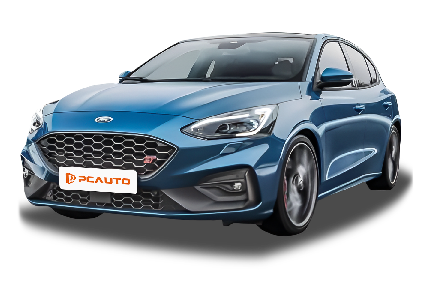
The 2014 Ford Focus ST 2.0 EcoBoost boasts a top speed of 248 km/h, showcasing its performance capabilities on the road. Powered by a 1999 cc engine that delivers a maximum output of 253 horsepower, the vehicle is capable of reaching such impressive speeds. It is important to note that attempting to achieve this top speed should only be done in appropriate and legal environments, such as a racetrack.
High-performance cars like the Focus ST are meticulously engineered in terms of their suspension, braking, and tire systems to handle high-speed driving. The front MacPherson strut independent suspension and rear multi-link independent suspension contribute to maintaining vehicle stability, while ventilated disc brakes effectively slow the vehicle from high speeds. The 235/40 R18 tires provide the essential grip needed for high-speed handling.
Special Disclaimer: This content is published by users and does not represent the views or position of PCauto.
Related Q&A
Q
How many gears does a Focus ST have?
The Ford Focus ST sold in the Malaysian market comes equipped with a 2.3L EcoBoost turbocharged engine paired with a 7-speed automatic transmission with SelectShift, as opposed to a traditional dual-clutch or manual gearbox (a 6-speed manual option is available in some markets). This transmission offers flexible shifting control, allowing for manual mode engagement via steering wheel paddles, optimizing both power delivery and fuel efficiency (official figures are around 7.6L/100km).
Additionally, its performance-oriented tuning maximizes the engine's 280PS power and 420Nm torque, making it particularly well-suited for Malaysia’s winding roads and highways. It's worth noting that Ford has not introduced the latest Focus ST manual version in Malaysia, so consumers seeking pure driving enjoyment may need to consider parallel imports. Moreover, this transmission features Adaptive Shift Scheduling technology, which automatically adjusts shift logic based on driving style.
 BikerRideMay 12, 2025
Q
Which model of Ford Focus is the most fuel-efficient ?
In terms of fuel efficiency, the three-cylinder Focus is relatively economical. It features advanced fuel injection technology and a lightweight design that enables precise control of fuel injection, promoting more complete combustion. The small displacement engine strikes a good balance between power demand and fuel consumption in urban driving conditions, and it can automatically adjust its operating mode. Additionally, the lighter body reduces the energy consumption required for the engine to drive the vehicle, with a combined fuel consumption typically ranging from 5.5L to 7.0L per 100km.
On the other hand, the 2014 Ford Focus ST 2.0 Ecoboost excels in power output efficiency. With a 2.0-liter engine that produces a maximum of 253PS, it can accelerate from 0 to 100km/h in just 6.5 seconds, showcasing outstanding performance in power delivery. However, its official combined fuel consumption stands at 7.2L/100km. Therefore, those prioritizing fuel economy might consider the three-cylinder Focus, while the ST version is more suitable for those seeking power efficiency.
 DriverRouteMay 12, 2025
Q
Does the Ford Focus ST feature AWD?
The Ford Focus ST is not AWD (All-Wheel Drive). It comes with Front Wheel Drive (FWD). This means that the power from the engine is sent directly to the front wheels. FWD is a common drivetrain layout, often chosen for its simplicity, cost-effectiveness, and decent traction in many driving conditions. The 2014 Ford Focus ST 2.0 Ecoboost with its front-wheel drive setup can provide good handling and performance on regular roads. It's important to note that while AWD can offer enhanced traction in challenging terrains like snow, mud, or on uneven surfaces, the FWD in the Focus ST is designed to optimize performance and fuel efficiency in locally normal driving scenarios.
 RiderJourneyMay 12, 2025
Q
Does the Focus ST have a belt or chain?
The 2014 Ford Focus ST 2.0 Ecoboost uses a timing chain instead of a belt. Both timing chains and belts are used to drive the engine's valve train, ensuring that the intake and exhaust valves open and close at the appropriate times to allow the engine to inhale and exhale properly. However, there are differences between the two. Timing chains are more durable. Their service life usually depends on the vehicle maintenance conditions. Under normal circumstances, their lifespan can reach 100,000 kilometers or more, and they generally don't require regular replacement. On the other hand, timing belts have a relatively shorter lifespan. Typically, they need to be replaced after driving approximately 60,000 kilometers. Otherwise, it may cause the engine to malfunction. Thus, the Focus ST offers relatively straightforward maintenance for its timing system, allowing owners to avoid concerns about replacing timing belts after a certain mileage.
 PilotFlightMay 12, 2025
Q
What is the fuel efficiency of Ford Focus ST ?
2014 Ford Focus ST 2.0 EcoBoost has an official combined fuel consumption of 7.2L per 100km. Whether it's fuel-efficient depends on various factors and which model you compare it to. For a performance-oriented vehicle with 253 horsepower, this figure is relatively decent. It indicates that under normal driving conditions, it can maintain a certain level of fuel efficiency while still delivering strong acceleration capabilities.
However, if compared to some small, fuel-efficient city cars, the consumption might appear higher. Additionally, actual fuel consumption can vary significantly based on driving habits, road conditions, and vehicle load. Aggressive driving with frequent hard acceleration and braking will likely increase fuel consumption, while a more conservative and steady driving style may result in figures closer to the official data. Overall, it strikes a balance between performance and reasonable fuel consumption.
 NomadicLifeMay 12, 2025
Q
How long can the engine of the Ford Focus ST last?
With proper maintenance and normal usage, the engine of the Ford Focus ST is typically expected to last over 600,000 kilometers, potentially exceeding 20 years. Ford has tested its next-generation ECOBOOST engine, which showed almost no significant signs of aging after 400,000 kilometers of operation, demonstrating impressive durability. However, the actual lifespan of the engine can be influenced by various factors.
In terms of driving habits, aggressive acceleration, hard braking, and prolonged high-load operations can increase engine wear and shorten its lifespan. Regarding component quality, using subpar engine oil, air filters, and other parts can hinder the engine's performance and longevity. Additionally, maintenance practices play a crucial role; irregular servicing and failing to timely replace oil and wear-and-tear parts can negatively impact the engine's long-term stability and operation.
 WanderPathMay 12, 2025
Q
How big is a gas tank in Focus ST ?
The 2014 Ford Focus ST 2.0 EcoBoost features a fuel tank capacity of 55 liters. This substantial fuel storage capacity is beneficial as it allows the vehicle to achieve a notable range between fill-ups, catering to various driving needs, whether for daily commutes or long road trips. A larger fuel tank like this means fewer trips to the gas station during travels, providing added convenience for drivers. It gives you more flexibility on the road without the constant worry of running out of fuel too soon. This tank capacity is comparable to many other vehicles in its class, ensuring that the Focus ST can cover a considerable distance before needing to refuel.
 RainbowGlowMay 12, 2025
Q
How reliable is Focus ST?
The Focus ST boasts a commendable level of reliability. In terms of chassis and suspension, it features dual-adjustable dampers, a double-tube stainless steel shock absorber casing, and powder-coated springs. The meticulously tuned chassis offers excellent stability, while the suspension system lowers the vehicle’s body height and can be adjusted to reduce unsprung weight, enhancing driving stability.
On the powertrain front, the equipped turbocharged 2.3-liter EcoBoost engine delivers consistent output with impressive torque characteristics. The 6-speed manual transmission offers quick and responsive shifts, providing an engaging driving experience. Inside, the cabin is well-appointed and reliable, featuring seats made from a blend of black leather and Alcantara materials, while the B&O sound system delivers an exceptional audio experience.
In terms of design, the RS-style classic Racing Blue paint job paired with high-gloss black accents creates an attractive yet durable exterior. Whether for daily commuting or more spirited driving, the Focus ST demonstrates high reliability through these outstanding attributes, giving owners worry-free driving experience.
 TravelBugMay 12, 2025
Q
Does a Focus ST have a launch control system?
The 2014 Ford Focus ST 2.0 EcoBoost does not explicitly list a launch control system among its features. However, some other Ford Focus models have demonstrated support for a "launch assist" function in various tests. For instance, certain evaluations of the Focus revealed that the car could achieve a controlled launch. Yet, for this specific 2014 Focus ST, we cannot determine whether it is equipped with a traditional launch control system without official confirmation.
Launch control can optimize and stabilize acceleration from a standstill by precisely managing engine power, torque, and transmission engagement. While the Focus ST comes with a robust 2.0-liter engine that produces 253 horsepower and can accelerate from 0 to 100 km/h in 6.5 seconds, it likely lacks the specialized launch control feature found in some high-performance vehicles.
 AdventureSeekMay 12, 2025
Q
How much horsepower can a Focus ST handle?
The horsepower that the Focus ST can withstand varies depending on the model version. For example, the 2014 Focus ST 2.0 Ecoboost has a maximum engine horsepower of 253 PS. The new Focus ST Edition special edition is equipped with an EcoBoost 2.3-liter inline 4-cylinder turbocharged gasoline engine, with a maximum output of 280 hp. Different engine tunings and technical applications result in varying horsepower performance across models. Higher horsepower delivers stronger power output, providing advantages in acceleration and overtaking. For instance, the 280-horsepower version accelerates from 0 to 100 km/h in just 5.7 seconds, with a top speed of 250 km/h, offering a more thrilling driving experience. However, during actual driving, it's essential to properly utilize the vehicle's horsepower by considering overall performance and road conditions to ensure safe operation.
 SparklingMay 12, 2025
Popular Cars
Model Year
Car Compare
Car Photo
Related Models
 Cars
CarsLatest Q&A
Q
Is AMT similar to automatic?
There are significant differences between AMT transmissions and automatic transmissions (AT) in terms of core structure and driving experience. AMT is essentially an electronically automated version of a manual transmission, simulating manual clutch operation and gear shifting through a computerized control system while retaining the gear set structure of manual transmissions. As a result, it offers higher transmission efficiency, with fuel consumption approximately 8%-12% lower than AT, making it particularly suitable for highway or long-distance driving. However, it may exhibit jerking similar to manual transmissions during low-speed gear shifts, especially noticeable in congested traffic conditions.
AT transmissions rely on torque converters for power transfer, delivering smooth and seamless gear shifts that appeal to comfort-oriented users. However, their complex structure (incorporating planetary gear sets, hydraulic systems, etc.) results in higher maintenance costs. A single service may cost between 800 to 1,500 ringgit, whereas AMT only requires gear oil replacement at approximately 400 ringgit.
From a market perspective, AMT is predominantly used in budget vehicles or commercial models priced below 80,000 ringgit, while AT is typically featured in mid-to-high-end vehicles. Consumers should select based on actual needs: AMT suits those prioritizing fuel efficiency and low maintenance costs, while AT better serves those valuing comfort. Notably, recent advancements in AMT electronic control technology have significantly mitigated jerking issues, though test drives should still emphasize low-speed performance evaluation.
 AriaMar 26, 2026
Q
Which is better, DCT or AT?
DCT (Dual-Clutch Transmission) and AT (Automatic Transmission) each have their own advantages and disadvantages, and the choice should be based on personal driving needs. AT transmissions transfer power through a torque converter, offering excellent shift smoothness, making them suitable for urban commuting or novice drivers. However, they tend to have higher fuel consumption, and vehicles equipped with them are usually more expensive. DCT transmissions utilize a dual-clutch structure, featuring fast shift speeds and high power transmission efficiency, which provides a more direct driving experience—particularly suitable for users seeking a sporty feel. However, they may exhibit jerking at low speeds and have relatively high maintenance costs. If durability and comfort are priorities, AT is the more reliable choice; if power responsiveness and driving pleasure are preferred, wet DCT (such as Volkswagen DSG) performs better, though dry DCT models should be avoided in prolonged stop-and-go traffic conditions. Additionally, CVT transmissions excel in smoothness and fuel efficiency, making them ideal for daily commuting, but they lack driving excitement. It is recommended to test-drive before purchasing, as tuning varies significantly across brands, and real-world experience is more important than theoretical specifications.
 FlutteringMar 26, 2026
Q
Is Amt good or bad?
AMT gearboxes have a significant cost advantage in the local market, typically being around 5,000 Ringgit cheaper than models equipped with conventional automatic transmissions. Their fuel efficiency is comparable to manual transmissions, resulting in long-term fuel savings. Featuring a straightforward design, they achieve transmission efficiency exceeding 90% with relatively low maintenance costs, making them ideal for practicality-oriented consumers. However, their shifting logic contains inherent limitations: gear changes between 1st and 2nd cause 0.3-0.5 second power interruptions, while unintended upshifts on inclines may reduce engine speed by 15%-20%, compromising driving smoothness. For urban commuters or budget-conscious buyers, AMT offers excellent value, though those prioritizing premium driving dynamics should consider alternative transmission types. Some domestic models like the Perodua Axia employ enhanced AMT systems, where optimized shift programming has reduced gearshift shock by approximately 30%.
 RainbowsMar 26, 2026
Q
Which gives better mileage, CVT or AMT?
From the perspective of fuel economy, CVT transmissions generally perform better under urban driving conditions. Their continuously variable design allows the engine to consistently operate within the optimal speed range, significantly reducing fuel consumption during frequent starts and stops. Test data shows that their fuel consumption in urban driving conditions is 10% to 15% lower than that of comparable models. AMT transmissions, on the other hand, inherit the high transmission efficiency of manual transmissions, delivering fuel efficiency close to manual transmissions during high-speed cruising. This makes them particularly suitable for long-distance driving in large-displacement vehicles. However, due to power interruption during gear shifts, their overall fuel consumption may be 5% to 8% higher than CVTs.
The difference in fuel-saving characteristics between the two transmissions stems from their technical principles: CVTs achieve continuous variability through steel belts and pulleys, eliminating the fixed gear ratio limitations of traditional transmissions; AMTs simulate manual gear changes via electronic control systems while maintaining the mechanical efficiency of gear transmission. Notably, actual fuel consumption is also influenced by driving habits. Smooth acceleration and anticipatory deceleration can maximize the transmissions' fuel-saving potential. If the vehicle budget permits and urban commuting is the primary use, CVTs offer a more economical choice. For frequent highway driving with an emphasis on cost-effectiveness, AMTs are equally worth considering.
 RubyBlazeMar 26, 2026
Q
Which is cheaper, AMT or CVT?
In terms of gearbox cost, AMT is usually more economical than CVT. Essentially, AMT is a manual transmission equipped with an electronic control unit, featuring a simple structure and low maintenance costs. The unit price ranges from approximately 5,000 to 8,000 ringgit, making it suitable for budget-conscious consumers or those who prioritize long-term operating costs. CVT incurs higher manufacturing costs due to its precision steel belt transmission system and continuous variable transmission technology, with a unit price of about 7,000 to 10,000 ringgit. However, it delivers a smoother driving experience and superior fuel efficiency. The primary differences between the two lie in technical complexity: AMT retains the gear-shifting mechanism, resulting in noticeable shift shock; CVT achieves linear power output through stepless speed variation but requires periodic belt inspection and incurs higher maintenance expenses. For those prioritizing initial cost and basic transportation needs, AMT offers better value; if comfort and long-term fuel economy are priorities, CVT represents a more worthwhile investment. Note that actual prices may vary based on vehicle model, brand, and local supply chain factors.
 ShadowProwlMar 26, 2026
Related News

Ford Focus is about to cease production in November and may return in 2027 in the form of an SUV.
WilliamSep 15, 2025

2027 Ford Super Duty comes with significant configuration upgrades, offering 35-inch large tires
LienMar 12, 2026

Ford introduces remote start inhibition technology, allowing owners to lock their cars remotely for theft prevention
MichaelDec 30, 2025

2025 Ford Ranger WildTrak launched, the most powerful diesel version in the Ranger lineup
MichaelAug 25, 2025

Is the Ford Ranger V6 about to enter Malaysia?
LienAug 13, 2025
View More
Pros
Cons