Q
How many types of cylinders do we have?

Cylinders can be mainly classified from four dimensions: structure, installation method, sealing form, and functional use. Structurally, they are divided into single-acting cylinders (driven only in one direction and relying on springs for resetting) and double-acting cylinders (driven by air pressure in both directions), as well as subdivided types such as piston-type, plunger-type, and diaphragm-type. Among them, piston-type cylinders also include variants like rodless, differential, and multi-station. Installation methods include base fixing, flange connection, threaded installation, as well as rotary and embedded types, which adapt to different mechanical layout requirements. Sealing technologies are divided into metal sealing (resistant to high pressure and temperature), non-metal sealing (with strong environmental adaptability), and composite sealing (balancing performance and cost). Functionally, they cover special-purpose designs such as general-purpose, buffer-type (e.g., impact cylinders), rotary-type (achieving arcuate motion), and gas-liquid damping-type (for smoother movement). In the automotive field, common engine cylinder layouts are inline (L-type), V-type, W-type, and horizontally opposed (H-type). The inline structure is compact and low-cost, the V-type offers excellent balance performance, while the horizontally opposed configuration lowers the center of gravity to enhance handling stability. These classification systems provide a clear technical framework for cylinder selection in applications such as industrial automation and automotive manufacturing.
Special Disclaimer: This content is published by users and does not represent the views or position of PCauto.
Popular Models
Related Q&A
Q
Is V the number of cylinders?
In the naming conventions for automobile engine models, the letter "V" typically denotes a V-type cylinder arrangement, not the number of cylinders. The cylinder count is directly represented by Arabic numerals; for instance, V6 indicates a 6-cylinder V-type engine, while L4 signifies a 4-cylinder in-line engine. Letter combinations in cylinder model codes carry specific functional meanings—for example, "V" may denote a valved cylinder—though naming variations may exist across manufacturers.
An engine model number generally comprises four segments: the prefix represents the manufacturer code, the middle section specifies the cylinder count and bore diameter, the suffix letters denote application features (e.g., "Q" for automotive use), and the ending differentiates revised versions. Determining cylinder specifications requires cross-referencing technical manuals, nameplate data, and manufacturer guidelines. For example, in code SCD50x100-100-LB, the numerals correspond to a 50mm bore and 100mm stroke respectively, with letters indicating the mounting configuration.
Vehicle owners should consult their owner's manual or B-pillar nameplate to verify the exact engine model for accurate information.
Q
Is there any 3 cylinder car?
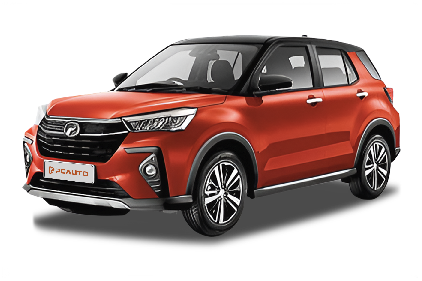
There are indeed three-cylinder models available on the current market. For instance, the Perodua Axia features a 1.0L three-cylinder naturally aspirated gasoline engine delivering 67 hp maximum power and 91 Nm peak torque. This vehicle has gained popularity as an economical commuter option due to its lightweight design and budget-friendly pricing (with the manual variant starting around RM 22,000). While three-cylinder engines have historically faced skepticism regarding refinement, contemporary advancements—including optimized combustion efficiency, turbocharging implementation, and hybrid system integration—have substantially enhanced their performance. Certain three-cylinder units from global manufacturers now approach four-cylinder levels in vibration control and power delivery. Note that three-cylinder engines may exhibit marginally inferior torque response at lower RPM ranges, yet they remain well-suited for urban driving conditions. Their compact displacement contributes to reduced fuel consumption and emissions, aligning with eco-friendly initiatives. For drivers prioritizing power, comparable four-cylinder alternatives like the Myvi or Bezza—equipped with 1.3L/1.5L engines offering more substantial power reserves—may be preferable.
Q
What are cylinders and types?
The cylinder is a cylindrical metal component in an engine that guides the piston to move linearly back and forth, and its core function is to convert chemical energy into mechanical energy through the combustion of the air-fuel mixture. Structurally, it can be divided into two types: integral cylinders and cylinder liners. The latter is further classified into wet liners (which directly contact the coolant and are mostly used in diesel engines) and dry liners (which do not contact the coolant and are commonly found in gasoline engines). Cylinders are mostly made of cast iron or aluminum alloy, requiring high strength, wear resistance, and heat dissipation performance. The precisely machined inner cylinder wall cooperates with the piston rings to ensure sealing. In the four-stroke cycle, the cylinder sequentially completes the intake, compression, combustion, and exhaust strokes. During combustion, the high-pressure gas generated pushes the piston to move, and power is output through the crankshaft. Modern engines mostly adopt inline or V-type cylinder arrangements. The inline structure is simple and suitable for engines with fewer than six cylinders, while the V-type arrangement can shorten the length and improve rigidity, which is more common in models with more than eight cylinders. Cylinder design directly affects engine efficiency, emissions, and service life. For example, although aluminum alloy cylinder blocks have higher costs, they are gradually becoming popular due to their lightweight and excellent heat dissipation.
Q
Is a cylinder 2 or 3 dimensional?
The cylinder is a three-dimensional mechanical component, whose structure consists of a cylindrical metal shell containing a reciprocating piston connected to external mechanisms via a piston rod. Geometrically, the cylinder has three dimensions: length, diameter, and wall thickness, with its inner wall requiring high-precision machining to ensure piston movement's sealing performance and low friction. In automotive engines, cylinders serve the critical function of converting thermal energy into mechanical energy, with their design requiring consideration of material strength (e.g., aluminum alloy, hard-chromium-plated steel tubing) and operational adaptability (e.g., corrosion resistance, high-frequency usage). Functionally, cylinders can be categorized into single-acting, double-acting, and diaphragm-type variants. The double-acting cylinder provides bidirectional force by alternating air supply to both chambers, while compact cylinders optimize spatial efficiency through their streamlined design. The three-dimensional attributes of cylinders fundamentally govern their mechanical performance and engineering applicability—for instance, bore diameter determines output force magnitude, and stroke length defines motion range. These parameters must undergo precise three-dimensional computational analysis and validation.
Q
What is the arrangement of V-type cylinders?
The V-type cylinder arrangement is a design that divides cylinders into two groups and arranges them symmetrically at a certain angle (usually 60° or 90°), forming a V-shape when viewed from the side. It is commonly used in 6 to 12-cylinder engines. This layout can significantly reduce the engine's length and height, improve space utilization, and allow for flexible arrangement in the engine compartment. Additionally, the angled design optimizes crankshaft balance, reduces vibration, and increases power density. For instance, V6 or V8 engines can deliver higher torque and horsepower while maintaining a compact size, making them suitable for performance cars and luxury models. Compared to inline engines, the V-type structure is slightly more complex due to requiring two cylinder heads, but it balances performance and size requirements, serving as a mainstream choice that combines power and practicality. Furthermore, its derivative technologies such as the W-type (a combination of two V-type arrangements) further enhance the power output of multi-cylinder engines, while the VR-type (small-angle V-type) optimizes the balance between size and weight.
Q
When to shift going by RPM?
When driving a manual transmission vehicle, gear shift timing primarily depends on engine speed (RPM) and driving demands. It is generally recommended to upshift between 2000 and 3000 RPM to ensure smooth power delivery and optimal fuel efficiency, while rapid acceleration or hill climbing may require delaying shifts until above 3500 RPM to utilize maximum torque. Downshifting should be adjusted based on vehicle speed and road conditions—for instance, selecting a lower gear during overtaking or descending hills to maintain the engine within its optimal operating range (approximately 1500 to 2500 RPM), thus preventing engine lugging or excessive RPM. For automatic transmission vehicles, although the transmission shifts automatically, the same principles apply when using manual mode. Particularly in mountainous terrain or during spirited driving, manual gear selection can enhance control. Note that optimal shift points vary by vehicle due to engine characteristics: turbocharged engines typically produce peak torque at lower RPMs, whereas naturally aspirated engines require higher RPMs. Sustaining proper shifting habits over time helps prolong drivetrain longevity and optimize fuel economy.
Q
What is the normal RPM for a truck?
The normal RPM (Revolutions Per Minute) range of a truck varies depending on the engine type and manufacturer settings. At idle, it is usually between 600 and 800 RPM, and around 1500 RPM when starting. Under normal driving conditions, the engine RPM is generally maintained between 1000 and 3000 RPM. For cruising on flat roads, it is recommended to keep it between 1000 and 1500 RPM, while it increases to 2000 to 3000 RPM during acceleration. When driving at high speeds, the RPM should be controlled between 1500 and 2500 RPM to balance power and fuel efficiency, and an RPM of around 3000 is suitable for scenarios requiring maximum power output. It should be noted that excessively low RPM may cause engine vibration, while excessively high RPM will increase fuel consumption. Therefore, during driving, the gear and RPM should be matched to avoid low-gear high-speed or high-gear low-speed operations, so as to protect the engine and extend the vehicle's service life. If abnormal RPM is detected, timely maintenance should be carried out to ensure the truck is in optimal working condition.
Q
What happens if the torque is too high?
Excessively high torque can have multiple impacts on vehicle performance and mechanical components. Engine torque is a key indicator for measuring power output; while high torque can significantly enhance acceleration performance, climbing ability, and load-carrying capacity, exceeding a reasonable range will lead to negative effects. Firstly, excessively high torque will increase the load on the transmission system, which may cause problems such as premature wear of the clutch, excessive stress on gearbox gears, and even deformation of the drive shaft. In terms of the chassis, excessive torque output may cause the drive wheels to slip, especially on wet roads, reducing the effectiveness of the traction control system. For the engine itself, continuous operation at high torque will accelerate the fatigue of core components such as piston rings and crankshaft bearings, affecting their service life. From the perspective of driving experience, if excessively high torque is not properly limited by the electronic system, it may lead to overly sensitive throttle response at low speeds, increasing the difficulty of handling in urban congestion. It is worth noting that although turbocharged engines can provide high torque at low speeds, improper tuning can easily lead to torque steer, affecting driving stability. It is recommended that car owners choose torque parameters according to their actual needs. A torque range of 200-400 N·m can balance power and fuel economy for daily driving. For professional off-road or towing needs, models with more than 400 N·m can be considered, but they require reinforced transmission and cooling systems.
Q
Does more RPM mean more torque?
The relationship between engine speed (RPM) and torque is not a simple linear proportionality, but rather an inverse relationship under the premise of constant power. At low engine speeds, due to the extended fuel injection and intake duration, the combustion pressure inside the cylinders increases, resulting in higher torque output, which is suitable for scenarios requiring strong traction such as vehicle launch, hill climbing, or heavy loads. Conversely, torque decreases at high speeds, but power may increase to support high-speed driving. This characteristic stems from the physical formula "Power = Torque × Speed × Constant." Therefore, different vehicle models are calibrated for torque curves based on their intended purposes. For example, diesel engines or turbocharged engines typically emphasize high torque at low speeds, while high-performance vehicles prioritize power output at high speeds. In daily driving, rationally utilizing transmission gear ratios to match speed and torque (such as using first gear for high-torque hill climbing and higher gears for low-RPM cruising) can optimize fuel economy and dynamic performance.
Q
What is low RPM high torque?
Low RPM high torque refers to the characteristic of an engine that can deliver substantial torque within a relatively low RPM range (typically 1500-3000 rpm). This design significantly enhances a vehicle's launch acceleration and hill-climbing capability. When engine power remains constant, torque is inversely proportional to RPM. Consequently, generating high torque at low RPM enables the crankshaft to produce greater power per revolution, providing ample traction without requiring high engine speeds—particularly advantageous for urban stop-and-go driving or mountainous terrain. Turbocharged models often excel in this regard; for instance, certain popular local SUVs achieve peak torque at 1800 rpm, facilitating loaded hill ascents or overtaking maneuvers. By contrast, low-torque engines must rely on higher RPMs to compensate for power deficiency, resulting in increased fuel consumption and acceleration lag. Notably, the low-RPM high-torque characteristic also reduces shift frequency, minimizes mechanical wear, and improves driving smoothness—especially beneficial for drivers frequently encountering congested conditions. When evaluating this parameter during vehicle selection, prioritize models whose torque curve peaks earlier, typically indicated in specifications as "XX N·m @ 1500-4000 rpm."
Popular Cars
Model Year
Car Compare
Car Photo
Latest Q&A
Q
What is the cylinder number?
The number of cylinders in an engine refers to the number of cylinders inside the engine, which is one of the core indicators for measuring engine performance. Common cylinder counts include 3, 4, 6, 8, and 12 cylinders. The cylinder is the core component of the engine, where pistons move up and down to generate power through fuel combustion, thereby driving the vehicle.
Cylinder count is closely related to engine displacement. For instance, engines with displacements below 1 liter typically use 3 cylinders, those between 1 to 2.5 liters mostly employ 4 cylinders, around 3 liters commonly utilize 6 cylinders, while displacements of 4 liters and above are predominantly equipped with 8 or 12 cylinders. Given the same cylinder bore, a higher cylinder count generally results in greater displacement and power output. For example, a 4-cylinder engine delivers stronger performance than a 3-cylinder counterpart.
Engine configurations vary, including inline, V-type, and horizontally opposed layouts, each affecting spatial efficiency and performance characteristics. Cylinder count also directly influences a vehicle's ride smoothness, fuel efficiency, and noise levels. Compact 3-cylinder and 4-cylinder engines with lower fuel consumption are well-suited for small and economy vehicles, whereas 6-cylinder and above engines, offering superior power and smoother operation, are primarily featured in mid-to-high-end models.
Amid energy-saving and emission-reduction trends, some high-performance models employ electrification technologies to reduce cylinder counts while maintaining power output and lowering emissions. When selecting cylinder count, comprehensive consideration should be given to displacement, technical tuning, and intended usage. For daily commuting, 4-cylinder models are recommended; those prioritizing smoothness may opt for 6-cylinder configurations, while high-performance applications are best served by 8-cylinder or higher setups.
Q
Does V6 mean 6 cylinders?
V6 does represent a 6-cylinder engine, whose name originates from its V-shaped cylinder arrangement design. This type of engine divides six cylinders into two banks with three cylinders each, and the angle between the two banks is usually 60° or 90° (some special designs like Volkswagen's VR6 adopt a 15° angle). The advantages of V6 engines lie in their compact structure: they are shorter in length than inline-four engines and lower in height than V8 engines, making them easy to arrange in front-wheel-drive models. Their displacement range is concentrated between 2.5 and 4 liters, which can provide abundant power. Meanwhile, the V-shaped arrangement achieves cylinder pressure balance, significantly reducing vibration and noise, and their running smoothness is better than that of inline engines. In terms of application, V6 engines are commonly used in mid-to-high-end sedans, SUVs and sports cars, such as Nissan's VQ series and Mercedes-Benz's M276 engine, which not only meet the comfort needs of luxury models but also provide the torque reserve required for off-roading for SUVs. In terms of technological development, modern V6 engines mostly integrate turbocharging and direct fuel injection technologies, and some models also adopt hybrid systems to improve fuel economy, such as the 3.5L V6 hybrid system of the Lexus RX450h. It is worth noting that although V6 engines are more powerful than four-cylinder engines, they are more fuel-efficient than V8 models. This balance has made them a long-term favorite choice in the market.
Q
Is V the number of cylinders?
In the naming conventions for automobile engine models, the letter "V" typically denotes a V-type cylinder arrangement, not the number of cylinders. The cylinder count is directly represented by Arabic numerals; for instance, V6 indicates a 6-cylinder V-type engine, while L4 signifies a 4-cylinder in-line engine. Letter combinations in cylinder model codes carry specific functional meanings—for example, "V" may denote a valved cylinder—though naming variations may exist across manufacturers.
An engine model number generally comprises four segments: the prefix represents the manufacturer code, the middle section specifies the cylinder count and bore diameter, the suffix letters denote application features (e.g., "Q" for automotive use), and the ending differentiates revised versions. Determining cylinder specifications requires cross-referencing technical manuals, nameplate data, and manufacturer guidelines. For example, in code SCD50x100-100-LB, the numerals correspond to a 50mm bore and 100mm stroke respectively, with letters indicating the mounting configuration.
Vehicle owners should consult their owner's manual or B-pillar nameplate to verify the exact engine model for accurate information.
Q
What is the meaning of number of cylinders?
The number of cylinders refers to the number of combustion chambers inside an engine and is one of the core indicators for measuring engine performance. As cylindrical hollow chambers, cylinders house pistons that reciprocate to convert thermal energy from fuel combustion into mechanical energy. The number of cylinders directly affects an engine's output power and torque; generally, more cylinders mean stronger power—for example, the explosive power of a V8 engine is significantly higher than that of a four-cylinder model, though this also increases manufacturing costs and fuel consumption. Among common configurations, three-cylinder engines (e.g., 1.0-liter displacement) are compact and cost-effective but require balance shaft technology to suppress vibration; four-cylinder engines (1.5-2.5 liters) have become the mainstream for family cars due to their balanced smoothness and fuel consumption; six-cylinder and above models (e.g., 3.0-liter V6) excel in linear power delivery and a rich exhaust note, making them widely used in mid-to-high-end vehicles. In terms of arrangement, inline structures have low maintenance costs, V-shaped layouts save space, and horizontally opposed designs enhance handling stability. Modern turbocharging technology allows four-cylinder engines to reach the power level of traditional six-cylinder engines, while three-cylinder engines also demonstrate excellent energy efficiency in hybrid systems. When choosing, one should consider displacement, technical tuning, and usage scenarios: four-cylinder engines are recommended for daily commuting, while six-cylinder or eight-cylinder configurations can be considered for those pursuing performance.
Q
Is type 4 CNG cylinder safe?
Type 4 CNG cylinders have significant advantages in terms of safety. They feature an all-plastic liner and a fully wrapped carbon fiber structure, making them the lightest type of cylinder with optimal fatigue resistance currently available, suitable for high-pressure environments (typically designed to withstand pressures up to 450 bar, significantly exceeding the working pressure of 216 bar). These cylinders comply with stringent certifications such as the international standard ISO 15500-13, are equipped with Pressure Relief Devices (PRD) to address extreme conditions, and require mandatory inspection and recertification every five years to ensure long-term reliability. Although their cost is higher, their lightweight characteristics enhance vehicle range and fuel efficiency, making them particularly suitable for weight-sensitive applications such as logistics vehicles and high-end passenger cars. It is important to note that all CNG cylinders require regular maintenance and must be sourced from certified manufacturers to comply with safety regulations.
View MoreLatest News

More spacious than the Honda CR-V, SAIC H5 equipped with Huawei ADS advanced intelligent driving
LienJan 15, 2026

Aerodynamic kit + Optimized V8 engine! Tom's Racing modified Lexus LC is so stunning?
MichaelJan 14, 2026

Musk: No longer selling FSD, only monthly subscription available in the future
AshleyJan 14, 2026

Honda N-BOX becomes the best-selling car in Japan in 2025, with Toyota Yaris ranking second
JohnJan 14, 2026

Malaysia's car sales may surpass Indonesia, becoming the largest car sales country in Southeast Asia by 2025.
LienJan 14, 2026
View More


Cars