
Q
How much horsepower does the 2023 BMW M2 coupe have?
 MiaSep 15, 2025, 06:05 PM
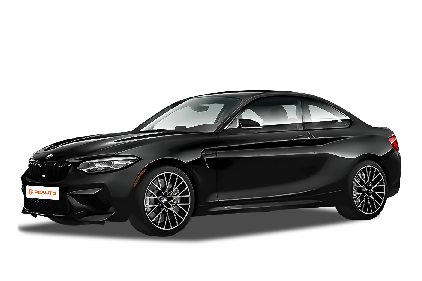
The 2023 BMW M2 two - door coupe is equipped with a 3.0 - liter inline six - cylinder twin - turbocharged engine. It can deliver a maximum horsepower of 453 and a peak torque of 550 Nm. It's mated to either a 6 - speed manual or an 8 - speed automatic transmission. The 0 - 100 km/h acceleration takes only 4.1 seconds (3.9 seconds for the automatic transmission version). This car is an entry - level high - performance model in BMW's M series, designed specifically for car enthusiasts who pursue driving pleasure. Its compact body and rear - wheel - drive layout offer an excellent handling experience.
In the Malaysian market, this car is suitable for owners who love high - performance coupes, especially those consumers who value the brand's heritage and driving dynamics. It's worth mentioning that the S58 engine of the BMW M2 is from the same family as those in the higher - end M3/M4, with only slightly different tuning, which further enhances its cost - effectiveness.
Given the hot climate in Malaysia, it is recommended that owners regularly maintain the cooling system to ensure the engine runs efficiently. At the same time, pay attention to choosing tires suitable for tropical regions to achieve the best grip.
Special Disclaimer: This content is published by users and does not represent the views or position of PCauto.
Related Q&A
Q
How much is BMW M2 Coupe in Malaysia?
The current official pricing for the BMW M2 Coupe in Malaysia sits roughly between RM575,000 and RM650,000. Exact figures can shift based on optional extras, tax adjustments, and ongoing promotions, so your best bet is to hit up your nearest authorized BMW Malaysia dealer for the latest quotes.
Under the hood, this bad boy packs a 3.0-liter inline-six turbo engine pumping out 453 horsepower, mated to a 7-speed M Dual-Clutch Transmission. That translates to a blistering 0-100km/h sprint in just 4.2 seconds, making it a real standout in the compact performance car segment.
For Malaysian enthusiasts, the M2 Coupe's tidy dimensions are a perfect fit for local road conditions. And with standard kit like the M Differential and adaptive suspension, it strikes that sweet balance between daily drivability and track-day thrills.
It's worth noting that Malaysia's import car prices factor in duties, taxes, and registration fees, so they do tend to run higher than some overseas markets. But BMW Malaysia sweetens the deal with a comprehensive 5-year warranty and service package, plus plenty of personalization options. You can mess around with different paint finishes, wheel designs, and interior trims using the configurator on their official website to spec your dream M2.
If your budget's a bit tighter, keep an eye on BMW's Official Certified Pre-Owned program. You can often find well-maintained M2 Coupes there, usually fetching 20-30% less than a brand-new model.
 EmeraldShadeOct 22, 2025
Q
Is the 2023 BMW M2 Coupe manual?
In 2023, the BMW M2 Coupe indeed offers a manual transmission option (6-speed manual). This is a design retained by BMW to meet the needs of driving enthusiasts for the pure pleasure of control. Meanwhile, it is also equipped with an 8-speed automatic manual transmission for consumers to choose from. This car is powered by a 3.0-liter inline-six twin-turbocharged engine with a maximum output power of 453 horsepower. Its performance is very impressive, especially suitable for the winding roads and high-speed driving environment in Malaysia. For Malaysian car fans, the manual version can provide a more direct driving involvement, while the automatic version is more suitable for congested urban traffic. As a high-performance compact coupe, the BMW M2 Coupe has received high praise for its handling and power performance. Its chassis tuning and power output are very suitable for owners who love the joy of driving. In addition, the hot and rainy climate in Malaysia places high demands on vehicle heat dissipation and tire performance. The cooling system and tire configuration of the M2 Coupe can well handle these challenges, ensuring the vehicle remains stable during intense driving.
 PiaSep 15, 2025
Q
What is the top speed of the 2023 BMW M2 Coupe?
The top speed of the 2023 BMW M2 Coupe is electronically limited to 250 km/h. However, if you opt for the M Driver's Package, this limit can be increased to 285 km/h. This model is equipped with a 3.0-liter in-line six-cylinder twin-turbocharged engine, with a maximum output power of 453 horsepower and a peak torque of 550 Nm. Paired with an 8-speed M Steptronic automatic transmission and a rear-wheel drive system, it can accelerate from 0 to 100 km/h in just 4.1 seconds. For car enthusiasts in Malaysia, this car can offer an excellent driving experience both on local roads and highways, especially on well - maintained sections like the North - South Expressway. However, it's important to note that although the M2 Coupe has powerful performance, in Malaysia's hot and rainy climate, it's recommended to regularly check the tires and cooling system to ensure optimal performance. At the same time, you should also abide by local traffic regulations. After all, public roads are not race tracks, and safe driving should always come first.
 NiaSep 15, 2025
Q
How much is the BMW M2 Coupe 2023?
The official starting price of the 2023 BMW M2 Coupé in Malaysia is approximately RM598,800 (excluding insurance and optional extras). The specific price may vary due to taxes in different states, dealer discounts, or optional configurations (such as the M Carbon Fibre Roof and M Professional Sports Suspension). This car is equipped with a 3.0-litre inline-six twin-turbocharged engine, which can deliver 460 horsepower and 550 Nm of torque. It is paired with an 8-speed M Steptronic transmission, and it only takes 4.1 seconds to accelerate from 0 - 100 km/h, making it a top performer in its class.
For Malaysian car enthusiasts, the compact body size of the M2 (4,580 mm in length) is more suitable for the local narrow roads. The standard Active M Differential and Adaptive Suspension can also ensure comfort in daily driving. If you have a limited budget, you can consider the parallel-imported version, but you need to pay attention to the differences in the warranty terms. It is also recommended to compare the 5-year unlimited - mileage warranty and free regular maintenance services provided by official dealers.
It's worth mentioning that the handling tuning of the M2 continues the precise characteristics of the BMW M family. The rear - wheel drive layout combined with a 50:50 weight distribution ratio can provide a lot of driving fun when driving on the Sepang Circuit or mountain roads.
 LeoSep 15, 2025
Popular Cars
Model Year
Car Compare
Car Photo
Related Models
 Cars
CarsLatest Q&A
Q
Is AMT similar to automatic?
There are significant differences between AMT transmissions and automatic transmissions (AT) in terms of core structure and driving experience. AMT is essentially an electronically automated version of a manual transmission, simulating manual clutch operation and gear shifting through a computerized control system while retaining the gear set structure of manual transmissions. As a result, it offers higher transmission efficiency, with fuel consumption approximately 8%-12% lower than AT, making it particularly suitable for highway or long-distance driving. However, it may exhibit jerking similar to manual transmissions during low-speed gear shifts, especially noticeable in congested traffic conditions.
AT transmissions rely on torque converters for power transfer, delivering smooth and seamless gear shifts that appeal to comfort-oriented users. However, their complex structure (incorporating planetary gear sets, hydraulic systems, etc.) results in higher maintenance costs. A single service may cost between 800 to 1,500 ringgit, whereas AMT only requires gear oil replacement at approximately 400 ringgit.
From a market perspective, AMT is predominantly used in budget vehicles or commercial models priced below 80,000 ringgit, while AT is typically featured in mid-to-high-end vehicles. Consumers should select based on actual needs: AMT suits those prioritizing fuel efficiency and low maintenance costs, while AT better serves those valuing comfort. Notably, recent advancements in AMT electronic control technology have significantly mitigated jerking issues, though test drives should still emphasize low-speed performance evaluation.
 AriaMar 26, 2026
Q
Which is better, DCT or AT?
DCT (Dual-Clutch Transmission) and AT (Automatic Transmission) each have their own advantages and disadvantages, and the choice should be based on personal driving needs. AT transmissions transfer power through a torque converter, offering excellent shift smoothness, making them suitable for urban commuting or novice drivers. However, they tend to have higher fuel consumption, and vehicles equipped with them are usually more expensive. DCT transmissions utilize a dual-clutch structure, featuring fast shift speeds and high power transmission efficiency, which provides a more direct driving experience—particularly suitable for users seeking a sporty feel. However, they may exhibit jerking at low speeds and have relatively high maintenance costs. If durability and comfort are priorities, AT is the more reliable choice; if power responsiveness and driving pleasure are preferred, wet DCT (such as Volkswagen DSG) performs better, though dry DCT models should be avoided in prolonged stop-and-go traffic conditions. Additionally, CVT transmissions excel in smoothness and fuel efficiency, making them ideal for daily commuting, but they lack driving excitement. It is recommended to test-drive before purchasing, as tuning varies significantly across brands, and real-world experience is more important than theoretical specifications.
FlutteringMar 26, 2026Q
Is Amt good or bad?
AMT gearboxes have a significant cost advantage in the local market, typically being around 5,000 Ringgit cheaper than models equipped with conventional automatic transmissions. Their fuel efficiency is comparable to manual transmissions, resulting in long-term fuel savings. Featuring a straightforward design, they achieve transmission efficiency exceeding 90% with relatively low maintenance costs, making them ideal for practicality-oriented consumers. However, their shifting logic contains inherent limitations: gear changes between 1st and 2nd cause 0.3-0.5 second power interruptions, while unintended upshifts on inclines may reduce engine speed by 15%-20%, compromising driving smoothness. For urban commuters or budget-conscious buyers, AMT offers excellent value, though those prioritizing premium driving dynamics should consider alternative transmission types. Some domestic models like the Perodua Axia employ enhanced AMT systems, where optimized shift programming has reduced gearshift shock by approximately 30%.
 RainbowsMar 26, 2026
Q
Which gives better mileage, CVT or AMT?
From the perspective of fuel economy, CVT transmissions generally perform better under urban driving conditions. Their continuously variable design allows the engine to consistently operate within the optimal speed range, significantly reducing fuel consumption during frequent starts and stops. Test data shows that their fuel consumption in urban driving conditions is 10% to 15% lower than that of comparable models. AMT transmissions, on the other hand, inherit the high transmission efficiency of manual transmissions, delivering fuel efficiency close to manual transmissions during high-speed cruising. This makes them particularly suitable for long-distance driving in large-displacement vehicles. However, due to power interruption during gear shifts, their overall fuel consumption may be 5% to 8% higher than CVTs.
The difference in fuel-saving characteristics between the two transmissions stems from their technical principles: CVTs achieve continuous variability through steel belts and pulleys, eliminating the fixed gear ratio limitations of traditional transmissions; AMTs simulate manual gear changes via electronic control systems while maintaining the mechanical efficiency of gear transmission. Notably, actual fuel consumption is also influenced by driving habits. Smooth acceleration and anticipatory deceleration can maximize the transmissions' fuel-saving potential. If the vehicle budget permits and urban commuting is the primary use, CVTs offer a more economical choice. For frequent highway driving with an emphasis on cost-effectiveness, AMTs are equally worth considering.
 RubyBlazeMar 26, 2026
Q
Which is cheaper, AMT or CVT?
In terms of gearbox cost, AMT is usually more economical than CVT. Essentially, AMT is a manual transmission equipped with an electronic control unit, featuring a simple structure and low maintenance costs. The unit price ranges from approximately 5,000 to 8,000 ringgit, making it suitable for budget-conscious consumers or those who prioritize long-term operating costs. CVT incurs higher manufacturing costs due to its precision steel belt transmission system and continuous variable transmission technology, with a unit price of about 7,000 to 10,000 ringgit. However, it delivers a smoother driving experience and superior fuel efficiency. The primary differences between the two lie in technical complexity: AMT retains the gear-shifting mechanism, resulting in noticeable shift shock; CVT achieves linear power output through stepless speed variation but requires periodic belt inspection and incurs higher maintenance expenses. For those prioritizing initial cost and basic transportation needs, AMT offers better value; if comfort and long-term fuel economy are priorities, CVT represents a more worthwhile investment. Note that actual prices may vary based on vehicle model, brand, and local supply chain factors.
 ShadowProwlMar 26, 2026
Related News

The all-new BMW i5 eDrive40 M Sport Pro lands in Malaysia
LienJan 16, 2026

Audi RS6 sedan version may return to compete fully with the BMW M5
WilliamNov 21, 2025

Neue Klasse platform's first mass-produced vehicle, the all-new BMW iX3 makes its debut, looks just like a concept car
LienSep 8, 2025

BMW X5 will become BMW's first model equipped with a hydrogen fuel cell, with a range of 504 kilometers
JamesSep 8, 2025

BMW's all-new iX3 to be unveiled on September 5, built on the Neue Klasse platform
Kevin WongSep 1, 2025
View More
Pros
Cons