
Q
How much is the new Santa Fe Hybrid 2024?
 DaisychaNov 05, 2025, 04:51 PM
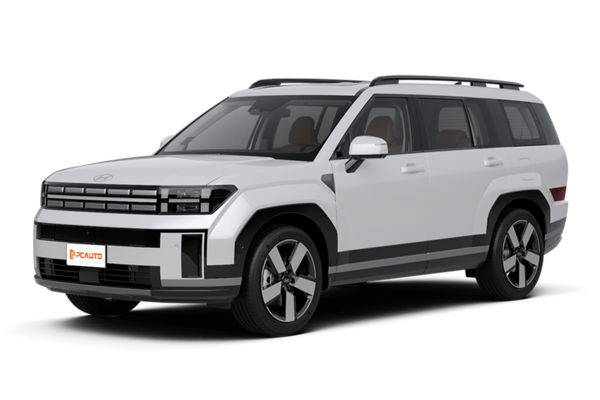
The official price of the all-new 2024 Santa Fe Hybrid in Malaysia is expected to range between RM 220,000 and RM 250,000. The exact price may vary depending on configuration options, taxes, and promotional activities, so it's recommended to check with local authorized Hyundai dealers for the latest quotes. This model is equipped with a 1.6-liter turbocharged hybrid system, which, combined with an electric motor, delivers approximately 230 combined horsepower. It also features an intelligent all-wheel-drive system, balancing fuel efficiency and performance. Its hybrid technology can significantly reduce fuel consumption, making it suitable for Malaysian users dealing with urban congestion and long-distance driving needs. The new car adopts the brand's latest "Parametric Dynamics" design language, with a dual 12.3-inch screen setup and a digital cockpit in the interior. It also comes standard with the Hyundai SmartSense active safety suite, including adaptive cruise control, lane keeping assist, and other functions. For consumers considering a hybrid SUV, the Santa Fe Hybrid offers lower operating costs than traditional gasoline-powered vehicles while avoiding the range anxiety of pure electric cars. However, it's advisable to compare it with the same class models like the Toyota Harrier Hybrid or Honda CR-V Hybrid before purchasing, make a choice based on personal budget and feature preferences, and also keep an eye on the Malaysian government's tax incentive policies for hybrid vehicles.
Special Disclaimer: This content is published by users and does not represent the views or position of PCauto.
Related Q&A
Q
What is the safety rating of the 2019 Hyundai Santa Fe?
The 2019 Hyundai Santa Fe delivers outstanding safety performance, earning top marks from leading evaluation agencies. It secured the IIHS "Top Safety Pick+" rating in the U.S. and a five-star Euro NCAP score in Europe—thanks to its rigid body structure, comprehensive active safety features, and advanced driver-assistance systems.
Standard equipment includes forward collision warning, automatic emergency braking, lane-keeping assist, and blind-spot monitoring. Higher trims add adaptive cruise control and rear cross-traffic alert for even greater protection.
Family-focused buyers can trust the Santa Fe’s safety credentials. Its high-strength steel construction effectively absorbs and disperses crash energy, while multiple airbags provide added security.
If you’re considering a used Santa Fe, don’t just rely on its safety ratings—check maintenance records and accident history to ensure all safety systems function properly. Even the best safety tech needs regular upkeep to perform at its best.
 PupNov 27, 2025
Q
Is the 2019 Hyundai Santa Fe all wheel drive?
The 2019 Hyundai Santa Fe does offer an all-wheel drive (AWD) variant, equipped with the HTRAC intelligent AWD system. This setup automatically distributes torque between the front and rear wheels based on road conditions, improving traction and stability on slippery surfaces or light off-road terrain.
In local markets, higher trim levels often come standard with AWD, while entry-level models may default to front-wheel drive—always check the vehicle's badge or spec sheet to confirm. Beyond handling wet weather with confidence, this AWD tech enhances safety on winding mountain roads. Hyundai's system uses electronic controls to seamlessly adjust power distribution between axles, balancing performance with fuel efficiency.
Keep in mind: AWD differs from traditional 4WD (built for rugged off-roading), as it prioritizes on-road agility. Buyers should weigh their typical driving needs. The Santa Fe's AWD also features selectable drive modes (Eco, Comfort, Sport) to adapt to different conditions.
 WolfNov 27, 2025
Q
What is the recall on the 2019 Hyundai Santa Fe?
The 2019 Hyundai Santa Fe recall primarily addresses two critical issues. First, certain vehicles may have a software glitch in the anti-lock braking system (ABS) module, which could potentially increase stopping distances under specific conditions, raising collision risks. Hyundai is resolving this by rolling out a control module software update.
Second, some models may contain a hydraulic electronic control unit (HECU) with manufacturing defects that could lead to electrical shorts, posing a fire hazard. Dealers will inspect and replace affected components at no cost.
Recalls like these are proactive safety measures initiated by automakers. Owners can check their vehicle’s recall status by entering the VIN on Hyundai’s official website. Keep in mind, all car brands occasionally issue recalls due to supply chain issues or the complexity of modern electronics—it’s actually a sign of responsible manufacturing.
We recommend staying updated with brand service bulletins and completing recall repairs promptly. Most software updates or part replacements take just 30 minutes to 2 hours and won’t void your warranty. If you notice abnormal brake warning lights or a burning smell, contact an authorized service center immediately.
 DoveNov 27, 2025
Q
Is the 2019 Santa Fe a reliable car?
The 2019 Santa Fe delivers decent reliability for a midsize SUV. Its proven 2.4L four-cylinder and 2.0L turbocharged engines provide smooth power delivery, while the transmission pairing is well-sorted. Major mechanical issues are uncommon in daily driving.
Owners report the suspension is tuned for comfort, making it family-friendly, and the interior materials/fit-and-finish are competitive for the segment. That said, some owners note occasional minor glitches with electronics—like infotainment screen lag—though these rarely affect drivability.
If buying used, always check the vehicle history or opt for units with complete maintenance records. Hyundai's quality has improved noticeably in recent years, and as their flagship SUV, the Santa Fe remains a generally dependable choice. Just remember—consistent maintenance and proper care go a long way in keeping it trouble-free.
LilyNov 27, 2025Q
Is there any recalls on the 2019 Hyundai Santa Fe?
The 2019 Hyundai Santa Fe was subject to recall notices in certain markets due to potential safety concerns. These included possible short circuits in the brake system's hydraulic electronic control unit, which could reduce braking force, as well as necessary software updates for the anti-lock braking system (ABS) in some vehicles.
Owners are advised to check their vehicle's recall status using the VIN on Hyundai’s official website or through an authorized service center to ensure their vehicle meets the latest safety standards. As a good practice, regularly test your brake response and ABS functionality. If you notice a stiff brake pedal or warning lights, have it inspected immediately.
Hyundai operates a global recall system, with all repairs handled free of charge at authorized service points—just book an appointment. For used car buyers, verifying whether previous owners completed all recall fixes should be part of the pre-purchase checks.
 RoseNov 27, 2025
Q
Is the 2019 Santa Fe reliable?
The 2019 Santa Fe delivers solid reliability overall. Its 2.4L and 2.0T engines are proven units, paired with either smooth-shifting 6-speed or 8-speed automatic transmissions that show low failure rates. Maintenance costs are reasonable for the segment.
You'll appreciate the spacious cabin and generous equipment, especially the safety tech like forward collision warning and lane keeping assist – these really boost confidence behind the wheel. That said, a few owners report occasional infotainment system glitches, so it's worth checking for software updates before purchase.
As a family SUV, the Santa Fe's durability sits above average in its class. Stick to the maintenance schedule and drive it right, and it'll serve you well for years. For used models, always review the full service history and pay extra attention to the undercarriage and electronics – these tell you more about the car's real condition than anything else.
Hyundai's build quality has come a long way, and this Santa Fe proves it. For practical buyers who want bang for their buck, it's a trustworthy choice.
FlameNov 27, 2025Q
Does the 2019 Santa Fe have 3 rows?
The 2019 Santa Fe offers an optional third-row seating configuration in select markets, making it a seven-seater for family-oriented buyers. However, availability depends on trim levels and regional specifications—higher trims are more likely to include this feature.
As a midsize SUV, it prioritizes practicality, though the third row is best suited for children or occasional adult use on shorter trips. For extended journeys, adults may find it somewhat cramped. Competing models like the Toyota Fortuner or Honda CR-V also offer similar three-row layouts in this segment.
If you're considering the seven-seat version, we recommend test-driving to evaluate the third-row space firsthand. Also, keep in mind that additional seating may affect vehicle inspections and insurance policies. For frequent group travel, an MPV might be a better choice, as they typically provide more generous third-row accommodations.
Before purchasing, always verify the seating configuration with the dealer or check the spec sheet, as mid-cycle updates can sometimes alter available options.
 FrostNov 27, 2025
Q
Does the 2019 Santa Fe have a sunroof?
Certain higher-trim 2019 Santa Fe models did come equipped with a panoramic sunroof, which significantly enhances cabin brightness and overall comfort. However, availability depends on the specific trim level purchased, as features vary across the range.
For sunroof maintenance, make sure to regularly clean the tracks and check that drainage holes are clear. Avoid prolonged sun exposure to prevent rubber seal deterioration—these simple steps can extend its lifespan. If you're considering a used Santa Fe, pay close attention to the sunroof's operation and check for any signs of water leakage, as these details often reveal how well the vehicle's been maintained.
While the sunroof does add to the enjoyment on road trips, drivers in hotter climates may find themselves using the sunshade more frequently to keep the cabin comfortable.
 BreezeNov 27, 2025
Q
What engine options did the 2019 Santa Fe offer?
The 2019 Santa Fe offers two engine options to suit different driving needs.
First up is the 2.4L naturally aspirated four-cylinder, delivering a solid 185 horsepower and 178 lb-ft of torque. It’s a great fit for daily city driving, with balanced fuel efficiency and smooth power delivery.
If you’re after more punch, the 2.0L turbocharged four-cylinder steps it up with 235 horsepower and 260 lb-ft of torque—perfect for drivers who want extra power for highway passing or loaded-up trips. Both engines pair with an 8-speed automatic transmission for seamless shifts.
As a midsize SUV, the Santa Fe strikes a nice balance between efficiency and performance. It also packs Hyundai’s latest safety tech at the time, like forward collision warning and lane-keeping assist, to help keep things secure on the road.
Quick note on the turbo: By forcing more air into the combustion chamber, it squeezes out extra power from the same displacement. Just remember—regular maintenance is key to keeping that turbo running smoothly for the long haul.
WaveNov 27, 2025Q
Is the 2019 Hyundai Santa Fe AWD?
The 2019 Hyundai Santa Fe does offer an AWD variant, equipped with the HTRAC intelligent all-wheel-drive system. This SUV automatically distributes power between the front and rear axles based on road conditions, delivering better traction on slippery surfaces or during light off-roading. In local markets, both the high-spec 2.2L diesel and 2.4L gasoline models come with this system.
The AWD version features a drive mode selector on the center console, allowing you to switch between Eco/Comfort/Sport/Smart modes. In Smart mode, it adjusts power distribution dynamically by analyzing throttle input, steering angle, and other data. That said, this system is primarily designed for urban driving and light unpaved terrain—it’s not a hardcore off-road setup.
Competing Japanese models like the Honda CR-V and Toyota RAV4 use a similar clutch-based on-demand AWD, while German rivals often favor full-time AWD solutions. For buyers, the choice depends on usage: if you frequently encounter rainy conditions or occasional muddy job sites, the AWD version is more practical. But if you’re mostly driving in the city, the FWD model offers better fuel efficiency (saving around 5-8% in consumption) and value.
 StarNov 27, 2025
Popular Cars
Model Year
Car Compare
Car Photo
Related Models
 Cars
CarsLatest Q&A
Q
How much does it cost to buy a 2024 Tesla Model 3?
The 2024 Tesla Model 3 starts at around RM 175,000, but the final price depends on your chosen configuration and add-ons. Opt for the Long Range or Performance version, and you’re looking at a higher tag.
As Tesla’s entry-level model, it packs cutting-edge EV tech, including 500+ km of range on a single charge and standard Autopilot for both daily commutes and road trips. Just keep in mind extra costs like insurance, registration, and potential home charger installation.
Tesla’s Supercharger network is expanding locally, with solid coverage in major cities, making charging hassle-free. Maintenance costs? Typically lower than gas cars—no oil changes, fewer moving parts—so long-term savings add up.
If you’re after more thrills, the Performance variant hits 0-100 km/h in roughly 3 seconds. Plus, government EV tax perks help soften the upfront cost.
 DesignerArtCreationDec 11, 2025
Q
How reliable is the 2024 Model 3?
The 2024 Model 3 delivers solid reliability, thanks to Tesla’s continuous software updates and hardware refinements. Key areas like the battery management system and Autopilot have seen multiple optimizations, leading to a noticeable drop in failure rates.
This model features a stiffer body structure and an improved suspension setup, offering a smoother ride. Upgraded interior materials also help reduce cabin rattles—a common gripe with earlier builds.
EV maintenance costs remain low (no oil changes, etc.), though it’s wise to periodically check battery health and charging components for long-term performance. For shoppers eyeing EVs, charging infrastructure and home charging options matter—thankfully, public chargers are expanding fast, making daily use more convenient.
If you frequently road-trip, planning charging stops ahead helps. While the range easily handles daily drives, a little route prep goes a long way in maximizing the experience.
 PilotDec 11, 2025
Q
What is the battery range of the Tesla Model 3 2025?
The battery range of Tesla Model 3 2025 is expected to be optimized based on existing models, and specific data needs to be released officially. However, referring to the EPA range of the 2024 rear wheel drive version, which is about 438 kilometers, and the high-performance version, which is about 513 kilometers, the 2025 model may further improve, especially in terms of battery technology or energy efficiency management. For electric vehicles, the range is greatly affected by driving habits, road conditions, and climate. Air conditioning may slightly reduce the range in hot weather, but the battery thermal management system can usually maintain stable performance. In terms of charging, Model 3 supports super fast charging, which can replenish about 250 kilometers of range in about 15 minutes, while home charging stations require 6-8 hours to fully charge. Daily commuting or long-distance travel are practical enough, it is recommended to follow Tesla's official website or local showroom for the latest information.
 QuirkyDec 11, 2025
Q
Is the 2024 Model 3 worth the price?
The 2024 Model 3 strikes an impressive balance between price and performance. Its upgraded range, more refined interior, and enhanced autonomous driving features genuinely boost its competitiveness—especially for tech-savvy, eco-conscious buyers.
Tesla optimized the battery efficiency this time around, making it suitable for both daily commutes and longer trips, while the handling stays true to the brand’s signature responsiveness. If your budget allows and you’re open to EVs, this one’s worth considering—though a test drive is wise to see if it matches your driving style.
That said, local charging access matters. While public chargers are becoming more common, home installation costs should factor into your budget. Alternatives in this price range exist, so cross-shop specs and service policies (like warranty coverage or charging network support) to make a well-rounded decision.
 SweetDec 11, 2025
Q
How many miles does a 2024 Tesla Model 3 get?
The 2024 Tesla Model 3 offers varying range figures depending on configuration. The rear-wheel-drive (RWD) version delivers an EPA-estimated 272 miles (approx. 438 km), while the all-wheel-drive Long Range model pushes that to around 341 miles (roughly 549 km). Real-world range may vary slightly based on driving style, road conditions, and climate.
As a pure EV, the Model 3 achieves this efficiency thanks to its advanced battery management system and lightweight design. It also supports fast charging—at a Tesla Supercharger, you can add up to 200 km of range in about 15 minutes. Whether for daily commutes or longer trips, that’s more than enough for most drivers, especially with charging infrastructure becoming more widespread.
If you need to maximize range, tweaking your driving mode or using the car’s built-in energy optimization features can help squeeze out even more miles.
 LovelyDec 11, 2025
Related News

2026 Toyota HiLux receives five-star ANCAP safety rating in ANCAP
MichaelDec 12, 2025

In Malaysia, which sliding door MPVs are available?
MichaelOct 30, 2025

Modern Ioniq 5 N Lands in Malaysia: Track-Level Performance Electric Vehicle is Here, Priced Possibly Below RM 400,000?
JohnSep 10, 2025

Hyundai's Big Return to Malaysia: Top 5 Models Expected
MichaelMay 30, 2025
580,000 km & 87.7% Battery Health: Ioniq 5’s Incredible Durability
MichaelMay 6, 2025
View More
Pros
Cons