
Q
how to reset honda city bluetooth
 WandererSoulSep 29, 2025, 02:24 PM
To reset the Bluetooth connection in your Honda City, start by firing up the car and making sure the infotainment screen is on. Then, head into the audio system's settings menu and look for options like "Bluetooth Devices" or "Paired Devices." Find your connected device, select it, and hit "Delete" or "Unpair." Once that's done, turn off the vehicle, wait about 30 seconds, and restart it—your Bluetooth list should now be clear, ready for new pairings.
Keep in mind that the interface might vary slightly across different Honda City model years. If you run into any snags, give the owner's manual a quick check or reach out to an authorized Honda service center in Malaysia for help.
Bluetooth is a key part of modern in-car entertainment, letting you take hands-free calls, stream music, and use phone mirroring features. It’s a good idea to keep both your phone and the car’s system updated to ensure everything plays nice together. And remember, avoid messing with Bluetooth settings too much while driving—safety first, always. If your Bluetooth keeps dropping, it could be signal interference or a system cache glitch. Trying resetting your phone’s network settings or restarting both devices might just fix the issue.
Special Disclaimer: This content is published by users and does not represent the views or position of PCauto.
Related Q&A
Q
Does the Honda City 2018 have airbags?
The 2018 Honda City does come with airbags, but the exact setup varies by trim level. Higher-spec models usually get 6 airbags – that's dual front, side, and side curtain airbags. The base version, though, might only have the dual front ones. Definitely check the specific trim's spec sheet before buying. Airbags are a key part of the passive safety system; they work with seatbelts during a crash to really cut down on injury risks. But remember, they only do their best job when you're properly buckled up, and never put a child seat in the front where there's an active airbag. The car also standardizes basics like ABS and EBD, and some versions might throw in VSA vehicle stability control – those help with handling in emergencies. Oh, and it's smart to keep an eye on the airbag system warning light day-to-day. If it lights up, get it checked out ASAP to make sure everything's working right.
 FitnessFanaticTrainerNov 19, 2025
Q
What is the fuel capacity of Honda City 2018?
The 2018 Honda City comes with a 40-liter fuel tank, a design that balances daily commuting and short to medium-distance travel needs. Paired with its efficient 1.5-liter i-VTEC petrol engine or 1.5-liter Earth Dreams diesel engine (in select markets), it delivers an approximate range of 500 to 600 kilometers, though actual performance varies based on driving habits and road conditions. Notably, all City models come standard with an ECO assist system, which further boosts fuel efficiency by optimizing throttle response and air conditioning output. The resin fuel tank not only reduces vehicle weight but also effectively lowers corrosion risks. For frequent long-distance drivers, regular tire pressure checks and air filter maintenance are recommended – these small details can lead to even better fuel economy. Competitors like the Toyota Vios offer a 42-liter tank, but real-world range depends on overall engine efficiency, and the City has always been competitive when it comes to fuel-saving technologies.
 ChocolateFreakFanaticNov 19, 2025
Q
Is the 2018 Honda City fuel efficient?
The 2018 Honda City does a solid job when it comes to fuel economy. Under the hood, you've got that 1.5-liter i-VTEC engine paired with a CVT transmission. Official figures peg the combined fuel consumption at around 5.4 liters per 100 kilometers. In real-world driving, if the roads are smooth and you keep a steady hand on the wheel, you can usually keep the mixed city-highway fuel use down to about 6 liters per 100 km. That makes it a pretty fuel-efficient pick for daily commutes or longer drives. A big part of that efficiency comes from Honda's Earth Dreams Technology, which boosts fuel economy by optimizing combustion efficiency and cutting down on mechanical resistance. If you're really looking to stretch a tank, there's always Eco mode—it tweaks the throttle response and air conditioning output to save even more fuel. Among its peers, its fuel economy sits comfortably in the upper-middle range, making it a great fit for shoppers who value practicality and cost-effectiveness. Oh, and don't forget—sticking to regular maintenance like changing the air filter and using the right viscosity oil will help keep that fuel economy in check, too.
 TeaAddictBrewerNov 19, 2025
Q
Does the 2018 Honda City have parking sensors?
The 2018 Honda City does come with parking sensors in some trim levels, but whether a specific model has them depends entirely on its actual specs and configuration grade. Higher-end variants typically feature front and rear parking sensors to help drivers park more safely and conveniently. These sensors use ultrasonic technology to detect distances to obstacles, alerting drivers with audio or visual cues—super handy in crowded city areas or tight parking spots. Beyond parking sensors, many modern cars also offer reverse cameras or even 360-degree surround-view systems, which take parking safety up another notch. If you're looking at a used model or considering upgrading features, it's best to check the vehicle in person or consult a dealer to confirm what's included. You might also want to ask about other driver-assist tech like automatic parking or blind-spot monitoring, as availability can vary between model years and trims.
 CoffeeLoverAddictNov 19, 2025
Q
What is the fuel consumption of Honda City 2018?
The fuel economy of the 2018 Honda City varies by powertrain. The version with the 1.5-liter i-VTEC naturally aspirated engine averages around 5.4 to 5.8 liters per 100 kilometers in combined driving, while the RS trim with the 1.5-liter Earth Dreams turbocharged engine is slightly higher at approximately 6.2 liters per 100 kilometers. Actual figures can fluctuate based on driving habits, road conditions, and maintenance status. Equipped with a CVT transmission that optimizes fuel efficiency, paired with an ECO mode for further savings, this car suits city commuting well. To boost fuel economy, regular maintenance like air filter replacements and using the recommended viscosity oil is advisable, along with avoiding aggressive acceleration or speeding. In its class, fuel efficiency ties closely to engine technology and lightweight design—some competitors achieve lower consumption through direct injection or hybrid systems, yet the Honda City remains popular for its reliability and strong after-sales network. Additionally, keeping tire pressure at the manufacturer's recommended levels and reducing idle warm-up time are small details that can marginally improve fuel economy.
 BookwormReaderNov 19, 2025
Q
How many airbags are in a Honda City 2018?
The 2018 Honda City comes standard with six airbags in the local market, including dual front airbags, side airbags, and side curtain airbags. This setup offers comprehensive crash protection for occupants and stands as a higher-tier configuration among its peers. As a key part of the passive safety system, airbags inflate rapidly during a collision to cushion impact forces. However, it's crucial to note that their effectiveness is maximized when used in conjunction with seatbelts—always remember to buckle up during daily drives.
Airbag counts may vary across different model years or trim levels of the Honda City. For instance, some entry-level variants might have fewer airbags to keep the price down. It's advisable to check the exact specifications through the official manual or your dealer before making a purchase.
In recent years, many automakers have been enhancing both active and passive safety features, such as adding knee airbags or rear side airbags. That said, the number of airbags isn't the sole measure of a vehicle's safety. Factors like body structure and electronic stability systems are equally important, so consumers should consider their own needs comprehensively.
 MotorcyclistRiderNov 19, 2025
Q
What is the mileage of Honda City automatic 2018?
The actual fuel consumption of the 2018 Honda City automatic models varies depending on driving conditions and vehicle condition. Official figures show a combined fuel economy of approximately 5.4 to 5.8 liters per 100 kilometers. It's powered by a 1.5-liter i-VTEC engine paired with a CVT transmission, a powertrain that delivers decent fuel efficiency both in the city and on the highway. In daily driving, by maintaining good driving habits—like avoiding sudden acceleration and hard braking, keeping up with regular maintenance, using the right engine oil, and ensuring proper tire pressure—you can get fuel economy closer to or even better than the official numbers. As a popular compact sedan, the Honda City's fuel efficiency has always been one of its selling points, along with its spacious interior and reliability, making it a great choice for family daily use. If you're looking for even better fuel economy, the latest hybrid versions are worth considering, but the 2018 pure gasoline model is still a great value-for-money option, especially well-maintained ones in the used car market.
 IonNov 19, 2025
Q
Does the Honda City 2018 have ABS?
The 2018 Honda City does come standard with Anti-lock Braking System (ABS), a key part of its active safety features. It effectively prevents wheel lock-up, letting drivers maintain steering control during emergency stops, which is especially handy on slippery roads. Beyond ABS, this model typically includes Electronic Brakeforce Distribution (EBD) and Brake Assist (BA) systems too. Working together, these three significantly boost braking stability. It's worth noting that specs can vary by region, but locally sold versions generally meet ASEAN safety standards. For owners, regularly checking brake fluid condition and pad thickness is crucial to keeping the ABS system effective. If the ABS warning light pops up on the dashboard, it's best to head to an authorized service center for diagnosis as soon as possible. In this class, such safety features have become mainstream, and when shopping for a used car, buyers can check the vehicle's VIN plate or use diagnostic tools to confirm the exact specs.
 MonNov 19, 2025
Q
What type of transmission is in the Honda City 2018?
The 2018 Honda City comes with two transmission options: a 5-speed manual (5MT) and a CVT. The CVT variant features Honda's Earth Dreams technology, which optimizes power transfer and shift logic to balance smoothness and fuel efficiency—perfect for city driving. What makes the CVT stand out is its lack of fixed gears; it seamlessly adjusts ratios based on driving conditions, keeping the engine in its optimal rpm range. This not only delivers better fuel economy than traditional automatics but also eliminates shift jerks. For drivers who prefer more control, the manual transmission offers direct power delivery and a more engaging driving experience. It's worth noting that the CVT requires regular changes of its specific transmission fluid for maintenance, while the manual needs attention to clutch disc wear. Both transmissions are widely used across Honda's lineup, boasting high technical maturity and reliable long-term performance. The choice ultimately comes down to your personal driving style and needs.
 TonNov 19, 2025
Q
What size engine is in the Honda City 2018?
The 2018 Honda City comes with a 1.5-liter four-cylinder naturally aspirated engine, codenamed L15A. This engine features Honda's i-VTEC technology, which delivers solid power while keeping fuel economy in check. It puts out 120 horsepower and 145 Nm of peak torque, paired with either a CVT automatic or a 5-speed manual gearbox. The overall performance is smooth, making it well-suited for city driving. This engine offers plenty of low-end torque, perfect for daily commuting, and still maintains decent power response at higher revs, balancing fuel efficiency with driving fun. It's worth highlighting that Honda's i-VTEC technology optimizes engine efficiency across different driving conditions by intelligently adjusting valve timing and lift—that's a real standout feature here. If you're craving more power, keep an eye out for the hybrid versions in later models; they take fuel economy to an even better level. All in all, the 2018 Honda City's engine setup is right up there with the mainstream in its class, ideal for shoppers who prioritize practicality and reliability.
 SapphireBlueNov 19, 2025
Popular Cars
Model Year
Car Compare
Car Photo
Related Models
 Cars
CarsLatest Q&A
Q
Is AMT similar to automatic?
There are significant differences between AMT transmissions and automatic transmissions (AT) in terms of core structure and driving experience. AMT is essentially an electronically automated version of a manual transmission, simulating manual clutch operation and gear shifting through a computerized control system while retaining the gear set structure of manual transmissions. As a result, it offers higher transmission efficiency, with fuel consumption approximately 8%-12% lower than AT, making it particularly suitable for highway or long-distance driving. However, it may exhibit jerking similar to manual transmissions during low-speed gear shifts, especially noticeable in congested traffic conditions.
AT transmissions rely on torque converters for power transfer, delivering smooth and seamless gear shifts that appeal to comfort-oriented users. However, their complex structure (incorporating planetary gear sets, hydraulic systems, etc.) results in higher maintenance costs. A single service may cost between 800 to 1,500 ringgit, whereas AMT only requires gear oil replacement at approximately 400 ringgit.
From a market perspective, AMT is predominantly used in budget vehicles or commercial models priced below 80,000 ringgit, while AT is typically featured in mid-to-high-end vehicles. Consumers should select based on actual needs: AMT suits those prioritizing fuel efficiency and low maintenance costs, while AT better serves those valuing comfort. Notably, recent advancements in AMT electronic control technology have significantly mitigated jerking issues, though test drives should still emphasize low-speed performance evaluation.
 AriaMar 26, 2026
Q
Which is better, DCT or AT?
DCT (Dual-Clutch Transmission) and AT (Automatic Transmission) each have their own advantages and disadvantages, and the choice should be based on personal driving needs. AT transmissions transfer power through a torque converter, offering excellent shift smoothness, making them suitable for urban commuting or novice drivers. However, they tend to have higher fuel consumption, and vehicles equipped with them are usually more expensive. DCT transmissions utilize a dual-clutch structure, featuring fast shift speeds and high power transmission efficiency, which provides a more direct driving experience—particularly suitable for users seeking a sporty feel. However, they may exhibit jerking at low speeds and have relatively high maintenance costs. If durability and comfort are priorities, AT is the more reliable choice; if power responsiveness and driving pleasure are preferred, wet DCT (such as Volkswagen DSG) performs better, though dry DCT models should be avoided in prolonged stop-and-go traffic conditions. Additionally, CVT transmissions excel in smoothness and fuel efficiency, making them ideal for daily commuting, but they lack driving excitement. It is recommended to test-drive before purchasing, as tuning varies significantly across brands, and real-world experience is more important than theoretical specifications.
FlutteringMar 26, 2026Q
Is Amt good or bad?
AMT gearboxes have a significant cost advantage in the local market, typically being around 5,000 Ringgit cheaper than models equipped with conventional automatic transmissions. Their fuel efficiency is comparable to manual transmissions, resulting in long-term fuel savings. Featuring a straightforward design, they achieve transmission efficiency exceeding 90% with relatively low maintenance costs, making them ideal for practicality-oriented consumers. However, their shifting logic contains inherent limitations: gear changes between 1st and 2nd cause 0.3-0.5 second power interruptions, while unintended upshifts on inclines may reduce engine speed by 15%-20%, compromising driving smoothness. For urban commuters or budget-conscious buyers, AMT offers excellent value, though those prioritizing premium driving dynamics should consider alternative transmission types. Some domestic models like the Perodua Axia employ enhanced AMT systems, where optimized shift programming has reduced gearshift shock by approximately 30%.
 RainbowsMar 26, 2026
Q
Which gives better mileage, CVT or AMT?
From the perspective of fuel economy, CVT transmissions generally perform better under urban driving conditions. Their continuously variable design allows the engine to consistently operate within the optimal speed range, significantly reducing fuel consumption during frequent starts and stops. Test data shows that their fuel consumption in urban driving conditions is 10% to 15% lower than that of comparable models. AMT transmissions, on the other hand, inherit the high transmission efficiency of manual transmissions, delivering fuel efficiency close to manual transmissions during high-speed cruising. This makes them particularly suitable for long-distance driving in large-displacement vehicles. However, due to power interruption during gear shifts, their overall fuel consumption may be 5% to 8% higher than CVTs.
The difference in fuel-saving characteristics between the two transmissions stems from their technical principles: CVTs achieve continuous variability through steel belts and pulleys, eliminating the fixed gear ratio limitations of traditional transmissions; AMTs simulate manual gear changes via electronic control systems while maintaining the mechanical efficiency of gear transmission. Notably, actual fuel consumption is also influenced by driving habits. Smooth acceleration and anticipatory deceleration can maximize the transmissions' fuel-saving potential. If the vehicle budget permits and urban commuting is the primary use, CVTs offer a more economical choice. For frequent highway driving with an emphasis on cost-effectiveness, AMTs are equally worth considering.
 RubyBlazeMar 26, 2026
Q
Which is cheaper, AMT or CVT?
In terms of gearbox cost, AMT is usually more economical than CVT. Essentially, AMT is a manual transmission equipped with an electronic control unit, featuring a simple structure and low maintenance costs. The unit price ranges from approximately 5,000 to 8,000 ringgit, making it suitable for budget-conscious consumers or those who prioritize long-term operating costs. CVT incurs higher manufacturing costs due to its precision steel belt transmission system and continuous variable transmission technology, with a unit price of about 7,000 to 10,000 ringgit. However, it delivers a smoother driving experience and superior fuel efficiency. The primary differences between the two lie in technical complexity: AMT retains the gear-shifting mechanism, resulting in noticeable shift shock; CVT achieves linear power output through stepless speed variation but requires periodic belt inspection and incurs higher maintenance expenses. For those prioritizing initial cost and basic transportation needs, AMT offers better value; if comfort and long-term fuel economy are priorities, CVT represents a more worthwhile investment. Note that actual prices may vary based on vehicle model, brand, and local supply chain factors.
 ShadowProwlMar 26, 2026
Related News

With a budget of 90k, should I choose the Proton S70 or the Honda City?
JamesDec 23, 2025

Additional features without extra cost! Honda City RS series upgraded, equipped with a 360° Surround View Camera System
Kevin WongDec 9, 2025
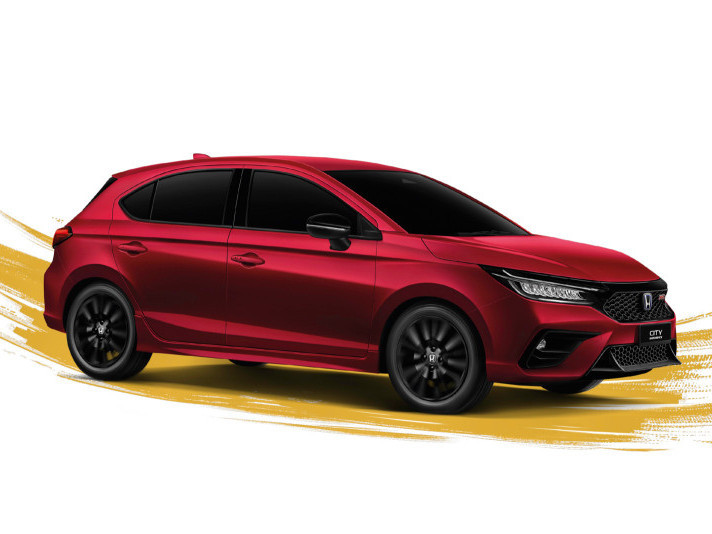
Honda City Hatchback Interior: Surprising Space Inside a Compact Body
WilliamJul 16, 2025
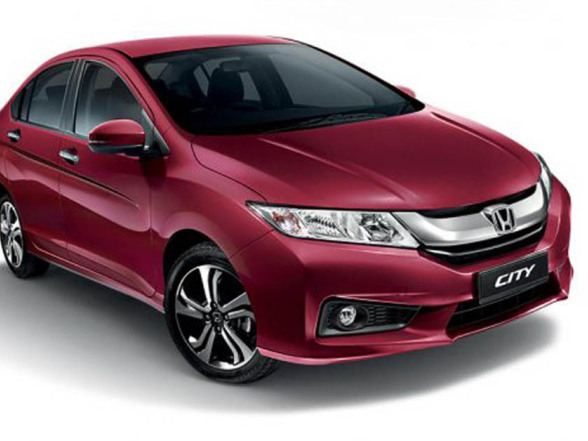
Should You Buy a Used Honda City GM6? – Get Idea Here!
RobertJun 23, 2025
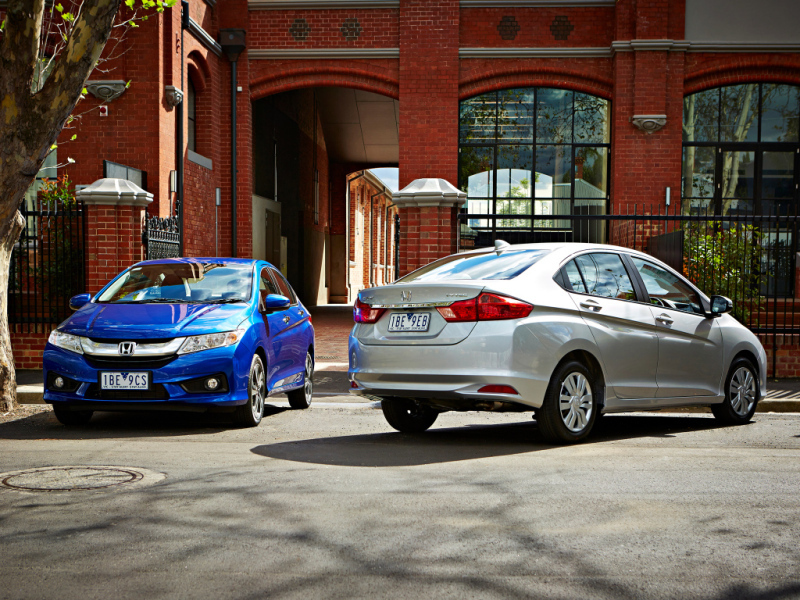
Is it worth buying a used Honda City GM7?
LienMar 7, 2025
View More
Pros
Cons