
Q
Is BMW 6 Series GT a good choice?
 SonJun 13, 2025, 11:07 AM
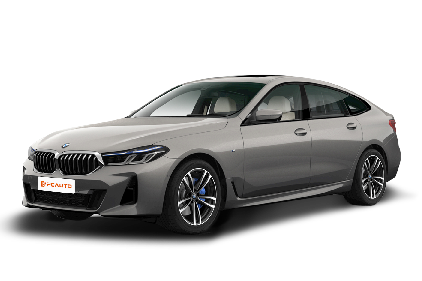
Yes, BMW 6 Series GT can be regarded as a great car. It features a sleek aerodynamic body and the iconic double-kidney grille. The long wheelbase gives it an elegant and dynamic stance. Its interior combines luxury and functionality. High-quality materials are used throughout the vehicle. The seats are comfortable and offer good support. The front seats are power-adjustable, and the rear bench can usually be split and folded to increase the flexibility for carrying cargo. The cabin is quiet, providing a peaceful driving experience.
In terms of power, it is equipped with a 2.0-liter turbocharged engine. It has excellent performance, smooth acceleration, and enough power to meet the needs of highway driving and overtaking. The car handles nimbly, and the suspension system offers a comfortable ride, effectively cushioning bumps and uneven road surfaces.
Safety is also one of its major advantages. It is equipped with a comprehensive set of advanced driver assistance systems, such as an anti-lock braking system, a vehicle stability control system, and multiple airbags.
However, like any vehicle, it has potential drawbacks. Some people may find that the fuel consumption of the gasoline engine is relatively high, and for a high-end brand like BMW, the maintenance cost may also be relatively high. But overall, if you're looking for a vehicle that combines comfort, performance, style, and safety, the 6 Series GT is a reliable choice.
Special Disclaimer: This content is published by users and does not represent the views or position of PCauto.
Related Q&A
Q
What is the fuel consumption of BMW 6 GT?
The fuel consumption of the BMW 6 GT is affected by various factors. Different vehicle models, driving habits, and road conditions can all cause variations in fuel consumption. The combined fuel consumption range revealed by the Ministry of Industry and Information Technology is between 6.8 and 8.2 liters per 100 kilometers. For the 2.0T models, the average fuel consumption per 100 kilometers for car owners is mostly around 8 to 10 liters, and for the 3.0T models, it's about 13.5 liters per 100 kilometers.
In actual driving, the fuel consumption is usually high on short - distance, congested urban roads. Approximately 13 liters of fuel are consumed per 1000 kilometers, which means the fuel consumption per 100 kilometers can reach around 13 liters. On the highway, it's relatively low. Some car owners reported that the fuel consumption per 100 kilometers on the highway can be as low as around 7 to 8 liters. If you have an aggressive driving style with frequent rapid acceleration and hard braking, the fuel consumption will increase. However, if you drive smoothly, anticipate road conditions in advance, and avoid unnecessary acceleration and deceleration, your vehicle can achieve relatively lower fuel consumption.
 XonJun 13, 2025
Q
What's the height of BMW 6 Series GT?
The height of BMW 6 Series GT is 1,550 mm, which offers several advantages. In terms of exterior design, this height is paired with its 5,103 mm length, 1,904 mm width, and 3,070 mm wheelbase, creating well-proportioned lines. The fastback styling paired with this height shows an elegant but sporty character, presenting smooth and natural contours when viewed from the side.
For interior space, the 1,550 mm height provides ample headroom for all occupants, ensuring both front and rear passengers enjoy comfortable seating—even during long journeys without feeling cramped. Moreover, this height, combined with its suspension tuning, maintains driving stability while also ensuring good ground clearance, allowing the vehicle to handle common road conditions with ease.
 VonJun 13, 2025
Q
What engine is equipped by the 2018 BMW 6 GT?
The 2018 BMW 6 GT is powered by a 2.0T inline 4-cylinder turbocharged engine, part of BMW's modular B-series engines with the designation B48B20B. This engine delivers a maximum power output of 190 kW, achievable between 5,000 to 6,500 rpm, while its peak torque of 400 N·m is available from 1,550 rpm and sustained up to 4,400 rpm.
Incorporating advanced technologies, it adopts direct fuel injection for precise spray patterns that enable efficient combustion, enhancing power delivery while reducing fuel consumption. The use of aluminum alloy for both the cylinder head and block ensures structural strength while minimizing engine weight, resulting in reduced vehicle load and more responsive acceleration.
Paired with this engine is an 8-speed automatic transmission from German manufacturer ZF, renowned for its smooth gear shifts and seamless driving experience. It promptly downshifts when additional power is demanded, keeping the engine within its optimal rpm range for efficient power output.
 UonJun 13, 2025
Q
What is the waiting period for BMW 6 Series GT?
The waiting period for BMW 6 Series GT can vary significantly. If the dealer has your desired specific model and configuration in stock, you might be able to drive it home within a few days to a week. However, if it's not available in inventory, the waiting period becomes more uncertain.
If you need to order the model from the manufacturer or request customizations according to your preferences, the waiting time will be extended. Under normal circumstances, it generally takes around one to two months. But during peak sales seasons or production bottlenecks, the wait could be stretched to two to three months or even longer.
Factors such as the model's popularity, the features you select, the complexity of customizations, and current production and supply chain conditions all play a role. For the most accurate estimate, it's best to consult your local BMW dealer directly. They can provide detailed information based on current inventory and production schedules.
 ZonJun 13, 2025
Q
Is BMW 6 Series GT equipped with framless doors?
Yes, the BMW 6 Series GT is equipped with frameless doors. Frameless doors are one of the most eye - catching features of this model, giving its exterior a perfect blend of style and sportiness. When the doors are closed, they are smoothly integrated with the overall vehicle design, enhancing the car's sleek lines. And when the doors are opened, the frameless design showcases elegance and uniqueness. This design element not only enhances the vehicle's aesthetic appeal but also reflects BMW's commitment to creating cars with distinctive exteriors. Coupled with features like a large panoramic sunroof, spacious interior, and a powerful engine, the frameless indeed make the 6 Series GT stand out in the executive sedan segment, combining luxury, performance, and style.
 YonJun 13, 2025
Q
What is the full name of BMW 6 Series GT?
The full name of BMW 6 Series GT is BMW 6 Series Gran Turismo. "Gran Turismo" can be directly translated as "Grand Tour" in English, which indicates that the 6 Series GT is the luxury touring version of BMW sedans. This model combines the features of SUVs, coupes, and station wagons. It boasts a sleek fastback design, frameless doors, and an electric spoiler. Compared with ordinary sedans, it offers more interior space and greater practicality. Its trunk is spacious and can be further expanded by folding down the rear seats. The 6 Series GT provides a comfortable long - distance driving experience and is suitable for both daily commuting and long - distance travel.
 RonJun 13, 2025
Q
What is the price of BMW 6 Series GT?
The price of the BMW 6 Series Gran Turismo is roughly between RM478,000 and RM540,000 (the exact price may vary depending on the model year, configuration, and dealership discount policies). This luxury hatchback sedan is available in two main versions, the 630i GT and the 640i xDrive GT, which are respectively equipped with a 2.0L turbocharged four - cylinder engine (258PS) and a 3.0L turbocharged inline - six engine (340PS), both paired with an 8 - speed Steptronic automatic transmission, offering smooth and powerful performance.
Since the 6 Series GT was discontinued in 2020, if there are still new car inventories in the market, there may be additional price discounts. However, if you choose a used or BMW Premium Selection (officially certified pre - owned) car, the price will be relatively lower (depending on the vehicle's condition and year). It is recommended to contact authorized BMW Malaysia dealers (such as Quill Automobiles) to inquire about the latest quotes. You can also find out if there are any exclusive loan programs or package deals to better fit your budget.
Although the 6 Series GT is not the most popular model in Malaysia, with its unique coupe roofline, spacious rear seating area, and luxurious interior, it remains a distinctive choice that combines practicality and style.
 TonJun 13, 2025
Popular Cars
Model Year
Car Compare
Car Photo
Related Models
 Cars
CarsLatest Q&A
Q
Is AMT similar to automatic?
There are significant differences between AMT transmissions and automatic transmissions (AT) in terms of core structure and driving experience. AMT is essentially an electronically automated version of a manual transmission, simulating manual clutch operation and gear shifting through a computerized control system while retaining the gear set structure of manual transmissions. As a result, it offers higher transmission efficiency, with fuel consumption approximately 8%-12% lower than AT, making it particularly suitable for highway or long-distance driving. However, it may exhibit jerking similar to manual transmissions during low-speed gear shifts, especially noticeable in congested traffic conditions.
AT transmissions rely on torque converters for power transfer, delivering smooth and seamless gear shifts that appeal to comfort-oriented users. However, their complex structure (incorporating planetary gear sets, hydraulic systems, etc.) results in higher maintenance costs. A single service may cost between 800 to 1,500 ringgit, whereas AMT only requires gear oil replacement at approximately 400 ringgit.
From a market perspective, AMT is predominantly used in budget vehicles or commercial models priced below 80,000 ringgit, while AT is typically featured in mid-to-high-end vehicles. Consumers should select based on actual needs: AMT suits those prioritizing fuel efficiency and low maintenance costs, while AT better serves those valuing comfort. Notably, recent advancements in AMT electronic control technology have significantly mitigated jerking issues, though test drives should still emphasize low-speed performance evaluation.
 AriaMar 26, 2026
Q
Which is better, DCT or AT?
DCT (Dual-Clutch Transmission) and AT (Automatic Transmission) each have their own advantages and disadvantages, and the choice should be based on personal driving needs. AT transmissions transfer power through a torque converter, offering excellent shift smoothness, making them suitable for urban commuting or novice drivers. However, they tend to have higher fuel consumption, and vehicles equipped with them are usually more expensive. DCT transmissions utilize a dual-clutch structure, featuring fast shift speeds and high power transmission efficiency, which provides a more direct driving experience—particularly suitable for users seeking a sporty feel. However, they may exhibit jerking at low speeds and have relatively high maintenance costs. If durability and comfort are priorities, AT is the more reliable choice; if power responsiveness and driving pleasure are preferred, wet DCT (such as Volkswagen DSG) performs better, though dry DCT models should be avoided in prolonged stop-and-go traffic conditions. Additionally, CVT transmissions excel in smoothness and fuel efficiency, making them ideal for daily commuting, but they lack driving excitement. It is recommended to test-drive before purchasing, as tuning varies significantly across brands, and real-world experience is more important than theoretical specifications.
 FlutteringMar 26, 2026
Q
Is Amt good or bad?
AMT gearboxes have a significant cost advantage in the local market, typically being around 5,000 Ringgit cheaper than models equipped with conventional automatic transmissions. Their fuel efficiency is comparable to manual transmissions, resulting in long-term fuel savings. Featuring a straightforward design, they achieve transmission efficiency exceeding 90% with relatively low maintenance costs, making them ideal for practicality-oriented consumers. However, their shifting logic contains inherent limitations: gear changes between 1st and 2nd cause 0.3-0.5 second power interruptions, while unintended upshifts on inclines may reduce engine speed by 15%-20%, compromising driving smoothness. For urban commuters or budget-conscious buyers, AMT offers excellent value, though those prioritizing premium driving dynamics should consider alternative transmission types. Some domestic models like the Perodua Axia employ enhanced AMT systems, where optimized shift programming has reduced gearshift shock by approximately 30%.
 RainbowsMar 26, 2026
Q
Which gives better mileage, CVT or AMT?
From the perspective of fuel economy, CVT transmissions generally perform better under urban driving conditions. Their continuously variable design allows the engine to consistently operate within the optimal speed range, significantly reducing fuel consumption during frequent starts and stops. Test data shows that their fuel consumption in urban driving conditions is 10% to 15% lower than that of comparable models. AMT transmissions, on the other hand, inherit the high transmission efficiency of manual transmissions, delivering fuel efficiency close to manual transmissions during high-speed cruising. This makes them particularly suitable for long-distance driving in large-displacement vehicles. However, due to power interruption during gear shifts, their overall fuel consumption may be 5% to 8% higher than CVTs.
The difference in fuel-saving characteristics between the two transmissions stems from their technical principles: CVTs achieve continuous variability through steel belts and pulleys, eliminating the fixed gear ratio limitations of traditional transmissions; AMTs simulate manual gear changes via electronic control systems while maintaining the mechanical efficiency of gear transmission. Notably, actual fuel consumption is also influenced by driving habits. Smooth acceleration and anticipatory deceleration can maximize the transmissions' fuel-saving potential. If the vehicle budget permits and urban commuting is the primary use, CVTs offer a more economical choice. For frequent highway driving with an emphasis on cost-effectiveness, AMTs are equally worth considering.
 RubyBlazeMar 26, 2026
Q
Which is cheaper, AMT or CVT?
In terms of gearbox cost, AMT is usually more economical than CVT. Essentially, AMT is a manual transmission equipped with an electronic control unit, featuring a simple structure and low maintenance costs. The unit price ranges from approximately 5,000 to 8,000 ringgit, making it suitable for budget-conscious consumers or those who prioritize long-term operating costs. CVT incurs higher manufacturing costs due to its precision steel belt transmission system and continuous variable transmission technology, with a unit price of about 7,000 to 10,000 ringgit. However, it delivers a smoother driving experience and superior fuel efficiency. The primary differences between the two lie in technical complexity: AMT retains the gear-shifting mechanism, resulting in noticeable shift shock; CVT achieves linear power output through stepless speed variation but requires periodic belt inspection and incurs higher maintenance expenses. For those prioritizing initial cost and basic transportation needs, AMT offers better value; if comfort and long-term fuel economy are priorities, CVT represents a more worthwhile investment. Note that actual prices may vary based on vehicle model, brand, and local supply chain factors.
 ShadowProwlMar 26, 2026
Related News

The all-new BMW i5 eDrive40 M Sport Pro lands in Malaysia
LienJan 16, 2026

Audi RS6 sedan version may return to compete fully with the BMW M5
WilliamNov 21, 2025

Neue Klasse platform's first mass-produced vehicle, the all-new BMW iX3 makes its debut, looks just like a concept car
LienSep 8, 2025

BMW X5 will become BMW's first model equipped with a hydrogen fuel cell, with a range of 504 kilometers
JamesSep 8, 2025

BMW's all-new iX3 to be unveiled on September 5, built on the Neue Klasse platform
Kevin WongSep 1, 2025
View More
Pros
Cons