
Q
What is Perodua Alza? Here's the Full Introduction for You
 FireflyGlowTracerJul 15, 2025, 10:23 AM
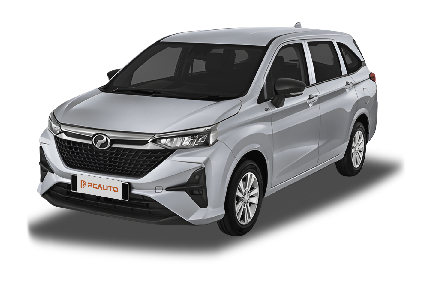
The Perodua Alza is a 7-seater compact MPV introduced by Perodua and is highly popular in the Malaysian market. It features a fashionable design. Although the body is compact, the interior space is quite roomy, and the three rows of seats offer multiple arrangement options. This car is equipped with a 1.5L naturally aspirated engine paired with a D-CVT gearbox. Despite not having extremely powerful performance, it has good fuel economy, with an official combined fuel consumption of 4.6L per 100km, making it suitable for daily use and long-distance trips.
In terms of safety performance, it is equipped with a number of safety systems, such as ABS anti-lock braking, vehicle stability control, lane departure warning, and autonomous emergency braking. There are also six airbags, providing all-round protection for passengers. Inside the car, the front air - conditioning system is a manual single - zone one with digital control and memory functions. Rear - air conditioning is standard. The seat design of some models is flexible, which is convenient for passengers to adjust and increase luggage space.
Regarding the price, it varies among different versions. For example, the price of the 2023 Perodua Alza 1.5 X is RM 62,500, the 1.5 H is RM 68,000, and the 1.5 AV is RM 75,500. Thanks to its reasonable price, reliable brand, and excellent after - sales service, it has become a popular choice for many Malaysian families when buying a car.
Special Disclaimer: This content is published by users and does not represent the views or position of PCauto.
Related Q&A
Q
What was the fuel economy of Alza 2018?
The 2018 Alza delivers average fuel economy. Its 1.5-liter naturally aspirated engine paired with a 4-speed automatic transmission returns a combined fuel consumption of approximately 6.5 to 7.0 liters per 100 kilometers. Actual figures may vary depending on driving habits, road conditions, and vehicle maintenance. As a family MPV, its fuel efficiency is par for the course in its class, making it suitable for daily commuting and family use.
If owners want to improve fuel efficiency, they can maintain a steady driving speed, avoid sudden acceleration and hard braking, and regularly replace engine oil and air filters. These simple tips not only help save fuel but also extend engine life.
Additionally, with advancements in automotive technology, hybrid and fully electric models have seen significant improvements in fuel economy in recent years. If fuel consumption is a top priority, these new-technology vehicles are worth considering. However, as an affordable and practical option, the Alza still meets the daily needs of most families.
 JopNov 12, 2025
Q
What are the dimensions of the Alza 2018?
The 2018 Alza measures 4270mm in length, 1695mm in width, and 1600mm in height, with a wheelbase of 2750mm. As a compact MPV, these dimensions offer nimble handling for city driving while ensuring practical interior space, making it ideal for family use. It has a ground clearance of 160mm, which can handle regular road conditions, and a 42-liter fuel tank that meets the needs of daily commuting and short to medium-distance trips. For some extra context, the 2018 Alza uses a front-engine, front-wheel-drive layout. This design helps maximize interior space, especially when it comes to arranging the second and third-row seats. While the third row is more suited for kids or short rides, the overall space performance is still competitive in its class. Additionally, it weighs around 1.2 tons and is paired with a 1.5-liter naturally aspirated engine, striking a good balance between fuel efficiency and power output – perfect for consumers who value practicality and economy.
 HopNov 12, 2025
Q
How many seats does the Alza 2018 have?
The 2018 Alza is a 7-seater compact MPV with a 2+3+2 three-row seating configuration, ideal for families or group outings. The second-row seats slide forward and backward to boost flexibility, while the third row is best suited for kids or short trips. It’s pretty good at space utilization – there’s still basic storage in the trunk when the third row is upright, and folding it down expands cargo capacity even more. The 2018 Alza comes with a 1.5L naturally aspirated engine paired with a 4-speed automatic transmission, focusing on affordability and practicality, with fuel economy that fits daily commuting needs. Among its peers, the seat functions lean into utility – like the split-folding second row, which makes loading longer items easier. Just keep in mind, legroom in the third row might feel a bit tight for adults, so a test drive is recommended. These compact MPVs are popular in the local market because they blend car-like driving feel with the ability to carry multiple people, perfect for budget-conscious buyers who need a 7-seater.
 GopNov 12, 2025
Q
What colors did the Alza 2018 come in?
The 2018 Alza comes with a variety of color options, including Pearl White, Metallic Silver, Metallic Gray, Metallic Black, and Red. These colors are not only classic and timeless but also cater to different consumers' personalized needs. Pearl White and Metallic Silver are the more popular choices because they hide dirt well and are easy to maintain, making them perfect for daily use. On the other hand, Metallic Black and Red give off a sportier vibe, ideal for owners who want a stylish look. Beyond just aesthetics, color choice can also affect a car's resale value. Generally, neutral colors like white and silver are more sought-after in the used car market and tend to hold their value better. Additionally, different colored paints have slight differences in maintenance. Dark-colored paints show scratches more easily and require more frequent waxing and care, while light-colored paints are relatively low-maintenance. If you're considering buying this car, you can choose the right color based on your personal preference and actual usage needs. Also, remember to regularly maintain the paint to keep the car in good condition.
 FopNov 12, 2025
Q
What changes were made to Alza in 2018?
The 2018 Alza gets minor upgrades focused on styling and features. The front end gets a sleeker chrome grille, and new LED daytime running lights boost visibility. Some higher trims also score fresh alloy wheel designs. Inside, the practical layout stays, but seat materials are updated and storage spaces are tweaked. Certain versions add a multifunction steering wheel and an upgraded sound system. Under the hood, it still runs the 1.5L naturally aspirated engine paired with a 4AT gearbox, but the tuning improves low-speed smoothness. Safety-wise, dual airbags and ABS+EBD come standard across the range, while the top trim adds a reverse camera. Notably, this refresh focused on better sound insulation materials, which does a better job of keeping wind noise in check at highway speeds. For used car shoppers, the 2018 model holds strong value on the used market thanks to its reliable reputation and low maintenance costs. Just make sure to check the transmission condition closely—it's the component that tends to need the most attention in this lineup.
 EepNov 12, 2025
Q
What engine options were available in Alza 2018?
The 2018 Alza comes with two engine options: a 1.5-liter 4-cylinder naturally aspirated engine (code 3SZ-VE) and a 1.5-liter 4-cylinder naturally aspirated Dual VVT-i engine (code 1NZ-FE), both known for their reliability and fuel efficiency. The 3SZ-VE engine puts out 104 horsepower and 136 Nm of peak torque, while the 1NZ-FE is slightly more powerful with 107 horsepower and 141 Nm of peak torque. Both are paired with a 4-speed automatic transmission, which works well for city driving. As a family MPV, the Alza's engines prioritize smoothness and durability, making it ideal for daily family use. It also has relatively low maintenance costs and is easy to repair. If you're after more power, keep an eye on newer models—these days, a lot of brands are adding turbocharging or hybrid tech to boost performance and fuel efficiency. But the 2018 Alza still focuses on practicality and affordability, perfect for budget-conscious buyers who value usefulness.
 DipNov 12, 2025
Q
Does the Alza 2018 have good reviews?
The 2018 Alza, as a practical and budget-friendly MPV, generally gets positive reviews, especially suited for family users. Its strengths lie in good space flexibility and fuel efficiency. While the third-row seats are a bit tight, they're acceptable for short trips. The 1.5L engine paired with a 4AT transmission is a mature powertrain with low maintenance costs. The interior focuses on functionality, with materials that meet expectations for its price range. However, in terms of features, it might feel a bit basic compared to competitors from the same era, lacking some modern tech gadgets. The suspension is tuned for comfort, ideal for city driving, but there's noticeable body roll when cornering at higher speeds. It holds its value moderately well in the used car market. As a family runabout, this car checks the boxes, but if you're after better driving dynamics or more tech, you might want to look elsewhere. Potential buyers should definitely test drive it to see if the space and handling fit their needs.
 CupNov 12, 2025
Q
Where was the Alza 2018 manufactured?
The 2018 Alza rolled off the production line at the Karawang plant in Indonesia. As a practical and budget-friendly MPV, it’s won over plenty of family buyers with its flexible interior layout and reliable performance. The main reason it’s built in Indonesia? The region’s well-established manufacturing system and supply chain advantages, which let it meet the needs of Southeast Asian markets. It’s worth mentioning that the 1.5-liter engine under the hood strikes a nice balance between fuel efficiency and power. Plus, with its 7-seat setup, it’s perfect for daily family use or small group getaways. In local markets, its relatively low maintenance costs and ample parts supply further boost its value for money. For consumers considering a used car, the 2018 Alza remains a solid choice—its durability and practicality have stood the test of time, making it capable of meeting most families’ travel needs.
 ShiningNov 12, 2025
Q
What is the fuel consumption of Alza 2018?
Based on official figures and owner feedback, the 2018 Alza's fuel economy for the 1.5L automatic variant sits around 6.5 to 7.2 liters per 100 kilometers combined. Your actual numbers will vary depending on driving habits, road conditions, and how well you maintain the vehicle – the manual transmission version might be slightly more efficient. Power comes from a 1.5L DVVT naturally aspirated engine paired with either a 4-speed auto or 5-speed manual gearbox. Fuel efficiency is right in the mainstream for its class of MPVs, making it a solid pick for family daily use. To squeeze out better mileage, keep up with regular air filter and spark plug maintenance, check tire pressures often, and avoid sudden acceleration or hard braking. It's also worth noting that MPVs, with their heavier bodies and higher wind resistance, typically drink a bit more fuel than sedans with the same engine size – that's just the nature of the beast. When choosing, you've gotta balance interior practicality against fuel costs.
 TwilightNov 12, 2025
Q
What is the price of Toyota Zenix 2023?
The 2023 Toyota Zenix is priced between approximately RM 140,000 and RM 170,000 in the Malaysian market, depending on the variant and specifications. Actual prices may vary slightly based on regional dealer promotions or optional extras. Positioned as Toyota's versatile family MPV, the Zenix comes with either a 2.0-liter naturally aspirated engine or a 1.8-liter hybrid powertrain, striking a balance between fuel efficiency and performance. Inside, you'll find a large touchscreen display, smart connectivity features, and Toyota's latest TSS safety suite—all tailored to meet family needs.
It's worth noting that Malaysian MPV buyers typically cross-shop rivals like the Honda BR-V or Mitsubishi Xpander. However, the Zenix holds its own in this segment, leveraging Toyota's strong brand reputation and the added appeal of hybrid technology. If you're in the market, I'd recommend checking with authorized dealers for the latest quotes and promotional packages. Be sure to request a test drive too—you'll want to experience firsthand the hybrid system's smooth power delivery and quiet operation, trends that are quickly gaining traction in Malaysia's automotive landscape.
 RubyRedFlameOct 14, 2025
Popular Cars
Model Year
Car Compare
Car Photo
Related Models
 Cars
CarsLatest Q&A
Q
Is AMT similar to automatic?
There are significant differences between AMT transmissions and automatic transmissions (AT) in terms of core structure and driving experience. AMT is essentially an electronically automated version of a manual transmission, simulating manual clutch operation and gear shifting through a computerized control system while retaining the gear set structure of manual transmissions. As a result, it offers higher transmission efficiency, with fuel consumption approximately 8%-12% lower than AT, making it particularly suitable for highway or long-distance driving. However, it may exhibit jerking similar to manual transmissions during low-speed gear shifts, especially noticeable in congested traffic conditions.
AT transmissions rely on torque converters for power transfer, delivering smooth and seamless gear shifts that appeal to comfort-oriented users. However, their complex structure (incorporating planetary gear sets, hydraulic systems, etc.) results in higher maintenance costs. A single service may cost between 800 to 1,500 ringgit, whereas AMT only requires gear oil replacement at approximately 400 ringgit.
From a market perspective, AMT is predominantly used in budget vehicles or commercial models priced below 80,000 ringgit, while AT is typically featured in mid-to-high-end vehicles. Consumers should select based on actual needs: AMT suits those prioritizing fuel efficiency and low maintenance costs, while AT better serves those valuing comfort. Notably, recent advancements in AMT electronic control technology have significantly mitigated jerking issues, though test drives should still emphasize low-speed performance evaluation.
 AriaMar 26, 2026
Q
Which is better, DCT or AT?
DCT (Dual-Clutch Transmission) and AT (Automatic Transmission) each have their own advantages and disadvantages, and the choice should be based on personal driving needs. AT transmissions transfer power through a torque converter, offering excellent shift smoothness, making them suitable for urban commuting or novice drivers. However, they tend to have higher fuel consumption, and vehicles equipped with them are usually more expensive. DCT transmissions utilize a dual-clutch structure, featuring fast shift speeds and high power transmission efficiency, which provides a more direct driving experience—particularly suitable for users seeking a sporty feel. However, they may exhibit jerking at low speeds and have relatively high maintenance costs. If durability and comfort are priorities, AT is the more reliable choice; if power responsiveness and driving pleasure are preferred, wet DCT (such as Volkswagen DSG) performs better, though dry DCT models should be avoided in prolonged stop-and-go traffic conditions. Additionally, CVT transmissions excel in smoothness and fuel efficiency, making them ideal for daily commuting, but they lack driving excitement. It is recommended to test-drive before purchasing, as tuning varies significantly across brands, and real-world experience is more important than theoretical specifications.
FlutteringMar 26, 2026Q
Is Amt good or bad?
AMT gearboxes have a significant cost advantage in the local market, typically being around 5,000 Ringgit cheaper than models equipped with conventional automatic transmissions. Their fuel efficiency is comparable to manual transmissions, resulting in long-term fuel savings. Featuring a straightforward design, they achieve transmission efficiency exceeding 90% with relatively low maintenance costs, making them ideal for practicality-oriented consumers. However, their shifting logic contains inherent limitations: gear changes between 1st and 2nd cause 0.3-0.5 second power interruptions, while unintended upshifts on inclines may reduce engine speed by 15%-20%, compromising driving smoothness. For urban commuters or budget-conscious buyers, AMT offers excellent value, though those prioritizing premium driving dynamics should consider alternative transmission types. Some domestic models like the Perodua Axia employ enhanced AMT systems, where optimized shift programming has reduced gearshift shock by approximately 30%.
 RainbowsMar 26, 2026
Q
Which gives better mileage, CVT or AMT?
From the perspective of fuel economy, CVT transmissions generally perform better under urban driving conditions. Their continuously variable design allows the engine to consistently operate within the optimal speed range, significantly reducing fuel consumption during frequent starts and stops. Test data shows that their fuel consumption in urban driving conditions is 10% to 15% lower than that of comparable models. AMT transmissions, on the other hand, inherit the high transmission efficiency of manual transmissions, delivering fuel efficiency close to manual transmissions during high-speed cruising. This makes them particularly suitable for long-distance driving in large-displacement vehicles. However, due to power interruption during gear shifts, their overall fuel consumption may be 5% to 8% higher than CVTs.
The difference in fuel-saving characteristics between the two transmissions stems from their technical principles: CVTs achieve continuous variability through steel belts and pulleys, eliminating the fixed gear ratio limitations of traditional transmissions; AMTs simulate manual gear changes via electronic control systems while maintaining the mechanical efficiency of gear transmission. Notably, actual fuel consumption is also influenced by driving habits. Smooth acceleration and anticipatory deceleration can maximize the transmissions' fuel-saving potential. If the vehicle budget permits and urban commuting is the primary use, CVTs offer a more economical choice. For frequent highway driving with an emphasis on cost-effectiveness, AMTs are equally worth considering.
 RubyBlazeMar 26, 2026
Q
Which is cheaper, AMT or CVT?
In terms of gearbox cost, AMT is usually more economical than CVT. Essentially, AMT is a manual transmission equipped with an electronic control unit, featuring a simple structure and low maintenance costs. The unit price ranges from approximately 5,000 to 8,000 ringgit, making it suitable for budget-conscious consumers or those who prioritize long-term operating costs. CVT incurs higher manufacturing costs due to its precision steel belt transmission system and continuous variable transmission technology, with a unit price of about 7,000 to 10,000 ringgit. However, it delivers a smoother driving experience and superior fuel efficiency. The primary differences between the two lie in technical complexity: AMT retains the gear-shifting mechanism, resulting in noticeable shift shock; CVT achieves linear power output through stepless speed variation but requires periodic belt inspection and incurs higher maintenance expenses. For those prioritizing initial cost and basic transportation needs, AMT offers better value; if comfort and long-term fuel economy are priorities, CVT represents a more worthwhile investment. Note that actual prices may vary based on vehicle model, brand, and local supply chain factors.
 ShadowProwlMar 26, 2026
Related News
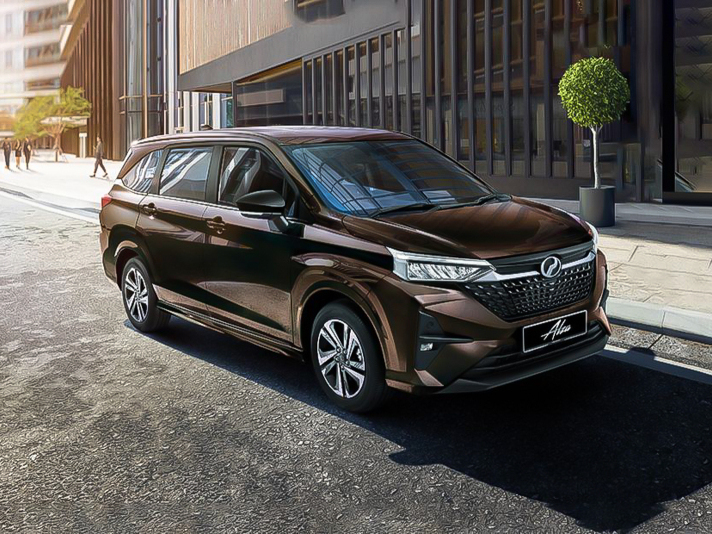
Perodua Alza Interior Design Revealed: Malaysia's Top Choice for Family MPV
AshleyJul 23, 2025
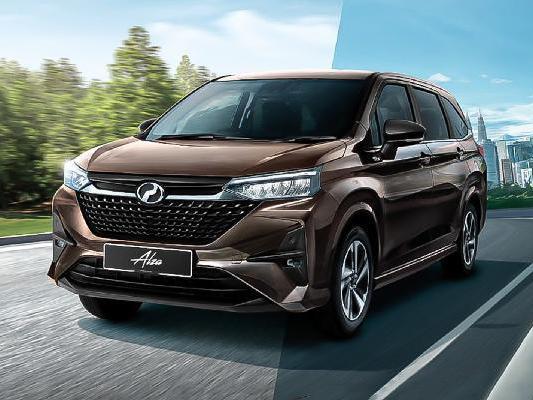
A Complete Guide to Perodua Alza: Must-Read Money-Saving Tips for Car Buyers
RobertMar 25, 2025

Produced by the same factory, why is there nearly a RM20k price difference? How to choose between Perodua Alza and Toyota Veloz?
JamesOct 21, 2024
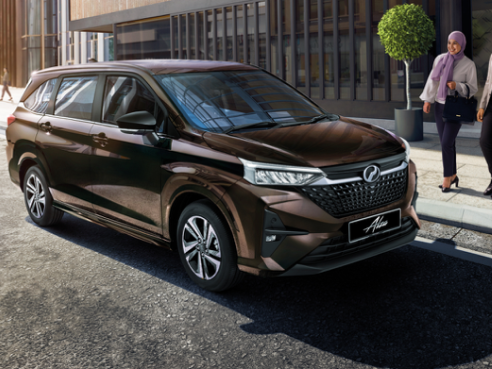
Perodua Alza: Priced from RM 62,500, the most cost-effective all-round MPV?
LienMay 31, 2024
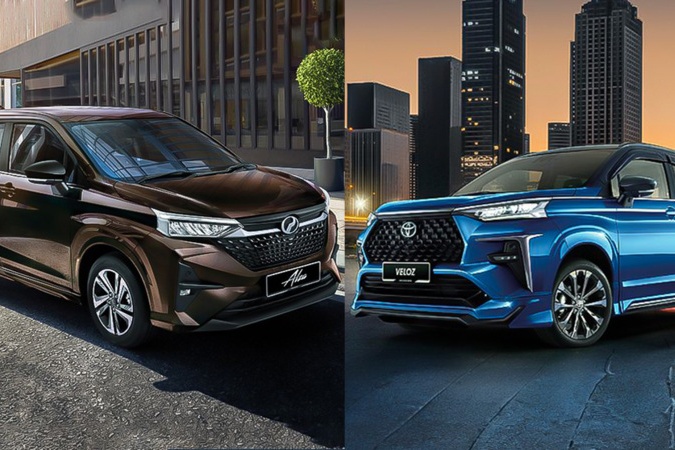
Where is the RM 20k Difference between Toyota Veloz and Perodua Alza? Which One is Your Favorite?
AshleyApr 10, 2024
View More
Pros
Cons