
Q
What are the differences between iX and iX M60?
 PamMay 12, 2025, 11:11 AM
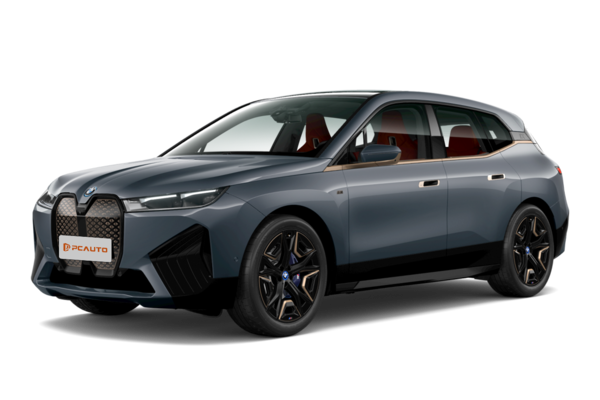
The iX is the leader of pure electric SUVs in BMW's new electrification era. It is regarded as the originator of BMW's pure electric SUVs. With an advanced design, it inherits many elements from the iNEXT concept car and has a drag coefficient of only 0.25Cd. The iX M60 belongs to the high-performance version of the iX series. Priced at RM 579,800, it is the flagship model. In terms of powertrain, it is equipped with a permanent magnet synchronous motor. The motor delivers a maximum horsepower of 619PS, with total power output of 455kW and peak torque of 1110N·m. The official 0-100km/h acceleration time is just 3.8 seconds, and the top speed reaches 250km/h. For exterior details, it features more refined "Titan Gold" trim elements. The carbon fiber body construction reduces weight while enhancing structural rigidity. In comparison, the iX M60 offers superior performance and a more distinctive, premium appearance, whereas the iX represents a more fundamental pure electric SUV model overall.
Special Disclaimer: This content is published by users and does not represent the views or position of PCauto.
Related Q&A
Q
Does the BMW iX M60 have air suspension?
The BMW iX M60 does not have air suspension. It is equipped with a double-wishbone independent suspension at the front and a multi-link independent suspension at the rear. These suspension systems are designed to achieve an optimal balance between ride comfort and handling performance. The front double-wishbone suspension effectively manages forces acting on the wheels during cornering and braking, enhancing steering precision. The rear multi-link suspension helps maintain stability and ride quality, adapting well to various road conditions. While air suspension in some other models offers adjustable ride height and damping characteristics to improve comfort and performance, the iX M60 focuses on the capabilities of its standard suspension setup to deliver a smooth and controlled driving experience.
 FopMay 12, 2025
Q
What's the weight of BMW iX M60?
A BMW iX M60 weighs 2,585 kg. Its weight is influenced by multiple factors, such as its large dimensions of 4,953 mm in length, 1,967 mm in width, and 1,969 mm in height, with a wheelbase of 3,000 mm. Its all-wheel-drive system with two permanent magnet synchronous motors also increases the weight. The vehicle's lithium-iron-phosphate battery, with a capacity of 111.5 kWh, significantly impacts the overall weight, as EV batteries are typically heavy. Additionally, robust safety and comfort features—such as a comprehensive airbag system, multi-zone climate control, and a premium audio system—further increase its total mass. This weight does not necessarily affect performance; in fact, the BMW iX M60 can reach a top speed of 250 km/h and accelerate from 0 to 100 km/h in just 3.8 seconds.
 EepMay 12, 2025
Q
What is the specification of the BMW iX M60 motor?
The BMW iX M60 is powered by permanent magnet synchronous motors. It adopts a dual-motor setup with front and rear placement. The motor specifications include a maximum output of 619 horsepower, with a combined power of 455 kW and peak torque of 1,110 N·m. These potent motors enable exceptional dynamic performance, allowing the vehicle to accelerate from 0 to 100 km/h in just 3.8 seconds (as officially claimed) and reach a top speed of 250 km/h.
The all-wheel-drive system enhances BMW iX M60's traction and handling performance across various road conditions. The combination of these motor parameters and the drivetrain delivers a smooth, powerful, and efficient driving experience, making the BMW iX M60 a perfect choice for those consumers seeking a high-performance electric executive sedan.
 CupMay 12, 2025
Q
What's the top speed of the iX M60?
The BMW iX M60 has a top speed of 250 km/h, which shows the excellence of its powertrain system. Equipped with dual motors - specifically permanent magnet synchronous motors - working together to deliver exceptional power output, the iX M60 achieves such top speed through its 619 horsepower, 455 kW combined system power, and remarkable 1,110 N·m of torque.
The outstanding top speed not only delivers enjoyable driving experience but also shows BMW's engineering excellence in the electric vehicle domain. The vehicle's suspension and braking systems - including the front double-wishbone independent suspension, rear multi-link independent suspension, and ventilated disc brakes throughout - are specifically designed to handle the forces and demands of high-speed operation, ensuring both safety and handling precision are maintained even at maximum velocity.
 AidMay 12, 2025
Q
What are the differences between the iX M60 and M70?
There are several differences between the BMW iX M60 and M70. In terms of power performance, the iX M60's electric motor delivers a maximum output of 619PS, while the M70 generates a more powerful performance of 650 horsepower. Regarding exterior design, the new iX's closed front grille features a revised surface pattern that has changed from diamond to diagonal design, while the M70 adopts horizontal slat details similar to those on the new BMW M3/M4. Besides that, an LED surround light strip has been added to the front grille as standard equipment on the M70, while being optional for other variants. For wheels, the new BMW iX is equipped with 20-inch rims, with 21-inch and 22-inch options available, while the M70 introduces an optional 23-inch rim for the first time. In terms of range, the iX M60 has an official pure-electric range of 561km, while the M70 is estimated to achieve 302 miles (approximately 486km). Inside, the new BMW iX adopts a redesigned three-spoke circular steering wheel, replacing the previous polygonal two-spoke design. Additionally, the M70's M multifunction seats feature revised lateral bolstering and come equipped with a new heat pump air conditioning system, potentially casuing differences in overall configuration and driving experience.
 ZedMay 12, 2025
Q
Is the BMW iX M60 equipped with All Wheel Drive system?
Yes, the BMW iX M60 is equipped with All Wheel Drive (AWD). It is powered by a dual-motor setup with a Front+Rear (front and rear) motor layout, which enables all-wheel drive. The all-wheel drive system makes the power distribution of the vehicle more flexible, allowing all four wheels to receive driving force. On slippery roads, such as in rainy or snowy conditions, all-wheel drive can significantly improve the vehicle's traction and stability, making the vehicle's driving safer and more reliable. During acceleration, all-wheel drive can better transfer power to the road surface, fully enabling the vehicle's power performance and achieving more rapid acceleration. Therefore, the all-wheel drive system of the BMW iX M60 brings drivers a better driving experience and adaptability in various road conditions.
 WilMay 12, 2025
Q
What are the differences between BMW iX M60 and xDrive50?
The BMW iX M60 differs from the xDrive50 in many aspects. In terms of power performance, the iX M60's electric motor shows more powerful output and quicker accerleration with a maximum output of 619PS, total power rated at 455kW, peak torque reaching 1,110N·m and official 0-100km/h acceleration time of 3.8 seconds, while the xDrive50 generates 523 horsepower and achieves the acceleration in 4.6 seconds. Regarding range, the iX M60's official pure-electric range reaches 561km, whereas the xDrive50's WLTP-certified range extends up to 630km. In addition, the drag coefficient measures 0.26Cd for the iX M60 compared to the xDrive50's 0.25Cd. In terms of price, the iX M60 is Priced at RM 579,800. What's more, in exterior design details, as the model of M Performance, the iX M60 adopts blue brake calipers with M badging, showing a more athletic and sophisticated appearance. Both models offer unique features, your selection can be based on your priorities for performance, range, and other factors.
 UmaMay 12, 2025
Q
How long does it take to fully charge the BMW iX M60?
The BMW iX M60, as a high-performance all-electric SUV equipped with a large-capacity battery pack and fast-charging technology, its charging time depends on the charging method. When using a 50kW public fast charger, charging the battery from 10% to 80% takes approximately 1 hour and 30 minutes. With a more powerful 200kW fast-charging station, the same charging range can be achieved in about 35 minutes. For overnight slow-charging using an 11kW AC home wallbox, a full charge typically requires 10-11 hours.
Notably, to protect battery longevity, BMW's charging management system automatically reduces charging speed after reaching 80% capacity (particularly during high-power fast charging). Therefore, for long-distance travel, it's recommended to discontinue charging at 80% as this already provides sufficient range.
TedMay 12, 2025Q
What is the actual range of the BMW iX M60?
The official pure-electric cruising range of the BMW iX M60 is 561 kilometers. However, in actual use, its real cruising range is affected by various factors. For example, driving habit is an important factor. If the driving style is aggressive, with frequent rapid acceleration and sudden braking, the power consumption will increase and the cruising range will be shortened; smooth driving helps to improve the cruising performance. Road conditions are also a crucial factor. Frequent start-stop cycles in congested road or uphill driving increase the vehicle's energy consumption and reduce the cruising range, whereas on unobstructed highways or urban expressways, the cruising range is relatively closer to the official data. Additionally, temperature impacts its cruising range. In cold weather, battery performance declines, reducing the cruising range. In hot weather, prolonged use of air conditioning also consumes power and shortens the cruising range. In summary, the combination of multiple factors results in differences between the actual cruising range and the official data.
 SueMay 12, 2025
Q
Where is the BMW iX M60 made?
The BMW iX M60 is manufactured in Germany. BMW is a renowned German automotive manufacturer, and its vehicles are typically produced in Germany factories. German manufacturing is known for its high quality, precision, and advanced engineering, which are hallmarks of BMW's production processes. The company's factories are equipped with state-of-the-art technology and staffed by skilled workers who ensure each vehicle meets BMW's stringent standards. The BMW iX M60 benefits from this manufacturing excellence, with features such as its advanced electric drivetrain, robust build quality, and luxurious interior working together to create a premium vehicle. Moreover, German manufacturing also enables efficient production and quality control, ensuring that Malaysian customers who purchase the BMW iX M60 receive a top-tier product.
 RexMay 12, 2025
Popular Cars
Model Year
Car Compare
Car Photo
Related Models
 Cars
CarsLatest Q&A
Q
Is AMT similar to automatic?
There are significant differences between AMT transmissions and automatic transmissions (AT) in terms of core structure and driving experience. AMT is essentially an electronically automated version of a manual transmission, simulating manual clutch operation and gear shifting through a computerized control system while retaining the gear set structure of manual transmissions. As a result, it offers higher transmission efficiency, with fuel consumption approximately 8%-12% lower than AT, making it particularly suitable for highway or long-distance driving. However, it may exhibit jerking similar to manual transmissions during low-speed gear shifts, especially noticeable in congested traffic conditions.
AT transmissions rely on torque converters for power transfer, delivering smooth and seamless gear shifts that appeal to comfort-oriented users. However, their complex structure (incorporating planetary gear sets, hydraulic systems, etc.) results in higher maintenance costs. A single service may cost between 800 to 1,500 ringgit, whereas AMT only requires gear oil replacement at approximately 400 ringgit.
From a market perspective, AMT is predominantly used in budget vehicles or commercial models priced below 80,000 ringgit, while AT is typically featured in mid-to-high-end vehicles. Consumers should select based on actual needs: AMT suits those prioritizing fuel efficiency and low maintenance costs, while AT better serves those valuing comfort. Notably, recent advancements in AMT electronic control technology have significantly mitigated jerking issues, though test drives should still emphasize low-speed performance evaluation.
 AriaMar 26, 2026
Q
Which is better, DCT or AT?
DCT (Dual-Clutch Transmission) and AT (Automatic Transmission) each have their own advantages and disadvantages, and the choice should be based on personal driving needs. AT transmissions transfer power through a torque converter, offering excellent shift smoothness, making them suitable for urban commuting or novice drivers. However, they tend to have higher fuel consumption, and vehicles equipped with them are usually more expensive. DCT transmissions utilize a dual-clutch structure, featuring fast shift speeds and high power transmission efficiency, which provides a more direct driving experience—particularly suitable for users seeking a sporty feel. However, they may exhibit jerking at low speeds and have relatively high maintenance costs. If durability and comfort are priorities, AT is the more reliable choice; if power responsiveness and driving pleasure are preferred, wet DCT (such as Volkswagen DSG) performs better, though dry DCT models should be avoided in prolonged stop-and-go traffic conditions. Additionally, CVT transmissions excel in smoothness and fuel efficiency, making them ideal for daily commuting, but they lack driving excitement. It is recommended to test-drive before purchasing, as tuning varies significantly across brands, and real-world experience is more important than theoretical specifications.
FlutteringMar 26, 2026Q
Is Amt good or bad?
AMT gearboxes have a significant cost advantage in the local market, typically being around 5,000 Ringgit cheaper than models equipped with conventional automatic transmissions. Their fuel efficiency is comparable to manual transmissions, resulting in long-term fuel savings. Featuring a straightforward design, they achieve transmission efficiency exceeding 90% with relatively low maintenance costs, making them ideal for practicality-oriented consumers. However, their shifting logic contains inherent limitations: gear changes between 1st and 2nd cause 0.3-0.5 second power interruptions, while unintended upshifts on inclines may reduce engine speed by 15%-20%, compromising driving smoothness. For urban commuters or budget-conscious buyers, AMT offers excellent value, though those prioritizing premium driving dynamics should consider alternative transmission types. Some domestic models like the Perodua Axia employ enhanced AMT systems, where optimized shift programming has reduced gearshift shock by approximately 30%.
 RainbowsMar 26, 2026
Q
Which gives better mileage, CVT or AMT?
From the perspective of fuel economy, CVT transmissions generally perform better under urban driving conditions. Their continuously variable design allows the engine to consistently operate within the optimal speed range, significantly reducing fuel consumption during frequent starts and stops. Test data shows that their fuel consumption in urban driving conditions is 10% to 15% lower than that of comparable models. AMT transmissions, on the other hand, inherit the high transmission efficiency of manual transmissions, delivering fuel efficiency close to manual transmissions during high-speed cruising. This makes them particularly suitable for long-distance driving in large-displacement vehicles. However, due to power interruption during gear shifts, their overall fuel consumption may be 5% to 8% higher than CVTs.
The difference in fuel-saving characteristics between the two transmissions stems from their technical principles: CVTs achieve continuous variability through steel belts and pulleys, eliminating the fixed gear ratio limitations of traditional transmissions; AMTs simulate manual gear changes via electronic control systems while maintaining the mechanical efficiency of gear transmission. Notably, actual fuel consumption is also influenced by driving habits. Smooth acceleration and anticipatory deceleration can maximize the transmissions' fuel-saving potential. If the vehicle budget permits and urban commuting is the primary use, CVTs offer a more economical choice. For frequent highway driving with an emphasis on cost-effectiveness, AMTs are equally worth considering.
 RubyBlazeMar 26, 2026
Q
Which is cheaper, AMT or CVT?
In terms of gearbox cost, AMT is usually more economical than CVT. Essentially, AMT is a manual transmission equipped with an electronic control unit, featuring a simple structure and low maintenance costs. The unit price ranges from approximately 5,000 to 8,000 ringgit, making it suitable for budget-conscious consumers or those who prioritize long-term operating costs. CVT incurs higher manufacturing costs due to its precision steel belt transmission system and continuous variable transmission technology, with a unit price of about 7,000 to 10,000 ringgit. However, it delivers a smoother driving experience and superior fuel efficiency. The primary differences between the two lie in technical complexity: AMT retains the gear-shifting mechanism, resulting in noticeable shift shock; CVT achieves linear power output through stepless speed variation but requires periodic belt inspection and incurs higher maintenance expenses. For those prioritizing initial cost and basic transportation needs, AMT offers better value; if comfort and long-term fuel economy are priorities, CVT represents a more worthwhile investment. Note that actual prices may vary based on vehicle model, brand, and local supply chain factors.
 ShadowProwlMar 26, 2026
Related News

The all-new BMW i5 eDrive40 M Sport Pro lands in Malaysia
LienJan 16, 2026

Audi RS6 sedan version may return to compete fully with the BMW M5
WilliamNov 21, 2025

Neue Klasse platform's first mass-produced vehicle, the all-new BMW iX3 makes its debut, looks just like a concept car
LienSep 8, 2025

BMW X5 will become BMW's first model equipped with a hydrogen fuel cell, with a range of 504 kilometers
JamesSep 8, 2025

BMW's all-new iX3 to be unveiled on September 5, built on the Neue Klasse platform
Kevin WongSep 1, 2025
View More
Pros
Cons