
Q
What is the Reslae Value of Perodua Axia?
 OceanMistExplorerJul 09, 2025, 09:29 AM
As one of the best-selling entry-level models in Malaysia, the Perodua Axia shows relatively stable resale value in the used car market. This is mainly due to advantages such as the high vehicle ownership of the brand, low maintenance costs, and good fuel economy. Depending on factors like vehicle age, mileage, vehicle condition, and configuration, Axias that are one to three years old usually retain 60% to 75% of their original price, while those that are five years old are around 40% to 50%. The specific price also needs to refer to market supply and demand and maintenance records. In addition, the durability of the Axia and its extensive service network also support its resale value.
For consumers considering buying a used Axia, it is recommended to give priority to models with complete original factory maintenance records to ensure the vehicle condition. At the same time, pay attention to the configuration differences of minor facelifts in different years. For example, models after 2022 have upgraded safety features, and such updates may have a positive impact on the resale price. In the Malaysian used car market, economical small cars like the Axia usually have a fast turnover rate and are a practical choice for car buyers with limited budgets.
Special Disclaimer: This content is published by users and does not represent the views or position of PCauto.
Related Q&A
Q
What is Axia tyre size?
The tire sizes for the Perodua Axia vary depending on the specific trim level and model year. The most common spec you'll come across is 165/55 R14 – that's the standard fitment for most Axia variants, perfect for zipping around the city and saving on fuel costs.
If you step up to some of the higher - end trims, you might find 175/65 R14 tires instead. These tires offer a bit more grip and stability, especially when cornering or at higher speeds.
But picking tires isn't just about the numbers. You've got to pay attention to the tread pattern and rubber compound too. For daily commuters who mostly stick to city streets, a good all - season economy tire should be a good choice. On the other hand, if you're regularly hitting the highway for longer hauls, a touring or slightly higher - performance tire might be a better bet for that extra peace of mind.
Malaysia's weather is quite changeable, with sudden downpours. It's smart to choose tires with good water dispersion, such as those with deep grooves and a tread design that helps quickly channel water away, reducing the risk of hydroplaning on slick roads during the monsoon season.
Also, don't forget the basics: keeping an eye on your tire pressure and checking tread wear regularly. It's not just about making your tires last longer – it's a crucial safety thing too. Under - inflated or worn - out tires can cause problems, especially in the wet conditions mentioned above.
Thinking of upsizing your tires for a better look or performance? Just make sure whatever new size you choose is compatible with the Axia's stock setup. You don't want to throw off your speedometer accuracy or put extra strain on the suspension components. When in doubt, follow the manufacturer's recommendations – they know what works best for the car.
 HappyPigOct 23, 2025
Q
What is the top speed of Axia?
The Perodua Axia, a top pick among Malaysia's entry-level economy cars, maxes out at around 155 to 165 km/h. Your actual top speed might vary a bit depending on the model year and specs. Take the 2023 1.0L DVVT engine version, for example – it's smoother and more fuel-efficient, but when it comes to flat-out speed, it's pretty much on par with the earlier models.
Under the hood, you've got a 1.0L three-cylinder engine, and let's be real, this little guy's designed first and foremost for zipping around the city. That said, it still holds its own on the highway with steady power delivery. Just keep in mind, it's a lightweight car, so you'll definitely notice more wind noise when you're pushing those higher speeds. For safety and to keep that fuel gauge happy, sticking to a reasonable pace is the way to go.
For Malaysian buyers, the Axia's main draws are its wallet-friendly price tag, low maintenance costs, and impressive fuel economy – we're talking about an official 21km/L. It's perfect for daily runabouts. Now, if you're craving a bit more zip, you might want to check out rivals like the Proton Saga. Its 1.3L engine gives slightly stronger acceleration. But here's the thing: the Axia still has the edge when it comes to resale value and the backing of a solid brand service network.
 HappyTurkeyOct 23, 2025
Q
What kind of car is Axia?
The Perodua Axia stands as one of Malaysia's most beloved entry-level economy cars. Launched back in 2014 by homegrown brand Perodua, it's all about delivering stellar fuel efficiency and a wallet-friendly price tag, making it a top pick for zipping around the city or handling daily family duties. Under the hood, you'll find a 1.0-liter three-cylinder engine, paired with your choice of manual or automatic transmission. It's a fuel sipper too – official figures peg it at around 21km/L. The 2023 refresh upped the ante with the Advanced Safety Assist (ASA) 3.0 system, throwing in handy features like automatic emergency braking and lane departure warning to boost safety credentials.
What makes the Axia a hit with Malaysians? Start with that approachable starting price, hovering around RM38,600, plus low maintenance costs. Its compact dimensions – a tidy 3.7 meters in length – are perfectly suited to tight city streets and those all-too-common cramped parking spots. It's worth noting that the Axia shares its platform with the Toyota Agya and Daihatsu Ayla, so it inherits that solid Japanese reliability we all know. Perodua sweetens the deal further with a five-year warranty, giving owners extra peace of mind.
For Malaysian shoppers on a budget who still want the thrill of a new car – think fresh graduates or small families – the Axia is a seriously practical choice. Factor in the super low annual road tax (just RM20!) and its potential for some fun modifications, and it's easy to see why the Axia keeps rolling off dealer lots.
 HappyChickenOct 23, 2025
Q
What size engine is the Axia?
The Perodua Axia is powered by a 1.0-liter three-cylinder naturally aspirated engine, codenamed 1KR-VE. This mill features a DOHC (Double Overhead Camshaft) setup, churning out a maximum of 67PS at 6,000rpm and 91Nm of torque at 4,400rpm. It's also equipped with Dual VVT-i (Variable Valve Timing with intelligence) technology, which plays a big part in its impressive fuel efficiency – Perodua claims it can hit 22km per liter. That makes it a really solid choice for zipping around Malaysian cities.
As Perodua's entry-level offering, the Axia's engine might not be the biggest in displacement, but don't let that fool you. Thanks to the car's lightweight design and some smart powertrain tuning, it's more than up to the task of daily driving. This is especially true in Malaysia's often congested traffic, where a smaller engine actually shines – it sips less fuel and puts out fewer emissions, which is a win-win.
Another thing worth noting is that this 1KR-VE engine isn't unique to the Axia; it also powers other Perodua models like the Myvi 1.0 variant. That means it's a tried-and-tested unit with a reputation for reliability. On top of that, maintenance and repair costs are generally quite reasonable. All in all, it makes the Axia a very compelling option for Malaysian buyers who are keeping a close eye on their budget.
 HappyDuckOct 23, 2025
Q
Is Axia 3 cylinder?
Right, the Perodua Axia comes with a 1.0-liter three-cylinder engine, and this little powerplant is all about fuel efficiency and a compact design – perfect for city driving. Especially here in Malaysia, it delivers decent performance while keeping fuel consumption low, which is a big plus in our traffic. Compared to a traditional four-cylinder, losing one cylinder makes the three-pot simpler, lighter, and that helps trim overall vehicle weight and boost fuel economy. Now, sure, three-cylinders can sometimes have a bit more vibration, but modern tech like balance shafts has really ironed that out these days. For Malaysian buyers watching their budget and wanting something economical for daily commuting, the Axia's three-cylinder is a solid, practical pick. It checks all the boxes for local emissions standards and keeps running costs down, even in stop-and-go jams. If you're worried about how smooth it is, though, I'd definitely suggest a test drive first. After all, how a car feels is pretty personal.
 HappyGoatOct 23, 2025
Q
What is the new Axia 2019?
Launched back in 2019, the Perodua Axia remains one of Malaysia's go-to choices for an affordable entry-level A-segment car. It's all about being easy on the wallet and packing solid value, making it a top pick for zipping around the city or running family errands.
Visually, it got some nips and tucks to keep things fresh – think a more modern front grille and LED daytime running lights that give it a younger, sharper look. Step inside, and the 2019 Axia upped its game with an upgraded sound system and comfier seat materials. Higher-spec trims even throw in a multifunction steering wheel and touchscreen infotainment, making those drives a bit more enjoyable.
Under the hood, you're looking at a 1.0L three-cylinder engine paired with either a 4-speed auto or 5-speed manual. The real star here? Fuel efficiency. It's a champ at sipping petrol, which is exactly what Malaysian buyers want when it comes to keeping running costs low.
Safety-wise, all Axias come standard with dual airbags, ABS, and EBD. Some models take it up a notch with Vehicle Stability Control (VSC) and Traction Control (TRC), adding that extra peace of mind on the road.
As Perodua's hometown hero, the 2019 Axia stays true to the series' roots of practicality and dependability, while those little upgrades here and there cater to folks wanting a bit more quality. If you're a Malaysian shopper on a budget but still want something that's fuel-efficient, easy to drive, and cheap to maintain, the 2019 Axia is definitely one to check out.
 HappySnakeOct 23, 2025
Q
What Segment is Perodua Axia?
The Perodua Axia belongs to the A-Segment vehicles in the Malaysian market, which is the most entry-level microcar category. It mainly targets consumers with limited budgets who prioritize fuel economy. Its body size is compact (about 3,640mm in total length and a wheelbase of 2,450mm). It is equipped with a 1.0L three-cylinder engine and paired with a D-CVT gearbox, highlighting the flexibility for urban commuting and the advantage of low cost. The official fuel consumption data shows that it can travel about 22 kilometers per liter of gasoline, meeting the needs of Malaysian consumers for economical and practical small cars.
In terms of extended knowledge, Malaysia's automobile classification standards usually refer to the European system. Besides the Axia, A-Segment models also include the Proton Saga and other vehicles. These cars are characterized by their affordable prices (the starting price of the Axia is around RM22,000 to RM49,000) and are suitable for narrow road environments. However, their safety configurations have been significantly improved in recent years. For example, all models of the 2023 new Axia come standard with ABS + EBD and dual airbags, and the top - end version is even equipped with the ASA 3.0 advanced safety assistance system, indicating that entry - level car models are gradually upgrading their technological equipment. Consumers can choose different configuration versions according to their budgets. At the same time, it is recommended to test - drive and compare the Proton Iriz in the same class or second - hand B - Segment models before purchasing a car to comprehensively evaluate the balance between space and functionality.
 CrystalGazeVisionaryJul 9, 2025
Q
How Many CC is Perodua Axia?
The Perodua Axia is one of the most popular entry - level compact cars in Malaysia. The engine displacement varies across different versions. Currently, the latest model of the Axia is equipped with a 1.0 - liter three - cylinder naturally aspirated engine, with a specific displacement of 998cc. This is a common engine configuration for compact economy cars. This engine emphasizes fuel efficiency and is highly suitable for city commuting and daily use.
For Malaysian consumers, the low displacement of the Axia not only means lower fuel consumption and road tax but also meets the domestic demand for economical and practical vehicles. It's worth noting that engine displacement (CC) doesn't directly determine a vehicle's power performance. Other factors such as horsepower, torque, and gearbox tuning also need to be comprehensively considered. Although the Axia has a relatively small displacement, its lightweight body design and optimized transmission system ensure sufficient power for daily driving.
Moreover, the Malaysian market is quite sensitive to the displacement of compact cars. Therefore, engines around 1.0 liters are very common locally. They can balance performance and cost and are also suitable for the local road conditions and fuel price environment.
 DreamySundaysRelaxerJul 9, 2025
Q
What is the Engine in Perodua Axia?
The Perodua Axia is a highly popular economy car in the Malaysian market. It is equipped with a 1.0-liter three-cylinder naturally aspirated engine, model number 1KR-DE. This engine was jointly developed by Perodua and Toyota of Japan. It adopts the double overhead camshaft (DOHC) and variable valve timing (VVT-i) technologies. The maximum power is 67 horsepower and the maximum torque is 91 Nm. It is paired with a 4-speed automatic transmission or a 5-speed manual transmission. The overall performance is smooth and it boasts excellent fuel economy, making it very suitable for urban commuting.
The design of this engine focuses on low fuel consumption and low emissions, meeting the environmental protection requirements of the Malaysian market. At the same time, it also reduces the daily usage cost for car owners. For readers who want to learn more about automotive knowledge, although three-cylinder engines may be slightly inferior to four-cylinder engines in terms of smoothness, their lightweight and high - efficiency features make them very popular in small - displacement models. The addition of VVT - i technology further optimizes power output and fuel efficiency, which are common technological trends in modern small - displacement engines.
CloverFieldsLoverJul 9, 2025Q
What is the Gearbox Type of Perodua Axia?
The transmission types of the Perodua Axia include manual transmission (MT) and continuously variable transmission (CVT). The 2023 Perodua Axia E 1.0 MT is equipped with an MT transmission, offering more direct gear - shifting control for drivers who prefer the manual handling feel and bringing a more engaging driving experience. On the other hand, models like the 2023 Perodua Axia 1.0 G, 1.0 X, 1.0 SE, and 1.0 AV are equipped with a CVT transmission. Its smooth gear changes can provide a more comfortable driving and riding experience and help improve fuel economy under specific operating conditions. The diverse transmission configurations fully meet the personalized needs of different consumers.
 MistyMeadowWalkerJul 9, 2025
Popular Cars
Model Year
Car Compare
Car Photo
Related Models
 Cars
CarsLatest Q&A
Q
Is AMT similar to automatic?
There are significant differences between AMT transmissions and automatic transmissions (AT) in terms of core structure and driving experience. AMT is essentially an electronically automated version of a manual transmission, simulating manual clutch operation and gear shifting through a computerized control system while retaining the gear set structure of manual transmissions. As a result, it offers higher transmission efficiency, with fuel consumption approximately 8%-12% lower than AT, making it particularly suitable for highway or long-distance driving. However, it may exhibit jerking similar to manual transmissions during low-speed gear shifts, especially noticeable in congested traffic conditions.
AT transmissions rely on torque converters for power transfer, delivering smooth and seamless gear shifts that appeal to comfort-oriented users. However, their complex structure (incorporating planetary gear sets, hydraulic systems, etc.) results in higher maintenance costs. A single service may cost between 800 to 1,500 ringgit, whereas AMT only requires gear oil replacement at approximately 400 ringgit.
From a market perspective, AMT is predominantly used in budget vehicles or commercial models priced below 80,000 ringgit, while AT is typically featured in mid-to-high-end vehicles. Consumers should select based on actual needs: AMT suits those prioritizing fuel efficiency and low maintenance costs, while AT better serves those valuing comfort. Notably, recent advancements in AMT electronic control technology have significantly mitigated jerking issues, though test drives should still emphasize low-speed performance evaluation.
 AriaMar 26, 2026
Q
Which is better, DCT or AT?
DCT (Dual-Clutch Transmission) and AT (Automatic Transmission) each have their own advantages and disadvantages, and the choice should be based on personal driving needs. AT transmissions transfer power through a torque converter, offering excellent shift smoothness, making them suitable for urban commuting or novice drivers. However, they tend to have higher fuel consumption, and vehicles equipped with them are usually more expensive. DCT transmissions utilize a dual-clutch structure, featuring fast shift speeds and high power transmission efficiency, which provides a more direct driving experience—particularly suitable for users seeking a sporty feel. However, they may exhibit jerking at low speeds and have relatively high maintenance costs. If durability and comfort are priorities, AT is the more reliable choice; if power responsiveness and driving pleasure are preferred, wet DCT (such as Volkswagen DSG) performs better, though dry DCT models should be avoided in prolonged stop-and-go traffic conditions. Additionally, CVT transmissions excel in smoothness and fuel efficiency, making them ideal for daily commuting, but they lack driving excitement. It is recommended to test-drive before purchasing, as tuning varies significantly across brands, and real-world experience is more important than theoretical specifications.
FlutteringMar 26, 2026Q
Is Amt good or bad?
AMT gearboxes have a significant cost advantage in the local market, typically being around 5,000 Ringgit cheaper than models equipped with conventional automatic transmissions. Their fuel efficiency is comparable to manual transmissions, resulting in long-term fuel savings. Featuring a straightforward design, they achieve transmission efficiency exceeding 90% with relatively low maintenance costs, making them ideal for practicality-oriented consumers. However, their shifting logic contains inherent limitations: gear changes between 1st and 2nd cause 0.3-0.5 second power interruptions, while unintended upshifts on inclines may reduce engine speed by 15%-20%, compromising driving smoothness. For urban commuters or budget-conscious buyers, AMT offers excellent value, though those prioritizing premium driving dynamics should consider alternative transmission types. Some domestic models like the Perodua Axia employ enhanced AMT systems, where optimized shift programming has reduced gearshift shock by approximately 30%.
 RainbowsMar 26, 2026
Q
Which gives better mileage, CVT or AMT?
From the perspective of fuel economy, CVT transmissions generally perform better under urban driving conditions. Their continuously variable design allows the engine to consistently operate within the optimal speed range, significantly reducing fuel consumption during frequent starts and stops. Test data shows that their fuel consumption in urban driving conditions is 10% to 15% lower than that of comparable models. AMT transmissions, on the other hand, inherit the high transmission efficiency of manual transmissions, delivering fuel efficiency close to manual transmissions during high-speed cruising. This makes them particularly suitable for long-distance driving in large-displacement vehicles. However, due to power interruption during gear shifts, their overall fuel consumption may be 5% to 8% higher than CVTs.
The difference in fuel-saving characteristics between the two transmissions stems from their technical principles: CVTs achieve continuous variability through steel belts and pulleys, eliminating the fixed gear ratio limitations of traditional transmissions; AMTs simulate manual gear changes via electronic control systems while maintaining the mechanical efficiency of gear transmission. Notably, actual fuel consumption is also influenced by driving habits. Smooth acceleration and anticipatory deceleration can maximize the transmissions' fuel-saving potential. If the vehicle budget permits and urban commuting is the primary use, CVTs offer a more economical choice. For frequent highway driving with an emphasis on cost-effectiveness, AMTs are equally worth considering.
 RubyBlazeMar 26, 2026
Q
Which is cheaper, AMT or CVT?
In terms of gearbox cost, AMT is usually more economical than CVT. Essentially, AMT is a manual transmission equipped with an electronic control unit, featuring a simple structure and low maintenance costs. The unit price ranges from approximately 5,000 to 8,000 ringgit, making it suitable for budget-conscious consumers or those who prioritize long-term operating costs. CVT incurs higher manufacturing costs due to its precision steel belt transmission system and continuous variable transmission technology, with a unit price of about 7,000 to 10,000 ringgit. However, it delivers a smoother driving experience and superior fuel efficiency. The primary differences between the two lie in technical complexity: AMT retains the gear-shifting mechanism, resulting in noticeable shift shock; CVT achieves linear power output through stepless speed variation but requires periodic belt inspection and incurs higher maintenance expenses. For those prioritizing initial cost and basic transportation needs, AMT offers better value; if comfort and long-term fuel economy are priorities, CVT represents a more worthwhile investment. Note that actual prices may vary based on vehicle model, brand, and local supply chain factors.
 ShadowProwlMar 26, 2026
Related News

Perodua Axia Hits 790,000 Sales: What Makes It So Popular?
AshleyAug 12, 2025
How Much is the Perodua Axia and How to Get the Best Price for Your Desired Model
WilliamMar 25, 2025
Perodua Axia’s Monthly Payments and Loan Calculation in Malaysia
WilliamMar 21, 2025

Is Perodua CKD or CBU? How to know if my car is CKD or CBU?
Kevin WongMar 4, 2025
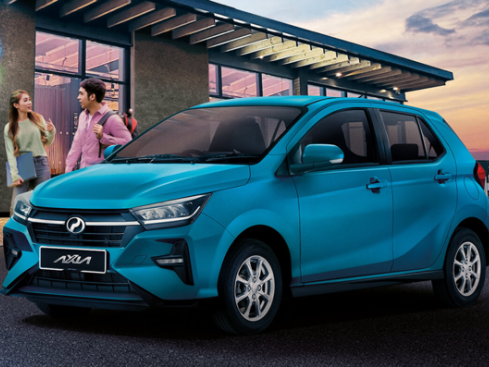
The 2023 Perodua Axia is priced from RM 22,000, with the 1.0 E MT offering the highest cost-performance ratio?
LienJun 11, 2024
View More
Pros
Cons