
Q
What size TYRE is a Haval H2 2019?
 SpiritSep 04, 2025, 05:46 PM
The 2019 Haval H2 comes standard with 235/55 R18 tires in the Malaysian market. This specification balances comfort and road grip, where 235 denotes tire width (in millimeters), 55 represents the aspect ratio (the percentage of sidewall height to width), and R18 indicates an 18-inch rim diameter. For Malaysia's rainy and humid road conditions, owners are advised to choose all-season tires with drainage patterns or high-performance wet-weather tires. Those frequently driving on rough suburban roads may consider upgrading to 235/60 R18 tires for enhanced cushioning, though note that this adjustment may cause approximately a 3% speedometer error. When replacing tires, besides matching dimensions, pay attention to the load index (e.g., 100 corresponds to 800 kg per tire) and speed rating (V denotes a 240 km/h limit). The manufacturer's recommended tire pressure is typically labeled on the driver's side door frame or inside the fuel filler door. Regularly inspect tread wear indicators (1.6mm raised blocks within grooves) to prevent hydroplaning. Rotate front tires every 8,000 km to extend service life. Address uneven wear promptly with a four-wheel alignment.
Special Disclaimer: This content is published by users and does not represent the views or position of PCauto.
Related Q&A
Q
Does the Haval H2 2019 have headlights?
Yes, the 2019 Haval H2 is indeed equipped with headlights, which is one of the standard features of the vehicle and meets the safety regulations in the Malaysian market. The headlights of the Haval H2 use halogen light sources. Some high - end models may offer LED daytime running lights to enhance visibility and aesthetics. The headlight design not only meets the night - time lighting needs but also has a height adjustment function to adapt to different driving environments. In Malaysia, vehicle headlights must meet the certification standards of the JPJ (Road Transport Department) to ensure that the lighting brightness and angle comply with safety regulations. In addition, it is recommended that car owners regularly check the condition of the headlights, including the bulb life and the cleanliness of the lamp covers, to avoid potential safety hazards caused by insufficient lighting. If you need to upgrade the lighting effect, you can choose LED or HID conversion kits that comply with the regulations. However, note that after the conversion, the vehicle must pass the JPJ vehicle inspection process to ensure its legality. As a compact SUV, the lighting system of the Haval H2 is designed to balance practicality and cost, making it suitable for local road conditions and climate.
 MusicianNoteSep 4, 2025
Q
Is the Haval H2 2019 supercharged?
The 2019 Haval H2 doesn't offer a supercharged version in the Malaysian market. All models in the lineup are equipped with a 1.5 - liter turbocharged gasoline engine. It has a maximum power of 150 horsepower and a peak torque of 210 N·m, and is mated to a 6 - speed manual or a 7 - speed dual - clutch transmission. Turbocharging technology boosts combustion efficiency by compressing the intake air. It's different from the belt - driven principle of supercharging, but both belong to forced - induction systems and can effectively improve the power performance of small - displacement engines. For Malaysian consumers, turbocharged models require special attention to the regular maintenance of the cooling system and intake pipes in the tropical climate to ensure long - term stable performance. If users seek stronger power response, they can refer to the original factory tuning data or consult authorized dealers about legal ECU upgrade solutions. However, they need to note that such modifications may affect the warranty terms. As a compact SUV, the Haval H2's power configuration focuses more on fuel economy for urban commuting rather than extreme performance output, which meets the market positioning of models in this price range.
 ActorStageSep 4, 2025
Q
Does the Haval H2 2019 have electronic suspension?
The 2019 Haval H2 is not equipped with an electronic suspension system in the Malaysian market. Its suspension structure combines a front MacPherson independent suspension and a rear multi-link independent suspension, focusing on comfort and practicality, which is suitable for the diverse local road conditions. Electronic suspensions usually appear in more high - end or performance - oriented models. They can adjust the damping stiffness in real - time through sensors to improve handling or shock absorption effects, but they are costly and complex to maintain. For SUV buyers with a budget of around 100,000 Malaysian Ringgit, traditional suspensions have more advantages in terms of durability and ease of maintenance. If you have higher requirements for suspension performance, you can pay attention to the sport - tuned versions or optional packages offered by some models in the same class. In Malaysia's rainy climate and congested urban road conditions, the current suspension settings of the Haval H2 can already balance the comfort of daily commuting. It is recommended to focus on experiencing whether its performance when passing over speed bumps and taking turns meets your personal expectations during a test drive.
 BoarderWaveSep 4, 2025
Q
Does the Haval H2 2019 have wheelie control?
The 2019 Haval H2 doesn't come with the "wheelie control" function. This technology usually appears on high - performance motorcycles or a few sports cars that focus on extreme driving experiences, which is used to prevent the front wheels from lifting too much and causing loss of control. As an urban SUV designed for daily use, the core configurations of the Haval H2 pay more attention to practicality. For example, standard features like the ABS anti - lock braking system, ESP electronic stability program, and hill descent control can enhance driving safety on the frequently rainy roads or in the hilly terrains common in Malaysia.
For local consumers, when choosing an SUV, they should focus more on practical needs such as ground clearance, suspension tuning, and the four - wheel drive system (available on some high - end models), rather than track - oriented features. If you have higher requirements for driving control, you can look into sporty models like the Haval H6 GT, which are equipped with more aggressive driving mode options but still prioritize road safety in their design.
Malaysian car owners are advised to test - drive the vehicle to feel its dynamic performance and make a choice based on their own driving scenarios when purchasing a car.
 DaisySep 4, 2025
Q
Is Haval H2 2019 good for touring?
The 2019 Haval H2, as a compact SUV, is suitable for mid - and short - distance self - driving tours in Malaysia. Its 1.5T turbocharged engine provides enough power to handle highways and mountain roads, and it also has relatively economical fuel consumption, making it suitable for long - distance driving. Although the interior space is not extremely spacious, it can comfortably accommodate four passengers and their luggage. The trunk volume can meet the needs of an average family's outing.
In terms of configuration, the Haval H2 is equipped with practical features such as a rear - view camera and cruise control, which enhance driving convenience. The comfortable seats and good sound insulation also make long - distance trips more relaxing.
It should be noted that the road conditions in Malaysia are diverse. It is recommended to regularly check the tires and braking system to ensure safety. If you plan to take frequent long - distance trips, you can consider installing a roof rack to increase storage space.
Overall, the Haval H2 is a cost - effective option, suitable for Malaysian consumers with limited budgets who still want to enjoy the fun of self - driving tours.
 SunbeamSep 4, 2025
Q
How many gears does an Haval H2 2019 have?
The 2019 Haval H2 available in the Malaysian market is equipped with a 6 - speed manual transmission or a 6 - speed automatic transmission. The specific configuration depends on the model version. The transmission design of this compact SUV emphasizes smoothness and fuel economy, making it suitable for both city driving and long - distance travel.
For Malaysian consumers, the 6 - gear setup allows for flexible shifting under different road conditions. For example, in the congested roads of Kuala Lumpur, low gears can be used to enhance handling response, while on the North - South Expressway, high gears can reduce engine speed and save fuel.
Modern automotive transmission technology has evolved from the traditional 4AT to the commonly used 6 - 8AT or even 9AT. More gears can optimize the power output curve, but in actual driving, the number of gears is not the only criterion. The transmission tuning logic and its compatibility with the engine also need to be considered. The 6AT of the Haval H2 is a mainstream configuration, comparable to that of Japanese and Korean models in the same class. Its maintenance cost is also relatively reasonable, and it is suitable for use in Malaysia's tropical climate.
It is recommended that car owners regularly replace the transmission fluid with the specified model and avoid long - term high - load driving to extend the service life of the transmission.
 GlimmerSep 4, 2025
Q
How many cylinders does an Haval H2 2019 have?
The 2019 Haval H2 is equipped with a 1.5-liter turbocharged four-cylinder engine. This engine adopts advanced fuel direct injection technology, which can provide decent power output and fuel economy, making it highly suitable for both urban driving in Malaysia and long-distance trips. The four-cylinder engine performs well in terms of smoothness and noise control. Meanwhile, its maintenance cost is relatively low, which makes it a good choice for Malaysian consumers who value practicality. In the Malaysian market, the four-cylinder engine is the mainstream configuration as it strikes a balance between power performance and fuel efficiency, and the engine of the Haval H2 also follows this trend. It's worth mentioning that the application of turbocharging technology enables this 1.5-liter engine to deliver power comparable to that of a larger-displacement naturally aspirated engine. This is especially important in Malaysia's mountainous terrain and hot climate, ensuring the vehicle's stable performance under different road conditions. For Malaysian consumers considering buying a compact SUV, the four-cylinder turbocharged engine of the Haval H2 is an option worthy of attention.
 WanderSep 4, 2025
Q
What is the star rating of the Haval H2 2019?
The 2019 Haval H2 received a 4-star safety rating in the ASEAN New Car Assessment Program (ASEAN NCAP) test. This rating indicates that it has reached a relatively high level in aspects such as adult occupant protection, child occupant protection, and safety assist technologies, making it suitable for Malaysian consumers who prioritize safety performance.
The vehicle is equipped with basic safety features like the ABS anti - lock braking system, dual airbags, and the electronic stability control system. Meanwhile, high - end models may also offer practical functions such as a rear - view camera and tire pressure monitoring, which can meet the needs of daily driving.
In the Malaysian market, a 4 - star rating is above average among SUVs in the same class. When making a purchase decision, consumers can also take into account more local factors. For example, how the 1.5T turbocharged engine of the Haval H2 performs in the tropical climate, and how well its high ground clearance adapts to the diverse road conditions in Malaysia.
It's worth noting that the test standards of ASEAN NCAP take regional road characteristics into comprehensive consideration. Therefore, this rating is directly relevant to Malaysian users. It is recommended that consumers take a test drive before purchasing to experience localized adaptation details such as the suspension tuning and the air - conditioning cooling effect.
 SilenceSep 4, 2025
Q
Does Haval H2 2019 have sunroof?
The 2019 Haval H2 does offer models equipped with sunroofs in the Malaysian market. However, the specific configurations may vary depending on different sales batches or optional packages provided by dealers. It is recommended that consumers directly confirm the actual vehicle configurations with local authorized dealers before purchasing. As a compact SUV targeting young families, the sunroof design of the Haval H2 can enhance the interior lighting and ventilation. This kind of configuration is especially popular in Malaysia's tropical climate, as it can not only improve air circulation but also enhance the driving pleasure. It should be noted that the sunroof, as an extended configuration, usually appears in mid - to high - end models, combined with configurations such as LED headlamps and leather seats. Consumers can make a choice based on their budget. In Malaysia's rainy environment, it is recommended to regularly check the sunroof drainage holes to prevent blockages. This is a maintenance detail that all vehicles with sunroofs need to pay attention to. Chinese brand models in the same class, such as the Baojun 510 and Geely Binyue, also generally offer sunroof options, which reflects the preference for this configuration in the Asian market. Consumers can make a choice by comparing the configuration lists of different brands.
 FlutteringWingSep 4, 2025
Q
Is Haval H2 2019 automatic?
Yes, the 2019 Haval H2 offers an automatic transmission (AT) version in the Malaysian market. It is equipped with a 6 - speed automatic transmission, which is suitable for consumers who prefer an easy - driving experience. As a compact SUV, the automatic - transmission models of the Haval H2 are quite popular in the local market, balancing the convenience of urban commuting and the practicality of occasional outings. The vehicle is also fitted with a 1.5 - liter turbocharged engine, which delivers a smooth power performance and has competitive fuel economy within its class. When Malaysian consumers choose an automatic - transmission model, they should pay attention to regular maintenance of the transmission fluid to ensure long - term durability. Meanwhile, Haval's after - sales service network is gradually improving in the local area, providing corresponding technical support. When comparing with other SUVs in the same price range, the configuration and space performance of the H2 are worth considering. However, it is recommended to take a test drive and make a decision based on personal needs.
 SparklingSep 4, 2025
Popular Cars
Model Year
Car Compare
Car Photo
Related Models
 Cars
CarsLatest Q&A
Q
Is AMT similar to automatic?
There are significant differences between AMT transmissions and automatic transmissions (AT) in terms of core structure and driving experience. AMT is essentially an electronically automated version of a manual transmission, simulating manual clutch operation and gear shifting through a computerized control system while retaining the gear set structure of manual transmissions. As a result, it offers higher transmission efficiency, with fuel consumption approximately 8%-12% lower than AT, making it particularly suitable for highway or long-distance driving. However, it may exhibit jerking similar to manual transmissions during low-speed gear shifts, especially noticeable in congested traffic conditions.
AT transmissions rely on torque converters for power transfer, delivering smooth and seamless gear shifts that appeal to comfort-oriented users. However, their complex structure (incorporating planetary gear sets, hydraulic systems, etc.) results in higher maintenance costs. A single service may cost between 800 to 1,500 ringgit, whereas AMT only requires gear oil replacement at approximately 400 ringgit.
From a market perspective, AMT is predominantly used in budget vehicles or commercial models priced below 80,000 ringgit, while AT is typically featured in mid-to-high-end vehicles. Consumers should select based on actual needs: AMT suits those prioritizing fuel efficiency and low maintenance costs, while AT better serves those valuing comfort. Notably, recent advancements in AMT electronic control technology have significantly mitigated jerking issues, though test drives should still emphasize low-speed performance evaluation.
 AriaMar 26, 2026
Q
Which is better, DCT or AT?
DCT (Dual-Clutch Transmission) and AT (Automatic Transmission) each have their own advantages and disadvantages, and the choice should be based on personal driving needs. AT transmissions transfer power through a torque converter, offering excellent shift smoothness, making them suitable for urban commuting or novice drivers. However, they tend to have higher fuel consumption, and vehicles equipped with them are usually more expensive. DCT transmissions utilize a dual-clutch structure, featuring fast shift speeds and high power transmission efficiency, which provides a more direct driving experience—particularly suitable for users seeking a sporty feel. However, they may exhibit jerking at low speeds and have relatively high maintenance costs. If durability and comfort are priorities, AT is the more reliable choice; if power responsiveness and driving pleasure are preferred, wet DCT (such as Volkswagen DSG) performs better, though dry DCT models should be avoided in prolonged stop-and-go traffic conditions. Additionally, CVT transmissions excel in smoothness and fuel efficiency, making them ideal for daily commuting, but they lack driving excitement. It is recommended to test-drive before purchasing, as tuning varies significantly across brands, and real-world experience is more important than theoretical specifications.
 FlutteringMar 26, 2026
Q
Is Amt good or bad?
AMT gearboxes have a significant cost advantage in the local market, typically being around 5,000 Ringgit cheaper than models equipped with conventional automatic transmissions. Their fuel efficiency is comparable to manual transmissions, resulting in long-term fuel savings. Featuring a straightforward design, they achieve transmission efficiency exceeding 90% with relatively low maintenance costs, making them ideal for practicality-oriented consumers. However, their shifting logic contains inherent limitations: gear changes between 1st and 2nd cause 0.3-0.5 second power interruptions, while unintended upshifts on inclines may reduce engine speed by 15%-20%, compromising driving smoothness. For urban commuters or budget-conscious buyers, AMT offers excellent value, though those prioritizing premium driving dynamics should consider alternative transmission types. Some domestic models like the Perodua Axia employ enhanced AMT systems, where optimized shift programming has reduced gearshift shock by approximately 30%.
 RainbowsMar 26, 2026
Q
Which gives better mileage, CVT or AMT?
From the perspective of fuel economy, CVT transmissions generally perform better under urban driving conditions. Their continuously variable design allows the engine to consistently operate within the optimal speed range, significantly reducing fuel consumption during frequent starts and stops. Test data shows that their fuel consumption in urban driving conditions is 10% to 15% lower than that of comparable models. AMT transmissions, on the other hand, inherit the high transmission efficiency of manual transmissions, delivering fuel efficiency close to manual transmissions during high-speed cruising. This makes them particularly suitable for long-distance driving in large-displacement vehicles. However, due to power interruption during gear shifts, their overall fuel consumption may be 5% to 8% higher than CVTs.
The difference in fuel-saving characteristics between the two transmissions stems from their technical principles: CVTs achieve continuous variability through steel belts and pulleys, eliminating the fixed gear ratio limitations of traditional transmissions; AMTs simulate manual gear changes via electronic control systems while maintaining the mechanical efficiency of gear transmission. Notably, actual fuel consumption is also influenced by driving habits. Smooth acceleration and anticipatory deceleration can maximize the transmissions' fuel-saving potential. If the vehicle budget permits and urban commuting is the primary use, CVTs offer a more economical choice. For frequent highway driving with an emphasis on cost-effectiveness, AMTs are equally worth considering.
 RubyBlazeMar 26, 2026
Q
Which is cheaper, AMT or CVT?
In terms of gearbox cost, AMT is usually more economical than CVT. Essentially, AMT is a manual transmission equipped with an electronic control unit, featuring a simple structure and low maintenance costs. The unit price ranges from approximately 5,000 to 8,000 ringgit, making it suitable for budget-conscious consumers or those who prioritize long-term operating costs. CVT incurs higher manufacturing costs due to its precision steel belt transmission system and continuous variable transmission technology, with a unit price of about 7,000 to 10,000 ringgit. However, it delivers a smoother driving experience and superior fuel efficiency. The primary differences between the two lie in technical complexity: AMT retains the gear-shifting mechanism, resulting in noticeable shift shock; CVT achieves linear power output through stepless speed variation but requires periodic belt inspection and incurs higher maintenance expenses. For those prioritizing initial cost and basic transportation needs, AMT offers better value; if comfort and long-term fuel economy are priorities, CVT represents a more worthwhile investment. Note that actual prices may vary based on vehicle model, brand, and local supply chain factors.
 ShadowProwlMar 26, 2026
Related News

Haval H6 HEV usually experiences which issues? Must-check before purchasing.
WilliamMar 19, 2026

5 Things to Know Before Buying a Haval: Not Just the Price, But Also After-Sales Service and Fuel Consumption
Kevin WongMar 9, 2026

2026 SUV Battle: Jaecoo J7 vs. Haval H6 vs. Jetour Dashing
AshleyFeb 18, 2026
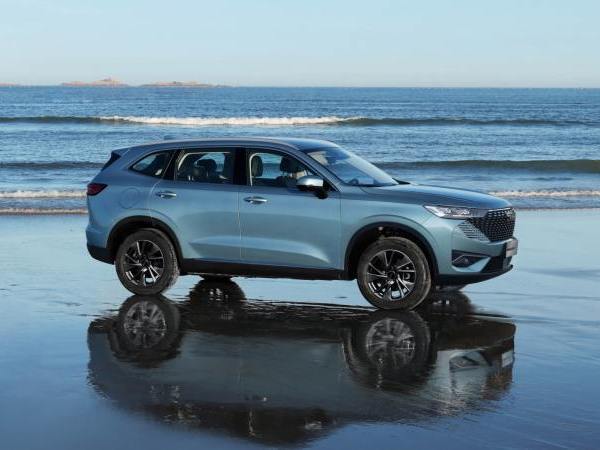
HAVAL H6 HEV Test Drive: A Budget-Friendly Alternative to CR-V e:HEV
WilliamJun 25, 2025
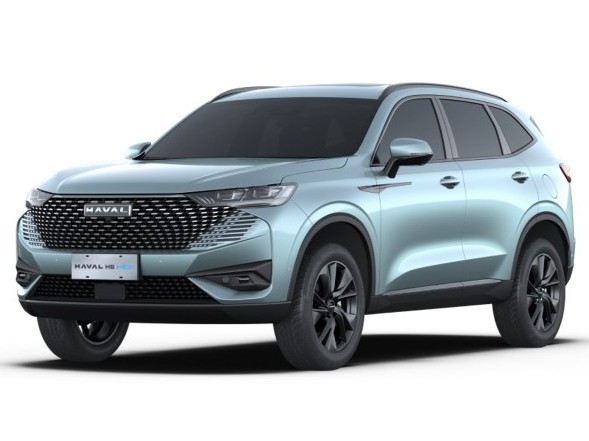
HAVAL H6: A Balanced Performer and a Reliable Choice for Family SUVs
Kevin WongApr 24, 2025
View More
Pros
Cons