
Q
when is the new Ford Everest coming out
 WolfOct 13, 2025, 11:43 AM
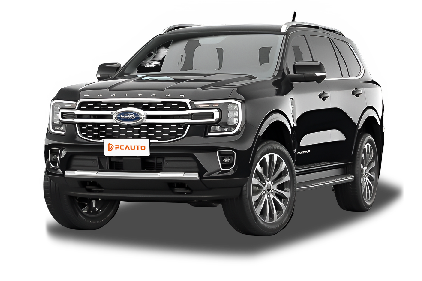
The all-new Ford Everest is set to hit Malaysian shores sometime in 2024, though Ford Malaysia is keeping the exact launch date under wraps for now. This rugged SUV has already made its debut in some international markets, packing a punch with upgraded powertrain options: a 2.0-liter bi-turbo diesel and a beefy 3.0-liter V6 turbo diesel. Tech-wise, it's stepping up its game with the advanced SYNC 4 infotainment system and Co-Pilot360 driver assistance suite.
For the local market, we can expect some tweaks to cater to Malaysian needs – think right-hand drive conversion, of course, and probably some tropical climate optimizations to handle our heat and humidity. Everest has long been a key player in Ford's Southeast Asian SUV lineup, prized for its solid off-road chops and everyday practicality. The new model might also introduce a more efficient 4x4 system and an enhanced terrain management setup, which is always good news for adventure seekers.
In the competitive mid-size SUV segment, it'll go head-to-head with the likes of the Toyota Fortuner and Mitsubishi Pajero Sport. If you're keen to stay in the loop, your best bet is to keep an eye on Ford Malaysia's official website or swing by your nearest authorized dealer for the latest updates. And a quick tip for SUV shoppers: don't forget to cross-shop on interior space and after-sales service when comparing models – it'll help you land the perfect ride that truly fits your lifestyle.
Special Disclaimer: This content is published by users and does not represent the views or position of PCauto.
Related Q&A
Q
When will the new Ford Everest be released?
Word on the street is the all-new Ford Everest is set to hit Malaysian showrooms in Q1 2024, though that timeline might shift a bit depending on supply chain hiccups or local homologation red tape. Expect this new iteration to keep that tough, rugged SUV vibe we love, but with some key upgrades under the hood – think a refined 2.0-liter bi-turbo diesel engine paired with a 10-speed auto box. And tech? It’s getting a boost too, with more advanced driver assists like adaptive cruise control and lane-keeping thrown into the mix.
Malaysian buyers have always had a soft spot for the Everest in the mid-size SUV segment, and it’s easy to see why – its off-road chops and do-it-all versatility make it a perfect fit for our country’s wildly varied road conditions. One big highlight we’re hearing about is smarter in-car tech, possibly the SYNC 4 infotainment system. That means wireless Apple CarPlay and Android Auto, which should make your daily drive that much smoother.
If you’re in the market for an SUV that balances family-friendly space with proper off-road grit, keep your eyes peeled on Ford Malaysia’s official site or swing by your nearest authorized dealer. You’ll want to stay in the loop for test drive slots and pre-order details. Oh, and before you sign on the dotted line? Make sure to cross-shop with rivals like the Toyota Fortuner and Mitsubishi Pajero Sport. Compare specs, check which trim suits your needs best – that’s the way to land the perfect ride.
 JourneyHomeOct 13, 2025
Q
How to open Ford Everest's hood?
To pop the hood on a Ford Everest, first make sure the vehicle is turned off and parked on level ground. Then, near the driver's side floor mat, you'll find the hood release lever—usually marked with a hood icon. Give it a firm pull and you'll hear a "click," which means the primary latch is released. Next, head to the front of the truck, stick your fingers into the gap at the center of the hood's leading edge, feel for the secondary release lever, and push it left or right to fully unlock. Finally, prop the hood open with the support rod and you're ready for inspection or maintenance.
A quick note: Everest models from different years might have slight variations in the release lever design, but the basic operation is the same. If you feel resistance, don't force it—best to check the owner's manual to confirm the exact location. As a popular midsize SUV in Malaysia, the Everest has a pretty tidy engine bay layout, making it easy to regularly check fluid levels like oil, coolant, and brake fluid. While you're at it, it's a good idea to clear out any leaves or debris each time you open the hood to prevent drain holes from clogging. Keeping the engine bay clean helps with heat dissipation and extends component life. And if you need to top up windshield washer fluid, the reservoir is usually on the left with a blue cap, so it's easy to spot and distinguish from other fluids.
 WanderPathOct 13, 2025
Q
Which is better? Ford Everest or Toyota Fortuner?
For Malaysian buyers trying to pick between the Ford Everest and Toyota Fortuner, it really comes down to your specific needs. The Everest brings more heat under the hood – its 2.0L bi-turbo diesel cranks out 213hp and 500Nm, making it the go-to for folks who crave driving excitement and off-road capability. Plus, its SYNC 4 infotainment system feels way more tech-forward.
The Fortuner, though, is all about that legendary Toyota reliability. Its 2.8L diesel (204hp/500Nm) paired with the tried-and-tested 6AT gearbox keeps maintenance costs low. Toyota’s service network in Malaysia is also way more extensive, and you’ll get better resale value down the line.
Space-wise, the Everest’s third row is roomier, but the Fortuner edges it out for cargo flexibility. If tech and power are your priorities, the Everest is a no-brainer. But if you’re focused on long-term ownership costs and brand trust, the Fortuner plays it safer.
One thing to note: Malaysia’s rainy climate means wading depth matters. Both clear 225mm easily, but the Everest (with the off-road package) ups the ante with an 800mm max wading depth – perfect for those extreme situations. The Fortuner, though, has a more stable electronic LSD for muddy trails.
Pro tip: Test drive both to feel the chassis difference. The Everest leans into highway comfort, while the Fortuner’s suspension is noticeably stiffer for rugged use.
 HunterQuestOct 13, 2025
Q
How long is a Ford Everest?
The Ford Everest's length varies slightly across different trims and generations, but here in Malaysia, the current third-gen model (launched in 2022) checks in at a standard 4,914mm – right in that sweet spot for a midsize SUV that's practical for family road trips or light off-roading around our local trails. What really makes a difference for passengers though is its 2,850mm wheelbase, which translates to genuinely usable space in all three rows – that third row isn't just for show, unlike some competitors where it's strictly kid-sized. Now, when it comes to daily life here, parking can be a squeeze, and while Everest's 1,842mm height needs a little extra care (remember most multi-storey carparks have that 1.8m height limit!), the standard 360-degree camera takes a lot of the stress out of tight spots. Underpinning this SUV is the same ladder-frame chassis as the Ranger pickup, which strikes a nice balance between stable highway cruising and decent rough-road capability when you venture beyond paved roads. The 2.0L bi-turbo diesel engine (213hp/500N·m) paired with the 10-speed auto has proven pretty solid in our tropical heat too, with good heat management even on long drives. Plus, since it's locally assembled, Ford has beefed up the underbody rust protection specifically for Malaysia's humid, rainforest-laden environment – a smart touch for our climate.
 ToughguyOct 13, 2025
Q
How many colors are there for the 2022 Ford Everest?
The 2022 Ford Everest offers a solid range of color options here in Malaysia, giving buyers plenty to pick from. You've got your classic Absolute Black, the sleek Aluminium Metallic, a modern Diffused Silver, the understated Meteor Grey, the head-turning Sedona Orange, and the premium White Platinum – that's six shades in total. Whether you're into a more low-key, sophisticated vibe or something that really stands out and shows off your personality, there's likely a color in there that'll catch your eye.
Picking the right color is a bigger deal than you might think when buying a car. It's not just about making the Everest look good (though that's definitely part of it); it can also affect day-to-day ownership and even how well the vehicle holds its value down the line. For example, lighter colors tend to hide dirt better, while darker hues? They'll show every little scratch and swirl mark. And hey, keep in mind that some of the more unique colors might come with a little extra cost or a longer wait time. So, when you're deciding, it's smart to balance what you personally love with how you'll actually use the truck. My advice? Swing by your local Ford dealer and check out the different colors in person – seeing them up close in real light can make a huge difference before you commit.
 AdventureOct 13, 2025
Q
how to start Ford Everest with key
To start the key ignition version of the Ford Everest, first make sure the vehicle is in Park (P) or Neutral (N), then press and hold the brake pedal. Next, insert the key into the ignition switch on the right side of the steering wheel, turn it clockwise to the "ON" position, and wait for the dashboard to complete its self-check (about 2-3 seconds). After that, continue turning the key to the "START" position, and release it immediately once the engine fires up—it'll automatically spring back to "ON".
If you're having trouble starting, it might be due to a weak battery or a faulty key chip. We recommend checking if the battery terminals are loose or giving the spare key a try. For our Malaysian friends, the tropical climate can take a toll on battery life, so regularly checking the battery health (like if the voltage drops below 12.4V) and the key battery (usually a CR2032) can save you from unexpected headaches.
Also, if your Everest is equipped with the smart key system, it supports remote start—just hold down the start button on the key fob. Keep in mind, though, this works best within about 30 meters and in areas with minimal signal interference. And if you're not driving for a while, firing up the engine for 10 minutes every two weeks helps keep the battery charged, which is extra important during the rainy, humid season to maintain the electrical system.
 RoseOct 13, 2025
Q
what engine is in the Ford Everest
Ford Everest offers two turbo diesel engine options in the Malaysian market. The base variant comes with a 2.0L single-turbo diesel unit, cranking out 180 horsepower and 420Nm of torque, while the higher-spec models get the beefier 2.0L bi-turbo diesel that pushes out 213hp and a meaty 500Nm of torque. Both engines are mated to a 10-speed automatic transmission and 4WD system, making this SUV equally at home on the highway as it is off the beaten path.
Under the hood, the Everest draws on Ford's global powertrain expertise, featuring common-rail direct injection and variable geometry turbo technology. This setup delivers strong low-end torque – perfect for Malaysia's hilly terrain and long-distance drives – while the diesel engines also offer better fuel economy compared to their petrol-powered rivals in the same class.
Ford has clearly focused on durability with the Everest's engine tuning. Recognizing Southeast Asia's hot climate, the cooling system and intake design have been specifically optimized for local conditions. Malaysian owners should stick to the 10,000km service intervals outlined in the official maintenance manual to keep things running smoothly.
Sure, competitors like the Toyota Fortuner and Mitsubishi Pajero Sport also offer diesel power, but the Everest holds its own with superior torque output and more advanced transmission tech. At the end of the day, it's worth test-driving all options to see which one best fits your needs.
 CheerysmOct 13, 2025
Q
how to open gas tank Ford Everest
To open the fuel door on your Ford Everest, first make sure the vehicle is unlocked. Then head to the left side of the vehicle where the fuel door is located—though for our friends in Malaysia with right-hand drive models, you'll find it on the right side instead. Just press the outer edge of the fuel door and it should pop open. A heads-up: some models might require you to first press the fuel door release button inside the cabin, usually near the driver's seat or below the steering wheel.
The Everest comes with Ford's Capless Fuel System, so you can skip wrestling with a traditional twist-off cap. Just stick the fuel nozzle straight in and you're good to go—it's super convenient and helps cut down on fuel vapor emissions too. For Malaysian owners, it's smart to periodically check the seal around the fuel door to keep out debris, especially during those heavy tropical rainstorms when moisture can sneak in. Also, keep an eye on the pump attendant to make sure they fully insert the nozzle to prevent any fuel splashing out.
If you ever run into a stuck fuel door, try locking and unlocking the vehicle a few times—that often does the trick. Some models also have an emergency pull cord in the trunk, so that's worth checking too. Getting the hang of these little details will make refueling safer and more efficient, and help keep your Everest's fuel system in top shape for longer.
 SweetestOct 13, 2025
Q
Ford Everest how many seats
The Ford Everest has cemented itself as a favorite 7-seater SUV in Malaysia, and it's easy to see why. Its flexible 2+3+2 seating layout is a big plus for families or anyone needing to haul a crowd. The second row splits 60:40 and folds down, while the third row tucks away completely, opening up cargo space that ranges from 233 liters all the way to a massive 2010 liters – perfect for whatever loading scenario you throw at it.
Under the hood, Malaysian buyers get a choice of powertrains, with the 2.0L turbo diesel paired to a 10-speed auto being a standout. It strikes a nice balance between punchy performance and decent fuel efficiency. Tech-wise, it's well-equipped too, featuring things like the SYNC®4 infotainment system and a 360-degree camera – all the good stuff local consumers look for when prioritizing versatility and comfort.
A quick heads-up though: if you're eyeing a 7-seater SUV in Malaysia, remember JPJ (Road Transport Department) regulations. The third row isn't really ideal for passengers over 1.4 meters tall on long journeys, and *everyone* needs to buckle up – both for compliance and, more importantly, safety. If you regularly need to carry more than seven people, some competitors do offer 8-seater alternatives in this segment. Just keep in mind those might hit your wallet a bit harder when it comes to road tax and fuel consumption.
 FunnyguyOct 13, 2025
Q
how much is a new Ford Everest
The all-new Ford Everest comes with a range of prices in Malaysia depending on the trim and specs. The entry-level Ford Everest Trend starts at around RM196,888, while the top-of-the-line Ford Everest Platinum is priced at approximately RM258,888. Keep in mind, these figures might vary slightly based on dealer promotions or optional extras you might add on.
Under the hood, this SUV packs a 2.0-liter turbocharged diesel engine, delivering solid power and decent fuel efficiency. It also comes with an advanced 4x4 system and multiple driving modes, making it a great fit for Malaysia's diverse road conditions – from city streets to those weekend getaways off the beaten path.
What really stands out with the Everest is its spacious seven-seat layout, loaded with tech like the SYNC 4 infotainment system, and smart driver-assist features such as adaptive cruise control and lane-keeping assist. No wonder it's a hit with both families and off-road enthusiasts alike.
And let's not forget, when buying a car in Malaysia, you'll need to factor in extra costs like insurance, road tax, and registration fees. These can vary based on the vehicle's price and your personal situation.
If you're seriously considering one, I'd recommend checking out Ford Malaysia's official website or stopping by an authorized dealer. They'll have the latest info on promotions and financing deals, which can help you make a smarter call when it's time to sign on the dotted line.
 WittywitOct 13, 2025
Popular Cars
Model Year
Car Compare
Car Photo
Related Models
 Cars
CarsLatest Q&A
Q
Is AMT similar to automatic?
There are significant differences between AMT transmissions and automatic transmissions (AT) in terms of core structure and driving experience. AMT is essentially an electronically automated version of a manual transmission, simulating manual clutch operation and gear shifting through a computerized control system while retaining the gear set structure of manual transmissions. As a result, it offers higher transmission efficiency, with fuel consumption approximately 8%-12% lower than AT, making it particularly suitable for highway or long-distance driving. However, it may exhibit jerking similar to manual transmissions during low-speed gear shifts, especially noticeable in congested traffic conditions.
AT transmissions rely on torque converters for power transfer, delivering smooth and seamless gear shifts that appeal to comfort-oriented users. However, their complex structure (incorporating planetary gear sets, hydraulic systems, etc.) results in higher maintenance costs. A single service may cost between 800 to 1,500 ringgit, whereas AMT only requires gear oil replacement at approximately 400 ringgit.
From a market perspective, AMT is predominantly used in budget vehicles or commercial models priced below 80,000 ringgit, while AT is typically featured in mid-to-high-end vehicles. Consumers should select based on actual needs: AMT suits those prioritizing fuel efficiency and low maintenance costs, while AT better serves those valuing comfort. Notably, recent advancements in AMT electronic control technology have significantly mitigated jerking issues, though test drives should still emphasize low-speed performance evaluation.
 AriaMar 26, 2026
Q
Which is better, DCT or AT?
DCT (Dual-Clutch Transmission) and AT (Automatic Transmission) each have their own advantages and disadvantages, and the choice should be based on personal driving needs. AT transmissions transfer power through a torque converter, offering excellent shift smoothness, making them suitable for urban commuting or novice drivers. However, they tend to have higher fuel consumption, and vehicles equipped with them are usually more expensive. DCT transmissions utilize a dual-clutch structure, featuring fast shift speeds and high power transmission efficiency, which provides a more direct driving experience—particularly suitable for users seeking a sporty feel. However, they may exhibit jerking at low speeds and have relatively high maintenance costs. If durability and comfort are priorities, AT is the more reliable choice; if power responsiveness and driving pleasure are preferred, wet DCT (such as Volkswagen DSG) performs better, though dry DCT models should be avoided in prolonged stop-and-go traffic conditions. Additionally, CVT transmissions excel in smoothness and fuel efficiency, making them ideal for daily commuting, but they lack driving excitement. It is recommended to test-drive before purchasing, as tuning varies significantly across brands, and real-world experience is more important than theoretical specifications.
FlutteringMar 26, 2026Q
Is Amt good or bad?
AMT gearboxes have a significant cost advantage in the local market, typically being around 5,000 Ringgit cheaper than models equipped with conventional automatic transmissions. Their fuel efficiency is comparable to manual transmissions, resulting in long-term fuel savings. Featuring a straightforward design, they achieve transmission efficiency exceeding 90% with relatively low maintenance costs, making them ideal for practicality-oriented consumers. However, their shifting logic contains inherent limitations: gear changes between 1st and 2nd cause 0.3-0.5 second power interruptions, while unintended upshifts on inclines may reduce engine speed by 15%-20%, compromising driving smoothness. For urban commuters or budget-conscious buyers, AMT offers excellent value, though those prioritizing premium driving dynamics should consider alternative transmission types. Some domestic models like the Perodua Axia employ enhanced AMT systems, where optimized shift programming has reduced gearshift shock by approximately 30%.
 RainbowsMar 26, 2026
Q
Which gives better mileage, CVT or AMT?
From the perspective of fuel economy, CVT transmissions generally perform better under urban driving conditions. Their continuously variable design allows the engine to consistently operate within the optimal speed range, significantly reducing fuel consumption during frequent starts and stops. Test data shows that their fuel consumption in urban driving conditions is 10% to 15% lower than that of comparable models. AMT transmissions, on the other hand, inherit the high transmission efficiency of manual transmissions, delivering fuel efficiency close to manual transmissions during high-speed cruising. This makes them particularly suitable for long-distance driving in large-displacement vehicles. However, due to power interruption during gear shifts, their overall fuel consumption may be 5% to 8% higher than CVTs.
The difference in fuel-saving characteristics between the two transmissions stems from their technical principles: CVTs achieve continuous variability through steel belts and pulleys, eliminating the fixed gear ratio limitations of traditional transmissions; AMTs simulate manual gear changes via electronic control systems while maintaining the mechanical efficiency of gear transmission. Notably, actual fuel consumption is also influenced by driving habits. Smooth acceleration and anticipatory deceleration can maximize the transmissions' fuel-saving potential. If the vehicle budget permits and urban commuting is the primary use, CVTs offer a more economical choice. For frequent highway driving with an emphasis on cost-effectiveness, AMTs are equally worth considering.
 RubyBlazeMar 26, 2026
Q
Which is cheaper, AMT or CVT?
In terms of gearbox cost, AMT is usually more economical than CVT. Essentially, AMT is a manual transmission equipped with an electronic control unit, featuring a simple structure and low maintenance costs. The unit price ranges from approximately 5,000 to 8,000 ringgit, making it suitable for budget-conscious consumers or those who prioritize long-term operating costs. CVT incurs higher manufacturing costs due to its precision steel belt transmission system and continuous variable transmission technology, with a unit price of about 7,000 to 10,000 ringgit. However, it delivers a smoother driving experience and superior fuel efficiency. The primary differences between the two lie in technical complexity: AMT retains the gear-shifting mechanism, resulting in noticeable shift shock; CVT achieves linear power output through stepless speed variation but requires periodic belt inspection and incurs higher maintenance expenses. For those prioritizing initial cost and basic transportation needs, AMT offers better value; if comfort and long-term fuel economy are priorities, CVT represents a more worthwhile investment. Note that actual prices may vary based on vehicle model, brand, and local supply chain factors.
 ShadowProwlMar 26, 2026
Related News

2027 Ford Super Duty comes with significant configuration upgrades, offering 35-inch large tires
LienMar 12, 2026

Ford introduces remote start inhibition technology, allowing owners to lock their cars remotely for theft prevention
MichaelDec 30, 2025

Ford Focus is about to cease production in November and may return in 2027 in the form of an SUV.
WilliamSep 15, 2025

2025 Ford Ranger WildTrak launched, the most powerful diesel version in the Ranger lineup
MichaelAug 25, 2025

Is the Ford Ranger V6 about to enter Malaysia?
LienAug 13, 2025
View More
Pros
Cons