
BYD has Launched a K-Car Targeting the Japanese Market, Aiming to Challenge Local Automotive Brands
 AshleyMay 20, 2025, 06:26 PM
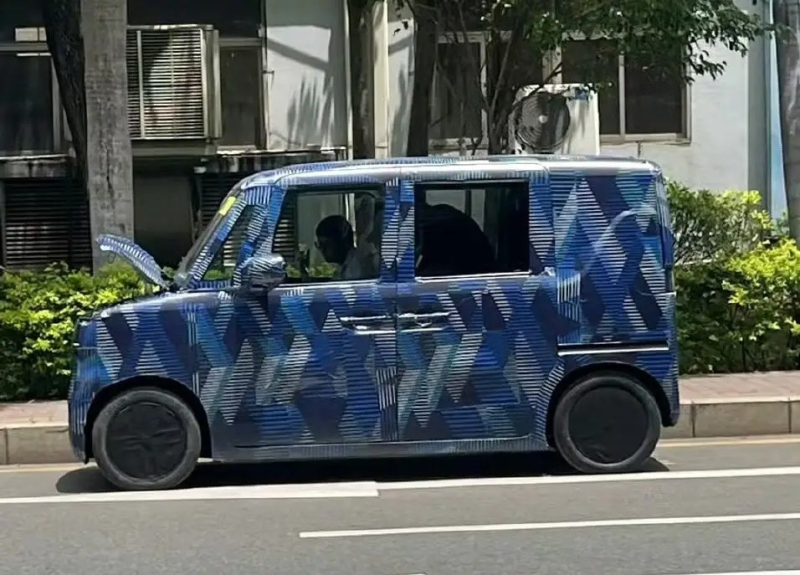
【PCauto】Spy shots of BYD's K-Car have circulated online, confirming the project's existence. However, given that this segment typically yields lower profits, why is BYD determined to develop it?
The answer may lie in BYD's exploration of the Japanese market. In most countries, BYD tends to introduce the ATTO 3 before adjusting its strategic direction.
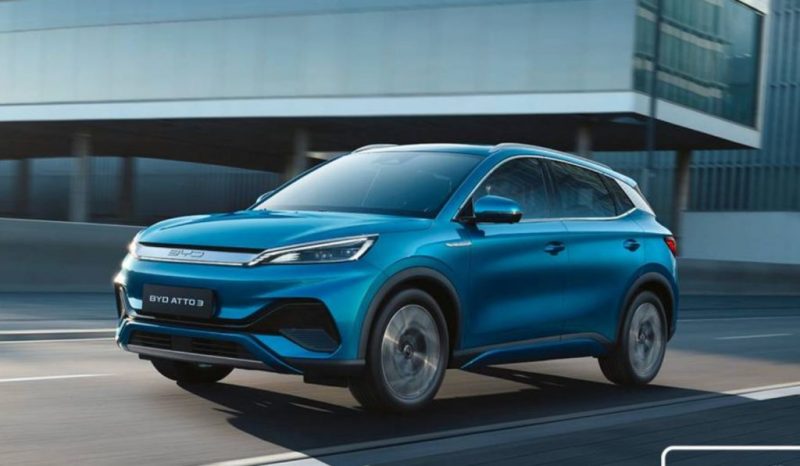
However, the ATTO 3's performance in Japan has not met expectations. Firstly, the local market still shows a strong preference for gasoline vehicles. Even though BYD's pure electric vehicle sales in Japan reached 2,223 units in 2024, marking a 54% year-on-year increase and surpassing Toyota's 2,038 units, the overall market share of pure electric vehicles (BEVs) in Japan remains only 1.4%. Even for plug-in hybrid electric vehicles (PHEVs), the market share is merely 1.7%. These figures indicate that most consumers in Japan are still reluctant to embrace electric vehicles, making growth for BYD challenging in this market environment.
Moreover, Japanese consumers tend to favor domestic brands such as Toyota, Honda, and Nissan, further complicating BYD's entry.
In Japan, the best-selling electric vehicle brand is actually Nissan with its Sakura model, which is also a K-Car. Between April 2023 and March 2024, Nissan Sakura sales reached 34,083 units, securing the top spot in domestic electric vehicle sales for two consecutive years, accounting for approximately 41% of the total sales that year. Even though the overall sales of pure electric vehicles in Japan declined by 33% in 2024, and Nissan Sakura's sales dropped by 38%, it still managed to sell 30,749 units for the year.
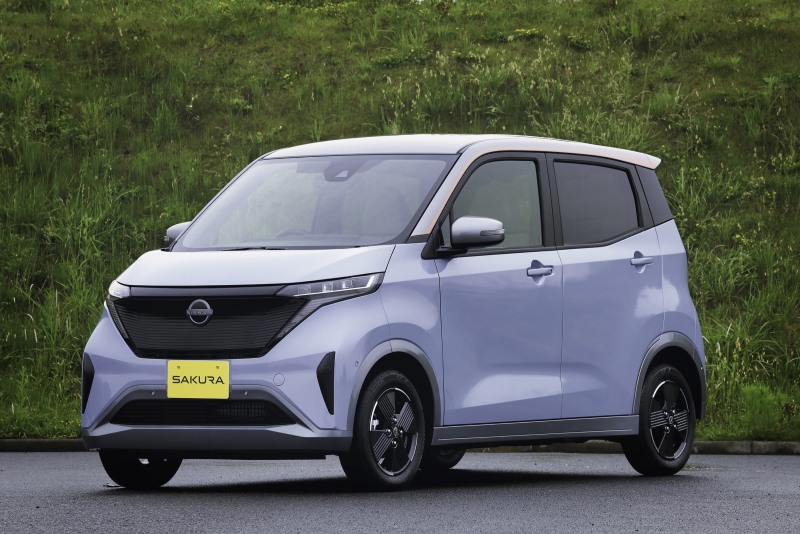
K-Cars, a unique category under Japanese regulations, have a 35% market share in Japan, with annual sales exceeding one million units, presenting a significant opportunity for BYD.
The K-Car being launched by BYD is built on a new platform adhering to Japan's microcar standards. The vehicle will be produced in China and then exported to the Japanese market, directly competing with local models such as the Nissan Sakura.
In terms of core features, BYD's K-Car demonstrates strong competitiveness. It features a 20 kWh battery pack offering a range of 180 kilometers under WLTC standards, along with a DC fast-charging capability of up to 100 kW, allowing the vehicle to charge from 30% to 80% in just a matter of minutes.
The car adopts a 5-door, 4-seat configuration with rear sliding doors, facilitating easy entry and exit for passengers in narrow streets or parking spots. It strictly complies with K-Car size regulations, enabling smooth navigation through Japan's urban landscapes.
For safety features, the K-Car is equipped with six airbags, an electronic stability system, and automatic braking functionality. Comfort features such as heated steering, heated seats, and electrically folding side mirrors enhance the driving experience. Smart features are impressive too, with an L2-level driver assistance system supporting lane keeping and automatic parking. Additionally, the heat pump air conditioning system reduces energy consumption by 30% at -10°C, making it well-suited for Japan's mountainous terrain and harsh winter climate.
Built on the e-platform 3.0 mini architecture, the power system integrates an eight-in-one electric drive unit, providing a peak power output of 70 kW, significantly outperforming the 47 kW motor of the Nissan Sakura—an impressive increase of 48.9%.

BYD's K-Car development isn’t solely focused on the Japanese market; the company plans to establish over 100 sales and service outlets across Japan by the end of 2025. Additionally, BYD has entered a strategic partnership with JMC, Japan's largest car rental company, to further expand sales channels and enhance brand influence.
Opportunities for foreign automotive companies in Japan are indeed scarce, as local brands hold a staggering 99.68% market share. Rather than investing heavily in cultivating the Japanese market, BYD's direct introduction of a K-Car may prove to be a simpler approach.
Moreover, K-Cars are not only relevant to Japan; there are potential consumer markets for K-Cars in countries like Indonesia, Malaysia, and Thailand. The compact and agile nature of K-Cars makes them ideal for congested urban roads. Additionally, their lower operational costs align with consumer demands. Therefore, it’s not out of the question that BYD's K-Car could also make its way to China.
If any infringement occurs, please contact us for deletion










Popular Cars
Model Year
Car Compare
Car Photo