

Ferrari 296 Review

 Share
Share
 Segment
 Body Type
 Capacity(L)
 Engine Power(PS)
 Transmission
 Driven Wheels
When supercar brands start to embrace hybrid technology, the market often expects a dual breakthrough in performance and efficiency—the 2022 Ferrari 296 GTS V6 is exactly such a product. As the convertible version of the 296 GTB, it is aimed at supercar consumers who pursue the ultimate driving experience while wanting to retain the fun of driving a convertible in daily use. The core of this test drive is to verify whether its hybrid system weakens Ferrari's iconic driving passion and whether the changes brought by the convertible structure affect the overall performance of the car.
The exterior of the 296 GTS continues the design language of the 296 GTB, but the convertible structure adds a bit of agility. The front features sharp L-shaped daytime running lights, echoing the air intakes of the front grille, while the overall lines are low-lying and aggressive. The side profile showcases a waistline that extends from the doors to the rear, paired with 20-inch wheels (front 245/35 R20, rear 305/35 R20), creating a highly dynamic visual appearance. The rear diffuser and dual exhaust layout reinforce its performance attributes, while the LED taillights adopt Ferrari's classic circular design, giving it high recognition. It is worth mentioning that its hard-top convertible system can open or close in 14 seconds at speeds below 45 km/h, operating smoothly without occupying trunk space, which is one of the details most valued by convertible supercar users.
Inside the cabin, the 296 GTS’s interior is driver-centric, with a clean design that exudes a racing feel. The steering wheel integrates multiple control buttons, including driving mode selection and suspension adjustment, allowing for easy operation without taking your hands off the wheel, offering great convenience. The 16-inch curved display clearly shows vehicle information, while the central control screen manages multimedia and navigation functions, with fast system response and intuitive logic. In terms of materials, the interior extensively uses Alcantara and carbon fiber panels, paired with genuine leather seats, achieving a combination of luxury and sportiness. The seats are bucket-style with excellent support and offer multi-directional electric adjustment, providing comfort even during long drives.
In terms of space, as a two-door two-seater supercar, the 296 GTS provides enough space for two passengers to travel. The front headroom is approximately 850mm when the top is closed (for a passenger with a height of 175 cm), and it is unrestricted when the top is open; the legroom, thanks to the 2600mm wheelbase, is also sufficiently spacious. Storage space is relatively limited, with a front trunk capacity of about 78L, which can only hold two carry-on suitcases. However, for supercar users, this performance meets expectations. There are also some small storage compartments in the car, such as the central armrest box and door panel storage slots, where items like phones and wallets can be stored.
The powertrain is the core highlight of the 296 GTS. It is equipped with a hybrid system consisting of a 3.0L V6 turbocharged engine and an electric motor, delivering a combined output of 830 PS. The combined torque output is not explicitly specified but feels powerful in practice. Officially, it accelerates from 0 to 100 km/h in just 2.9 seconds, with a top speed of 330 km/h, identical to the hardtop 296 GTB. During actual driving, the electric motor provides 315N·m of torque at startup, making the car extraordinarily responsive with almost no turbo lag. When the accelerator is fully pressed, the engine kicks in smoothly, delivering instant power. Mid-range acceleration (80-120 km/h) takes only about 1.5 seconds, making overtaking effortless. Driving modes include electric-only, hybrid, sport, and track modes. In electric-only mode, the range is about 25 km, which is suitable for short city commutes, while the sport mode makes the exhaust sound more aggressive, fitting the supercar's positioning.
In terms of handling, the 296 GTS performs outstandingly. The front double-wishbone independent suspension setup provides high stability in corners, the steering is precise with minimal dead zones, and the driver can clearly perceive road feedback. The chassis is tuned on the firmer side, but it effectively filters out most minor vibrations on bumpy roads, ensuring passenger comfort. During high-speed cornering, body roll is minimal, and the tires provide strong grip, instilling ample confidence. The four-wheel-drive system performs stably on slippery roads, reasonably distributing power between the front and rear wheels to prevent slipping.
As for fuel consumption, the official combined fuel consumption is 6.6L/100km. During actual test drives, the urban fuel consumption (in semi-hybrid mode) was approximately 8.5L/100km, and highway fuel consumption was around 6L/100km. For a supercar with 830PS, this performance is already quite impressive. The braking system uses ventilated disc brakes at the front and rear, with short and linear braking distances, and no significant heat fade even after multiple braking attempts.
In terms of driving comfort, the 296 GTS exceeds expectations. With the roof closed, cabin noise is well-controlled, with wind noise at around 65 decibels at 120km/h. Tire noise and engine noise are also unobtrusive. When the roof is open, the adjustable wind deflector effectively reduces wind noise, allowing passengers to have normal conversations even at speeds of 100km/h. The seats strike a good balance between support and cushioning, ensuring long trips are not fatiguing. The energy recovery system has three adjustable levels. The highest level provides a braking force close to a single-pedal driving experience, enhancing range to some extent, while the lowest level feels almost like driving a traditional fuel car, catering to different user preferences.
Compared to competitors in the same class, such as the McLaren Artura (PHEV convertible version priced around RM 1.5 million), the 296 GTS has a price advantage at RM 1,448,000. Additionally, Ferrari's brand influence and after-sales network are more established in Malaysia. Compared to the hard-top version of the 296 GTB (priced at RM 1,228,000), the GTS is approximately RM 220,000 more expensive but offers the enjoyment of a convertible without sacrificing performance. For users who love convertibles, it is a worthwhile choice.
In summary, the 2022 Ferrari 296 GTS V6 is a supercar that balances performance, efficiency, and the pleasure of open-air driving. Its core highlights include a powerful hybrid powertrain, precise handling, a convenient convertible system, and relatively reasonable fuel consumption. It is suitable for those who want to enjoy Ferrari's iconic driving experience while also having the option to enjoy the thrill of open-top driving on pleasant days—such as young entrepreneurs, seasoned supercar enthusiasts, or high-income individuals seeking a personalized driving experience. If you are looking for a supercar that is practical for daily driving, capable on the track, and perfect for sunny coastal drives with the top down, the 296 GTS is an excellent choice.
Ferrari 296 Loan Calculator
More Ferrari Reviews
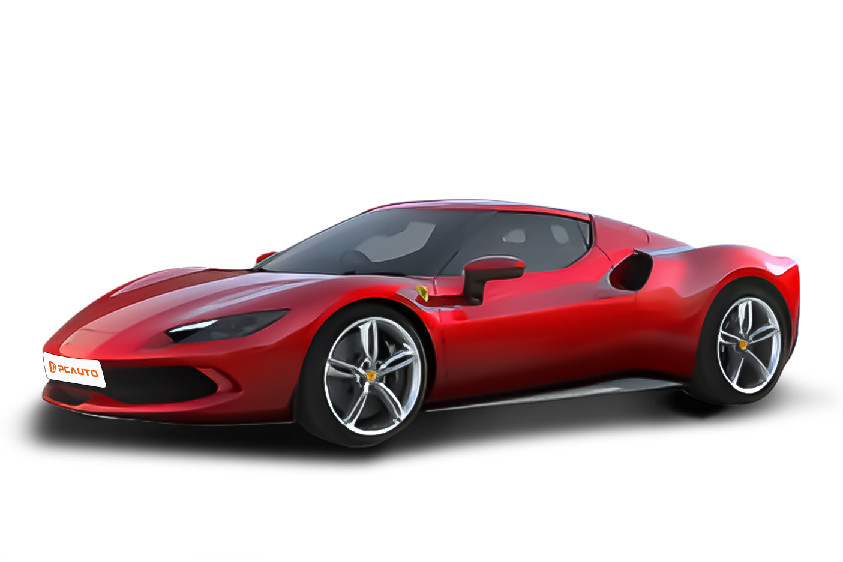
Cars With Similar Price And Features
2
Rank in Coupe
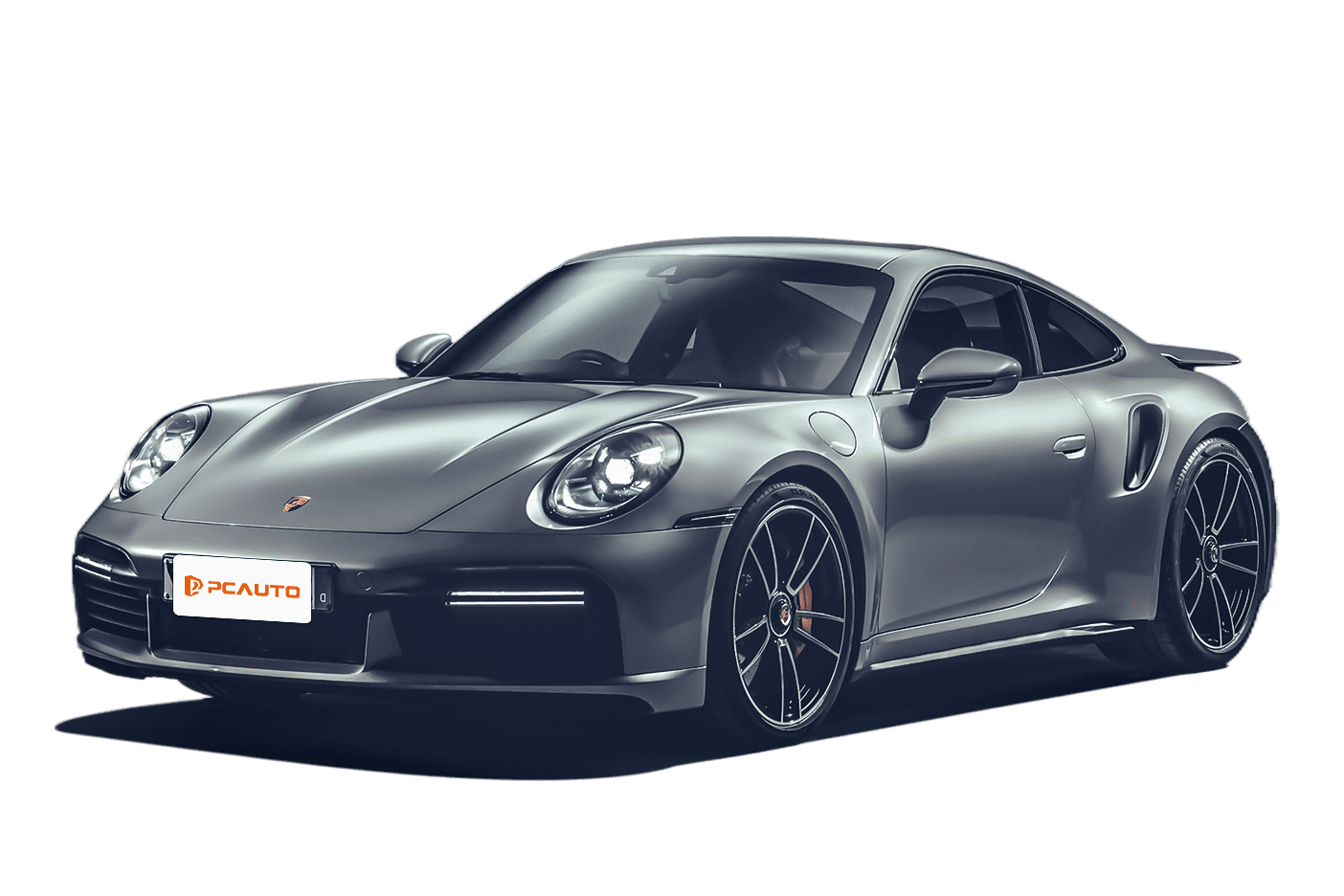
The 2025 Porsche 911 Carrera, as a classic entry-level coupe, features a 0-100 km/h acceleration in 3.9 seconds with its 3.0T+PDK performance, combining practical daily configurations and iconic design to balance track excitement with commuting convenience.
10
Rank in Coupe

2021 Ferrari SF90 Spider, as the brand's first mass-produced plug-in hybrid convertible supercar, offers a 2.5-second 0-100 km/h acceleration, a 14-second retractable hardtop, and adaptability to multiple scenarios, balancing extreme driving pleasure with practicality.