

Hyundai i30N 2020 Review

 Share
Share
 Segment
 Body Type
 Capacity(L)
 Engine Power(PS)
 Transmission
 Driven Wheels
In recent years, the C-Segment performance car market in Malaysia has been heating up. Many consumers want the practicality of daily commuting while also experiencing driving pleasure occasionally. The 2020 Hyundai i30N is designed to meet this demand. Its core selling points are a 2.0T turbocharged engine paired with a 6-speed manual transmission, balancing performance with family-use attributes. In this test drive, we will focus on evaluating its dynamic performance to see if it aligns with its "hot hatch" positioning, while also assessing its practicality for daily use.
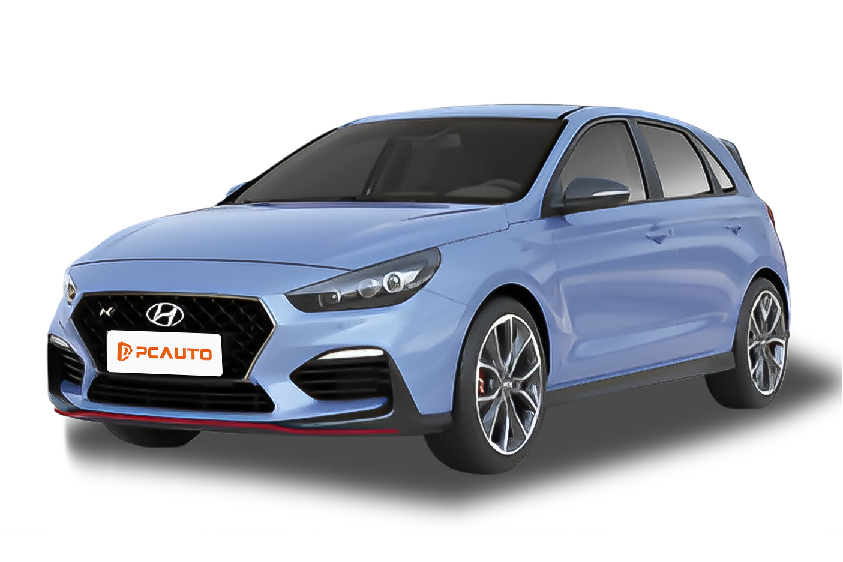
The exterior design of the i30N directly conveys its performance-oriented nature. The front features a large honeycomb grille with the N-series logo embedded in the center. The sharp-shaped LED headlights seamlessly integrate with the edges of the grille, offering high recognition. The side profile exhibits fluid lines, complemented by 19-inch multi-spoke alloy wheels paired with 235/35 R19 tires, enhancing its sporty stance. The black accents on the side skirts and exterior mirrors add layers of detail. The rear is equipped with a small spoiler and dual circular exhausts on both sides, while the tail lights adopt a horizontal design extending to the vehicle's flanks. The overall style is minimalist but infused with a sporty vibe.
Sitting inside the car, the interior is predominantly black with red stitching embellishments, such as around the steering wheel, seats, and gearshift, creating a sporty atmosphere. The dashboard layout is clear, with an 8-inch touchscreen centrally located, supporting the Sound Plus function, and offering good operational fluency. The instrument cluster features a 4.2-inch Supervision Cluster LCD display, showing information such as RPM, speed, and fuel consumption, with an intuitive interface. In terms of materials, the top of the dashboard is wrapped in soft-touch material, while the lower part uses hard plastic, fitting its class positioning. Configuration-wise, the driver's seat supports 10-way electric adjustment, the passenger seat is manually adjustable, and the rear seats support a 60:40 split-fold with a central pass-through, providing decent practicality. Features such as dual-zone automatic climate control, keyless entry, push-button start, and rain-sensing wipers are all included, offering sufficient convenience for daily use.
Regarding space, the vehicle measures 4,335mm in length, 1,795mm in width, and 1,447mm in height, with a wheelbase of 2,650mm. The front-row seating space is ample, and after a 180cm passenger adjusts the seat, there is still a fistful of headroom remaining. The rear offers about two fists of legroom and one fist of headroom, making it adequate for family daily use. The trunk capacity is 395L, which can be expanded by folding down the rear seats, providing enough space for large items such as baby strollers or suitcases. Interior storage spaces, including door pockets, center armrest boxes, and cup holders, are well-designed for practicality.
Dynamic performance is the core strength of the i30N. It is equipped with a 2.0T turbocharged engine that delivers a maximum output of 275PS and a peak torque spread across 1450-4700rpm, paired with a 6-speed manual transmission. At startup, the clutch biting point is clear, and coordinating the clutch with the accelerator is easy to get the hang of. The turbo kicks in early, and you can feel significant power delivery around 1500rpm, offering smooth acceleration. When switched to sport mode, the throttle response becomes more sensitive, and the exhaust note during downshifts sounds more exhilarating. During overtakes, pushing the pedal delivers immediate power response. The officially stated 0-100km/h acceleration time is 6.1 seconds, and the actual experience certainly provides a noticeable push-back feel.
In terms of handling, the steering wheel is precise, with minimal play and decent directional accuracy. The suspension system is on the stiffer side, providing adequate support during cornering, effectively suppressing body roll, and giving the driver confidence when navigating curves. However, on bumpy roads, such as speed bumps or potholes, the vibration damping is not thorough, and rear passengers may feel significant jolts, compromising comfort. The braking performance is stable, with a linear pedal feel. During emergency braking, the body posture remains stable without noticeable nose dive.
Regarding fuel consumption, the official average fuel consumption is 8.5L/100km, while actual test drives showed an urban fuel consumption of about 10-11L per 100 kilometers and a highway fuel consumption of about 7-8L, meeting the expectations of a 2.0T performance car. For noise control, engine noise is relatively low at idle, but tire and wind noise become more noticeable at high speeds, although within an acceptable range. The seats are well-contoured and comfortable for long drives, but the rear seat cushions are relatively firm, making long-distance riding moderately comfortable.
Overall, the core highlights of the 2020 Hyundai i30N lie in its power performance and handling. With the 2.0T engine paired with a manual transmission, it caters to driving enthusiasts' needs. The car also comes well-equipped, offering safety features such as lane-keeping assist and automatic emergency braking, making it highly cost-effective among performance vehicles in its class. Compared to competitors like the Golf GTI, the i30N is more affordable with comparable features, and the manual version provides better driving pleasure. However, its stiff suspension and moderate rear comfort make it more suitable for consumers focused on driving experience rather than those purely seeking family comfort.
In summary, the 2020 Hyundai i30N is a C-segment model that balances performance and practicality, ideal for young families or individuals who need a daily commute vehicle while occasionally enjoying spirited driving. If you appreciate the handling feel of a manual transmission and have certain expectations for features and practicality, the i30N is a choice worth considering. It is not a pure track weapon but rather a balanced option that caters to daily driving and occasional driving excitement.
Hyundai i30N Car Compare
Hyundai i30N Loan Calculator
More Hyundai Reviews

Cars With Similar Price And Features
5
Rank in Hatchback

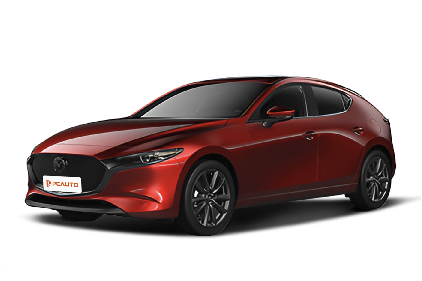
2025 Mazda 3 Hatchback 1.5 L highlights its KODO design, balancing fuel efficiency and practicality. Despite being an entry-level model, it retains core safety features, making it suitable for family users who value design and daily commuting.
6
Rank in Hatchback

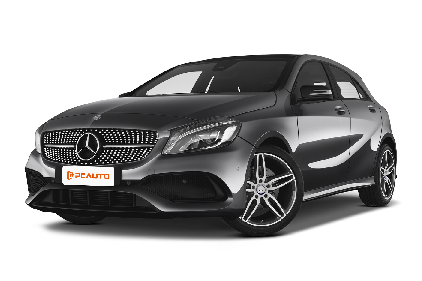
2018 Mercedes-Benz A-Class A200 Progressive Line offers luxurious features such as dual screens at an entry-level price, balanced space, and smooth power, making it a textured choice favored by young families and professionals.

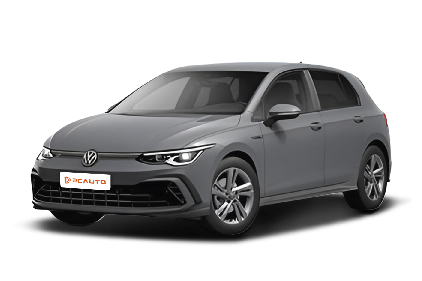
2024 Volkswagen Golf GTI Edition 50, as the anniversary model of the classic performance hatchback, features an upgraded Harman Kardon sound system, a fully digital instrument cluster, and a powerful 2.0T engine, combining driving pleasure with family practicality.