

Maxus V80 Review

 Share
Share/Exterior/001.jpg)
/Exterior/002.jpg)
/Exterior/003.jpg)
/Exterior/005.jpg)
 Segment
 Body Type
 Capacity(L)
 Engine Power(PS)
 Transmission
 Driven Wheels
In the Malaysian commercial vehicle market, models that balance practicality for carrying passengers and cargo, fuel efficiency, and basic configurations are always the top choices for SME owners and fleet operators. The Maxus V80 series, as a popular option in this segment, has consistently maintained stable attention due to its multi-seater layout, long-wheelbase space, and low fuel consumption with diesel power. This time, we focus on testing the 2014 Maxus V80 2.5L High Roof Panel Van LWB (hereinafter referred to as the V80 High Roof Panel Van) with the main purpose of verifying space utilization, power capacity under heavy loads, and overall daily operational cost performance.
The exterior of the V80 High Roof Panel Van follows the typical practical line of commercial vehicles, with overall square lines and no excess decorations. The front face features a simple black plastic grille paired with halogen headlights. While the design is modest, the durability of the components matches the positioning of a commercial vehicle. The most striking feature on the side of the vehicle is the high roof design, which reaches a height of 2552mm. Together with a length of 5700mm and a wheelbase of 3850mm, it reserves ample space for the cargo area. The rear is equipped with split-opening doors that can open to a wide angle, making it convenient for forklifts or manual handling of large items. Reflective strips under the rear bumper improve nighttime visibility while driving. The lighting system uses halogen light sources for basic illumination needs, suitable for users focused on cost control.
Opening the door to the driver's cabin, the interior primarily uses dark-colored plastics, with materials leaning toward wear-resistance and practicality. The center console layout is straightforward, with function buttons concentrated within easy reach of the driver. The steering wheel is made of plastic and lacks multifunction buttons, but its moderate weight makes prolonged driving less fatiguing. The instrument cluster is a traditional mechanical needle type, displaying basic information such as RPM, speed, fuel level, and water temperature with clear and direct readings. In terms of core configurations, the vehicle comes standard with keyless entry, eliminating the hassle of frequently searching for keys. The front is equipped with a manual air conditioning system, with decent cooling speed to handle the local hot weather. A 220V/230V power outlet is a highlight, enabling temporary power supply for tools or small equipment inside the vehicle. The driver's seat is manually adjustable. While the adjustment range is limited, the support provided by the cushion and backrest is sufficient to accommodate long drives.
Space performance is the core advantage of the V80 High Roof Panel Van. The length of 5700mm and the wheelbase of 3850mm provide a spacious cargo area, while the high roof design ensures ample vertical space inside. Even when transporting taller items, there will be no issues with height limitations. The cargo area features a flat-floor design with no significant protrusions on either side, maximizing space utilization and making it suitable for stacking boxes, tools, or small equipment. Inside the driver's cabin, the front seats offer ample legroom and headroom. A 175cm driver can still have about two fists’ worth of headroom after adjusting the seating position. In terms of storage space, there’s an open storage compartment below the center console where a phone or documents can be placed, and the glovebox in front of the passenger seat is spacious enough to hold the vehicle manual and small tools.
In terms of performance, the V80 High Roof Panel Van is equipped with a 2.5L naturally aspirated diesel engine, producing a maximum horsepower of 138PS and peak torque available as early as 1800rpm. It is paired with a 5-speed manual transmission. During start-up, as long as the clutch engagement point is well-controlled, the power response is relatively positive even when the cargo area is loaded with around half a ton of goods, without significant difficulty. During acceleration, the torque output in the low RPM range is strong, delivering good power continuity when following other cars in urban roads or overtaking in suburban areas with throttle application after shifting. However, once the speed exceeds 80km/h, the power reserve decreases, and accelerating further on highways requires downshifting in advance. The gear lever has a long travel, but the gear positions are clear, aligning with the tuning style of commercial vehicles.
The handling and chassis performance focus on stability and practicality. The front suspension adopts a MacPherson independent suspension, while the rear suspension features an integral axle design. Paired with 215/75 R16 tires, the suspension can filter out most small bumps when driving on rugged roads. However, when encountering larger speed bumps or deep trenches, there is noticeable bouncing from the rear cargo compartment, though the overall vehicle posture remains stable. The steering system is hydraulic-assisted; at low speeds, the steering is relatively light, making it convenient for U-turns or parking in narrow streets. At high speeds, the steering becomes heavier, enhancing driving stability. In terms of braking, both the front and rear use ventilated disc brakes, and the braking force output is linear. Although braking distance extends slightly under heavy loads, the overall performance is as expected.
During fuel consumption testing, we simulated typical operation scenarios, driving approximately 50 km each on urban congested roads and suburban expressways while carrying 300kg of cargo in the compartment. The final measured combined fuel consumption was about 9.3L/100km, which is close to the official figure of 9.1L/100km, showing good fuel efficiency. With an 80L fuel tank capacity, the driving range under full fuel load can exceed 850km, reducing the frequency of refueling and making it suitable for long-distance transportation. In terms of noise control, the diesel engine noise at idle is relatively noticeable, but when driving, wind noise and tire noise become the main sound sources. These are within acceptable limits and won't significantly affect driving communication.
Overall, the core advantages of the 2014 Maxus V80 high-roof van version are focused on space, fuel consumption, and basic configurations. Compared to its peers like the Toyota HiAce or Isuzu N-Series, the V80 offers a larger cargo compartment, and the high-roof design is more suitable for transporting specialized goods. Additionally, standard features like keyless entry and a 220V power outlet provide slight convenience advantages. However, the interior materials and craftsmanship are relatively simple, and the multimedia configuration is fairly basic, making it suitable for users prioritizing practicality over comfort.
This vehicle is most suitable for small and medium business owners, such as furniture vendors, courier service providers, or small logistics companies. Its large cargo space meets transportation needs, while the low fuel consumption helps control operating costs. Additionally, the 15-seat version is also suitable for short-distance passenger transportation or employee shuttles. The rear air conditioning and ample legroom ensure basic comfort for passengers. Overall, the V80 series is a practical commercial vehicle without obvious shortcomings, embodying the concept of "utility first" quite thoroughly.
Final conclusion: The Maxus V80 is a commercial vehicle focusing on space utilization and operational costs, suitable for users requiring efficient transportation tools. If your need is for a vehicle capable of both cargo and passenger transport, prioritizing fuel economy and requiring only basic practical features, then the V80 will be a high-value choice.
Maxus V80 Loan Calculator
More Maxus Reviews
Cars With Similar Price And Features
1
Rank in Commercial
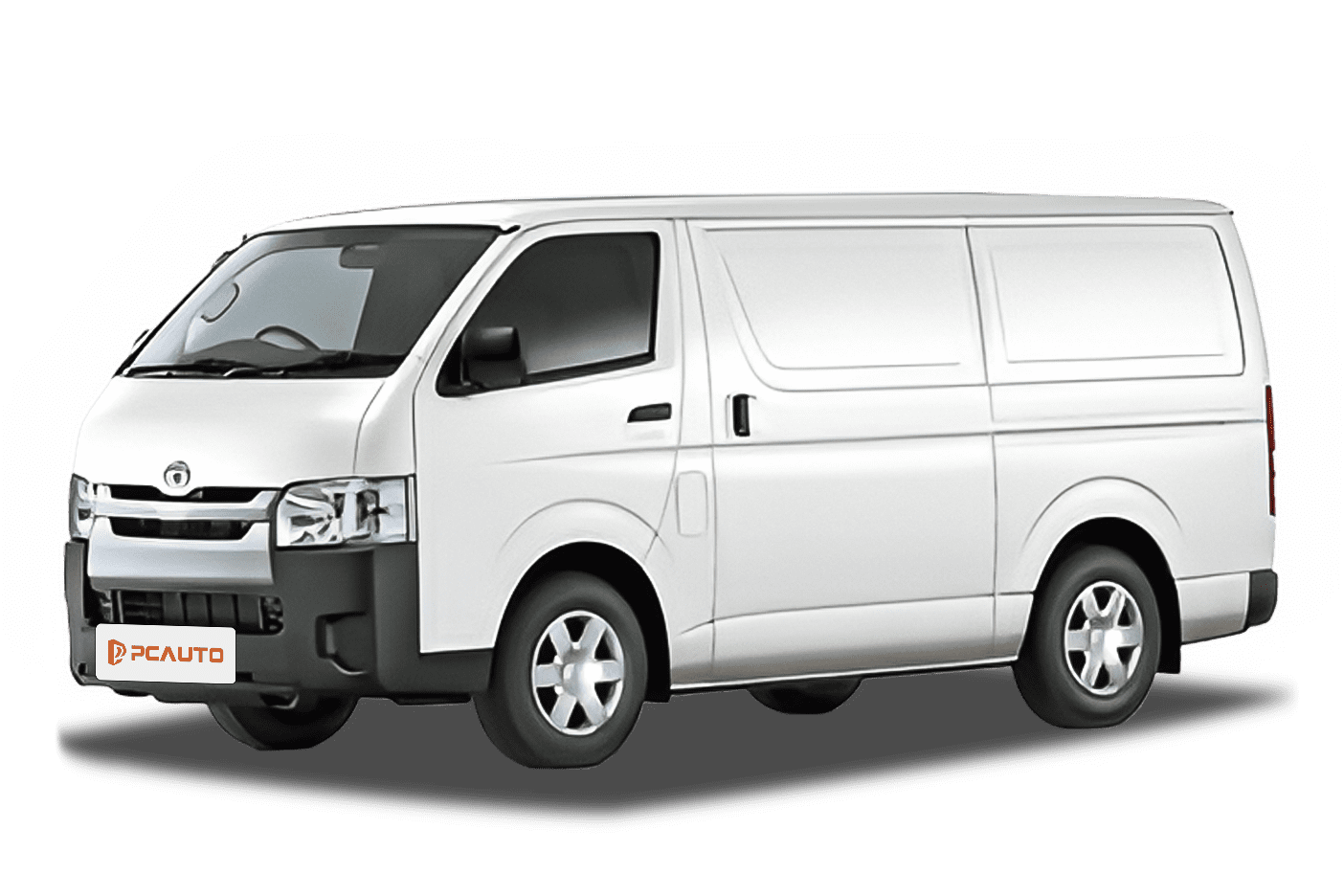
2018 Toyota Hiace Panel Van 2.5 Turbo Diesel is a small van that balances durability, off-road capability with four-wheel drive, and practical configurations, suitable for urban deliveries and rural unpaved roads.