

Toyota Hiace 2018 Review

 Share
Share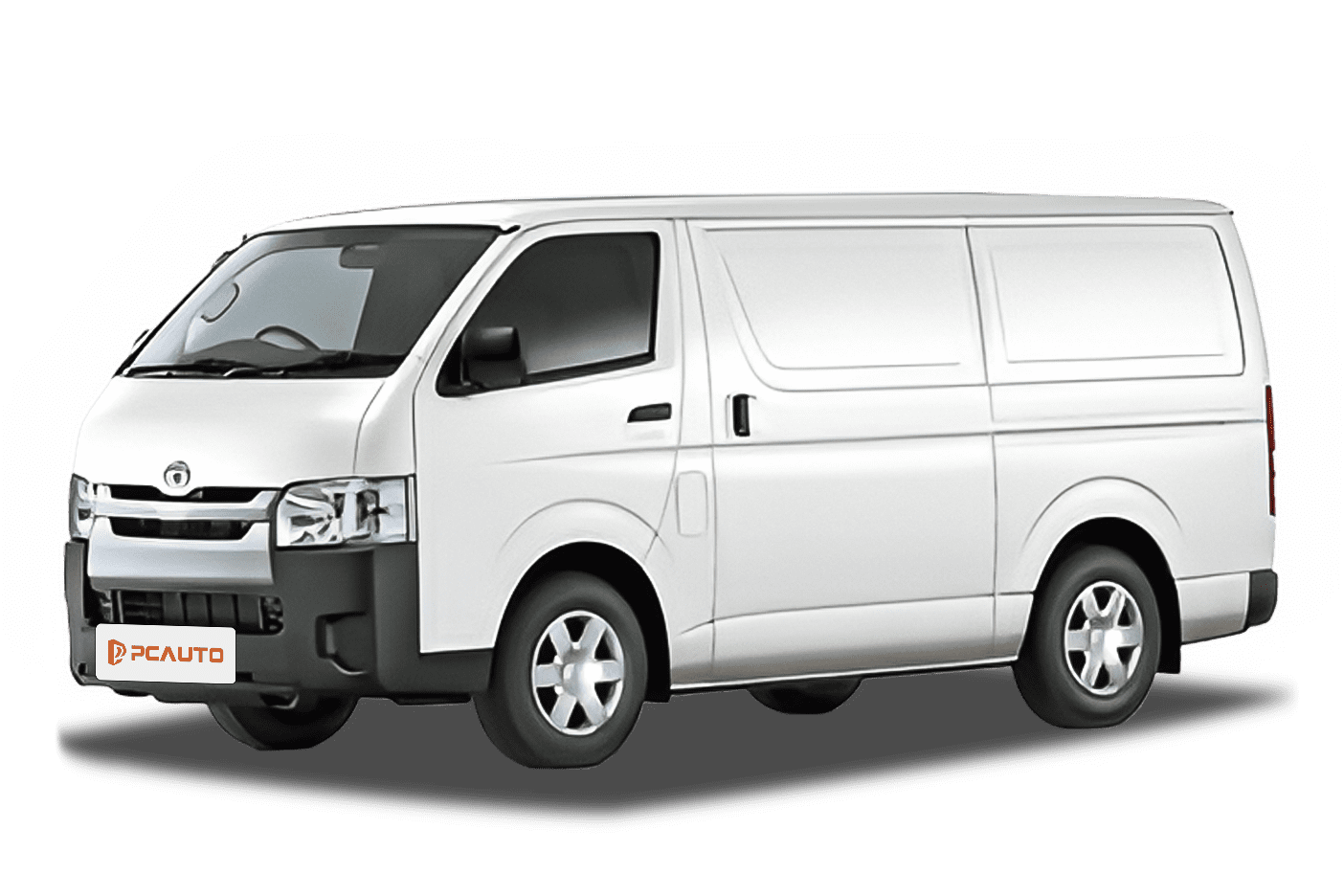
 Segment
 Body Type
 Capacity(L)
 Engine Power(PS)
 Transmission
 Driven Wheels
In Malaysia's commercial vehicle market, economically durable panel vans have always been the core choice for small business owners and self-employed individuals. These types of vehicles need to withstand the high-intensity daily cargo use while maintaining fuel efficiency and basic comfort. The 2018 Toyota Hiace Panel Van 2.5 Turbo Diesel is a popular model in this segment, attracting considerable attention with Toyota's consistent reputation for reliability, practical cargo space, and balanced power performance. This review will focus on static experience, dynamic driving, and practical usage scenarios to see whether this classic panel van still meets the current users' needs.
In terms of appearance, the 2018 Hiace Panel Van continues the practical style of commercial vehicles, with a boxy and straightforward design without unnecessary decorations. The front face uses a large black plastic grille, paired with halogen headlights on both sides, which is simple and easy to maintain. The side of the vehicle is a typical panel design, with a 3-door structure (front left and right doors + right sliding door). The opening width of the right sliding door is sufficient for loading and unloading large items. The body dimensions are 2930mm in length, 1545mm in width, 1335mm in height, and a wheelbase of 2570mm. These standard compact van dimensions make it more maneuverable in narrow city roads or parking lots. The rear features a vertical design, with vertically arranged tail lights and space under the rear bumper reserved for loading and unloading. The overall design prioritizes functionality. Although it doesn’t stand out in appearance, its durability aligns well with its commercial vehicle positioning.
Upon entering the vehicle, the interior is dominated by dark hard plastic, which feels hard to the touch but has evenly aligned edges, meeting the durability requirements of commercial vehicles. The dashboard layout is simple, with the manual air conditioning control area on the left, which has moderate resistance in its knobs and offers intuitive operation. In the middle is a basic audio system equipped with two speakers, providing basic auditory needs. The steering wheel is made of plastic, without multifunction buttons, but has a comfortable grip. The seats are made of fabric, with the driver's seat offering manual adjustment, and the passenger seat equipped with manual recline functionality to allow slight posture changes during long drives to ease fatigue. Notably, the vehicle is equipped with a 220V/230V power outlet, which is highly practical for tools or equipment requiring temporary power supply. The front row provides ample legroom and headroom, ensuring drivers up to 180cm won't feel cramped.
Space performance is a core strength of panel vans. The cargo box volume of the 2018 Hiace Panel Van meets the standards of its class. The interior is flat without unnecessary protrusions on both sides, making it easy to place pallets or large items. Rear storage space meets only basic needs, with storage compartments under the driver's seat and in front of the passenger seat for documents or small tools. The 2570mm wheelbase provides a stable driving foundation, while the minimum ground clearance of 195mm ensures the vehicle doesn't scrape the ground on light off-road or uneven road surfaces.
In terms of power, it is equipped with a 2.5L turbocharged diesel engine that delivers a maximum power of 102PS at 3600rpm. Maximum torque is output at as low as 1600rpm (specific data not explicitly provided but diesel engines typically excel in low-end torque). This is paired with a manual transmission. In actual driving, the power response during acceleration is smooth, and the torque output at low RPM is adequate to pull a fully loaded van. On urban routes or highway cruising, the engine maintains a speed of 60-80km/h at around 2000rpm. Downshifting and increasing RPM are required for overtaking, but the power reserve meets daily cargo transportation needs. The drivetrain is all-wheel drive (AWD), providing more stability in rainy, slippery roads or light muddy paths, making it suitable for users who occasionally drive on unpaved roads.
The handling and chassis performance lean towards comfort and practicality. The front suspension is a double wishbone independent suspension, and although the rear suspension is not explicitly labeled, it is estimated to be a leaf spring structure (a common configuration in commercial vehicles). When dealing with bumpy roads, the suspension can filter out most of the fine vibrations, but when encountering speed bumps or large potholes, the rear cargo area shows noticeable bouncing, which is a typical characteristic of leaf spring suspensions. The steering wheel has a slight play, but the direction is clear and daily driving does not require frequent adjustments. In terms of braking, the front brakes use ventilated discs, braking response is linear, and although the braking distance is longer when fully loaded compared to when empty, the overall performance is stable.
The fuel economy performance meets expectations. According to actual tests, fuel consumption is around 7-8L per 100 kilometers in urban conditions (half-loaded), and during highway cruising (unloaded), fuel consumption can drop to about 6L per 100 kilometers. The 70L fuel tank capacity provides a cruising range of approximately 800 kilometers, reducing the trouble of frequent refueling. As for noise control, the idling noise of the diesel engine is quite noticeable, but while driving, the wind and tire noise are overshadowed by engine noise. Overall, it falls within the acceptable range for commercial vehicles. There is no extra sound insulation, but it does not overly bother the driver in daily use.
Overall, the main advantages of the 2018 Toyota Hiace Panel Van 2.5 Turbo Diesel lie in Toyota's reputation for reliability, practical cargo space, all-wheel drive capability, and balanced fuel economy. Compared with competitors like the Nissan NV200 or Mitsubishi Triton Van in the same class, Hiace has stronger brand value retention and maintenance convenience. Although its features are relatively basic, its durability better meets the long-term needs of commercial vehicle users.
This vehicle is clearly suited for a specific user group: small and micro-business owners (such as delivery services, small-scale freight, tool rentals), individual entrepreneurs (such as hardware stores, small processing workshops), and users who occasionally need to handle off-road scenarios for outdoor work. It is not designed for users seeking comfort or advanced features, but rather focuses on "reliability, durability, and practicality" to meet the high-frequency needs of everyday cargo transportation.
In summary, the 2018 Toyota Hiace Panel Van 2.5 Turbo Diesel is a competent practical commercial vehicle. It does not boast flashy features or outstanding design, but its balanced performance in terms of reliability, space, and off-road capability makes it a worthy choice in the Malaysian commercial vehicle market. If you need a van that "gets the job done," requires minimal repairs, and lasts for a long time, it will not disappoint.
Toyota Hiace Loan Calculator
More Toyota Reviews
Cars With Similar Price And Features

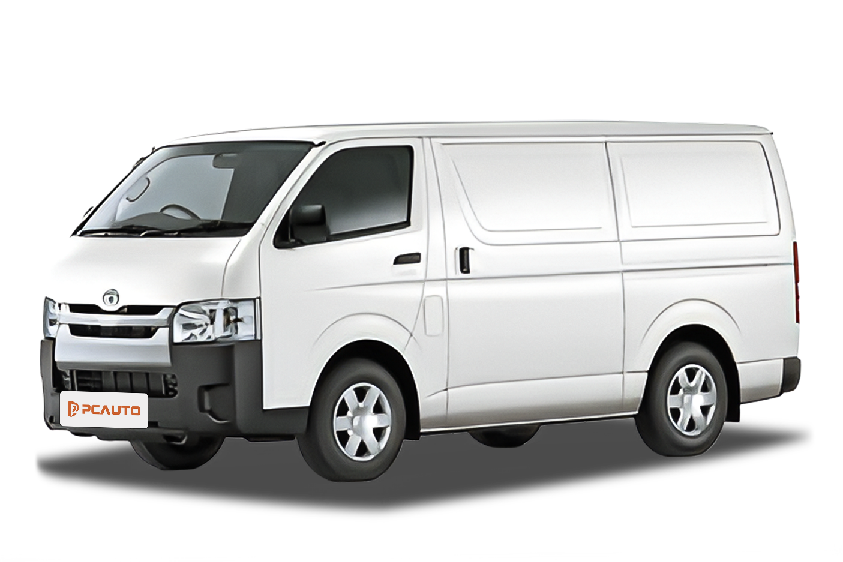
2018 Maxus V80 Panel Van is a high-roof, long-wheelbase commercial vehicle that balances practicality for transporting passengers and cargo, featuring low fuel consumption diesel power and practical configurations such as a 220V power supply, designed for small and medium-sized business owners and fleet operators.