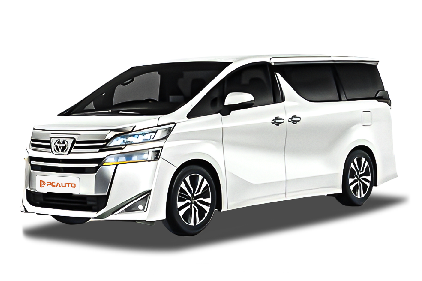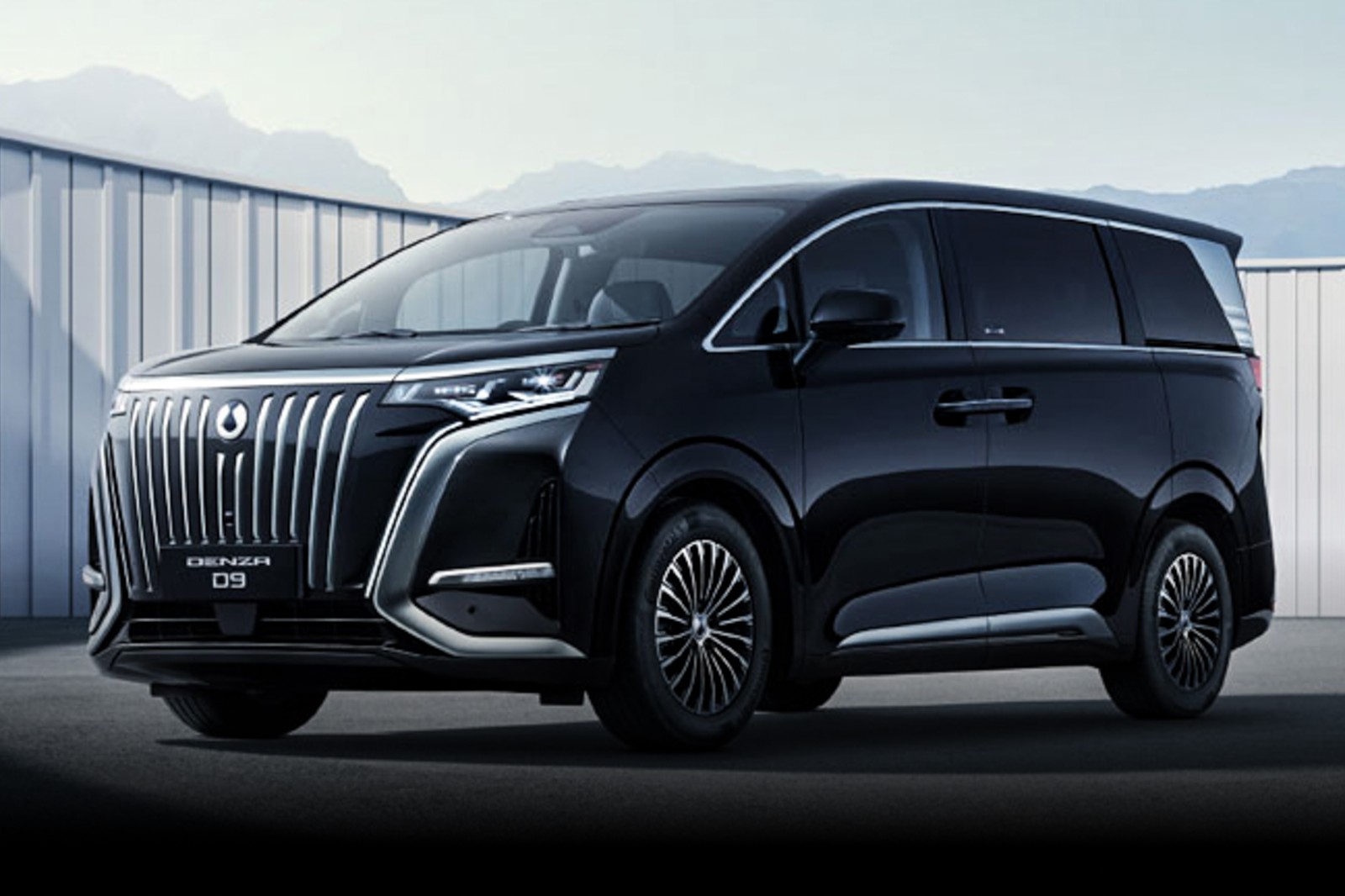
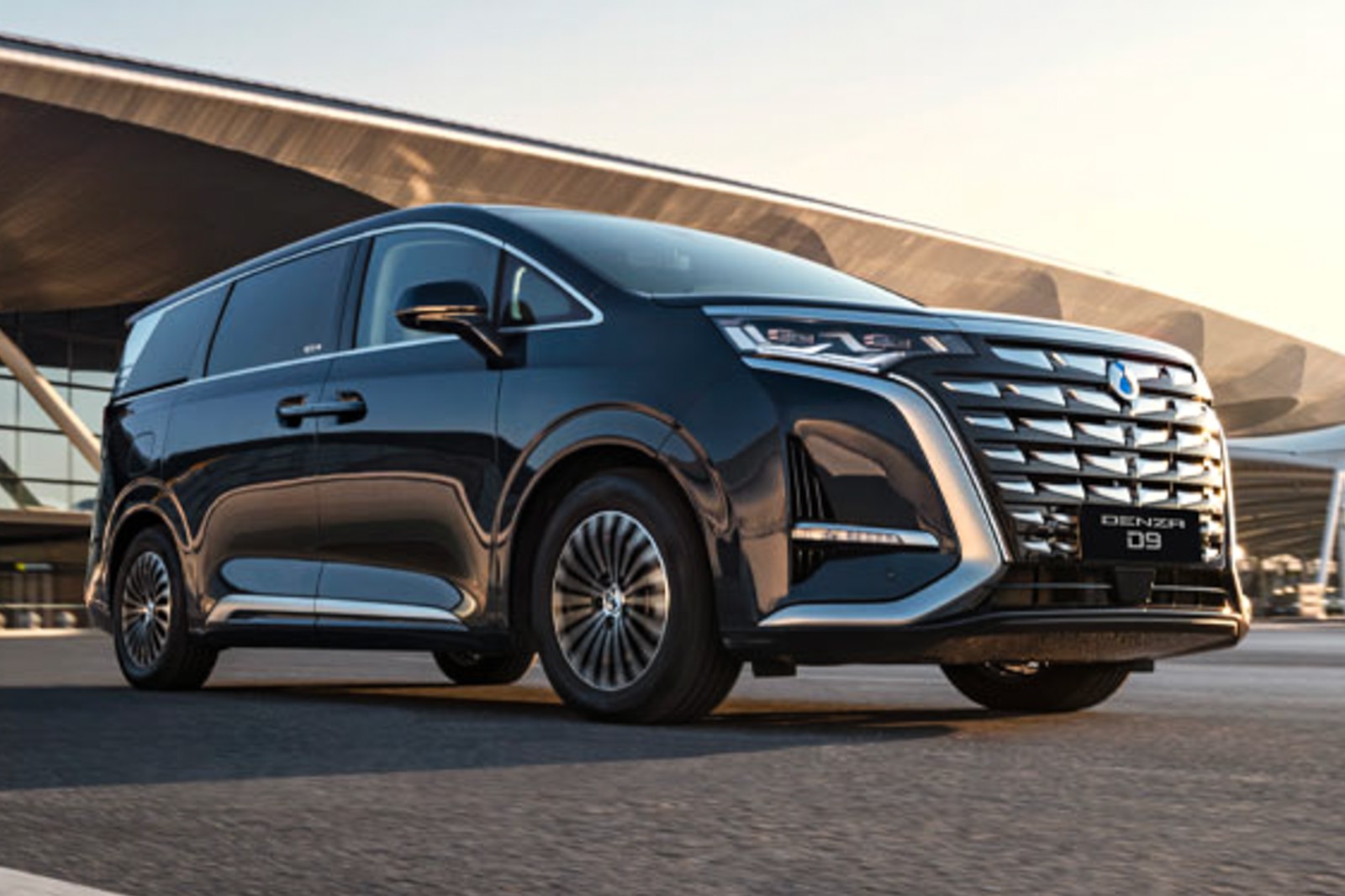
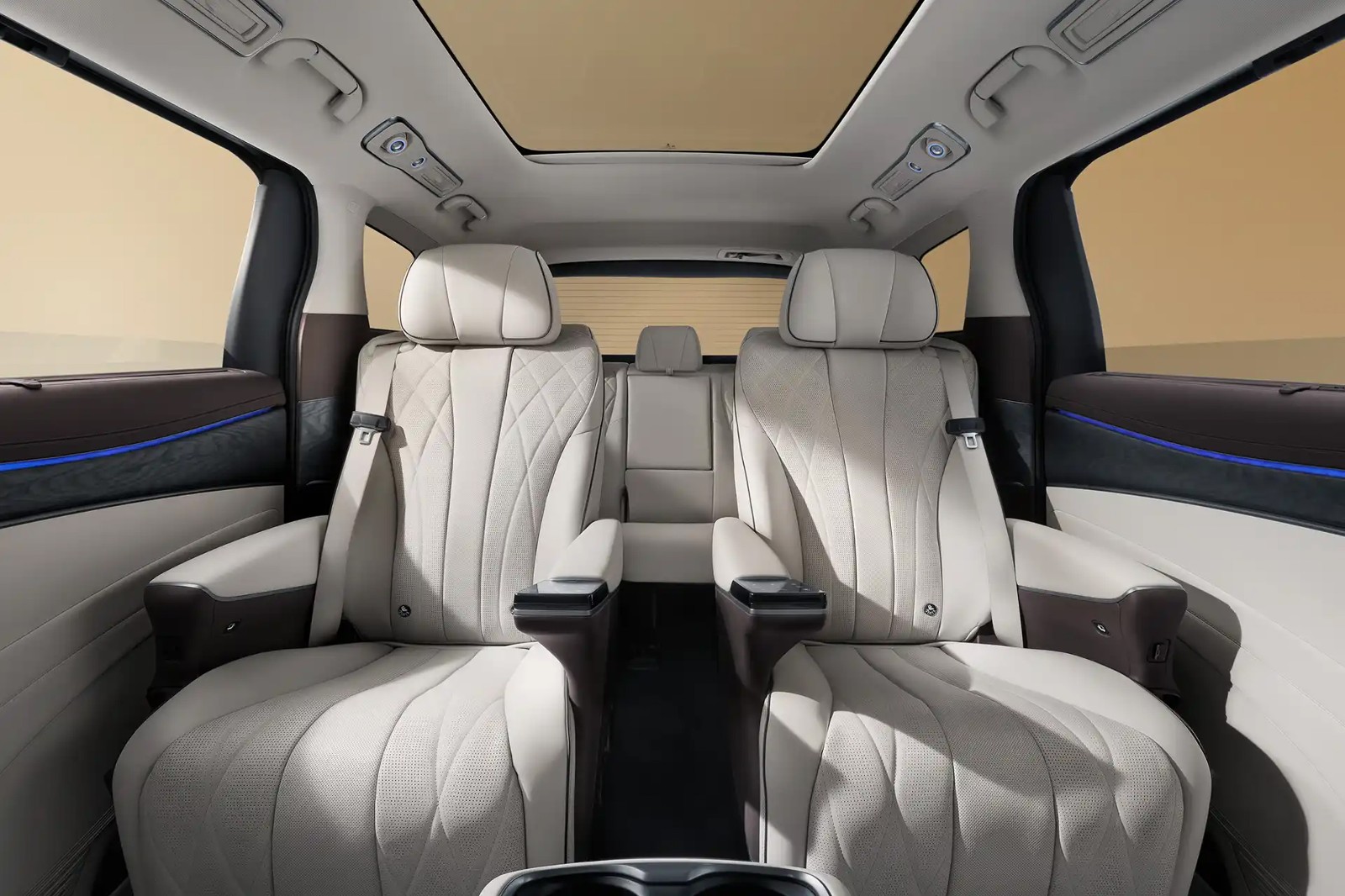
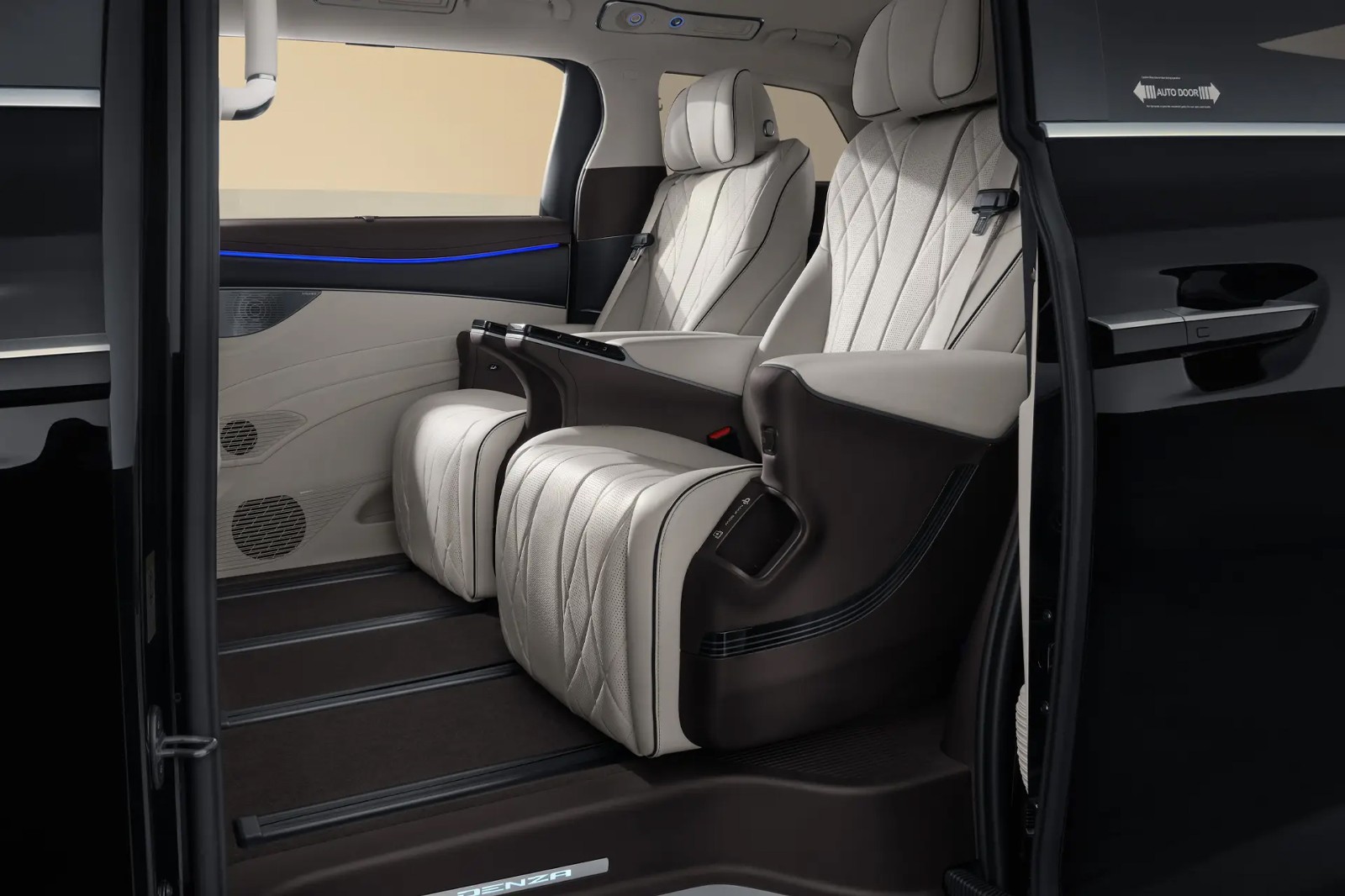
2025 Denza D9 Premium AWD
No.9 in Best MPVPrice
RM 309,000
Select a Vehicle Variant
2025 Denza D9 Advanced FWD RM 259,000
Summary
Looking at the 2025 Denza D9 Premium AWD? This D-Segment MPV debuted in 2025-2-20 with pricing from RM 309,000. There’s space for 7 passengers inside (5250mm long cabin), and it hits 6.9 km/h(s) smoothly. The 580 km range means fewer charging stops – ideal for busy lives.
Under the floor sits a 103.6 kWh Lithium iron phosphate battery pack. Fast charging takes 0.5 hours for a quick boost, while a full home charge needs - hours. No fancy jargon here – just an easy-to-live-with EV that’s ready for work or weekend adventures.
Under the floor sits a 103.6 kWh Lithium iron phosphate battery pack. Fast charging takes 0.5 hours for a quick boost, while a full home charge needs - hours. No fancy jargon here – just an easy-to-live-with EV that’s ready for work or weekend adventures.
Core Specs

Segment
D-Segment

EV Range(km)
580

Battery Type
Lithium iron phosphate battery

100 Kilometers(kWh)
6.9

Motor Arrangement
Front+Rear

Battery Capacity(kWh)
103.6

Seats
7

Length(mm)
5250

Width(mm)
1960

Height(mm)
1920

Wheelbase(mm)
3110

Boot Volume(L)
410
Other Variants
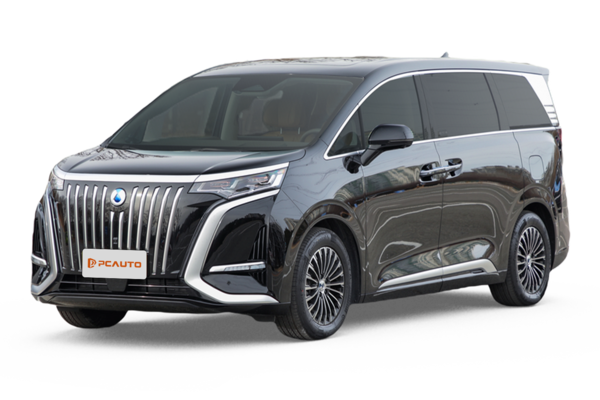
Price
RM 309,000
Body
5250×1960×1920
Motor Output(PS)
374
Motor Output(kW)
275
Battery Capacity
103.6
EV Range
580
Power Consumption
-
Related Q&A
View More >Q
when will toyota corolla cross hybrid be available
UMW Toyota Motor hasn't officially announced when the Toyota Corolla Cross Hybrid will hit Malaysian shores, but based on current market buzz and the brand's product rollout strategy in Southeast Asia, we're expecting it to land sometime in 2024. This crossover pairs a 1.8-liter petrol engine with an electric motor, promising better fuel efficiency and greener emissions – perfect for Malaysian drivers who value economy without sacrificing practicality.
The Corolla Cross Hybrid has already made waves in neighboring markets like Thailand, and it's easy to see why. Standout features include the smart Toyota Safety Sense suite and a surprisingly roomy interior. If you're keen on hybrid tech, keep an eye out for UMW Toyota's official updates. And while you're at it, it wouldn't hurt to check out rivals like the Honda HR-V Hybrid too – always good to shop around before making a call.
Hybrid vehicles are steadily gaining traction in Malaysia, and with the government throwing in some tax incentives, we can expect even more options to pop up in the coming months. Stay tuned!
 ButterflyFlightChaserSep 24, 2025
Q
What's the top speed of Suzuki Swift Sport?
The Suzuki Swift Sport tops out at around 200 km/h, and let me tell you, this little pocket rocket means business. Under the hood, you've got a 1.4-liter BOOSTERJET turbo engine cranking out 140 horsepower and 230 Nm of torque, paired with a slick 6-speed automatic manual transmission. The power delivery? Seriously impressive—perfect for Malaysian drivers who crave that rush behind the wheel. What really makes the Swift Sport stand out is its lightweight chassis and razor-sharp handling. It dances through corners, feeling nimble and alive, and the sport-tuned suspension? It just amplifies that fun, making every drive feel like a mini adventure. And here's the kicker: despite its sporty credentials, it's surprisingly fuel-efficient too. That makes it a solid all-rounder for both Malaysian city commutes and those longer highway stretches. If you're into hot hatches, you might also check out rivals like the Toyota GR Yaris or Honda Civic Type R—each has its own strengths in power and handling. But the Swift Sport? With its wallet-friendly price tag and well-balanced package, it's still the go-to pick for a lot of young drivers.
 HonOct 16, 2025
Q
Which model is a good purchase option? Honda Jazz or Toyota Yaris ?
When picking between the Honda Jazz and Toyota Yaris in Malaysia, it really comes down to your personal needs and what you value most in a car. The Honda Jazz stands out with its super flexible interior and that handy Magic Seat system – it’s a great pick if you need a car that can adapt to hauling people, cargo, or a mix of both. Under the hood, the 1.5-liter i-VTEC engine delivers a smooth drive, and it’s pretty easy on fuel too, which is always a plus.
On the flip side, the Toyota Yaris draws folks in with Toyota’s reputation for bulletproof reliability and generally lower maintenance costs. Its 1.5-liter Dual VVT-i engine offers consistent power, and the ride leans more towards comfort, making it a solid choice for daily city commuting and running errands.
Safety-wise, both come standard with ABS, EBD, and multiple airbags, but if you’re after extra active safety features, the higher-spec Yaris models might have a bit more to offer there.
Another thing to keep in mind is Malaysia’s rainy and humid climate – it can be tough on cars, so good rust protection and stable electronics are important. Both these Japanese models have built up a solid reputation in the local market, and their after-sales networks are pretty well-established too, which is reassuring.
My top tip? Head down to the dealerships and take both for a test drive. Get a feel for the seat comfort, how well they keep out road noise, and how they respond when you hit the gas or brakes. And don’t forget to compare any ongoing promotions, packages, and warranty terms. Doing your homework like this will help you make sure you end up with the car that fits both your budget and your lifestyle best.
 OceanblueOct 16, 2025
Q
When is the Launch Date of Proton Saga?
The all-new Proton Saga was officially launched on September 14, 2023. As Malaysia’s iconic national sedan, the upgraded model brings notable enhancements to its exterior, interior, and technological features. Highlights include a redesigned front end, upgraded LED daytime running lights, and a more contemporary cabin layout. Despite these improvements, the Saga maintains its affordable price point, reinforcing its position as one of the most popular economy cars in the Malaysian market. Consumers looking for more information can stay updated through Proton’s official channels, where details about specifications, features, and promotions are regularly published. It is also highly recommended that interested buyers visit a nearby Proton showroom to experience the new model firsthand. Because in addition to its refreshed design, the new Saga has been optimized for improved ride comfort and fuel efficiency, making it ideal for both daily commuting and family use. As one of Malaysia’s best-selling vehicles, its proven durability and comprehensive after-sales service network remain key reasons why it continues to earn the trust of car owners nationwide.
 DreamyEscapeJul 7, 2025
Q
What Are the Difference Variants of Tesla Model Y?
Currently, Tesla Model Y offers three different versions in the Malaysian market, namely the Rear-Wheel Drive Standard Range (RWD), the Dual-Motor All-Wheel Drive Long Range (Long Range AWD), and the Performance version. The Rear-Wheel Drive version features a single-motor design, with a range of approximately 455 kilometers (WLTP standard). It's suitable for daily commuting and comes with a more affordable price. The Long Range version is equipped with dual motors, capable of achieving a range of up to 533 kilometers (WLTP). It strikes a balance between performance and practicality, making it a great choice for users who need to drive longer distances. The Performance version also has dual motors, but it's been tuned for a sportier feel. It can accelerate from 0 to 100 kilometers per hour in just 3.7 seconds, with a range of 514 kilometers (WLTP). This version is ideal for consumers who seek driving pleasure. All three models come standard with Tesla's Autopilot driver assistance system and support OTA remote upgrades. Malaysian users should consider the coverage of charging facilities when making a choice. Tesla has already deployed a Supercharger network locally, but it's recommended to install a home charging pile for greater convenience. Additionally, the Model Y is slightly taller than the Model 3, making it more suitable for Malaysia's rainy weather and some rough roads. Its trunk space is also more flexible, making it a good fit for families.
 AmberliteJul 7, 2025
Q
How much is Perodua Aruz ?
The prices of different models of Perodua Aruz vary. The price of the 2023 Perodua Aruz 1.5L X is RM 62,500; the 2023 Perodua Aruz 1.5L H is sold at RM 68,000; and the 2023 Perodua Aruz 1.5L AV is priced at RM 75,500. Additionally, for example, the price of the 2021 Perodua Aruz 1.5 X is RM 72,900, the 2021 Perodua Aruz 1.5 AV is RM 77,900. The 2019 1.5 X model costs RM 72,900, and the 1.5 AV is RM 73,226. These models differ in configurations, such as tire specifications and some functional equipment. Consumers can choose the suitable model according to their own needs and budgets.
 CalmOceanAug 26, 2025
Q
What is the spec of the Lotus Emeya 2024?
The 2024 Lotus Emeya is a pure - electric high - performance GT sedan. It's equipped with a dual - motor all - wheel drive system, boasting a combined output power of up to 905 horsepower and a peak torque of 985 N·m. It can accelerate from 0 to 100 km/h in just 2.78 seconds and reach a top speed of 256 km/h. It comes with a 102 - kWh battery pack, offering a WLTP range of up to 600 km. It supports 350 - kW fast charging, and can add 180 km of range in just 5 minutes.
The Emeya adopts an 800 - volt high - voltage architecture and is outfitted with an active rear - wheel steering system, air suspension, and a carbon - ceramic braking system. A large amount of aluminum alloy and carbon fiber materials are used in the body to reduce weight.
In terms of the interior, the Emeya features a 55 - inch AR - HUD head - up display, a KEF 3D audio system, and premium leather seats. Its in - car system supports OTA updates.
For Malaysian consumers, the Emeya's fast - charging capability is well - suited to the local gradually improving charging network, and its powerful performance can also meet the power and handling requirements of drivers in the tropical region. It's worth mentioning that the Emeya continues Lotus' lightweight concept. Even though it's an electric vehicle, it maintains a good weight distribution through material optimization, which is highly beneficial for Malaysia's winding mountain roads and highways.
 DreamyHorizonSep 1, 2025
Q
Which tyre is important, front or rear?
When it comes to the question of which tires are more important, front or rear, both play crucial roles, but their specific priorities depend on the vehicle's drive type and driving conditions. For front-wheel-drive cars, the front tires handle steering, propulsion, and most of the braking force, so they wear faster. That's why it's recommended to put newer or higher-performance tires on the front—this ensures handling stability, especially on wet roads where it helps prevent understeer.
Rear-wheel-drive or high-performance cars, though, rely more on rear tire grip to deliver power. If the rear tires are too worn, they might cause slipping or even oversteer during acceleration, making the condition of the rear tires more critical here. No matter the drive type, though, the safest approach is to keep all four tires in good shape. Regularly checking tire pressure, tread depth (aim for at least 1.6 millimeters), and even wear is basic maintenance knowledge.
It's worth noting that some drivers mistakenly think only the tires at "high risk" of blowouts need priority replacement. In reality, tire aging is a whole-tire issue—even if they haven't blown, you should replace them promptly based on wear. If you end up with mixed tire brands or tread patterns front to rear, at the very least, ensure the tires on each axle (left and right sides) are identical. This avoids vehicle pulling caused by uneven grip.
 HappyCamelJan 23, 2026
Q
What does 70% visibility tint look like?
Automotive window films with a 70% light transmittance perform visually such that when looking out from inside the car, the view clarity is close to the state without a film, and sufficient visual distance can still be maintained at night or in low-light environments, meeting the minimum light transmittance requirements for front windshields and driving view areas specified in national standards. When observed from outside the car, the interior outline can still be clearly identified at this transmittance, but the privacy is relatively limited. Such films usually present light or neutral tones and do not significantly alter the original color of the glass. Their technical implementation requires combining high-transmittance base materials (such as high-quality PET) with precision coating processes to ensure that ultraviolet and infrared rays are blocked while maintaining optical performance. It should be noted that the actual light transmittance effect is affected by the transmittance of the original car glass. If the original glass transmittance is 80%, a film material with a transmittance of more than 87% must be selected to ensure that the overall transmittance after film application meets the standard. Professional testing requires the use of a split-type light transmittance meter, and it is difficult to accurately judge the value with the naked eye.
 MoonlitSerenadeFeb 13, 2026
Q
What is MT shift?
MT gearbox, or manual gearbox, with the full English name Manual Transmission, is a mechanical transmission system that enables the driver to change gear engagement positions by manually operating the clutch and gear shift lever. Its core principle involves adjusting the transmission ratio through different gear combinations to achieve power transfer and speed control. Structurally, it primarily consists of an input shaft, an output shaft, synchronizers, and gear sets, featuring high transmission efficiency (up to 95%-98%), low maintenance costs (requiring only periodic gearbox oil changes), and superior fuel economy (approximately 5%-15% more fuel-efficient than automatic transmission versions of the same model). For drivers, the MT gearbox delivers a more direct mechanical control experience. Particularly when starting on inclines or downshifting during turns, engine braking or rapid power response can be achieved through precise coordination of the clutch and accelerator. However, frequent operation in urban traffic congestion may increase driver fatigue. In the local market, mainstream models such as the Perodua Myvi and Proton Saga continue to offer MT variants, typically priced 8,000 to 15,000 ringgit lower than similarly equipped automatic transmission models, making them ideal for budget-conscious consumers or those seeking greater driving engagement. Regular inspection of synchronizer wear is essential to prevent gear grinding during shifts, and gearbox oil conforming to JASO GL-4 or manufacturer-specified standards must be used to prolong service life.
 DoveMar 26, 2026
Popular Cars
Model Year
Car Compare
Car Photo
Model List
DENZA D9 is a D-Segment MPV EV launched by DENZA. PCauto has cataloged various variants of this car produced from 2025 to 2025.You can compare differences in detail at the parameter table.
Among the 2 variants of DENZA D9, prices range from the affordable RM 259,000 to the most expensive RM 309,000.You can find different horsepower versions ranging from 313PS to 374PS.
DENZA D9 offers 275 Permanent Magnet Synchronous Motor, 230 Permanent Magnet Synchronous Motor Motor and 103.6kWh battery. Check the spec sheet for more details.
2 Models on Sale
2025