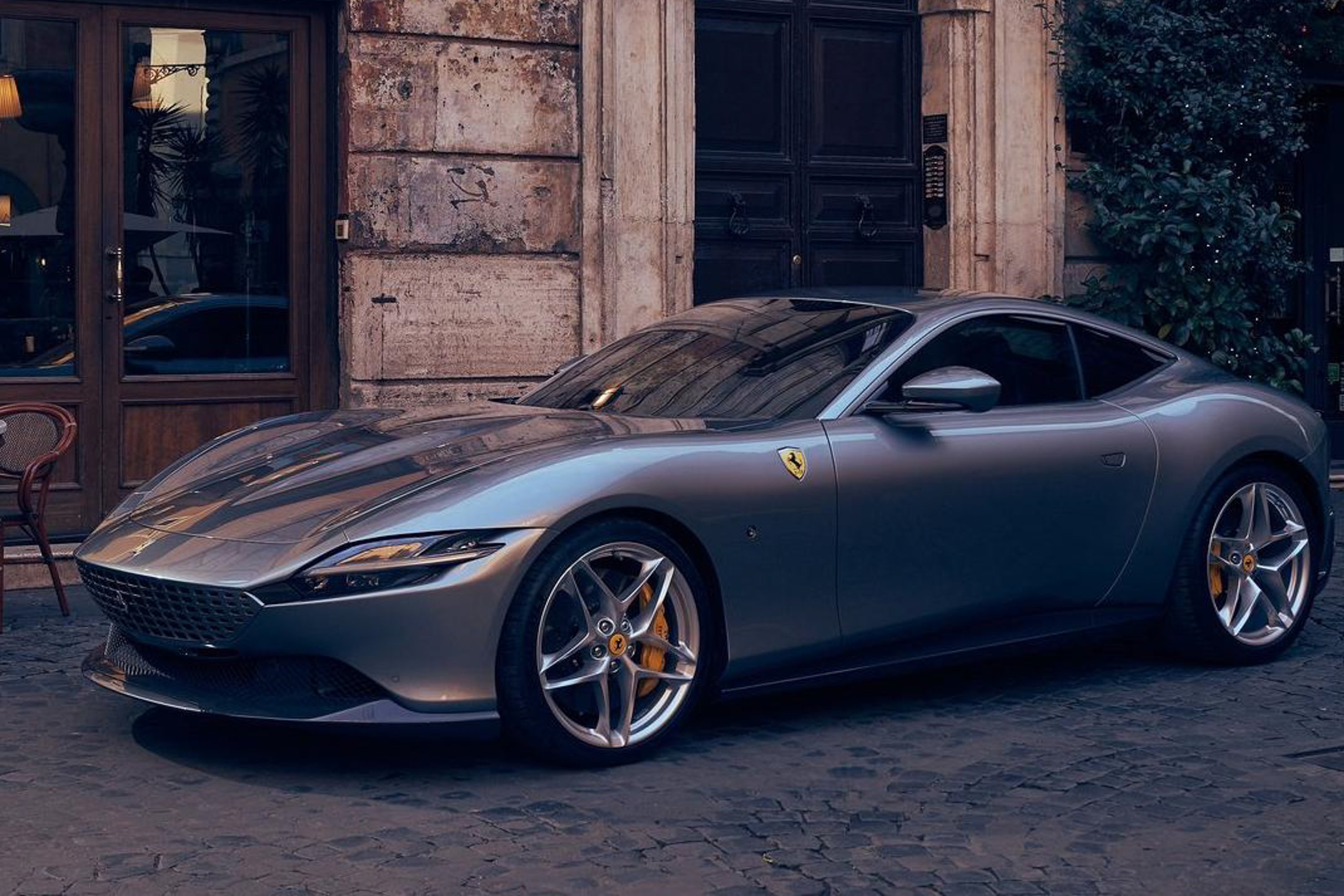
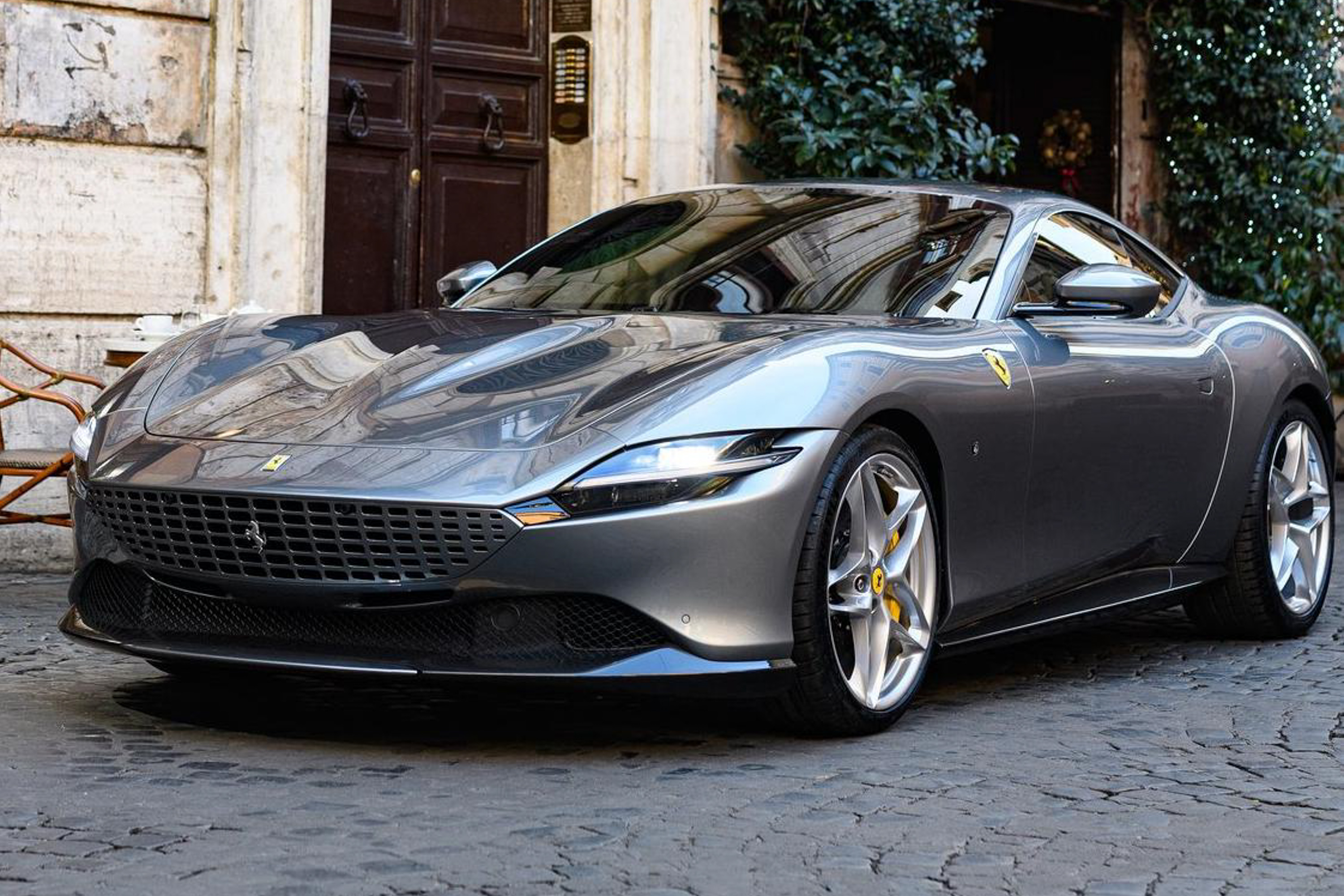
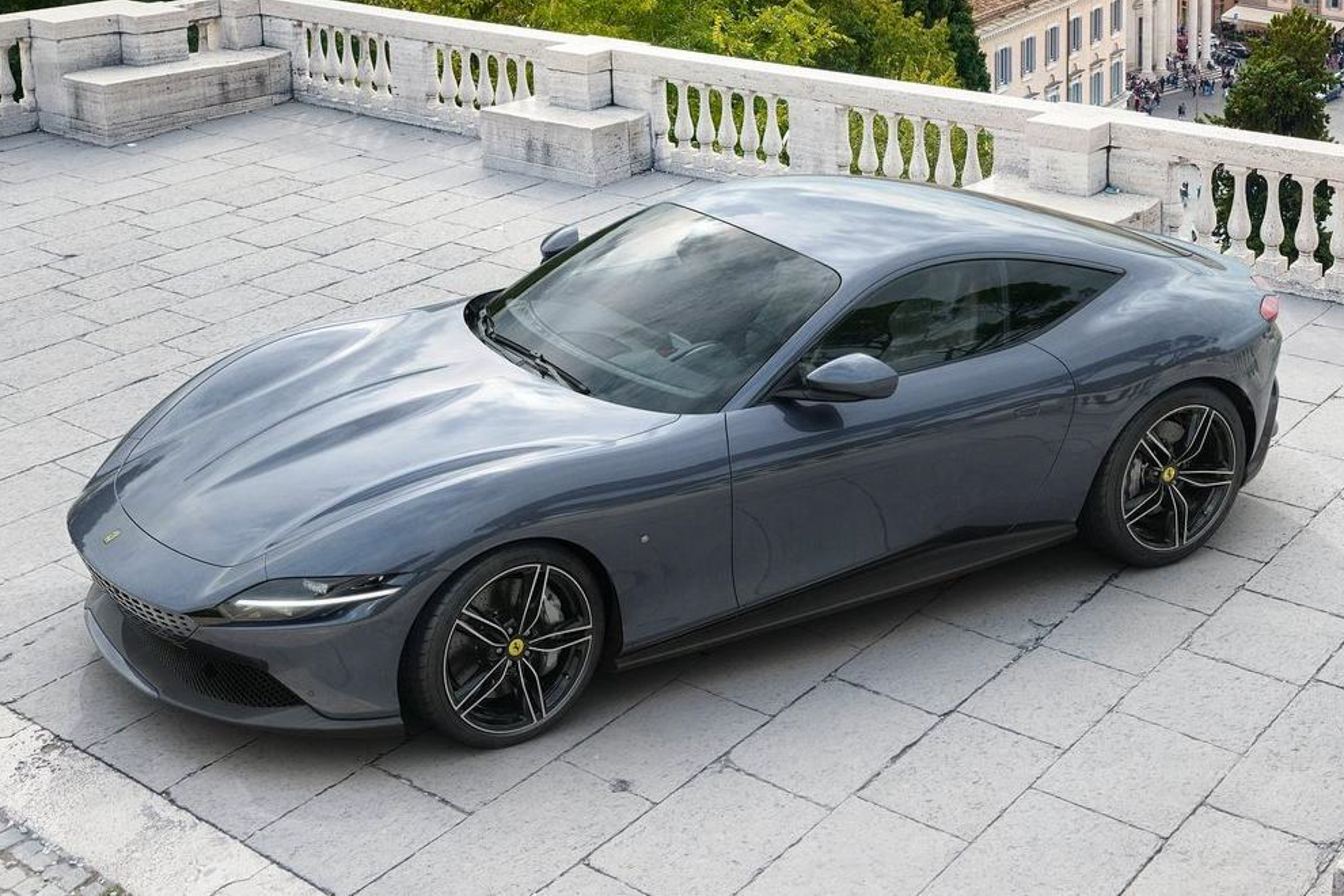
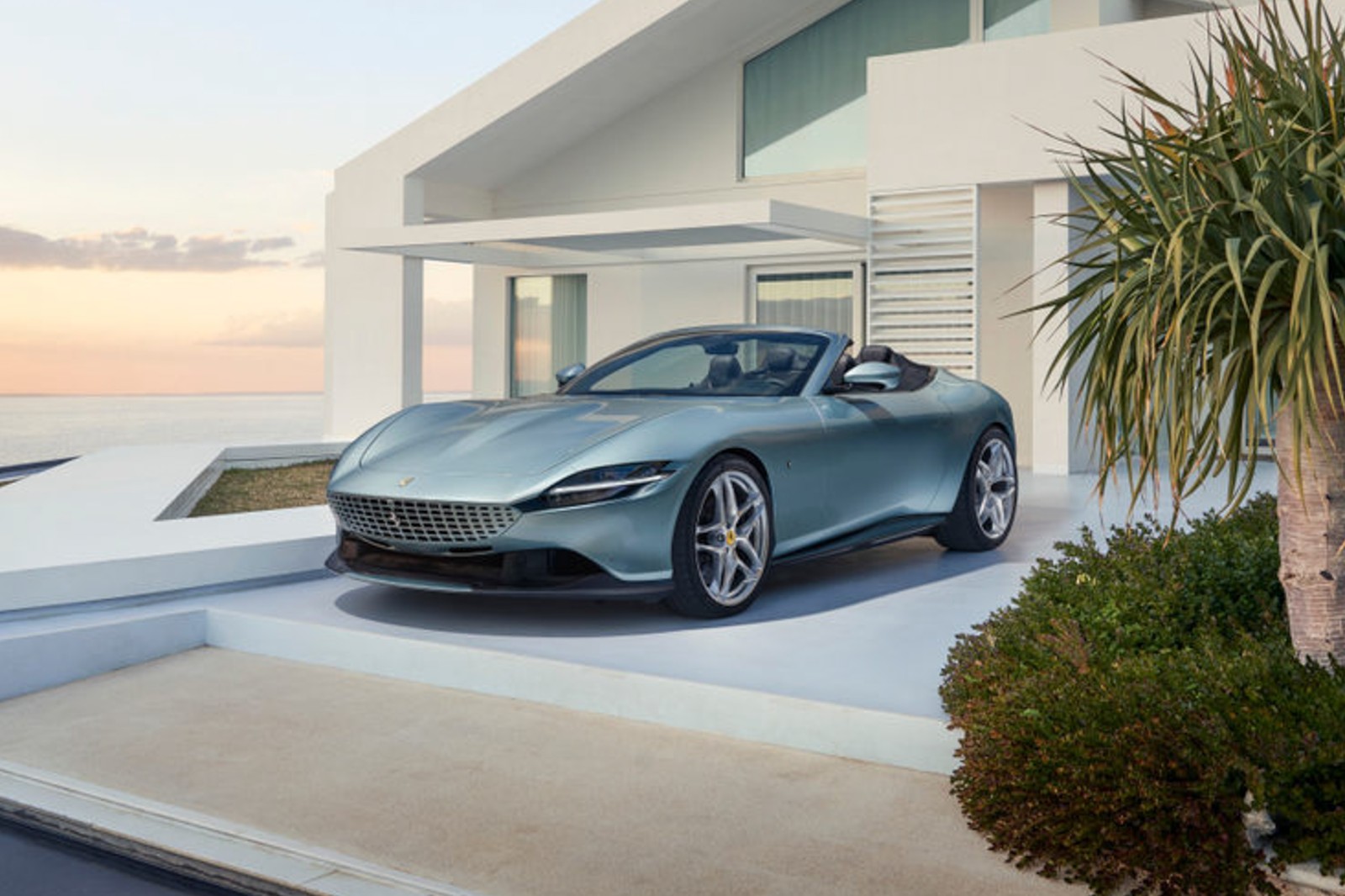
2020 Ferrari Roma 3.9L V8
No.8 in Best CoupePrice
RM 968,000
Select a Vehicle Variant
2023 Koenigsegg Jesko Attack 5.0L V8 TBC
Summary
Drivers love the 2020 Ferrari Roma 3.9L V8, a Super Car Coupe launched in 2020. At RM 968,000, it’s great value. Carry 2 people easily – the roomy interior measures 4656mm long, 1974mm wide, and 1301mm tall. Ideal if you haul kids or gear but want easy city handling.
It cruises smoothly at up to 320km/h. With its 3855cc engine, you get lively acceleration without high fuel costs. For a versatile ride that’s stylish and dependable, the 2020 Ferrari Roma 3.9L V8 ticks every box.
It cruises smoothly at up to 320km/h. With its 3855cc engine, you get lively acceleration without high fuel costs. For a versatile ride that’s stylish and dependable, the 2020 Ferrari Roma 3.9L V8 ticks every box.
Core Specs

Segment
Super Car

Engine Capacity(cc)
3855

Transmission
DCT

Fuel Comsumption (L/100km)
-

Fuel Tank(litres)
80

Top Speed(km/h)
320

Seats
2

Length(mm)
4656

Width(mm)
1974

Height(mm)
1301

Wheelbase(mm)
2670

Boot Volume(L)
272
Other Variants
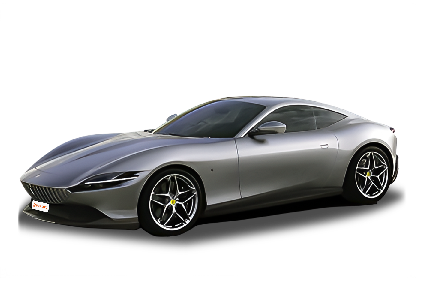
Price
RM 968,000
Body
4656×1974×1301
Engine Power(PS)
620
Engine Torque(Nm)
-
TRANSMISSION
DCT
Fuel Consumption
-
Related Q&A
View More >Q
What is the range of the 2024 E-Class?
The 2024 Mercedes-Benz E-Class offers varying range figures depending on the powertrain. The plug-in hybrid variant (E 300 e) delivers an estimated 100-120 km of pure electric range under WLTP standards—ideal for daily short commutes. Meanwhile, conventional fuel models rely on tank capacity, with combined fuel consumption around 6-7L/100km, enabling a full-tank range of roughly 800-900 km.
Equipped with fourth-gen plug-in hybrid tech, the E-Class supports fast charging, reaching 80% in about 30 minutes while retaining the long-distance convenience of a combustion engine. Keep in mind that real-world range depends on driving habits, road conditions, and climate—frequent stop-and-go or high-speed driving can reduce electric mileage.
For those eyeing electrified options, rivals like the BMW 5 Series PHEV or Audi A6 TFSI e offer similar performance-efficiency trade-offs. Mercedes’ electrification roadmap is clear (think future EQE sedan), but for now, the E-Class PHEV remains a pragmatic balance of usability and sustainability.
 YipDec 18, 2025
Q
What is the engine 2.0 L 4 cylinder for 2021 Hyundai Elantra?
The 2.0-liter naturally aspirated four-cylinder engine (model: Nu MPI) equipped in the 2021 Hyundai Elantra is a power unit that emphasizes fuel economy and smoothness. It has a maximum output of 149 horsepower (110 kilowatts) and a torque of 179 Nm. It is mated to a 6-speed automatic transmission or a 6-speed manual transmission (depending on the configuration), which is suitable for urban commuting and long-distance driving needs in Malaysia.
This engine uses an aluminum alloy cylinder block to reduce weight and is equipped with Dual Continuous Variable Valve Timing (Dual CVVT) technology to optimize intake and exhaust efficiency. The official combined fuel consumption is about 6.1 liters per 100 kilometers, meeting the local users' expectations for energy-saving performance.
It's worth noting that similar - displacement engines are also available in rival models in the same class, such as the Toyota Corolla or the Honda Civic. However, the Smartstream series technology of the Elantra emphasizes a low - friction design. For example, it uses a thermal management system and low - tension piston rings to improve durability.
If users are looking for more power, they can consider the 1.6T turbocharged version of the Elantra N Line. Nevertheless, the 2.0L version remains a practical choice in Malaysia's rainy and hot climate, thanks to its lower maintenance costs and proven reliability. It is recommended to use engine oil that meets the API SP standard regularly to keep the engine in optimal condition.
 AmberGlowSunsetWarmSep 4, 2025
Q
How much is a used Tesla Model Y 2024 worth?
Here’s a natural-sounding English translation from an automotive editor’s perspective:
"Pricing for used 2024 Tesla Model Ys in the current market shows nearly new models hovering around RM 180k to RM 220k, depending on specs, mileage, and condition. Performance variants or units equipped with FSD typically command a 10-15% premium over base models, while cars exceeding 10,000 km see a 5-8% price dip.
Pro tip for EV shoppers: Prioritize battery health checks—expect under 5% degradation for cars under two years old. Also verify if Supercharging privileges transfer with ownership, as these significantly impact resale value.
One quirk of EVs? Their depreciation curve differs from ICE cars—steeper in the first three years but stabilizing later. That makes 2024 models prime for value hunting, especially ex-display or demo units in good nick. Don’t overlook Tesla’s OTA updates either; even used cars gain new features, a sneaky perk that adds value but often flies under the radar during pricing."
(Note: "RM" is retained for the Malaysian context; adjust to "$" or local currency if needed. The tone balances insider knowledge with conversational flair, avoiding robotic phrasing.)
 NedDec 2, 2025
Q
How many people can sit in Bugatti La Voiture Noire?
As a top-tier supercar, the Bugatti La Voiture Noire features a two-seater layout, which can only accommodate two people: a driver and a passenger. This design aligns with its positioning of ultimate performance and luxury, focusing on providing a unique driving experience for the occupants. For car enthusiasts in Malaysia, the rarity of this car (only one in the world) and its hand - crafted customization process are particularly precious. It is equipped with an 8.0 - liter W16 quad - turbocharged engine that can unleash an astonishing 1500 horsepower. It can accelerate from 0 to 100 km/h in just about 2.5 seconds, demonstrating Bugatti's technological pinnacle in the supercar field.
Although the practicality of the La Voiture Noire is limited, this kind of vehicle places more emphasis on symbolic meaning and collectible value. If high - end car enthusiasts in Malaysia have the opportunity to see the actual car, they can admire its carbon - fiber body and retro - futuristic design language up close. For example, details such as the central spine line inspired by the classic Type 57 SC Atlantic and the hidden wheel covers. These elements together contribute to its astonishing price tag of over 11 million euros.
It's worth noting that similar limited - edition supercars need to go through special import procedures in Malaysia, and daily driving may be restricted by local road conditions. However, there's no doubt about its status as a work of art in the automotive industry.
 DazzlingRayAug 4, 2025
Q
How heavy is a 2016 Lancer?
The weight of the 2016 Mitsubishi Lancer varies depending on the trim level and equipment, generally ranging from around 1,200 to 1,400 kilograms. For instance, the base Lancer ES tips the scales at approximately 1,210 kg, while the higher-spec Lancer GT might weigh in closer to 1,350 kg. The exact figure can also depend on whether it's equipped with all-wheel drive or other optional extras.
For Malaysian drivers, knowing a car's weight is useful for gauging fuel efficiency and handling characteristics. Typically, a lighter body makes for more agile city driving and better fuel economy, while a slightly heavier build can contribute to more stable highway cruising. What's more, weight also plays a role in choosing the right tires and suspension setup, so it's a good idea for owners to check these components regularly to keep things safe on the road.
As a budget-friendly sedan, the Lancer has found favor in Malaysia thanks to its solid reliability and affordable maintenance costs, making it a practical pick for daily commuting and family use.
 NiaOct 20, 2025
Q
How big is the 2024 Tesla Model 3?
The 2024 Tesla Model 3 measures 4,720 mm in length, 1,848 mm in width, and 1,442 mm in height, with a wheelbase of 2,875 mm. While slightly tweaked from the previous generation, it retains its compact electric sedan DNA—perfect for city driving and tight parking.
Thanks to its EV platform, the rear legroom is surprisingly generous, and with a 425-liter trunk plus a front frunk, practicality is solid. For its class, the Model 3 sits in the upper mid-size range—roomy enough for daily use without feeling bulky.
A standout feature? The low-mounted battery pack lowers the center of gravity, boosting handling stability. And with a drag coefficient of just 0.23, efficiency gets a nice bump.
Oh, and if you’re into EVs, don’t sleep on the charging perks—Tesla’s Supercharger network is vast and fast, making road trips a non-issue.
 CreatorIdeaInnovationDec 15, 2025
Q
How much should I pay for a 2020 Nissan Altima?
In Malaysia, the used car prices for a 2020 Nissan Altima can vary quite a bit depending on things like condition, mileage, trim level, and where exactly you're looking. Generally speaking, you're looking at a ballpark range of around RM80,000 to RM120,000. Low-mileage examples in tip-top shape with all the bells and whistles might nudge closer to that RM120k mark, while higher-mileage units or base models will be more budget-friendly. When you're in the market, make sure to check the service records and accident history thoroughly. It's also a smart move to get a third-party inspection to really know what you're buying, and shop around at a few different used car dealers to compare prices and get the best deal. The Altima has always been a solid pick in Malaysia, known for its comfy ride and dependable performance. That 2.5-liter four-cylinder engine paired with the CVT gearbox delivers a smooth, easy drive that's perfect for family use. If fuel efficiency is a bigger priority for you, the hybrid version is worth considering, though it'll cost you a bit more. And don't forget to factor in insurance, road tax, and potential repair costs when budgeting for your used Altima – that way you can keep the total cost of ownership in check.
 ButterflyFlightChaserOct 24, 2025
Q
What is a wheel hub in a car?
The wheel hub is a cylindrical metal support component inside the inner contour of a car tire, connected to the axle at its center. It is commonly referred to as the rim, steel rim, or wheel bell. As the core component of the wheel, its functions include supporting the tire, transmitting driving force and braking force, and directly affecting driving safety, handling stability, and comfort.
In terms of materials, steel wheel hubs have low cost and strong fatigue resistance but are heavy and have poor heat dissipation. Aluminum alloy wheel hubs, on the other hand, are more lightweight, which can effectively reduce engine load, improve heat dissipation efficiency, and enhance high-speed driving stability, making them predominantly used in mid-to-high-end models.
The structure of a wheel hub consists of the rim (the part where the tire is installed), the wheel center (the part connected to the axle), and the spokes (the supporting structure connecting the two). Manufacturing processes include gravity casting (low cost but prone to air bubbles), forging (high strength but costly), and low-pressure precision casting (balancing performance and cost).
When purchasing, parameters such as the ET value (mounting surface offset) and J value (rim width) should be considered to ensure compatibility with the vehicle. For daily maintenance, avoid using corrosive cleaners and promptly repair scratches.
With technological advancements, wheel hubs made of new materials such as carbon fiber are increasingly being adopted in high-performance models, though aluminum alloy remains the market mainstream due to its lightweight properties, which offer significant advantages in improving fuel efficiency and driving experience.
 BlackFangMar 18, 2026
Q
How much is a 2018 D-Max?
The used car prices for the 2018 D-Max vary depending on factors like condition, mileage, trim level, and location. Current market rates are roughly between RM60,000 and RM90,000. Low-mileage, well-maintained high-spec models might edge closer to the upper end, while base trims or higher-mileage examples will be more affordable. This pickup comes with a 3.0T diesel engine, delivering reliable performance and strong off-road capabilities – perfect for users needing to balance cargo hauling with daily driving. Its modification potential is also a hit with enthusiasts. When buying, it's advisable to focus on checking for chassis rust, engine condition, and 4WD system status. If purchasing through a used car dealer, request an inspection report or arrange third-party testing. Additionally, the D-Max benefits from a comprehensive parts supply and service network, making post-purchase maintenance costs relatively reasonable. However, diesel vehicles do require regular fuel system cleaning and DPF maintenance to keep them running at their best. If your budget is tight, you could also consider same-year competitors like the Toyota Hilux or Mitsubishi Triton, but be sure to compare specs and service records thoroughly before deciding.
 LivelySpiritNov 21, 2025
Q
Does the 2025 Corolla Cross have a CVT transmission?
The 2025 Toyota Corolla Cross continues to come with a CVT gearbox here in Malaysia, and honestly, it's a solid fit. This transmission is known for its smooth shifts and fuel efficiency, which makes it perfect for our stop-and-go city traffic. Toyota's refined their CVT tech over the years—they've added simulated gear shifts to cut down on that annoying "rubber band effect" you get with older CVTs, and they've beefed up durability too. That's a big plus for Malaysian drivers who hate high maintenance costs.
Another thing to note is how well this CVT handles our tropical heat—it stays reliable even when the mercury spikes. Pair it with the Corolla Cross's 1.8L or 2.0L naturally aspirated engines, and you get a nice balance of power and fuel economy. If you're looking at the hybrid version, though—the Corolla Cross Hybrid—it uses Toyota's e-CVT system. Heads up, that's not a traditional CVT; it's a power-split device that does a smarter job of blending the electric motor and petrol engine for better efficiency.
For Malaysian owners, keeping this gearbox happy is straightforward: just stick to the recommended CVT fluid change intervals (every 40,000 to 60,000 km, typically). And with Toyota's factory warranty backing it up, there's less to worry about when it comes to long-term ownership.
 FixerToolRepairOct 20, 2025
Popular Cars
Model Year
Car Compare
Car Photo
Model List
Koenigsegg Jesko is a Super Car Coupe car launched by Koenigsegg. PCauto has cataloged various variants of this car produced from - to -.You can compare differences in detail at the parameter table.
Among the 0 variants of Koenigsegg Jesko, prices range from the affordable TBC to the most expensive TBC.You can find different horsepower versions ranging from - to -.
Koenigsegg Jesko offers - engines and - transmission. Check the spec sheet for more details.
0 Model on Sale
2023
- Fuel Consumption: 18.09
- Engine Power(PS): 1298
- Driven Wheels: All Wheel Drive
- Electronic Stability Control(ESC)
- Blind Spot Info System
- Fuel Consumption: 18.09
- Engine Power(PS): 1298
- Driven Wheels: All Wheel Drive
- Electronic Stability Control(ESC)
- Blind Spot Info System
2023 Koenigsegg Jesko Attack 5.0L V8
TBCNot On Sale
2023 Koenigsegg Jesko Absolut 5.0L V8
TBCNot On Sale