
Q
byd atto 3 how many cc
 FoxSep 23, 2025, 03:26 PM
The Perodua Alza is one of Malaysia's most popular 7-seater MPVs, and its pricing varies depending on the trim and specifications. For the current 2023 model, you're looking at a price range roughly between RM62,500 and RM75,500, though actual figures might shift a bit with promotions or optional extras.
The base Alza 1.5L comes packing a Dual VVT-i engine, which is all about that efficient fuel economy – perfect for keeping running costs in check. Step up to the higher-spec versions, and you'll get the Advanced Safety Assist (ASA) system, featuring handy stuff like pre-collision warning and lane departure alert to boost your peace of mind on the road.
What really sells the Alza, though, is its flexible interior layout and smart storage solutions – it's a real workhorse for family life. In the Malaysian market, it goes head-to-head with rivals like the Proton Exora and Toyota Avanza, but the Alza holds its own with a solid mix of wallet-friendly pricing and reliable build quality, helping it maintain a strong market share.
If you're in the market for an affordable, practical family MPV, the Alza is definitely worth a spot on your shortlist. Swing by your nearest Perodua showroom for a test drive and to check out the latest deals – you might just find your perfect match.
Special Disclaimer: This content is published by users and does not represent the views or position of PCauto.
Related Q&A
Q
What is the lifespan of the battery in the BYD Atto 3?
The BYD Atto 3's battery lifespan typically sits around 8 to 10 years, though this can vary depending on your driving habits and charging routines. Under the hood (or rather, under the floor), it's packing BYD's in-house developed Blade Battery, a lithium iron phosphate (LFP) unit that's big on safety and long-term durability. Official specs tell us this battery can handle around 3,000 full charge-discharge cycles. Doing some quick math on daily usage, that translates to over 300,000 kilometers driven while still retaining more than 80% of its original capacity.
Now, for our friends in Malaysia, that hot climate might nudge the battery life a tiny bit, but the Blade Battery's thermal management system does a solid job of keeping temperatures in check. A pro tip? Try to avoid super frequent fast charging and leaving the battery sitting at 100% for ages – that'll help stretch its life even further. Let's not forget, battery longevity also ties in closely with regular maintenance. Keeping an eye on the battery's health status and sticking to the manufacturer's service recommendations are key moves.
Here's a reassuring thought: these days, the actual usable life of most EV batteries often outlasts how long owners typically keep their cars. Plus, BYD backs the Atto 3 with an impressive 8-year or 150,000-kilometer battery warranty, which covers the bulk of your ownership journey. So, Malaysian drivers, there's really no need to lose sleep over battery life with this one.
 LeafygreOct 15, 2025
Q
Can you put roof racks on a BYD Atto 3?
Yep, the BYD Atto 3 can definitely handle a roof rack, but you’ll want to stick with accessories specifically designed for this model to make sure everything fits right and stays safe. The Atto 3’s roof comes with pre-installed mounting points, which makes adding crossbars or a roof box a breeze—perfect for hauling bikes, surfboards, or extra luggage when you need the space.
In Malaysia, you can find both genuine BYD roof rack setups and third-party options that are certified, either at auto accessory shops or BYD’s authorized dealers. My tip? Go for products that have passed safety tests. You don’t want to risk damaging the roof structure by skimping here.
When you’re installing, keep an eye on the weight limits. The Atto 3’s dynamic roof load (that’s when you’re driving) is usually around 50-75kg, and the static load (when parked) is higher, but check your owner’s manual for the exact numbers—don’t guess on that.
Also, remember that a roof rack adds wind resistance, which can hit your EV’s range, especially at higher speeds. It’s probably best for shorter trips. And make a habit of checking the bolts now and then to keep everything tight.
For folks in Malaysia, our hot and humid weather can speed up rust on metal parts, so either pick roof racks made with rust-resistant materials or give them regular maintenance to keep them going longer. If you’re loading stuff often, you might also think about a rear-mounted bike rack or a tow hitch as alternatives—just make sure whatever you choose plays by local traffic rules.
 EleOct 15, 2025
Q
How many kilometers is Atto 3 full charge?
The BYD Atto 3, as a pure electric SUV, offers an official range of approximately 480 kilometers on a full charge under the WLTP standard. Now, real-world driving range can vary a bit depending on things like your driving style, road conditions, and how much you use the air conditioning – totally normal, right? But overall, it's more than capable of handling Malaysian drivers' daily commutes and those quick weekend getaways.
Given Malaysia's warm weather, a quick tip: using the AC sensibly and keeping a steady driving pace can really help optimize that range. And let's talk about peace of mind – the Atto 3's Blade Battery technology is a standout here, offering solid safety and stability, which is perfect for our local climate with its frequent rain and high temperatures.
For EV owners, staying on top of battery health checks and planning routes with public charging stations in mind will definitely make your driving experience smoother. Plus, the Atto 3 supports fast charging – you can go from 30% to 80% in around 30 minutes, which means way less time twiddling your thumbs at the charger.
The Malaysian government is really pushing for EV adoption these days, with more charging infrastructure popping up and some nice tax incentives. So, picking a high-value option like the Atto 3 isn't just about enjoying emission-free driving; it's also a smart move to align with the country's growing focus on greener mobility.
 ZonOct 15, 2025
Q
Can BYD ATTO 3 self drive?
The BYD ATTO 3, as a pure electric SUV, doesn't come with full self-driving capabilities just yet, but it does pack a pretty advanced Advanced Driver Assistance System (ADAS). This setup delivers a taste of automated driving with features like Adaptive Cruise Control (ACC), Lane Keeping Assist (LKA), and Automatic Emergency Braking (AEB). These tech tools are real lifesavers on highways or in stop-and-go traffic, taking some of the strain off the driver – though it’s crucial to stay alert and ready to take over at any moment.
For Malaysian drivers, the ATTO 3’s smart features should be more than enough for daily commuting needs. That’s especially true in busy urban spots like Kuala Lumpur, where these driver-assist functions can really step up both safety and convenience behind the wheel. It’s worth keeping in mind, though, that while self-driving tech is evolving fast, most cars on the market right now are still at Level 2 assisted driving. Full autonomy (L4 or L5) is still not mainstream. So, while it’s great to enjoy the perks of this tech, it’s just as important to understand the limits of what these systems can do to keep everyone safe on the road.
Beyond its tech, the BYD ATTO 3 also stands out in Malaysia with its solid driving range and local service support. All these factors combined make it a strong contender for anyone looking to jump into the electric vehicle game.
 YonOct 15, 2025
Q
How much does it cost to charge a BYD ATTO 3 at home?
In Malaysia, the cost to charge your BYD ATTO 3 at home really comes down to your electricity rate and the battery size. The ATTO 3 packs around a 60.48kWh battery, right? So if you’re on TNB’s residential tariff, averaging about RM0.30 per kWh, a full charge would set you back roughly RM18.14. Of course, the actual cost might wiggle a bit depending on the time of day you charge or those tiered pricing structures they have.
One thing to note: home charging usually means plugging into an AC slow charger (around 7kW), which takes about 8-10 hours to top up the battery. That’s why most folks find it easiest to charge overnight—perfect for taking advantage of off-peak rates if you can get ’em. Compare that to public DC fast chargers, which can blast you up to 80% in 40 minutes, but man, those things cost 2-3 times more than charging at home. Ouch.
Here’s a pro tip for Malaysian owners: hit up TNB about their EV-specific tariff plans, like the EV Tariff. These often hook you up with sweet discounts for nighttime charging, which can knock down your running costs even more. Now, installing a home charger isn’t free—you’re looking at an initial outlay of around RM2,000 to RM4,000 for installation. But here’s the kicker: over time, you’ll save roughly 60% on energy costs compared to a gas-powered car. Plus, the Malaysian government is throwing in incentives like tax breaks for EV charging gear, so it’s worth chatting with a certified installer to see what deals you can score. Trust me, the long-term savings make that upfront cost totally worth it.
 UonOct 15, 2025
Q
Is the BYD ATTO 3 fully electric or hybrid?
The BYD ATTO 3 is a fully electric SUV with no hybrid option in sight. It's packed with BYD's in-house developed Blade Battery tech, offering around 480km of NEDC range – though your actual mileage might vary depending on how you drive. This makes it a solid fit for Malaysian drivers needing a reliable runabout for daily commutes or quick weekend getaways.
Being a pure EV, the ATTO 3 taps into Malaysia's government incentives for electric vehicles, which means sweet savings on import duties and road tax. Plus, its zero-emission credentials align perfectly with the growing eco-conscious vibe. BYD's no newcomer to the EV game; they're a global leader, and their electric vehicle tech has been road-tested and proven. The ATTO 3 shines when it comes to safety, smart driving assists, and in-car tech – think that cool rotating infotainment screen and the DiLink smart connectivity system.
And let's not forget Malaysia's charging infrastructure is slowly but surely getting better, making life with a pure EV more hassle-free. All in all, the BYD ATTO 3 strikes a nice balance between performance, green credentials, and everyday practicality.
 LavaFlowOct 15, 2025
Q
What is the top speed of the byd atto 3?
The BYD Atto 3, as an all-electric SUV, tops out at 160 km/h – more than enough oomph for zipping around Malaysian cities or cruising down the highway. And let's not forget, electric motors are total beasts when it comes to off-the-line acceleration, which the Atto 3 definitely delivers on. Under the hood (or rather, under the floor), you've got a motor cranking out 204 horsepower and 310 Nm of torque. Pair that with BYD's e-Platform 3.0 tech, and you're looking at a smooth, refined drive that's also surprisingly efficient with energy.
Now, Malaysia's tropical climate can be tough on batteries, but the Atto 3's battery management system does a solid job of keeping things stable and performing at their best. That WLTP-rated range of around 400 km? Perfectly suitable for most folks' daily grind around here. On top of that, electric vehicles mean lower maintenance bills and a greener footprint – two big ticks, especially with the Malaysian government really pushing those green mobility initiatives lately.
If you're thinking about making the switch to electric, top speed is just one piece of the puzzle. Charging convenience, how far you can go on a single charge, and reliable after-sales support are huge factors too. And honestly? The Atto 3 checks those boxes pretty well, making it a compelling option in the EV space.
 CrystalBladeOct 15, 2025
Q
Can I charge my byd atto 3 to 100%?
Can the BYD Atto 3 be charged to 100%? Absolutely, this electric vehicle supports a full charge. However, to maximize battery lifespan, it's best to keep the charge level between 20% and 80% for daily use, only topping it up to 100% when you need maximum range for a long road trip. The Atto 3 is equipped with a lithium iron phosphate (LFP) battery, which offers better thermal stability and a longer cycle life compared to traditional ternary lithium batteries, so occasional full charges won't have much impact on the battery. For Malaysian users, the hot climate can affect battery performance a bit. It's advisable to avoid prolonged charging in high-temperature environments; instead, try to charge in shaded areas or during the cooler night hours to keep the battery in good shape. Additionally, regular use of slow charging helps balance the cell voltages in the battery pack, further enhancing battery efficiency. If you plan to leave the vehicle parked for an extended period, it's recommended to keep the charge around 50%, and when you start using it again, perform a full charge-discharge cycle to calibrate the battery management system.
 StormWingOct 15, 2025
Q
Does the ByD Atto 3 come with a charging cable?
The BYD Atto 3 typically comes with a standard home charging cable here in Malaysia, letting owners juice up directly from regular household power outlets. But it's worth noting that exact specs might vary a bit depending on the dealer or any ongoing promotions, so it’s always a good idea to check with your local BYD showroom before finalizing your purchase. For Malaysian drivers, that home charging cable is a solid daily companion. Yeah, the charging speed is on the slower side, but it’s super cost-effective—perfect for overnight top-ups when you’re not in a rush. If you need a quicker boost, though, the Atto 3 does support DC fast charging. You’ll just need to hit up public charging stations, which are popping up more and more these days—think shopping malls, petrol stations, and the like across the country. On the support front, BYD’s after-sales network in Malaysia is steadily growing too. Their official app is handy for locating nearby charging spots and service centers, so you can drive with peace of mind. For anyone new to EVs, getting clued up on the different charging options and where the infrastructure is located is key. That way, you can plan your trips better and really make the most of the convenience and eco-friendly perks that come with driving an electric vehicle.
 PlasmaFangOct 15, 2025
Q
Can you fit 3 car seats in BYD Atto 3?
The BYD Atto 3, as a compact SUV, offers a rear seat width of approximately 1,350 millimeters. On paper, this suggests the possibility of fitting three child seats across, but the real-world feasibility hinges heavily on the specific size and design of the seats you're working with. If you opt for narrower ISOFIX child safety seats – think around 44 centimeters wide each – squeezing three side by side might just work, though it's likely to feel pretty tight. Buckling up could become a bit of a hassle too, with limited room to maneuver the seatbelts.
My advice? Don't just take the specs at face value. Parents should definitely measure the actual space in the car and, better yet, bring their child seats along to the dealership for a test fit. This way, you can check both how securely they latch in and whether there's enough comfort for the little ones.
And hey, let's not forget the legal side of things, especially here in Malaysia. The law is clear: kids must be in approved safety seats. So, when you're shopping, make sure whatever seat you pick carries the UN R44 or R129 certification, and double-check that it's installed correctly every time.
If you're regularly shuttling around multiple children, it might be worth considering a seven-seater alternative. Maybe look at the Atto 3's siblings within the BYD lineup or explore other brands' MPVs. These often provide more flexible interior layouts and can make installing multiple child seats a whole lot easier.
 FuryStrikeOct 15, 2025
Popular Cars
Model Year
Car Compare
Car Photo
Related Models
 Cars
CarsLatest Q&A
Q
Is AMT similar to automatic?
There are significant differences between AMT transmissions and automatic transmissions (AT) in terms of core structure and driving experience. AMT is essentially an electronically automated version of a manual transmission, simulating manual clutch operation and gear shifting through a computerized control system while retaining the gear set structure of manual transmissions. As a result, it offers higher transmission efficiency, with fuel consumption approximately 8%-12% lower than AT, making it particularly suitable for highway or long-distance driving. However, it may exhibit jerking similar to manual transmissions during low-speed gear shifts, especially noticeable in congested traffic conditions.
AT transmissions rely on torque converters for power transfer, delivering smooth and seamless gear shifts that appeal to comfort-oriented users. However, their complex structure (incorporating planetary gear sets, hydraulic systems, etc.) results in higher maintenance costs. A single service may cost between 800 to 1,500 ringgit, whereas AMT only requires gear oil replacement at approximately 400 ringgit.
From a market perspective, AMT is predominantly used in budget vehicles or commercial models priced below 80,000 ringgit, while AT is typically featured in mid-to-high-end vehicles. Consumers should select based on actual needs: AMT suits those prioritizing fuel efficiency and low maintenance costs, while AT better serves those valuing comfort. Notably, recent advancements in AMT electronic control technology have significantly mitigated jerking issues, though test drives should still emphasize low-speed performance evaluation.
 AriaMar 26, 2026
Q
Which is better, DCT or AT?
DCT (Dual-Clutch Transmission) and AT (Automatic Transmission) each have their own advantages and disadvantages, and the choice should be based on personal driving needs. AT transmissions transfer power through a torque converter, offering excellent shift smoothness, making them suitable for urban commuting or novice drivers. However, they tend to have higher fuel consumption, and vehicles equipped with them are usually more expensive. DCT transmissions utilize a dual-clutch structure, featuring fast shift speeds and high power transmission efficiency, which provides a more direct driving experience—particularly suitable for users seeking a sporty feel. However, they may exhibit jerking at low speeds and have relatively high maintenance costs. If durability and comfort are priorities, AT is the more reliable choice; if power responsiveness and driving pleasure are preferred, wet DCT (such as Volkswagen DSG) performs better, though dry DCT models should be avoided in prolonged stop-and-go traffic conditions. Additionally, CVT transmissions excel in smoothness and fuel efficiency, making them ideal for daily commuting, but they lack driving excitement. It is recommended to test-drive before purchasing, as tuning varies significantly across brands, and real-world experience is more important than theoretical specifications.
 FlutteringMar 26, 2026
Q
Is Amt good or bad?
AMT gearboxes have a significant cost advantage in the local market, typically being around 5,000 Ringgit cheaper than models equipped with conventional automatic transmissions. Their fuel efficiency is comparable to manual transmissions, resulting in long-term fuel savings. Featuring a straightforward design, they achieve transmission efficiency exceeding 90% with relatively low maintenance costs, making them ideal for practicality-oriented consumers. However, their shifting logic contains inherent limitations: gear changes between 1st and 2nd cause 0.3-0.5 second power interruptions, while unintended upshifts on inclines may reduce engine speed by 15%-20%, compromising driving smoothness. For urban commuters or budget-conscious buyers, AMT offers excellent value, though those prioritizing premium driving dynamics should consider alternative transmission types. Some domestic models like the Perodua Axia employ enhanced AMT systems, where optimized shift programming has reduced gearshift shock by approximately 30%.
 RainbowsMar 26, 2026
Q
Which gives better mileage, CVT or AMT?
From the perspective of fuel economy, CVT transmissions generally perform better under urban driving conditions. Their continuously variable design allows the engine to consistently operate within the optimal speed range, significantly reducing fuel consumption during frequent starts and stops. Test data shows that their fuel consumption in urban driving conditions is 10% to 15% lower than that of comparable models. AMT transmissions, on the other hand, inherit the high transmission efficiency of manual transmissions, delivering fuel efficiency close to manual transmissions during high-speed cruising. This makes them particularly suitable for long-distance driving in large-displacement vehicles. However, due to power interruption during gear shifts, their overall fuel consumption may be 5% to 8% higher than CVTs.
The difference in fuel-saving characteristics between the two transmissions stems from their technical principles: CVTs achieve continuous variability through steel belts and pulleys, eliminating the fixed gear ratio limitations of traditional transmissions; AMTs simulate manual gear changes via electronic control systems while maintaining the mechanical efficiency of gear transmission. Notably, actual fuel consumption is also influenced by driving habits. Smooth acceleration and anticipatory deceleration can maximize the transmissions' fuel-saving potential. If the vehicle budget permits and urban commuting is the primary use, CVTs offer a more economical choice. For frequent highway driving with an emphasis on cost-effectiveness, AMTs are equally worth considering.
 RubyBlazeMar 26, 2026
Q
Which is cheaper, AMT or CVT?
In terms of gearbox cost, AMT is usually more economical than CVT. Essentially, AMT is a manual transmission equipped with an electronic control unit, featuring a simple structure and low maintenance costs. The unit price ranges from approximately 5,000 to 8,000 ringgit, making it suitable for budget-conscious consumers or those who prioritize long-term operating costs. CVT incurs higher manufacturing costs due to its precision steel belt transmission system and continuous variable transmission technology, with a unit price of about 7,000 to 10,000 ringgit. However, it delivers a smoother driving experience and superior fuel efficiency. The primary differences between the two lie in technical complexity: AMT retains the gear-shifting mechanism, resulting in noticeable shift shock; CVT achieves linear power output through stepless speed variation but requires periodic belt inspection and incurs higher maintenance expenses. For those prioritizing initial cost and basic transportation needs, AMT offers better value; if comfort and long-term fuel economy are priorities, CVT represents a more worthwhile investment. Note that actual prices may vary based on vehicle model, brand, and local supply chain factors.
 ShadowProwlMar 26, 2026
Related News

BYD Yuan PLUS (ATTO 3) undergoes significant upgrade: body length increased to 4665 mm
JamesMar 18, 2026

Leapmotor B10 VS BYD Atto 3, a showdown between two automakers adept at price wars
WilliamNov 27, 2025
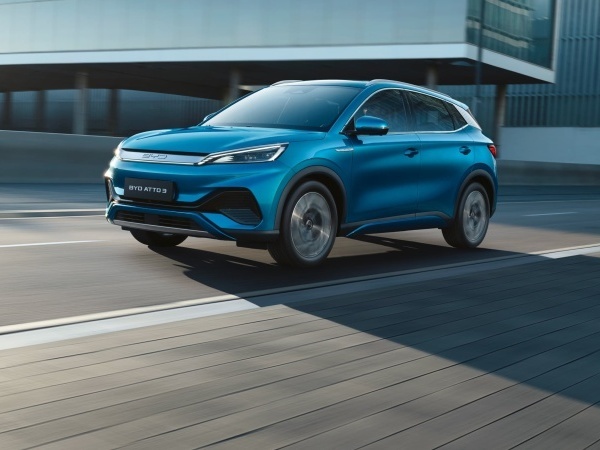
BYD ATTO 3 Interior Malaysia: Where Simplicity Meets Smart Technology
LienJul 22, 2025
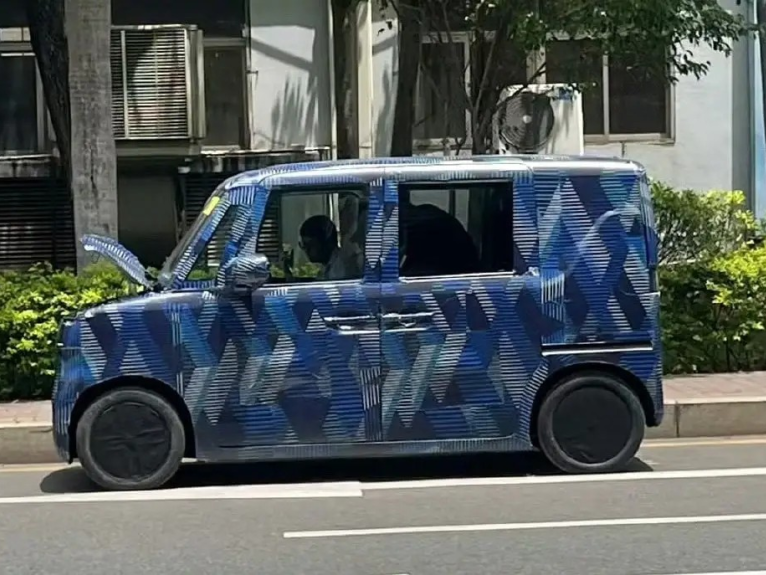
BYD has Launched a K-Car Targeting the Japanese Market, Aiming to Challenge Local Automotive Brands
AshleyMay 20, 2025
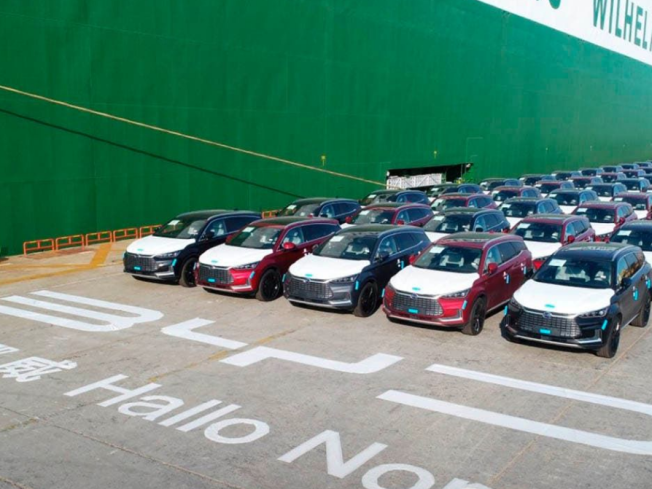
BYD Exports 214K Vehicles in Q1, Top Sales in 7 Markets
RobertApr 30, 2025
View More
Pros
Cons