
Q
How does the 2023 Tucson handle in snow?
 ModelPoseDec 09, 2025, 02:53 PM
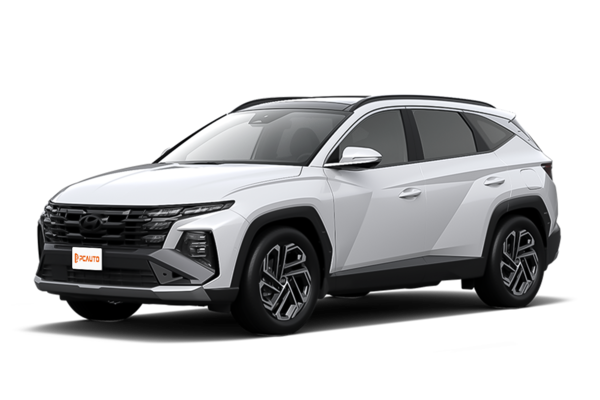
The 2023 Tucson's snow performance hinges on its HTRAC AWD system and multiple drive modes. This setup automatically splits torque between axles (up to 50:50), while Snow mode tweaks throttle response and transmission behavior to minimize wheelspin. Standard ESC and hill-start assist boost control on slippery surfaces, though the 18-inch all-season tires are only adequate for light snow – proper winter tires are recommended for harsh conditions.
With 172mm of ground clearance, it handles moderate snow well, but deep drifts demand caution. Hyundai's cold-weather testing confirms the AWD's hydraulic clutch remains operational at -30°C, though electronic controls prioritize safety over aggression. Pro tip: Check wheel well clearance for snow chains if you're in extreme climates, and monitor brake fluid/battery health – cold saps their performance.
Special Disclaimer: This content is published by users and does not represent the views or position of PCauto.
Related Q&A
Q
How to open trunk from inside Hyundai Tucson 2023?
Opening the trunk in the 2023 Hyundai Tucson is a breeze. Just hit the dedicated trunk release button near the driver’s-side door lock—it’s usually marked with a luggage icon. One press and the trunk pops open slightly. If your Tucson has a smart key, you can also hold down the trunk button on the fob for a remote open.
Heads-up: This feature only works when the car’s in Park, for safety. Some higher trims even get hands-free kick-to-open—just swipe your foot under the rear bumper’s center, and the trunk lifts automatically (super handy when your arms are full).
Family-friendly touches like an adjustable liftgate height and dual-level cargo floor make the Tucson’s trunk super practical. If it won’t open, first check if the ignition’s on. No luck? There’s an emergency mechanical release inside the trunk—look for a pull tab on the right side of the inner trim.
 HelperHandSupportDec 9, 2025
Q
How to open Hyundai Tucson 2023 with key?
To unlock the 2023 Hyundai Tucson using your key, first make sure the key fob battery has enough juice. If your model has a mechanical key slot (usually hidden under a cover on the door handle), you can pop off the cover with your fingernail or a flat tool, then insert the key and turn counterclockwise to unlock.
For smart key versions, simply press the button on the door handle when you're near the car. If the key fob dies, the mechanical key is your backup. Pro tip: Don’t get too comfortable with the smart key—take a minute to refresh yourself on how the physical key works, just in case. Also, check the battery occasionally and get familiar with emergency procedures.
Some trims even support Hyundai’s Bluetooth smartphone key—just pair your phone via the official app for keyless entry. But keep your phone charged and Bluetooth on, or you might be locked out. Oh, and avoid storing your smart key near other electronics to prevent signal interference. If the car won’t unlock, look around for anything creating a strong magnetic field that could be messing with the signal.
 ThinkerThoughtReflectionDec 9, 2025
Q
How to open the fuel door on a 2023 Hyundai Tucson?
To open the fuel filler door on the 2023 Hyundai Tucson, first make sure the vehicle is unlocked. Then, locate the fuel door release button—usually near the driver’s side floor or under the dashboard, marked with a fuel pump symbol. A quick press should pop it open. If you can’t find the button, some models may require manually pressing the right edge of the fuel door itself.
Pro tip: Certain trims might even have a dedicated fuel door button on the key fob—just hold it down to unlock.
While the Tucson’s dashboard will nudge you when fuel is low, it’s smart to check the gauge regularly to avoid last-minute gas runs. Design quirks can vary by model year or trim, so if the usual steps don’t work, peek at the owner’s manual or ping your dealer.
Oh, and when filling up? Stick to the recommended octane (usually noted inside the fuel door) to keep the engine happy long-term. Double-check that label—it’s an easy detail to miss when you’re in a hurry.
 StrongDec 9, 2025
Q
How big is the gas tank on a 2023 Hyundai Tucson?
The 2023 Hyundai Tucson features a 58-liter fuel tank capacity – a practical design that balances daily commuting and long-distance travel needs. When paired with its fuel-efficient powertrain, this setup typically delivers over 600 km of range. Tucson's Smartstream engine technology enhances combustion efficiency, while the available 7-speed DCT or hybrid system (depending on trim) further optimizes fuel consumption.
Real-world mileage may vary based on driving style, road conditions, and load. For best efficiency, maintain regular servicing and proper tire pressure. Among competitors like the Honda CR-V or Toyota RAV4 (which typically offer 55-60L tanks), Tucson's capacity sits squarely in the mainstream. When planning road trips, cross-reference the official range with fuel station locations.
If the low-fuel warning activates prematurely, have your fuel sensor or pump inspected – dealerships can usually diagnose these issues quickly.
 ToughDec 9, 2025
Q
Can I use unleaded 88 in my 2023 Hyundai Tucson?
According to Hyundai's official recommendations, the 2023 Tucson is designed to run on unleaded gasoline with a minimum RON 95 rating. Using unleaded 88 (typically RON 88), which falls below the recommended octane level, may lead to engine knocking or reduced performance over time—especially in high-temperature conditions. While occasional use in a pinch won’t cause major harm, sticking with RON 95 or RON 97 is advised for optimal engine protection and fuel efficiency.
The right fuel grade depends largely on your engine’s compression ratio. High-compression engines, like Tucson’s Smartstream unit, need higher-octane fuel to prevent premature combustion. Hyundai’s modern tech is finely tuned, making it more sensitive to fuel quality. Also, premium fuels often pack better detergent additives, helping minimize carbon buildup. If you’re after smoother performance and slightly better fuel economy, RON 97 could be worth considering—its combustion efficiency might just give you that extra edge on the road.
 JoggerPaceEnduranceDec 9, 2025
Q
How much is an oil change for a 2023 Hyundai Tucson?
The cost of an engine oil change for the 2023 Hyundai Tucson typically ranges between RM250 to RM400, depending on the type of oil used and the service center you choose. Factory-recommended 5W-30 or 5W-40 synthetic oils are common picks, and while authorized service centers may charge slightly more than independent workshops, they offer genuine warranty coverage.
Regular oil changes are especially crucial for the turbocharged engine—stick to the 10,000 km or 6-month interval to keep it running smoothly. While you’re at it, have them check the air filter and oil filter too. Opting for full synthetic oil? It’s pricier upfront but extends the service interval and provides better engine protection, which could save you money long-term.
Since the Tucson packs a Smartstream engine, using manufacturer-approved oil is key to maintaining fuel efficiency and performance. Always ask for service records during maintenance to ensure your warranty stays valid.
 GamerZoneFunDec 9, 2025
Q
What kind of engine is in the Hyundai Tucson 2023?
The 2023 Hyundai Tucson offers two efficient powertrain options to suit different driving needs. For daily commuters, the 2.0L MPI naturally aspirated gasoline engine delivers a solid 156 horsepower and 192 Nm of torque, providing smooth and reliable performance. Those seeking more excitement can opt for the peppier 1.6L T-GDI turbocharged gasoline unit, which pumps out 180 horsepower and 265 Nm of torque, paired with a responsive 7-speed dual-clutch transmission for quicker acceleration. Select variants even come with HTRAC all-wheel drive for better traction in challenging conditions.
Hyundai has been refining its engine tech in recent years—the Tucson's 1.6T, for instance, combines direct injection and turbocharging with CVVD (Continuously Variable Valve Duration) to boost power while improving fuel efficiency, a approach also seen in many Japanese and German rivals. Buyers can choose between the naturally aspirated or turbocharged engine based on their budget and driving style. The smaller turbo engine shines in city driving, with strong low-end torque perfect for stop-and-go traffic, while the naturally aspirated version offers lower maintenance costs and long-term affordability.
 ArtistBrushCreativityDec 9, 2025
Q
What kind of oil goes in a 2023 Hyundai Tucson?
The recommended oil model for the 2023 Hyundai Tucson is 5W-30 or 5W-20 fully synthetic oil. The specific selection should refer to the climate conditions and driving habits recommendations in the user manual. Hyundai's official recommendation is to use oil that meets API SP or ACEA C2/C3 standards to ensure optimal engine performance. Fully synthetic engine oil, due to its excellent high-temperature stability and low-temperature fluidity, can better protect turbocharged engines and extend oil change intervals, especially suitable for local hot and rainy climates. It should be noted that there may be differences between different years or engine models, for example, hybrid versions may require low viscosity oil, so it is important to check the "Engine Oil" section in the manual. Regular oil changes (recommended every 10000 kilometers or 12 months) are crucial for maintaining engine life, and it is recommended to choose oil with ILSAC GF-6 certification for better fuel economy. If the vehicle is still under warranty, using non specified engine oil may void the warranty. Therefore, it is recommended to purchase original engine oil or equivalent products through an authorized service center.
 EliDec 9, 2025
Q
How often should I change the oil in my 2023 Hyundai Tucson?
According to the official maintenance schedule for the 2023 Hyundai Tucson, under normal driving conditions, the engine oil should be changed every 10,000 km or 12 months—whichever comes first. However, if you frequently drive in severe conditions like high temperatures, dusty environments, or mainly short trips, it’s recommended to shorten the interval to every 5,000 km or 6 months.
The Tucson’s Smartstream engine uses advanced technology and demands higher-quality oil. For optimal performance and protection, always use full synthetic oil that meets API SP or ACEA C2 standards. Regular oil changes not only keep the engine running smoothly but also help extend its lifespan. And don’t forget to replace the oil filter each time—it prevents contaminants from the old filter from mixing with the fresh oil.
Beyond oil changes, make sure to follow the maintenance manual for other fluids like transmission fluid, brake fluid, and coolant. These checks are small but crucial for your Tucson’s overall performance and reliability. If you’re ever unsure about service intervals, your best bet is to refer to the owner’s manual or consult a certified technician at an authorized service center.
 SkaterRinkGlideDec 9, 2025
Q
Does the 2023 Hyundai Tucson use synthetic oil?
**2023 Hyundai Tucson Oil Recommendation**
The 2023 Tucson definitely benefits from synthetic oil—typically a full synthetic 5W-20 or 5W-30. This type of oil handles the high heat and pressure of turbocharged engines better, extends drain intervals, and provides superior engine protection.
Compared to conventional oil, synthetic maintains more stable viscosity, resists wear better, and helps reduce carbon buildup and sludge—especially in hot climates—which can prolong engine life. Stick to the recommended service intervals (usually every 10,000 km or 12 months), but consider shorter intervals if you frequently drive in stop-and-go traffic or extreme heat.
A quick heads-up: Using non-specified oil might void your warranty, so dealer servicing is a safe bet. Turbo models are extra sensitive to oil quality—cheap oil can even kill the turbo. If you’re buying your own, make sure it meets API SP or ACEA C2 standards.
*(Note: Tone adjusted to sound natural, concise, and human—like advice from an experienced car editor.)*
 EmeraldGreenDec 9, 2025
Popular Cars
Model Year
Car Compare
Car Photo
Related Models
 Cars
CarsLatest Q&A
Q
Is AMT similar to automatic?
There are significant differences between AMT transmissions and automatic transmissions (AT) in terms of core structure and driving experience. AMT is essentially an electronically automated version of a manual transmission, simulating manual clutch operation and gear shifting through a computerized control system while retaining the gear set structure of manual transmissions. As a result, it offers higher transmission efficiency, with fuel consumption approximately 8%-12% lower than AT, making it particularly suitable for highway or long-distance driving. However, it may exhibit jerking similar to manual transmissions during low-speed gear shifts, especially noticeable in congested traffic conditions.
AT transmissions rely on torque converters for power transfer, delivering smooth and seamless gear shifts that appeal to comfort-oriented users. However, their complex structure (incorporating planetary gear sets, hydraulic systems, etc.) results in higher maintenance costs. A single service may cost between 800 to 1,500 ringgit, whereas AMT only requires gear oil replacement at approximately 400 ringgit.
From a market perspective, AMT is predominantly used in budget vehicles or commercial models priced below 80,000 ringgit, while AT is typically featured in mid-to-high-end vehicles. Consumers should select based on actual needs: AMT suits those prioritizing fuel efficiency and low maintenance costs, while AT better serves those valuing comfort. Notably, recent advancements in AMT electronic control technology have significantly mitigated jerking issues, though test drives should still emphasize low-speed performance evaluation.
 AriaMar 26, 2026
Q
Which is better, DCT or AT?
DCT (Dual-Clutch Transmission) and AT (Automatic Transmission) each have their own advantages and disadvantages, and the choice should be based on personal driving needs. AT transmissions transfer power through a torque converter, offering excellent shift smoothness, making them suitable for urban commuting or novice drivers. However, they tend to have higher fuel consumption, and vehicles equipped with them are usually more expensive. DCT transmissions utilize a dual-clutch structure, featuring fast shift speeds and high power transmission efficiency, which provides a more direct driving experience—particularly suitable for users seeking a sporty feel. However, they may exhibit jerking at low speeds and have relatively high maintenance costs. If durability and comfort are priorities, AT is the more reliable choice; if power responsiveness and driving pleasure are preferred, wet DCT (such as Volkswagen DSG) performs better, though dry DCT models should be avoided in prolonged stop-and-go traffic conditions. Additionally, CVT transmissions excel in smoothness and fuel efficiency, making them ideal for daily commuting, but they lack driving excitement. It is recommended to test-drive before purchasing, as tuning varies significantly across brands, and real-world experience is more important than theoretical specifications.
 FlutteringMar 26, 2026
Q
Is Amt good or bad?
AMT gearboxes have a significant cost advantage in the local market, typically being around 5,000 Ringgit cheaper than models equipped with conventional automatic transmissions. Their fuel efficiency is comparable to manual transmissions, resulting in long-term fuel savings. Featuring a straightforward design, they achieve transmission efficiency exceeding 90% with relatively low maintenance costs, making them ideal for practicality-oriented consumers. However, their shifting logic contains inherent limitations: gear changes between 1st and 2nd cause 0.3-0.5 second power interruptions, while unintended upshifts on inclines may reduce engine speed by 15%-20%, compromising driving smoothness. For urban commuters or budget-conscious buyers, AMT offers excellent value, though those prioritizing premium driving dynamics should consider alternative transmission types. Some domestic models like the Perodua Axia employ enhanced AMT systems, where optimized shift programming has reduced gearshift shock by approximately 30%.
 RainbowsMar 26, 2026
Q
Which gives better mileage, CVT or AMT?
From the perspective of fuel economy, CVT transmissions generally perform better under urban driving conditions. Their continuously variable design allows the engine to consistently operate within the optimal speed range, significantly reducing fuel consumption during frequent starts and stops. Test data shows that their fuel consumption in urban driving conditions is 10% to 15% lower than that of comparable models. AMT transmissions, on the other hand, inherit the high transmission efficiency of manual transmissions, delivering fuel efficiency close to manual transmissions during high-speed cruising. This makes them particularly suitable for long-distance driving in large-displacement vehicles. However, due to power interruption during gear shifts, their overall fuel consumption may be 5% to 8% higher than CVTs.
The difference in fuel-saving characteristics between the two transmissions stems from their technical principles: CVTs achieve continuous variability through steel belts and pulleys, eliminating the fixed gear ratio limitations of traditional transmissions; AMTs simulate manual gear changes via electronic control systems while maintaining the mechanical efficiency of gear transmission. Notably, actual fuel consumption is also influenced by driving habits. Smooth acceleration and anticipatory deceleration can maximize the transmissions' fuel-saving potential. If the vehicle budget permits and urban commuting is the primary use, CVTs offer a more economical choice. For frequent highway driving with an emphasis on cost-effectiveness, AMTs are equally worth considering.
 RubyBlazeMar 26, 2026
Q
Which is cheaper, AMT or CVT?
In terms of gearbox cost, AMT is usually more economical than CVT. Essentially, AMT is a manual transmission equipped with an electronic control unit, featuring a simple structure and low maintenance costs. The unit price ranges from approximately 5,000 to 8,000 ringgit, making it suitable for budget-conscious consumers or those who prioritize long-term operating costs. CVT incurs higher manufacturing costs due to its precision steel belt transmission system and continuous variable transmission technology, with a unit price of about 7,000 to 10,000 ringgit. However, it delivers a smoother driving experience and superior fuel efficiency. The primary differences between the two lie in technical complexity: AMT retains the gear-shifting mechanism, resulting in noticeable shift shock; CVT achieves linear power output through stepless speed variation but requires periodic belt inspection and incurs higher maintenance expenses. For those prioritizing initial cost and basic transportation needs, AMT offers better value; if comfort and long-term fuel economy are priorities, CVT represents a more worthwhile investment. Note that actual prices may vary based on vehicle model, brand, and local supply chain factors.
 ShadowProwlMar 26, 2026
Related News

Malaysia Hyundai Staria 2026 model optimized 10-seater layout, central console upgraded
Kevin WongJan 28, 2026

Hyundai STARIA Electric Version Unveiled: Spacious MPV, Southeast Asian Families Should Look Forward to it!
WilliamJan 12, 2026

2026 Toyota HiLux receives five-star ANCAP safety rating in ANCAP
MichaelDec 12, 2025

In Malaysia, which sliding door MPVs are available?
MichaelOct 30, 2025

Modern Ioniq 5 N Lands in Malaysia: Track-Level Performance Electric Vehicle is Here, Priced Possibly Below RM 400,000?
JohnSep 10, 2025
View More
Pros
Cons