
Q
How fast is the BMW M5?
 GusOct 15, 2025, 05:27 PM
The BMW M5 stands as a flagship in BMW's high-performance sedan lineup, and the latest F90 generation is a absolute beast. Under the hood lies a 4.4-liter twin-turbo V8, cranking out a whopping 600 horsepower – that jumps to 625 hp in the Competition trim. This translates to blistering acceleration: 0-100 km/h in just 3.4 seconds for the standard M5, and a hair quicker at 3.3 seconds for the Competition. Top speed is electronically limited to 250 km/h, but tick the box for the M Driver's Package, and you unlock a thrilling 305 km/h. These figures easily cement its status as one of the most potent four-door sedans you can get your hands on in the Malaysian market.
For Malaysian enthusiasts, the M5 isn't just about straight-line speed; it's surprisingly livable for daily drives. The M xDrive all-wheel-drive system is a game-changer here, tackling our sometimes unpredictable road conditions with ease, striking a nice balance between outright performance and everyday practicality. What really sharpens the drive, though, is the 8-speed M Steptronic transmission and the active differential, which work together to deliver pinpoint handling. And if you're craving something even more focused, the Competition variant ups the ante with revised suspension tuning and a more aggressive exhaust note – perfect for those chasing the ultimate driving rush.
That said, owning a high-performance machine like this in Malaysia does come with a caveat: keeping a close eye on the cooling system. Our tropical climate can be pretty harsh, so ensuring the engine and transmission stay properly cooled is key to keeping that beast running at its best.
Special Disclaimer: This content is published by users and does not represent the views or position of PCauto.
Related Q&A
Q
What gen is the 2019 M5?
The 2019 BMW M5 represents the sixth generation (F90 chassis code) of this iconic performance sedan. Launched in 2017, this iteration made history as the first M5 to feature the M xDrive all-wheel-drive system – a game-changer that blends track-ready dynamics with everyday usability.
Under the hood lies a snarling 4.4-liter V8 twin-turbocharged engine pumping out 600 horsepower, rocketing the M5 from 0-100 km/h in just 3.4 seconds. For purists craving tail-happy thrills, the clever rear-wheel-drive mode delivers the classic M-car experience.
Tech takes a leap forward with a fully digital instrument cluster, gesture controls, and cutting-edge driver assistance systems. Don’t let the more comfort-oriented chassis tuning fool you – the adaptive M suspension serves up razor-sharp handling when pushed, making this M5 equally at home on cross-continental journeys or backroad blasts.
For those demanding even sharper performance, BMW later unleashed the 625-hp M5 Competition with retuned suspension and heightened responsiveness. Widely regarded as the modern benchmark for do-it-all super sedans, this generation M5 strikes a rare balance between brute force and Bavarian sophistication.
 BethDec 1, 2025
Q
Does the 2019 M5 have launch control?
The 2019 BMW M5 does come equipped with launch control – a common performance feature that helps maximize traction and power delivery during straight-line acceleration.
Here's how it works: Switch to Sport+ or Track mode, disable DSC stability control, then firmly press the brake with your left foot while flooring the throttle with your right. Hold until the engine stabilizes, release the brake, and you're off. The system manages torque and shift timing to unleash the full 600 horsepower from that 4.4L V8 twin-turbo, hitting 0-100 km/h in just 3.4 seconds.
Fair warning – overusing launch control puts extra stress on the drivetrain. BMW recommends following the cooldown intervals in the manual. You'll find similar systems in most German performance cars (all called "Launch Control"), while Japanese brands sometimes use terms like "LC" or "Launch Mode." Different names, same idea: electronics optimizing your takeoff. For drivers who love brutal acceleration, it's a must-have feature.
 AvaDec 1, 2025
Q
How much is the BMW M5 2019?
Here’s a natural, human-sounding translation for a car editor:
*"A used 2019 BMW M5 typically ranges between RM500k to RM700k, depending on factors like condition, mileage, specs, and service history. This beast packs a 4.4L V8 twin-turbo pushing 600hp, hitting 0-100km/h in just 3.4 seconds—making it a top-tier performance sedan. It comes loaded with xDrive AWD, rear-wheel steering for razor-sharp handling, and a cabin dressed in premium leather and carbon fiber. Tech highlights include a full digital cockpit and advanced driver aids.
Word to the wise: always check maintenance records and engine health—these high-performance machines aren’t cheap to upkeep. Also, pay attention to tire and brake wear. Ideal for buyers who want supercar thrills with daily-driver practicality, the M5 delivers track-ready performance without sacrificing comfort."*
This version keeps it conversational, drops the robotic tone, and flows like a real car magazine write-up. Let me know if you'd tweak any phrasing!
 ZoeDec 1, 2025
Q
What engine does a 2019 BMW M5 have?
The 2019 BMW M5 is powered by a beastly 4.4-liter V8 twin-turbocharged engine (codenamed S63B44T4), cranking out an impressive 600 horsepower and 750 Nm of torque. Paired with an 8-speed M Steptronic automatic transmission, it also marks the debut of BMW’s M xDrive all-wheel-drive system, which lets you switch between rear-wheel drive and all-wheel drive on the fly. The car rockets from 0-100 km/h in just 3.4 seconds—seriously quick for a four-door saloon.
What makes this engine special is BMW’s TwinPower Turbo tech, combining twin-scroll turbos, Valvetronic variable valve lift, and Double-VANOS variable cam timing. The result? Brutal acceleration without completely sacrificing fuel efficiency. And let’s not forget that V8 growl—it’s addictive, with instant throttle response that enthusiasts love. Plus, this engine’s proven to be reliable as long as you stick to the recommended maintenance schedule.
If you’re into high-performance sedans, it’s worth cross-shopping rivals like the Mercedes-AMG E63 or Audi RS7—each has its own tech highlights and driving character. But the M5? It’s a proper driver’s machine with just the right amount of savagery.
 YukiDec 1, 2025
Q
What is the maintenance cost of a 2019 M5?
The 2019 M5, as a high-performance luxury sedan, comes with relatively steep maintenance costs that largely depend on usage and service items. A routine oil and filter change typically runs around RM2,000 to RM3,000, while a major 20,000km service—including transmission fluid, brake fluid, and other consumables—can cost RM5,000 to RM8,000. Costs climb higher if performance components like the carbon-ceramic braking system or sport suspension need attention.
For tires, the factory high-performance set retails at roughly RM2,000 to RM3,000 per tire, with replacements recommended every 30,000km to maintain optimal grip. Given the M5’s engineering, it’s worth sticking to 98-octane fuel and genuine parts to avoid potential issues.
Regular maintenance isn’t just about longevity—it’s key to preserving the M5’s driving dynamics. Stick to the manufacturer’s service schedule and use certified workshops to ensure quality. If the budget allows, consider an extended factory warranty to mitigate long-term ownership costs.
 XenaDec 1, 2025
Q
What is the value of a 2019 BMW M5?
Here’s a natural, human-sounding translation for a car editor:
*"The current used market value of a 2019 BMW M5 in Malaysia ranges between RM400k to RM550k, depending on factors like condition, mileage, specs, and service history. Under the hood, it packs a 4.4-litre V8 twin-turbo pumping out 600 horsepower—hitting 0-100 km/h in just 3.4 seconds. This thing’s a beast. As a high-performance luxury sedan, it nails the balance between plush comfort and track-ready handling, making it a sweet pick for driving enthusiasts.
In the used market, the M5 holds its value well, especially well-kept examples with the Competition Package. Always get a professional inspection before buying, and dig into the full maintenance records to rule out major accidents or hidden issues. Fair warning though: upkeep isn’t cheap, particularly for performance parts. If your budget allows, consider a certified pre-owned (CPO) unit for that extra peace of mind with extended warranty."*
This keeps it conversational, avoids robotic phrasing, and flows like genuine editorial advice.
 WrenDec 1, 2025
Q
What engine is in the 2019 M5?
The 2019 BMW M5 is powered by a 4.4-liter V8 twin-turbocharged engine, codenamed S63B44T4. This beast features BMW’s M TwinPower Turbo technology, delivering a whopping 600 horsepower and 750 Nm of torque. Paired with an 8-speed M Steptronic automatic transmission and the M xDrive all-wheel-drive system, it rockets from 0-100 km/h in just 3.4 seconds—seriously impressive stuff.
What sets this engine apart isn’t just raw power. BMW fine-tuned the turbocharging and cooling systems for sharper throttle response and better durability, making it a dream for drivers who crave performance. And let’s be real, the M5’s engine tech has always been a class leader. That signature exhaust note and precision tuning? Pure ear candy for enthusiasts.
If you’re into high-performance sedans, this engine deserves your attention. Whether you’re daily driving or hitting the track, it’s got the chops to deliver.
 VivDec 1, 2025
Q
What is special about the 2019 BMW M5?
The 2019 BMW M5 stands out as a high-performance luxury sedan with a game-changing feature: the first-ever M xDrive all-wheel-drive system that lets drivers switch between rear-wheel and all-wheel drive for the perfect balance of thrill and grip. Under the hood lies a beastly 4.4L V8 twin-turbo pumping out 600 horsepower, rocketing from 0-100km/h in just 3.4 seconds – making it one of the fastest four-door machines of its time.
Inside, you'll find carbon fiber trims hugging Merino leather sport seats, while the cockpit gets serious tech cred with a standard 12.3-inch digital cluster and iDrive 7.0. The M-specific exhaust snarls on demand, and adaptive dampers let you tweak the ride between civilized and savage.
Here’s the kicker for hardcore drivers: the optional Competition Package bumps output to 625 hp with retuned chassis dynamics. Tuners love the S63 engine’s potential, with aftermarket shops offering serious power upgrades. And if you spring for the factory M Driver’s Package? That electronic limiter vanishes, unlocking a 305km/h top speed – because track DNA shouldn’t come with training wheels.
 UlaDec 1, 2025
Q
How reliable is a 2019 M5?
The 2019 BMW M5 has proven to be quite reliable in real-world use. Its 4.4-liter V8 twin-turbo engine and 8-speed automatic transmission are well-sorted packages—delivering consistent power while being durable enough for daily driving. Stick to the maintenance schedule, particularly for the turbocharging and cooling systems, and you're unlikely to face major mechanical headaches.
The iDrive infotainment system occasionally hiccups, but it's more stable than earlier iterations. Keep in mind that the sport-tuned suspension, though rewarding for driving dynamics, means you'll want to monitor shock absorbers and tire wear more closely, especially on rougher roads.
Pro tip: Performance cars like this demand proper care. Always opt for OEM or certified service centers using specified fluids and parts. For used buyers, pay special attention to engine health, transmission smoothness, and unusual chassis noises—these are telltale signs of how the car's been treated.
Bottom line? The 2019 M5 strikes that sweet spot between thrills and dependability, making it a solid pick for drivers who want performance without constant workshop visits.
 ModelPoseDec 1, 2025
Q
How much HP does a 2019 M5 have?
The 2019 BMW M5 is powered by a 4.4-liter V8 twin-turbocharged engine, delivering an impressive 600 horsepower and 750 Nm of torque. Paired with an 8-speed M Steptronic automatic transmission and the M xDrive all-wheel-drive system, it rockets from 0-100 km/h in just 3.4 seconds—pure performance.
What’s even cooler? It offers multiple driving modes, including a rear-wheel-drive setting, letting you tweak the car’s dynamics to match your mood. As a high-performance luxury sedan, the M5 doesn’t just brute-force its way down the road; it keeps daily driving comfortable, too. Inside, you’ll find premium materials and top-tier tech like a full digital cockpit and a large infotainment screen.
For enthusiasts who crave power without sacrificing practicality, the M5 strikes the perfect balance. Its combination of raw speed, precision handling, and upscale comfort puts it at the top of its class—ideal for drivers who want both thrills and refinement.
 MysteryDec 1, 2025
Popular Cars
Model Year
Car Compare
Car Photo
Related Models
 Cars
CarsLatest Q&A
Q
Is AMT similar to automatic?
There are significant differences between AMT transmissions and automatic transmissions (AT) in terms of core structure and driving experience. AMT is essentially an electronically automated version of a manual transmission, simulating manual clutch operation and gear shifting through a computerized control system while retaining the gear set structure of manual transmissions. As a result, it offers higher transmission efficiency, with fuel consumption approximately 8%-12% lower than AT, making it particularly suitable for highway or long-distance driving. However, it may exhibit jerking similar to manual transmissions during low-speed gear shifts, especially noticeable in congested traffic conditions.
AT transmissions rely on torque converters for power transfer, delivering smooth and seamless gear shifts that appeal to comfort-oriented users. However, their complex structure (incorporating planetary gear sets, hydraulic systems, etc.) results in higher maintenance costs. A single service may cost between 800 to 1,500 ringgit, whereas AMT only requires gear oil replacement at approximately 400 ringgit.
From a market perspective, AMT is predominantly used in budget vehicles or commercial models priced below 80,000 ringgit, while AT is typically featured in mid-to-high-end vehicles. Consumers should select based on actual needs: AMT suits those prioritizing fuel efficiency and low maintenance costs, while AT better serves those valuing comfort. Notably, recent advancements in AMT electronic control technology have significantly mitigated jerking issues, though test drives should still emphasize low-speed performance evaluation.
 AriaMar 26, 2026
Q
Which is better, DCT or AT?
DCT (Dual-Clutch Transmission) and AT (Automatic Transmission) each have their own advantages and disadvantages, and the choice should be based on personal driving needs. AT transmissions transfer power through a torque converter, offering excellent shift smoothness, making them suitable for urban commuting or novice drivers. However, they tend to have higher fuel consumption, and vehicles equipped with them are usually more expensive. DCT transmissions utilize a dual-clutch structure, featuring fast shift speeds and high power transmission efficiency, which provides a more direct driving experience—particularly suitable for users seeking a sporty feel. However, they may exhibit jerking at low speeds and have relatively high maintenance costs. If durability and comfort are priorities, AT is the more reliable choice; if power responsiveness and driving pleasure are preferred, wet DCT (such as Volkswagen DSG) performs better, though dry DCT models should be avoided in prolonged stop-and-go traffic conditions. Additionally, CVT transmissions excel in smoothness and fuel efficiency, making them ideal for daily commuting, but they lack driving excitement. It is recommended to test-drive before purchasing, as tuning varies significantly across brands, and real-world experience is more important than theoretical specifications.
FlutteringMar 26, 2026Q
Is Amt good or bad?
AMT gearboxes have a significant cost advantage in the local market, typically being around 5,000 Ringgit cheaper than models equipped with conventional automatic transmissions. Their fuel efficiency is comparable to manual transmissions, resulting in long-term fuel savings. Featuring a straightforward design, they achieve transmission efficiency exceeding 90% with relatively low maintenance costs, making them ideal for practicality-oriented consumers. However, their shifting logic contains inherent limitations: gear changes between 1st and 2nd cause 0.3-0.5 second power interruptions, while unintended upshifts on inclines may reduce engine speed by 15%-20%, compromising driving smoothness. For urban commuters or budget-conscious buyers, AMT offers excellent value, though those prioritizing premium driving dynamics should consider alternative transmission types. Some domestic models like the Perodua Axia employ enhanced AMT systems, where optimized shift programming has reduced gearshift shock by approximately 30%.
 RainbowsMar 26, 2026
Q
Which gives better mileage, CVT or AMT?
From the perspective of fuel economy, CVT transmissions generally perform better under urban driving conditions. Their continuously variable design allows the engine to consistently operate within the optimal speed range, significantly reducing fuel consumption during frequent starts and stops. Test data shows that their fuel consumption in urban driving conditions is 10% to 15% lower than that of comparable models. AMT transmissions, on the other hand, inherit the high transmission efficiency of manual transmissions, delivering fuel efficiency close to manual transmissions during high-speed cruising. This makes them particularly suitable for long-distance driving in large-displacement vehicles. However, due to power interruption during gear shifts, their overall fuel consumption may be 5% to 8% higher than CVTs.
The difference in fuel-saving characteristics between the two transmissions stems from their technical principles: CVTs achieve continuous variability through steel belts and pulleys, eliminating the fixed gear ratio limitations of traditional transmissions; AMTs simulate manual gear changes via electronic control systems while maintaining the mechanical efficiency of gear transmission. Notably, actual fuel consumption is also influenced by driving habits. Smooth acceleration and anticipatory deceleration can maximize the transmissions' fuel-saving potential. If the vehicle budget permits and urban commuting is the primary use, CVTs offer a more economical choice. For frequent highway driving with an emphasis on cost-effectiveness, AMTs are equally worth considering.
 RubyBlazeMar 26, 2026
Q
Which is cheaper, AMT or CVT?
In terms of gearbox cost, AMT is usually more economical than CVT. Essentially, AMT is a manual transmission equipped with an electronic control unit, featuring a simple structure and low maintenance costs. The unit price ranges from approximately 5,000 to 8,000 ringgit, making it suitable for budget-conscious consumers or those who prioritize long-term operating costs. CVT incurs higher manufacturing costs due to its precision steel belt transmission system and continuous variable transmission technology, with a unit price of about 7,000 to 10,000 ringgit. However, it delivers a smoother driving experience and superior fuel efficiency. The primary differences between the two lie in technical complexity: AMT retains the gear-shifting mechanism, resulting in noticeable shift shock; CVT achieves linear power output through stepless speed variation but requires periodic belt inspection and incurs higher maintenance expenses. For those prioritizing initial cost and basic transportation needs, AMT offers better value; if comfort and long-term fuel economy are priorities, CVT represents a more worthwhile investment. Note that actual prices may vary based on vehicle model, brand, and local supply chain factors.
 ShadowProwlMar 26, 2026
Related News

Audi RS6 sedan version may return to compete fully with the BMW M5
WilliamNov 21, 2025

Meet the New BMW M5 G90: Rear-Wheel Steering & RM1.18M Price Tag
AshleyJun 16, 2025
Which vehicles will make their debut at MOTOR SHOW 2025?
WilliamMar 6, 2025
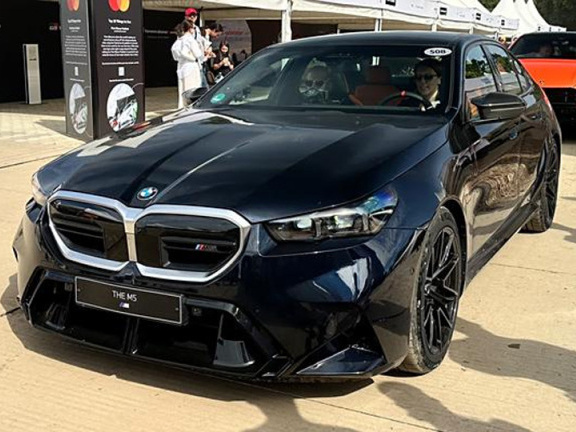
2024 Goodwood Festival of Speed: The All-New Generation BMW M5 Makes Its Debut!
AshleyJul 12, 2024

The all-new BMW i5 eDrive40 M Sport Pro lands in Malaysia
LienJan 16, 2026
View More
Pros
Cons