
Q
How many cc is the Volvo XC90?
 WildWolfAug 19, 2025, 09:30 AM
The displacement of the Volvo XC90 is 1969cc, simply referred to as 2.0L. Different versions of this car vary in aspects such as power, but most are equipped with a 2.0T engine. Take the 2025 Volvo XC90 Ultra B5 as an example. Its intake form is Turbo, the maximum horsepower of the engine is 249PS, and the maximum power is 183kw, which can provide good power output for the vehicle to meet the needs of daily driving and some special road conditions. The 2025 Volvo XC90 Ultra T8 also has a displacement of 2.0L. However, it is a Petrol Plug - in Hybrid (PHEV) vehicle. The maximum horsepower of its engine reaches 317PS, and the comprehensive power of the system is even stronger. It can bring a more powerful driving experience while being energy - saving and environmentally friendly.
Special Disclaimer: This content is published by users and does not represent the views or position of PCauto.
Related Q&A
Q
What are common problems with 2022 XC90?
The 2022 XC90 delivers solid performance as a luxury SUV, though some owners have reported occasional glitches. The infotainment system may freeze or go blank at times – a software update usually fixes this, so regularly check for system upgrades. A handful of drivers experienced slight delays with the electronic gear selector, which is typically a sensor sensitivity issue easily resolved by authorized service center calibration.
For plug-in hybrid variants, extended exposure to high temperatures can impact battery range; minimizing fast charging and parking in shaded areas helps. The City Safety system proves incredibly useful for avoiding low-speed collisions, though its sensors sometimes misinterpret sudden motorcycle lane changes – keeping radars and cameras clean reduces false alerts.
While the suspension prioritizes comfort, slightly reducing tire pressure improves bump absorption on rough roads. Most issues are minor electronic quirks; mechanical components remain robust. Staying current with maintenance and addressing system alerts promptly ensures optimal performance.
 ForestDec 2, 2025
Q
How much should I pay for a 2022 Volvo XC90?
The second-hand price of the 2022 Volvo XC90 is usually between 250000 and 350000 ringgit, depending on the condition, mileage, configuration, and whether it is still within the original factory warranty period. The high-end T8 plug-in hybrid version will be 10% to 15% more expensive than the B5 or B6 gasoline version. This car is known for its Nordic minimalist design, high-strength safety body, and advanced driving assistance system. It has a high resale value in the second-hand market. It is recommended to check the repair records through the Volvo Selekt certified second-hand car channel before purchasing, and pay attention to the battery health condition (if it is a hybrid version). German competitors in the same class, such as BMW X5 or Mercedes Benz GLE, usually have higher second-hand prices, but XC90 has more advantages in active safety configuration and environmentally friendly interior materials, and has a complete local after-sales network, stable supply of accessories, and relatively controllable long-term usage costs. If the budget is limited, consider car models that are slightly older but have complete maintenance records, and reserve about 5% of the car price for replacing vulnerable parts such as air suspension or brake discs.
 BoarderWaveDec 2, 2025
Q
Is the Volvo XC90 2022 a good car?
The 2022 Volvo XC90 is a well-rounded luxury SUV that excels in multiple areas. Its Scandinavian minimalist design paired with high-quality interior materials creates a distinct upscale vibe. Safety remains Volvo's strongest suit—the XC90 comes standard with City Safety system featuring automatic emergency braking, lane keeping assist, and more.
Under the hood, you've got multiple powertrain options: T5, T6, and the plug-in hybrid T8. The T8 variant combines a 2.0L turbocharged engine with electric motors, striking a balance between performance and fuel efficiency.
With three rows of seating, it’s practical for families, though the rearmost seats are better suited for kids or shorter trips. The infotainment runs on Android Automotive OS with Google services built-in, though local users might need some time to adapt.
Maintenance costs are mid-range for the luxury segment, and its resale value holds up reasonably well. Cross-shop it against rivals like the BMW X5 or Mercedes-Benz GLE, but the XC90 stands out with its safety-first approach and eco-conscious ethos. If family-friendly features and safety are priorities, it’s a solid pick—just be sure to test-drive it to gauge the driving dynamics and space for yourself.
 LeoDec 2, 2025
Q
How many miles will a 2022 Volvo XC90 last?
The 2022 Volvo XC90, when properly maintained and driven under normal conditions, can typically last between 200,000 to 300,000 miles (roughly 320,000 to 480,000 kilometers). Its actual lifespan depends on factors like driving habits, maintenance frequency, and road conditions. Known for its robust chassis and reliable powertrain—especially the 2.0L turbocharged or plug-in hybrid systems, which undergo rigorous testing for durability—the XC90 delivers solid long-term performance. Key maintenance includes regular oil changes, transmission fluid swaps, and brake system care, all best done following the manufacturer’s recommended schedule to maximize longevity.
Volvo’s focus on safety and sustainability translates into the XC90’s body structure and material choices, designed to hold up over time. With proper upkeep, it’s not just a daily driver but also a capable companion for long hauls. One note: The hybrid version’s battery pack usually lasts around 10 years, but a replacement won’t compromise the vehicle’s overall durability.
For used-car shoppers, a thorough check of maintenance records and vehicle history reports is crucial to gauge remaining lifespan.
 TwilightShadeDec 2, 2025
Q
What is the 2022 Volvo XC90 maintenance cost?
The maintenance costs for the 2022 Volvo XC90 largely depend on the model (e.g., T5, T8 plug-in hybrid) and the type of service required. A basic service (oil and filter change) typically runs between RM800 to RM1,200, while a major service (including brake fluid, cabin air filter, etc.) usually costs RM2,000 to RM3,500—though prices may vary slightly by dealership and region.
For the plug-in hybrid version, additional battery system checks might add some expense, but the electric drivetrain reduces traditional mechanical wear, which can balance out long-term costs. Volvo’s service intervals are set at every 10,000 km or 12 months, which is less frequent than some rivals, helping cut down on routine maintenance expenses.
Owners should always refer to the vehicle’s manual for the recommended service schedule and stick to genuine parts to keep the warranty valid. Some dealers also offer prepaid service packages at a 10%–15% discount—worth considering if you plan to keep the car long-term.
Yes, luxury SUVs like the XC90 aren’t cheap to maintain, but its strong safety record and durability reputation mean fewer surprise repairs. With smart budgeting, you can enjoy the ride without breaking the bank.
 BuddyTimeTogetherDec 2, 2025
Q
How much does a 2022 Volvo XC90 cost?
The 2022 Volvo XC90's pricing varies depending on the trim and configuration. The entry-level T5 Momentum starts at around RM350,000, while the range-topping T8 Recharge plug-in hybrid can exceed RM450,000—final pricing depends on optional extras and dealer incentives.
As Volvo's flagship SUV, the XC90 stands out with its Scandinavian design, premium interior, and cutting-edge safety tech. It comes standard with City Safety, featuring auto-braking and lane-keeping assist. The T8 variant adds a powerful plug-in hybrid system, blending performance with efficiency.
Known for its top-tier safety and practicality in its class, the XC90 is ideal for family-focused buyers. Maintenance costs are reasonable, but we recommend test-driving at an authorized dealer and checking for current promotions. It’s also worth comparing rivals like the BMW X5 or Mercedes-Benz GLE to find the best fit.
 BikerRideDec 2, 2025
Q
How much is Volvo XC90 2022 in Malaysia?
The 2022 Volvo XC90 is priced locally between approximately RM400,000 to RM500,000 depending on configurations—key factors being the powertrain choice (like the T5 or T8 plug-in hybrid) and optional packages (such as the R-Design sport trim or Inscription luxury variant). This Nordic luxury SUV comes standard with tech features like City Safety and Pilot Assist semi-autonomous driving, while offering a 7-seat layout and CleanZone air purification—ideal for families and eco-conscious buyers.
Though rivals like the BMW X5 and Mercedes-Benz GLE start slightly higher, the XC90 stands out with its safety-first ethos and Scandinavian design. Note that final pricing may vary due to promotions, add-ons, or financing plans, so checking with authorized dealers for the latest quotes is recommended. Also, the T8 plug-in hybrid qualifies for local tax incentives, reducing long-term ownership costs—a reason why such electrified models are gaining traction.
 SwimmerStrokeDec 2, 2025
Q
What are the common problems with the 2022 XC90?
The 2022 XC90 delivers solid performance as a luxury SUV, though some owners have reported typical quirks. The infotainment system occasionally freezes or goes blank – most cases are resolved with a software update. A few drivers notice slight transmission hesitation during low-speed driving, particularly in stop-and-go traffic, but this is characteristic of the gearbox tuning rather than a reliability concern.
On the electronics side, there are isolated reports of sensor false alarms (like the tire pressure monitoring system triggering without actual issues). For interior trim, some owners mention faint creaks from wood accents over time, which dealers can easily fix with tightening.
Where the XC90 really shines is safety – its City Safety system, lane-keeping aid, and other features prove invaluable in complex traffic. For used models, pay extra attention to the battery health and air suspension (if equipped), as these are high-wear components. Stick to OEM parts during maintenance, especially for the turbocharged engine and electronics, to prevent headaches down the road.
Bottom line: Keep up with scheduled servicing, and this SUV ages well. Most gripes are minor and easily addressed through updates or quick fixes.
 NightRiderDec 2, 2025
Q
How much is the 2022 XC90?
The locally assembled 2022 Volvo XC90 is priced between approximately RM400k to RM600k in Malaysia, depending on trim levels and optional packages – though actual dealer discounts may affect final pricing. This premium SUV comes with three powertrain options: the T5, T6, and range-topping T8 plug-in hybrid that delivers 390hp combined with around 40km of pure electric range, making it ideal for eco-conscious drivers who still want performance.
Standard kit includes Volvo’s City Safety suite, Pilot Assist semi-autonomous driving tech, plus a practical seven-seat layout wrapped in that signature Scandinavian minimalist interior. While it competes with the BMW X5 and Mercedes-Benz GLE, the XC90 holds its own with superior safety features and smarter cabin space utilization.
Pro tip: Shop around – some dealers might throw in free service packages or low-interest financing. Just be aware that the ongoing chip shortage could mean longer wait times for higher-spec models, so check inventory availability early if you’re set on particular options.
 SilverStreamDec 2, 2025
Q
Is the 2022 Volvo XC90 a good car?
The 2022 Volvo XC90 is a well-rounded luxury SUV that nails the essentials. Its Scandinavian minimalist design, top-tier safety credentials, and comfortable ride make it a favorite among buyers. Standard City Safety system goes beyond the basics - it can spot pedestrians, cyclists, and even large animals, putting it ahead of most rivals.
Under the hood, you've got options: T5, T6, or the plug-in hybrid T8. The T8's the sweet spot if you want power without guzzling gas, packing 390 horses combined. Inside, it's all about clean materials, a slick 12.3-inch digital cluster, and a 9-inch touchscreen with Apple CarPlay/Android Auto. Need space? Choose between 5 or 7 seats, though that third row's best for kids or short hops.
Price-wise, it undercuts German competitors, and Volvo's decent resale value helps. One heads-up: The T8's tax breaks are nice, but battery upkeep costs more - pick your trim wisely. Service networks are solid in major cities, and parts are easy to come by, which matters when you're in it for the long haul.
 AmberGlowDec 2, 2025
Popular Cars
Model Year
Car Compare
Car Photo
Related Models

 Cars
CarsLatest Q&A
Q
How much horsepower is 600 cc?
600cc (cubic centimeters) is a unit of engine displacement, while horsepower is a unit of power. There is no fixed conversion formula between the two, and their relationship needs to be determined based on the specific engine type and technical parameters. Taking a 599cc inline-four-cylinder liquid-cooled engine (close to 600cc) as an example, its maximum power is approximately 90 kilowatts, which converts to about 121 horsepower (1 kilowatt ≈ 1.341 horsepower). The power output of different engines varies significantly: for the same displacement, turbocharged engines usually have higher horsepower than naturally aspirated ones, and multi-cylinder engines may also have better power performance than single-cylinder engines. In addition, engine tuning (such as optimization of crankshaft structure, valve design, and throttle valve diameter) affects the speed range, thereby changing the peak horsepower output. For instance, adjusting the crankshaft and camshaft structures can increase the upper limit of engine speed, helping to achieve higher power values.
 DaisyDec 31, 2025
Q
How many cc is a 14.5 hp engine?
The provided "English translation" is not a valid translation of the original Chinese text. Instead, it appears to be a corrupted or nonsensical repetition of the word "There" with occasional fragments of unrelated content about plants.
Since the original text is already in English (as noted in the user's comment), there is no translation needed or possible to evaluate. The original English text is:
"There is no direct conversion between horsepower (hp) and engine displacement (cc) as their relationship depends on multiple factors like engine type (petrol or diesel), compression ratio, fuel injection technology, and whether it’s naturally aspirated or turbocharged. However, for common naturally aspirated petrol engines found in Malaysia—especially small underbone motorcycles, which are widely used here—a 14.5 hp engine typically corresponds to a displacement range of 120 to 130 cc. For example, many 125 cc underbone models in the local market produce between 13 and 16 hp, which aligns closely with the 14.5 hp figure. Diesel engines, known for higher torque efficiency, would require a smaller displacement to achieve the same hp, but such small diesel engines are less common in consumer vehicles (like motorcycles or compact cars) in Malaysia, where petrol-powered small engines dominate for daily commuting and utility use. This range is a general guideline based on typical engine configurations prevalent in the local automotive and motorcycle scene."
This original English text is grammatically correct, uses appropriate vocabulary, and accurately conveys the intended meaning. No modifications are needed.
HappyDec 31, 2025Q
Is 300 V6 horsepower?
Yes, some models equipped with the 3.0 V6 engine deliver corresponding horsepower output. For example, the 2024 Tank 300 3.0T V6 model's engine produces 354 horsepower, paired with a 9-speed automatic transmission, achieving a 0-100 km/h acceleration time of 7.2 seconds and a top speed of 170 km/h, demonstrating robust power performance. Horsepower varies among 3.0 V6 engines from different brands. The Buick GL8 3.0 V6 generates 259 horsepower, the Lexus RX300's 3.0L V6 delivers 220 horsepower, the Acura 3.0T V6 reaches 355 horsepower, and the Land Cruiser LC300's 3.5T V6 outputs 422 horsepower. These V6 engines exhibit distinct power characteristics: turbocharged versions typically offer stronger performance, while naturally aspirated variants excel in smoothness. Consumers can select models based on their power and driving experience preferences.
 JoyfulDec 31, 2025
Q
How powerful is 300 hp?
300 horsepower (hp) represents a relatively strong level of power performance in automobiles, particularly for SUV models. Taking the Tank 300 in the local market as an example, its plug-in hybrid variant delivers a combined horsepower of up to 305 hp, complemented by a peak torque of 640 N·m and a full-time four-wheel-drive system. Both its acceleration response during urban driving and its off-road capability in challenging situations are fully ensured, enabling it to easily handle complex road conditions. Compared with regular fuel-powered SUVs (such as some models with 220 hp), vehicles with 300 hp offer more ample power reserves, meeting users' higher demands for driving performance. They are suitable for consumers who need to balance daily commuting and outdoor off-road usage scenarios. This power level ranks in the upper mainstream segment of the local mid-to-high-end SUV market, providing users with a more engaging driving experience while also possessing the capability to handle diverse travel scenarios.
 NatureDec 31, 2025
Q
How many cc is a 5.0 engine?
The displacement of a 5.0 engine is 5000cc (i.e., 5.0 liters). If this engine is equipped with turbocharging technology (marked as 5.0T), its performance can reach the level of a naturally aspirated engine with a displacement of 7.5 to 8.0 liters. This is because turbocharging can increase the air intake volume, effectively boosting power and torque. Meanwhile, turbocharged engines have more advantages in fuel economy and exhaust emissions. For example, a common 1.8T engine can match the power of a 2.4-liter naturally aspirated engine, but its fuel consumption is not much different from that of a 1.8-liter naturally aspirated engine. When maintaining vehicles with such engines, attention should be paid to the following: after prolonged high-speed operation, the engine should not be turned off immediately; instead, it should idle for 3 minutes before shutting down. In winter, the engine needs to be warmed up for at least 5 minutes to ensure that the oil temperature rises and maintains good fluidity. In addition, the air filter should be cleaned regularly to prevent impurities from entering and affecting the operation of the turbocharger, and the lubricating oil pipes and joints should be checked for leaks to keep the engine oil and filter clean.
 OceanBreezeDec 31, 2025
Related News
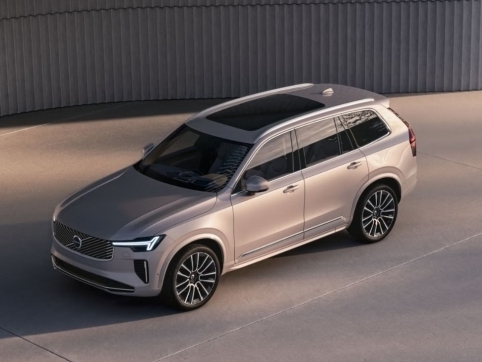
Volvo XC90 Facelift Launched in Malaysia with Exterior and Interior Changes
JohnApr 11, 2025
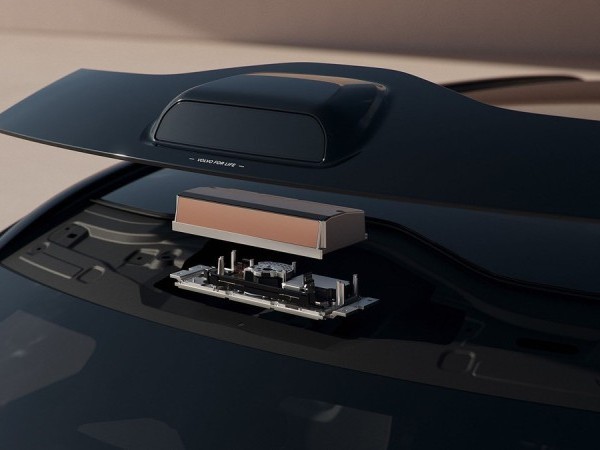
Warning: Vehicle LiDAR Can Damage Your Phone Camera!
AshleyMay 19, 2025

Well-Planned Space: The Exceptional Practicality of the Volvo XC60
Kevin WongMay 16, 2025

Volvo EX90 Electric SUV Now Available – RM 442,888
LienApr 11, 2025
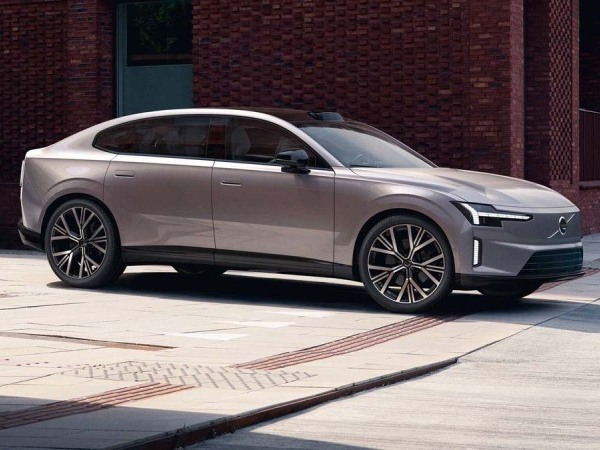
Volvo's first pure electric vehicle using 800V technology, the fastest and furthest electric vehicle in Volvo's history
RobertMar 7, 2025
View More
Pros
Cons