
Q
How many people can sit in a Toyota Rush?
 ClimberMay 21, 2025, 11:00 AM
The Toyota Rush can accommodate up to seven passengers. It features a 3+2+2 seating layout, which is a common configuration for seven-seater vehicles. This arrangement offers flexibility in passenger seating options. The middle row seats come with a 60:40 split-folding design, allowing for one-touch folding and manual adjustment of the incline angle, while the rear row utilizes a 50:50 split-folding design.
This versatility enables various seating configurations to cater to different needs, such as providing extra space for passengers or increasing cargo capacity. Whether you're traveling with family or friends, the seven-seat layout of the Toyota Rush offers a convenient option for group outings.
Special Disclaimer: This content is published by users and does not represent the views or position of PCauto.
Related Q&A
Q
Is Toyota Rush a Jeep?
The Toyota Rush is not a Jeep in the traditional sense, but rather a compact SUV built on the Toyota IMV platform, which leans more towards urban travel in the Malaysian market. This model features a higher ground clearance of approximately 220mm along with a robust and boxy exterior design, offering some light off-road capability. However, its primary focus remains on daily commuting and family use as a city-oriented SUV.
The Rush is equipped with front-wheel drive (with an optional four-wheel drive available in certain markets) and is powered by a 1.5L naturally aspirated engine (2NR-VE model) that delivers a maximum output of 104 PS. The vehicle's tuning prioritizes fuel efficiency over hard-core off-road performance. Compared to professional off-road vehicles like the Jeep Wrangler or Toyota's Land Cruiser series, the Rush lacks features such as part-time four-wheel drive and differential locks, but its compact size and nimble handling make it practical for various road conditions in Malaysia.
For users who occasionally need to tackle muddy or rocky terrain, opting for the four-wheel drive version and adding a skid plate is advisable. However, for serious off-roading, more specialized models are recommended.
 SwimmerMay 21, 2025
Q
Is a Toyota Rush AWD?
No, the Toyota Rush available in Malaysia is not an all-wheel drive (AWD) vehicle; it is equipped with a rear-wheel drive (RWD) system. This rear-wheel drive setup provides good balance and handling across various driving conditions. With its seven-seat layout, practical interior space, and decent off-road capability despite being RWD, the Toyota Rush has become a popular choice in the local SUV segment.
It comes with a range of safety features, including multiple airbags and electronic stability control, while the comfortable cabin layout enhances the overall driving experience. Its fuel-efficient gasoline engine and other convenient amenities cater to the needs of many local consumers.
 HikerMay 21, 2025
Q
Is the Toyota Rush a CVT or automatic?
The Toyota Rush is equipped with an automatic transmission (AT), rather than a continuously variable transmission (CVT). The AT, which utilizes a hydraulic torque converter, connects to the engine and employs internal planetary gears to facilitate gear shifting and torque conversion. Both the 2019 Toyota Rush 1.5G AT and 1.5S AT feature this automatic transmission.
On the other hand, a CVT uses two variable-diameter pulleys and a steel belt to continuously and seamlessly adjust the gear ratio. The AT in the Toyota Rush offers automatic characteristics, allowing drivers to enjoy convenience without the need for manual shifting. This enhances the driving experience by making it more relaxed. Furthermore, the Rush's AT helps deliver the engine's power smoothly to the wheels, ensuring a comfortable ride. With its smooth shifting and reliable operation, the automatic transmission in the Toyota Rush meets the daily driving needs of many consumers.
 BikerMay 21, 2025
Q
Is Toyota Rush expensive?
The price of the Toyota Rush ranges from RM 93,000 to RM 97,000, and whether this is considered expensive largely depends on individual perspectives and needs. For consumers on a tight budget who require a seven-seater vehicle, this price range may be quite reasonable, especially given the array of standard safety and practical features it offers, including six airbags, electronic stability control, and a 360-degree parking camera system.
From a segment perspective, this pricing is in line with the market positioning for a B-segment compact SUV. However, consumers seeking higher performance or luxury features may find it pricey, especially considering the engine produces a maximum output of 105 PS and that the majority of the seat adjustments are manual.
 DriverMay 21, 2025
Q
What type of car is the Toyota Rush?
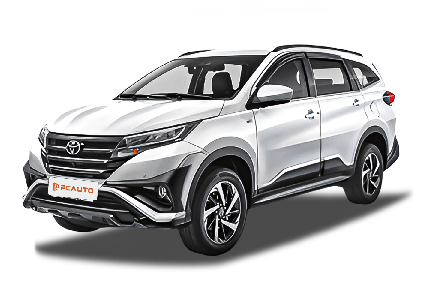
The Toyota Rush is classified as a B-segment vehicle. With a length of 4,435 mm, width of 1,695 mm, height of 1,705 mm and wheelbase of 2685mm, it features a five-door, seven-seat layout that is suitable for family use. The vehicle weighs between 1,300 and 1,305 kg, and has a fuel tank capacity of 45 liters.
Powering the Rush is a 1.5-liter gasoline engine that delivers a maximum output of 105 horsepower, paired with a rear-wheel-drive system and an automatic transmission (AT). The front suspension consists of MacPherson struts, and the braking system is equipped with ventilated disc brakes.
Safety features are extensive and include an anti-lock braking system (ABS), electronic stability control, and six airbags. Comfort features are well-appointed, with standard automatic climate control, a touchscreen infotainment system, and electric accessories. The seating configuration provides flexibility for both passengers and cargo.
 RiderMay 21, 2025
Q
How fast can a Toyota Rush drive?
The Toyota Rush is powered by a naturally aspirated 1.5-liter four-cylinder gasoline engine, which produces 105 horsepower at 6,000 RPM and generates 140 Nm of torque at 4,200 RPM. It is paired with an automatic transmission and features a rear-wheel-drive layout.
While there is currently no official information regarding the Toyota Rush's top speed, considering its engine power, torque, and vehicle characteristics, it may achieve a maximum speed of approximately 160 to 180 km/h under ideal conditions. However, this is merely an estimate.
It is important to note that speeding is not only dangerous but also violates traffic regulations. The focus should be on maintaining a safe driving speed. Additionally, factors such as road conditions, vehicle load, and engine status can impact the actual attainable speed.
 PilotMay 21, 2025
Q
What is the safety rating of Toyota Rush?
The Toyota Rush excels in safety features, offering a range of equipment designed to protect both drivers and passengers. Standard active safety systems include ABS (Anti-lock Braking System), Electronic Stability Control, Lane Departure Alert, Automatic Emergency Braking, and Forward Collision Warning, all of which work together to effectively prevent accidents.
In terms of passive safety, the vehicle is equipped with six airbags, including those for the driver, front passenger, front side airbags, and curtain airbags for both front and rear passengers, providing comprehensive protection for occupants. Additionally, the ISOFIX child seat anchors offer safety and convenience for families traveling with children.
While there is no specific safety rating data available, the rich and practical safety features of the Toyota Rush suggest a high level of protection for those inside the vehicle, offering driving safety on every journey.
 SailorMay 21, 2025
Q
Can a Toyota Rush go uphill?
The Toyota Rush is capable of tackling inclines with ease. It is equipped with a 1.5-liter gasoline engine that delivers a maximum power output of 105 horsepower. Under normal conditions, this level of power is sufficient to propel the vehicle uphill. Additionally, features like rear-wheel drive provide enhanced traction and stability when ascending.
The vehicle also comes standard with a Hill Start Assist feature, which prevents rollback when starting on a slope, giving drivers added confidence during incline driving. With a ground clearance of 220 millimeters, the Rush is well-equipped to handle rugged terrain without the risk of wearing the bottom. With these capabilities, the Toyota Rush is well-prepared to navigate climbing scenarios effortlessly.
 NomadMay 21, 2025
Q
Is a Toyota Rush a 7-seater layout?
Yes, the Toyota Rush is a 7-seater vehicle. It features a 3+2+2 seating configuration, comfortably accommodating seven passengers. This makes it a practical choice for families or groups in need of extra seating. Compared to smaller vehicles, its seven seats provide the flexibility to transport more people.
Whether for daily commutes, road trips, or carrying larger groups, the 7-seat configuration of the Toyota Rush offers convenience and practical functionalities. Additionally, the interior design and seating arrangement are crafted to ensure sound comfort for all passengers.
 OliMay 21, 2025
Q
Which car category does Toyota Rush belong to?
The Toyota Rush falls into the B-segment compact SUV category. With a body length of 4,435 mm, a width of 1,695 mm, a height of 1,705 mm, and a wheelbase of 2685mm, it boasts a compact overall size. This model features characteristics suitable for both urban driving and light off-roading, with a minimum ground clearance of 220 mm that contributes to its good passability.
The interior is designed with a 7-seat layout, providing flexible seating options. The second row features a 60:40 split-folding design that allows for one-touch folding and manual reclining, while the third row has a 50:50 split-folding capability, catering to various passenger and cargo needs. In terms of powertrain, the Rush is equipped with a 1.5L naturally aspirated engine paired with an automatic transmission and rear-wheel drive, offering stable power support for daily commutes and occasional outdoor adventures.
 RoyMay 21, 2025
Popular Cars
Model Year
Car Compare
Car Photo
Related Models
 Cars
CarsLatest Q&A
Q
Is AMT similar to automatic?
There are significant differences between AMT transmissions and automatic transmissions (AT) in terms of core structure and driving experience. AMT is essentially an electronically automated version of a manual transmission, simulating manual clutch operation and gear shifting through a computerized control system while retaining the gear set structure of manual transmissions. As a result, it offers higher transmission efficiency, with fuel consumption approximately 8%-12% lower than AT, making it particularly suitable for highway or long-distance driving. However, it may exhibit jerking similar to manual transmissions during low-speed gear shifts, especially noticeable in congested traffic conditions.
AT transmissions rely on torque converters for power transfer, delivering smooth and seamless gear shifts that appeal to comfort-oriented users. However, their complex structure (incorporating planetary gear sets, hydraulic systems, etc.) results in higher maintenance costs. A single service may cost between 800 to 1,500 ringgit, whereas AMT only requires gear oil replacement at approximately 400 ringgit.
From a market perspective, AMT is predominantly used in budget vehicles or commercial models priced below 80,000 ringgit, while AT is typically featured in mid-to-high-end vehicles. Consumers should select based on actual needs: AMT suits those prioritizing fuel efficiency and low maintenance costs, while AT better serves those valuing comfort. Notably, recent advancements in AMT electronic control technology have significantly mitigated jerking issues, though test drives should still emphasize low-speed performance evaluation.
 AriaMar 26, 2026
Q
Which is better, DCT or AT?
DCT (Dual-Clutch Transmission) and AT (Automatic Transmission) each have their own advantages and disadvantages, and the choice should be based on personal driving needs. AT transmissions transfer power through a torque converter, offering excellent shift smoothness, making them suitable for urban commuting or novice drivers. However, they tend to have higher fuel consumption, and vehicles equipped with them are usually more expensive. DCT transmissions utilize a dual-clutch structure, featuring fast shift speeds and high power transmission efficiency, which provides a more direct driving experience—particularly suitable for users seeking a sporty feel. However, they may exhibit jerking at low speeds and have relatively high maintenance costs. If durability and comfort are priorities, AT is the more reliable choice; if power responsiveness and driving pleasure are preferred, wet DCT (such as Volkswagen DSG) performs better, though dry DCT models should be avoided in prolonged stop-and-go traffic conditions. Additionally, CVT transmissions excel in smoothness and fuel efficiency, making them ideal for daily commuting, but they lack driving excitement. It is recommended to test-drive before purchasing, as tuning varies significantly across brands, and real-world experience is more important than theoretical specifications.
FlutteringMar 26, 2026Q
Is Amt good or bad?
AMT gearboxes have a significant cost advantage in the local market, typically being around 5,000 Ringgit cheaper than models equipped with conventional automatic transmissions. Their fuel efficiency is comparable to manual transmissions, resulting in long-term fuel savings. Featuring a straightforward design, they achieve transmission efficiency exceeding 90% with relatively low maintenance costs, making them ideal for practicality-oriented consumers. However, their shifting logic contains inherent limitations: gear changes between 1st and 2nd cause 0.3-0.5 second power interruptions, while unintended upshifts on inclines may reduce engine speed by 15%-20%, compromising driving smoothness. For urban commuters or budget-conscious buyers, AMT offers excellent value, though those prioritizing premium driving dynamics should consider alternative transmission types. Some domestic models like the Perodua Axia employ enhanced AMT systems, where optimized shift programming has reduced gearshift shock by approximately 30%.
 RainbowsMar 26, 2026
Q
Which gives better mileage, CVT or AMT?
From the perspective of fuel economy, CVT transmissions generally perform better under urban driving conditions. Their continuously variable design allows the engine to consistently operate within the optimal speed range, significantly reducing fuel consumption during frequent starts and stops. Test data shows that their fuel consumption in urban driving conditions is 10% to 15% lower than that of comparable models. AMT transmissions, on the other hand, inherit the high transmission efficiency of manual transmissions, delivering fuel efficiency close to manual transmissions during high-speed cruising. This makes them particularly suitable for long-distance driving in large-displacement vehicles. However, due to power interruption during gear shifts, their overall fuel consumption may be 5% to 8% higher than CVTs.
The difference in fuel-saving characteristics between the two transmissions stems from their technical principles: CVTs achieve continuous variability through steel belts and pulleys, eliminating the fixed gear ratio limitations of traditional transmissions; AMTs simulate manual gear changes via electronic control systems while maintaining the mechanical efficiency of gear transmission. Notably, actual fuel consumption is also influenced by driving habits. Smooth acceleration and anticipatory deceleration can maximize the transmissions' fuel-saving potential. If the vehicle budget permits and urban commuting is the primary use, CVTs offer a more economical choice. For frequent highway driving with an emphasis on cost-effectiveness, AMTs are equally worth considering.
 RubyBlazeMar 26, 2026
Q
Which is cheaper, AMT or CVT?
In terms of gearbox cost, AMT is usually more economical than CVT. Essentially, AMT is a manual transmission equipped with an electronic control unit, featuring a simple structure and low maintenance costs. The unit price ranges from approximately 5,000 to 8,000 ringgit, making it suitable for budget-conscious consumers or those who prioritize long-term operating costs. CVT incurs higher manufacturing costs due to its precision steel belt transmission system and continuous variable transmission technology, with a unit price of about 7,000 to 10,000 ringgit. However, it delivers a smoother driving experience and superior fuel efficiency. The primary differences between the two lie in technical complexity: AMT retains the gear-shifting mechanism, resulting in noticeable shift shock; CVT achieves linear power output through stepless speed variation but requires periodic belt inspection and incurs higher maintenance expenses. For those prioritizing initial cost and basic transportation needs, AMT offers better value; if comfort and long-term fuel economy are priorities, CVT represents a more worthwhile investment. Note that actual prices may vary based on vehicle model, brand, and local supply chain factors.
 ShadowProwlMar 26, 2026
Related News
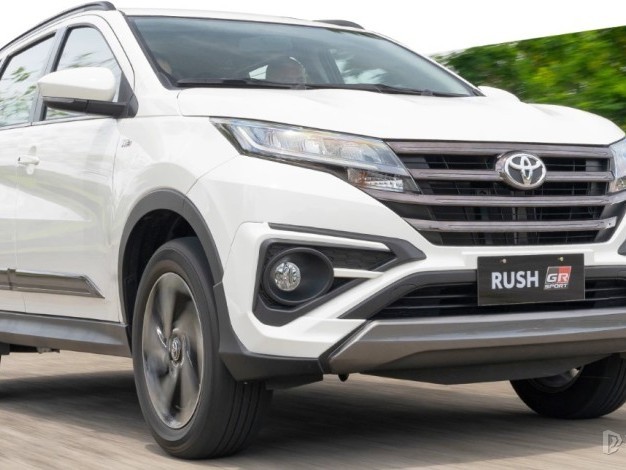
The compact SUV Toyota Rush, which has already been discontinued in Malaysia, does anyone around you drive it?
AshleyJul 25, 2024
Toyota Leads Global Sales in 2023, Despite 8% Decline but Tops Thailand
Kevin WongFeb 23, 2024

Toyota may launch the Tundra TRD Hammer high-performance off-road pickup in the future
RobertMar 23, 2026

Toyota Land Cruiser Buying Guide: From LC300 to LC70, which versions are worth buying? Are the maintenance costs for used ones high?
JohnMar 17, 2026

Toyota Crown Sedan and Lexus ES price difference? What are their differences?
WilliamMar 13, 2026
View More
Pros
Cons