
Q
How much does a 2021 Honda HR-V cost?
 CreatorIdeaDec 05, 2025, 10:54 AM
The 2021 Honda HR-V has a starting price range of approximately RM100,000 to RM120,000 depending on trim levels, though regional promotions or optional accessories may cause slight variations. This crossover SUV comes with a 1.8L naturally aspirated engine paired with a CVT transmission, emphasizing fuel efficiency and practical cargo space—its Magic Seats allow flexible rear configurations for family use.
Do note that used HR-V prices typically sit 15%-30% below new models, influenced by mileage, condition, and remaining warranty. While rivals like the Proton X50 and Toyota C-HR are worth cross-shopping, the HR-V holds stronger resale value thanks to Honda’s reliability and lower maintenance costs.
Before buying, check official channels for updated pricing and ask authorized dealers about the 5-year unlimited-mileage warranty. Some showrooms may even throw in free service packages—always worth inquiring.
Special Disclaimer: This content is published by users and does not represent the views or position of PCauto.
Related Q&A
Q
What's the 2021 HR-V's resale value?
The resale value of a used 2021 HR-V largely depends on its condition, mileage, and trim level. Currently, the 1.5L S variant typically sells for around RM 70k to 80k, while the 1.8L E version holds steady between RM 80k and 95k. The hybrid models, being rarer, might fetch a 10% premium.
What keeps the HR-V’s value strong? Honda’s solid reputation, low maintenance issues, and the model’s high popularity in the local market—especially its practical cabin space and fuel efficiency—play a big role. If you’re looking to maximize resale value, keep full service records and avoid modifications, as stock condition tends to get better offers from dealers.
Compared to rivals in its segment, a five-year-old HR-V usually retains 5-8% more of its value, thanks to steady demand. That said, final pricing still comes down to details like paint quality and tire wear. Right now, with SUVs in high demand in the used market, selling an HR-V could land you a better deal than you’d get with a compact sedan.
 ToughFighterDec 5, 2025
Q
Which is better, Honda CR-V or Honda HR-V 2021?
The 2021 Honda CR-V and HR-V cater to different buyer needs with distinct positioning. As a midsize SUV, the CR-V offers noticeably more cabin space – particularly in rear legroom and cargo capacity (up to 1,084L max). Its 1.5L turbocharged engine (193hp) delivers stronger power reserves, making it ideal for families or frequent highway drivers.
The HR-V, being a compact SUV, shines in urban environments with its nimble size for easier parking. Its 1.8L naturally aspirated engine (142hp) returns slightly better fuel economy, though the clever Magic Seat design compromises some headroom. Both models come standard with Honda Sensing, but higher CR-V trims add perks like a power tailgate.
If you prioritize practicality and cargo space, the CR-V is the clear choice. Budget-conscious city dwellers might prefer the HR-V's lower price and maneuverability. Worth noting: cross-shop rivals like the Mazda CX-5 or Toyota Corolla Cross before deciding – always test drive to compare real-world comfort and features.
 FearlessSoulDec 5, 2025
Q
Is the 2021 HR-V good in snow?
The 2021 HR-V delivers modest snow performance – its FWD version can handle light snow thanks to electronic stability control and traction management, but deeper snow or icy conditions may push its limits due to ground clearance and all-season tires. For frequent winter driving, we'd recommend winter tires or opting for the AWD variant.
*Important note:* These snow capability assessments are based on international model testing. Local variants without winter tires or cold-weather fluids may underperform.
For occasional mountain trips, understand your vehicle's limits and carry chains – no crossover matches a dedicated off-roader in severe conditions. Also worth noting: all-season tires vary significantly in snow traction; look for the Three-Peak Mountain Snowflake (3PMSF) symbol for more reliable cold-weather grip.
Pro tip for cold-climate owners: Always verify your antifreeze's freezing point to prevent cooling system damage.
 BraveAdventurerDec 5, 2025
Q
What is the most common problem with the 2021 Honda CRV?
The most common issue with the 2021 Honda CR-V is occasional oil dilution in the 1.5-liter turbocharged engine reported by some owners. This situation may be more pronounced during short distance driving in cold climates, but can be effectively alleviated through regular maintenance and the use of appropriate viscosity oil. In addition, some car owners have mentioned that the car's infotainment system occasionally experiences response delays or unstable connections, especially when using Apple CarPlay or Android Auto, which can usually be resolved through system updates. As a best-selling SUV, the overall reliability of the CR-V remains excellent. It is recommended to regularly change the oil, check the battery status, and keep the car's engine system at the latest version during daily use. The maintenance of turbocharged models requires special attention to oil quality and replacement intervals. Regularly cleaning the air filter can help maintain optimal engine performance. If abnormal oil consumption or frequent engine failures are found, it is recommended to contact an authorized service center for professional testing in a timely manner.
 ClimberPeakDec 5, 2025
Q
How long will a 2021 HR-V last?
The lifespan of a 2021 HR-V largely depends on maintenance, driving habits, and road conditions. With regular basic upkeep—like following the manufacturer’s recommended oil changes, filter replacements, and brake inspections—plus avoiding aggressive driving and chronic overloading, this model can reliably clock 150,000 to 200,000 kilometers or more. Its chassis and powertrain durability are on par for the segment.
The 1.8L naturally aspirated engine is a proven unit with modest maintenance costs, though the CVT transmission demands periodic fluid swaps to stay smooth. Worth noting: tropical climates may speed up wear on rubber components (bushings, seals), so inspect suspension mounts and underbody bushings every 3–5 years. Frequent stop-and-go driving? Consider shortening service intervals to protect the drivetrain.
Among rivals, the HR-V’s simpler electronics work in its favor—fewer gizmos mean fewer glitches over time. And in the used market, well-documented service history typically translates to stronger resale value, a nod to its solid reputation.
 DiverDepthDec 5, 2025
Q
What is the weakness of the Honda HR-V 2021?
The 2021 Honda HR-V remains a popular crossover SUV with well-rounded performance, though it does have some notable drawbacks. Rear legroom feels slightly tighter compared to key rivals, which taller passengers might find less accommodating. Noise insulation could also be improved at highway speeds—tire and wind noise become particularly noticeable.
Under the hood, the 1.8L naturally aspirated engine delivers proven reliability but lacks punch during acceleration, especially when loaded up or tackling steep inclines. Inside, the cabin relies heavily on hard plastics. While build quality is solid, the materials lack the upscale feel of competitors using softer touchpoints. Tech-wise, the base model feels pretty barebones, missing advanced driver aids; you’ll need to step up to higher trims for more comprehensive features.
One more thing: Like most small SUVs, the HR-V’s suspension leans toward comfort. It handles city streets just fine but shows noticeable body roll during spirited driving. These trade-offs are pretty typical for the segment. Buyers prioritizing power or premium touches might want to look at larger models, though the HR-V still holds its ground with strong fuel efficiency and Honda’s reputation for reliability.
 SwimmerStrokeDec 5, 2025
Q
Is the Honda HRV 2021 a good car?
The 2021 Honda HR-V is a well-rounded compact SUV that's perfect for daily commutes and family use. Staying true to Honda's reputation for reliability and practicality, it comes with a 1.8L i-VTEC engine that delivers smooth power and decent fuel efficiency—ideal for city driving. The CVT transmission shifts seamlessly, and the comfort-tuned suspension does a great job absorbing road imperfections.
Inside, the HR-V offers above-average space for its class, with the clever Magic Seat adding extra versatility. The cargo area is also spacious enough for everyday needs. Standard features include LED headlights, a 7-inch touchscreen, and a rearview camera, while safety is covered by six airbags and VSA stability control—nothing fancy, but it gets the job done.
That said, the cabin relies heavily on hard plastics, and road noise is noticeable—common trade-offs in this segment. If you prioritize brand reliability and strong resale value, the HR-V is a solid pick. But if you're after more power or premium features, you might want to cross-shop rivals. As always, a test drive will help you decide if it fits your driving style.
 WittyRemarkDec 5, 2025
Q
What is the performance of the 2022 Honda HR-V like?
The 2022 Honda HR-V has really made waves in the Malaysian market. Under the hood, you've got that tried-and-true 1.5-liter i-VTEC engine, churning out 121 horsepower and 145 Nm of torque. Power delivery is smooth, and fuel efficiency is a strong suit too—perfect whether you're navigating city streets or hitting the highway for a longer trip.
Safety-wise, Honda didn't skimp. The HR-V comes loaded with the Honda Sensing suite, which includes adaptive cruise control, lane keep assist, and collision mitigation braking. These features add a whole extra layer of confidence behind the wheel.
Step inside, and the interior leans into simplicity and functionality—no unnecessary frills here. The 7-inch touchscreen infotainment system is straightforward to use, and with Apple CarPlay and Android Auto support, staying connected on the go is a breeze, just like modern drivers expect.
Size-wise, it's just right for most folks. The rear seats fold down nice and easy, freeing up a decent amount of cargo space when you need to haul stuff. Malaysian buyers really appreciate the HR-V's reputation for reliability and low maintenance costs—those are big ticks in the "pro" column.
Another thing that stands out is the suspension setup. It's tuned more for comfort, which works brilliantly on Malaysia's varied roads. Whether you're stuck in stop-and-go city traffic or rolling over some bumpy backroads, the HR-V handles it all without breaking a sweat.
If you're in the market for a compact SUV that's practical, fuel-efficient, and safe, the 2022 Honda HR-V is definitely worth a spot on your shortlist. All things considered, it's a solid all-rounder that holds its own against the competition in its class.
 SpiritSep 22, 2025
Q
Is the 2022 Honda HR-V good in snow?
The 2022 Honda HR-V puts in a solid if unspectacular performance in snowy conditions. The front-wheel drive variant handles light snow-covered roads adequately, but when faced with deeper snow or icy surfaces, opting for the version equipped with the real-time all-wheel drive system is advisable to boost traction. This AWD setup automatically distributes torque between the front and rear wheels, enhancing stability on slippery surfaces. That said, compared to dedicated off-roaders or full-time AWD vehicles, the HR-V's snow capabilities still lean more towards urban driving needs.
For our Malaysian readers, while local weather means snow driving isn't a concern, similar principles apply to wet road conditions during the monsoon season. The HR-V's Vehicle Stability Assist (VSA) and Hill Start Assist functions prove handy in heavy rain, offering that extra layer of safety. If you're planning a road trip to colder climes, swapping to winter tires and packing snow chains is a smart move. Also, keep in mind the HR-V's ground clearance (around 180mm) might be a limiting factor in deep snow.
On a side note, Honda's G-CON safety body structure does a good job of dispersing impact forces if you happen to lose control on slippery surfaces – a feature that's equally useful in Malaysia's rainy environment.
 DaisySep 22, 2025
Q
Is the Honda HR-V a smooth ride?
The Honda HR-V has built a solid following among Malaysian car buyers, and it's easy to see why—this crossover nails that smooth, hassle-free driving feel so many folks here love. A big part of that appeal comes down to Honda's thoughtful suspension tuning and powertrain setup.
The suspension does a commendable job ironing out those typical Malaysian road annoyances—think potholes, uneven tarmac, and speed bumps—all handled with a plushness that keeps the ride easygoing. Cabin noise levels are also above average for the class, which definitely adds to the overall comfort factor. Another highlight? The seats are ergonomically designed, so even on longer drives, you won't find yourself shifting around trying to get comfortable. That makes it a solid pick for family-oriented drivers who prioritize a relaxed commute.
Steering feel is on the lighter side too, which is a godsend when navigating Malaysia's often congested city streets—maneuvering into tight spots or weaving through traffic feels like a breeze. Now, if you're someone who spends a lot of time bombing down the highway, you might notice the chassis feels a touch soft when cruising at higher speeds, but honestly, it's a minor trade-off for how comfortable the rest of the package is.
Of course, it's not the only player in the game—rivals like the Toyota Corolla Cross offer similar vibes. As always, the best move is to head to a dealership, take 'em both for a spin, and see which one gels better with your daily grind. At the end of the day, the HR-V's got a lot going for it if smooth, easy comfort is your top priority.
 JoggerPaceSep 22, 2025
Popular Cars
Model Year
Car Compare
Car Photo
Related Models

 Cars
CarsLatest Q&A
Q
What's the 2021 HR-V's resale value?
The resale value of a used 2021 HR-V largely depends on its condition, mileage, and trim level. Currently, the 1.5L S variant typically sells for around RM 70k to 80k, while the 1.8L E version holds steady between RM 80k and 95k. The hybrid models, being rarer, might fetch a 10% premium.
What keeps the HR-V’s value strong? Honda’s solid reputation, low maintenance issues, and the model’s high popularity in the local market—especially its practical cabin space and fuel efficiency—play a big role. If you’re looking to maximize resale value, keep full service records and avoid modifications, as stock condition tends to get better offers from dealers.
Compared to rivals in its segment, a five-year-old HR-V usually retains 5-8% more of its value, thanks to steady demand. That said, final pricing still comes down to details like paint quality and tire wear. Right now, with SUVs in high demand in the used market, selling an HR-V could land you a better deal than you’d get with a compact sedan.
ToughFighterDec 5, 2025Q
Which is better, Honda CR-V or Honda HR-V 2021?
The 2021 Honda CR-V and HR-V cater to different buyer needs with distinct positioning. As a midsize SUV, the CR-V offers noticeably more cabin space – particularly in rear legroom and cargo capacity (up to 1,084L max). Its 1.5L turbocharged engine (193hp) delivers stronger power reserves, making it ideal for families or frequent highway drivers.
The HR-V, being a compact SUV, shines in urban environments with its nimble size for easier parking. Its 1.8L naturally aspirated engine (142hp) returns slightly better fuel economy, though the clever Magic Seat design compromises some headroom. Both models come standard with Honda Sensing, but higher CR-V trims add perks like a power tailgate.
If you prioritize practicality and cargo space, the CR-V is the clear choice. Budget-conscious city dwellers might prefer the HR-V's lower price and maneuverability. Worth noting: cross-shop rivals like the Mazda CX-5 or Toyota Corolla Cross before deciding – always test drive to compare real-world comfort and features.
FearlessSoulDec 5, 2025Q
Is the 2021 HR-V good in snow?
The 2021 HR-V delivers modest snow performance – its FWD version can handle light snow thanks to electronic stability control and traction management, but deeper snow or icy conditions may push its limits due to ground clearance and all-season tires. For frequent winter driving, we'd recommend winter tires or opting for the AWD variant.
*Important note:* These snow capability assessments are based on international model testing. Local variants without winter tires or cold-weather fluids may underperform.
For occasional mountain trips, understand your vehicle's limits and carry chains – no crossover matches a dedicated off-roader in severe conditions. Also worth noting: all-season tires vary significantly in snow traction; look for the Three-Peak Mountain Snowflake (3PMSF) symbol for more reliable cold-weather grip.
Pro tip for cold-climate owners: Always verify your antifreeze's freezing point to prevent cooling system damage.
BraveAdventurerDec 5, 2025Q
What is the most common problem with the 2021 Honda CRV?
The most common issue with the 2021 Honda CR-V is occasional oil dilution in the 1.5-liter turbocharged engine reported by some owners. This situation may be more pronounced during short distance driving in cold climates, but can be effectively alleviated through regular maintenance and the use of appropriate viscosity oil. In addition, some car owners have mentioned that the car's infotainment system occasionally experiences response delays or unstable connections, especially when using Apple CarPlay or Android Auto, which can usually be resolved through system updates. As a best-selling SUV, the overall reliability of the CR-V remains excellent. It is recommended to regularly change the oil, check the battery status, and keep the car's engine system at the latest version during daily use. The maintenance of turbocharged models requires special attention to oil quality and replacement intervals. Regularly cleaning the air filter can help maintain optimal engine performance. If abnormal oil consumption or frequent engine failures are found, it is recommended to contact an authorized service center for professional testing in a timely manner.
ClimberPeakDec 5, 2025Q
How long will a 2021 HR-V last?
The lifespan of a 2021 HR-V largely depends on maintenance, driving habits, and road conditions. With regular basic upkeep—like following the manufacturer’s recommended oil changes, filter replacements, and brake inspections—plus avoiding aggressive driving and chronic overloading, this model can reliably clock 150,000 to 200,000 kilometers or more. Its chassis and powertrain durability are on par for the segment.
The 1.8L naturally aspirated engine is a proven unit with modest maintenance costs, though the CVT transmission demands periodic fluid swaps to stay smooth. Worth noting: tropical climates may speed up wear on rubber components (bushings, seals), so inspect suspension mounts and underbody bushings every 3–5 years. Frequent stop-and-go driving? Consider shortening service intervals to protect the drivetrain.
Among rivals, the HR-V’s simpler electronics work in its favor—fewer gizmos mean fewer glitches over time. And in the used market, well-documented service history typically translates to stronger resale value, a nod to its solid reputation.
DiverDepthDec 5, 2025Related News

Choose Honda HR-V or Mitsubishi XPANDER for a family car?
WilliamNov 12, 2025
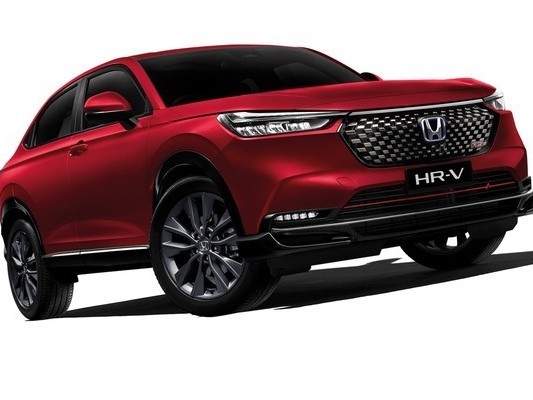
Honda HR-V : Save Money When Buying Your Vehicle!
WilliamApr 8, 2025

Honda HR-V minor redesign launched in Thailand: More dynamic appearance, smarter interior upgrades!
WilliamNov 12, 2024

2024 Honda HR-V will be launched in Thailand in November, with an estimated price of RM 113,000.
JamesOct 8, 2024

Honda Prelude priced as high as $42,000, which makes me nostalgic for the old Prelude
JamesNov 20, 2025
View More
Pros
Cons