
Q
How much does a 2024 Porsche Taycan cost?
 CreatorzNov 27, 2025, 05:43 PM
The 2024 Porsche Taycan starts at around RM 580,000, but the final price will vary depending on the model and optional extras. As Porsche’s first all-electric vehicle, the Taycan comes in multiple variants—including the rear-wheel-drive Taycan, the all-wheel-drive 4S, and the high-performance Turbo and Turbo S. The range-topping Turbo S can easily exceed RM 1 million.
Equipped with cutting-edge 800V fast-charging tech, the Taycan can juice up from 5% to 80% in just 22 minutes. Depending on the model, you’re looking at a range of roughly 400 to 600 km. It delivers the classic Porsche driving dynamics we love, with that instant electric torque punch—hitting 0-100 km/h in as little as 2.8 seconds in the Turbo S.
If you’re mostly commuting, the base model should cover your needs, but hardcore drivers will want the Turbo S. Keep in mind, Porsche offers tons of personalization—wheels, interiors, colors—all of which affect pricing. For the full breakdown, it’s best to check with an official dealer.
Special Disclaimer: This content is published by users and does not represent the views or position of PCauto.
Related Q&A
Q
How fast can the Taycan 2024 charge?
The 2024 Porsche Taycan delivers industry-leading charging performance when using an 800V high-voltage fast charger under ideal conditions, with a peak charging power of 350kW. This enables a rapid charge from 5% to 80% in just 18 minutes. The key to this capability lies in its 800V architecture, which significantly reduces heat generation from high-current charging, coupled with a standard intelligent battery thermal management system that ensures stability during fast charging.
That said, real-world charging speeds can vary due to factors like ambient temperature, initial battery state, and charger output. For instance, in hot weather, the system may deliberately limit peak power to protect the battery. For daily use, we recommend prioritizing DC fast chargers rated at 270kW or higher, while the 11kW AC home charger is better suited for overnight top-ups—taking roughly 9 hours for a full charge.
Among its competitors, the Taycan’s high-voltage fast-charging tech dramatically cuts wait times on long trips. Still, it’s wise to plan routes using the built-in navigation to locate compatible fast-charging stations in advance. Keep in mind that charging speed intentionally slows beyond 80% to preserve battery health, making further charging less time-efficient.
 DazzlingSparkleShineNov 27, 2025
Q
What is the range of the Taycan in 2024?
The 2024 Porsche Taycan delivers varying range figures depending on model and battery configuration. The rear-wheel-drive Taycan achieves up to 678 km (WLTP), while the high-performance Taycan Turbo S offers around 630 km—marking a notable improvement over previous models, thanks to optimized battery management and more efficient electric drive tech.
With 800-volt ultra-fast charging capability (up to 350 kW), the Taycan can juice up from 10% to 80% in just 18 minutes, making it ideal for long trips. As a pure-electric sports car, it doesn’t compromise Porsche’s signature driving thrill—the all-wheel-drive variants can sprint from 0-100 km/h in under 3 seconds.
Its energy recuperation system also boosts real-world range by converting kinetic energy into electricity during braking or coasting. If you’re into electric performance cars, the Taycan strikes a compelling balance between range and dynamics. The game-changer? Its rapid charging tech slashes wait times, adding everyday convenience without sacrificing excitement.
 FrostyWinterWhispersNov 27, 2025
Q
Is there a recall on the Porsche Taycan 2024?
As of now, Porsche has not issued any official recall notices for the 2024 Taycan. This all-electric model maintains the brand’s signature high technical standards, featuring upgrades like an 800V high-voltage architecture and a more efficient battery management system.
If owners want to verify their vehicle’s status, we recommend checking Porsche’s official VIN lookup system or contacting an authorized dealer for the latest updates.
For daily use, keep an eye on battery health and charging compatibility. Try to avoid frequent fast charging to preserve battery longevity, and schedule regular high-voltage system inspections at a Porsche service center—these habits go a long way in maintaining performance.
While EVs have simpler mechanics, Porsche’s precision electronics and dynamic tuning still require professional diagnostics. If any warning lights pop up, don’t ignore them—get in touch with Porsche’s service team right away.
 HikerzzNov 27, 2025
Q
How fast can the 2024 Porsche Taycan charge?
The 2024 Porsche Taycan delivers outstanding charging performance, supporting DC fast charging at up to 320 kW. Under ideal conditions, this allows the battery to recharge from 10% to 80% in just around 18 minutes—perfect for long trips or quick top-ups.
Equipped with an advanced 800-volt high-voltage battery architecture, the Taycan not only boosts charging efficiency but also optimizes energy management, maintaining stable charging speeds even at high-power stations. For daily use, it’s also compatible with lower-power charging options like home wallboxes or public AC chargers—slower, but more than enough for regular commutes.
Worth noting: Porsche’s charging network is expanding, and many third-party stations now offer high-power support. The built-in navigation makes it easy to locate nearby fast chargers. Plus, Taycan’s battery management system automatically adjusts power based on temperature and charge level to protect battery health and safety.
If fast charging is a priority, aim for high-power stations and keep the vehicle software updated for peak performance.
 HappyAntelopeNov 27, 2025
Q
What is the range of the Taycan 2024?
The 2024 Porsche Taycan delivers varying range figures depending on the model and battery configuration. The rear-wheel-drive base variant achieves up to 678 km under WLTP testing, while the high-performance Taycan Turbo S offers around 630 km. This improved efficiency stems from upgraded battery tech and optimized energy management.
Supporting 800V ultra-fast charging at up to 320kW, the Taycan can juice up from 10% to 80% in just 18 minutes—drastically cutting downtime. Keep in mind, real-world range hinges on driving style, road conditions, and climate. Aggressive driving or extreme weather, for instance, may dent those numbers.
As Porsche’s first all-electric model, the Taycan retains the brand’s signature handling prowess, enhanced by features like three-chamber air suspension and rear-axle steering. It strikes a compelling balance between performance and sustainability.
For charging convenience, China’s major cities now boast robust fast-charging networks. Pair that with a home charger, and daily usability gets even smoother.
 HappyBuffaloNov 27, 2025
Q
What is the top speed of the Taycan 2024?
The top speed of the 2024 Porsche Taycan varies by model. The range-topping Taycan Turbo S hits an electronically limited 260 km/h, but with the optional Performance Battery Plus package, that figure climbs to an impressive 290 km/h. Meanwhile, the entry-level rear-wheel-drive Taycan tops out at 230 km/h.
As a pure electric sports car, the Taycan leverages its 800-volt architecture and two-speed transmission not just for blistering acceleration (the Turbo S rockets from 0-100 km/h in 2.8 seconds) but also for sustained high-speed performance—cementing its status as a benchmark in the EV performance segment.
That said, while its top speed is impressive, real-world drivers will care more about range and charging. The 2024 model delivers up to 587 km (WLTP) thanks to optimized battery management, and with 270 kW DC fast charging, it can juice up from 10% to 80% in just 22 minutes—far more relevant for road trips. Porsche has also tweaked the battery’s thermal management for hot climates, ensuring consistent performance even in scorching conditions—a key perk for drivers in sunbelt regions.
 HappyRhinocerosNov 27, 2025
Q
What engine is in the Porsche Taycan 2024?
The 2024 Porsche Taycan lineup is all-electric, offering multiple motor configurations. The base model features a rear-mounted single motor delivering 408 horsepower, while the range-topping Taycan Turbo S packs dual motors with all-wheel drive, cranking out a staggering 761 hp and 1,050 Nm of torque. This beast rockets from 0-100 km/h in just 2.8 seconds – performance that gives traditional supercars a run for their money.
Power comes from a standard 93.4 kWh high-performance battery, offering up to 587 km (WLTP). The 800V high-voltage architecture supports ultra-fast charging at 350 kW, juicing the battery from 5% to 80% in just 22.5 minutes.
True to Porsche’s motorsport DNA, the Taycan boasts a finely tuned chassis with adaptive air suspension and rear-axle steering for razor-sharp handling without sacrificing comfort. Its four-stage regenerative braking system recovers up to 265 kW of energy, and an intelligent thermal management system preconditions the battery for optimal fast-charging – a game-changer in hot climates to preserve battery health.
 HappyHyenaNov 27, 2025
Q
What is the range of the new Taycan 2024?
The 2024 Porsche Taycan delivers up to 678 km of range under WLTP testing, though actual figures vary by model and driving conditions. For instance, the Turbo S version falls slightly short of the base model but still maintains over 500 km on a full charge.
This latest iteration features an upgraded battery pack and more efficient electric motors, paired with 800-volt fast-charging tech—just 15 minutes at a high-power station can add roughly 400 km of range, making long trips far more practical.
While range matters, charging speed and real-world efficiency are equally critical for EV owners. The Taycan excels here, thanks to its precision energy recuperation system and adaptive driving modes that optimize power use based on road conditions.
That said, factors like driving style and weather can impact range. For best results, plan charging stops strategically to keep performance at its peak.
 HappyJaguarNov 27, 2025
Q
What is the cost of a 2024 Porsche?
**Porsche Pricing for the 2024 Model Year**
Pricing for the 2024 Porsche lineup varies significantly depending on the model and configuration. The entry-level Macan starts at around RM 400,000, while the Cayenne kicks off above RM 500,000. High-performance models like the 911 Turbo S can exceed RM 2 million.
Porsche offers extensive customization options, including performance upgrades, interior finishes, and tech features—all of which can noticeably impact the final price. If you're interested in a specific model, we recommend contacting your local dealer for exact quotes and test drive arrangements.
Known for its thrilling driving dynamics and impeccable craftsmanship, Porsche blends high performance with everyday usability across its SUV and sports car ranges. The latest models also feature advanced driver-assistance systems and hybrid technology, delivering eco-friendly efficiency without compromising on driving pleasure.
 HappyLeopardNov 27, 2025
Q
What is the difference between Taycan 2024 and 2025?
The key differences between the 2024 and 2025 Porsche Taycan mainly come down to tech upgrades and refinements. The 2025 model is expected to pack a more efficient battery system, potentially boosting range by 5-10%, along with improved charging speeds thanks to support for higher-power fast charging.
Inside, the 2025 Taycan will likely get an updated infotainment system with smoother graphics and smarter connectivity—think more accurate voice control and expanded in-car apps. Don’t expect major exterior changes, though Porsche might introduce fresh paint colors or wheel designs to keep things feeling new. Performance variants could also see tweaks to motor output for sharper acceleration.
For EV enthusiasts, the 2025 updates are more about iterative tech improvements than groundbreaking changes. If you care about extra range or cutting-edge connectivity, it might be worth waiting. Just remember—EV tech moves fast, so check the final specs when Porsche releases them, and don’t forget to compare warranty coverage and charging perks for long-term ownership.
 HappyTigerNov 27, 2025
Popular Cars
Model Year
Car Compare
Car Photo
Related Models

 Cars
CarsLatest Q&A
Q
Is AMT similar to automatic?
There are significant differences between AMT transmissions and automatic transmissions (AT) in terms of core structure and driving experience. AMT is essentially an electronically automated version of a manual transmission, simulating manual clutch operation and gear shifting through a computerized control system while retaining the gear set structure of manual transmissions. As a result, it offers higher transmission efficiency, with fuel consumption approximately 8%-12% lower than AT, making it particularly suitable for highway or long-distance driving. However, it may exhibit jerking similar to manual transmissions during low-speed gear shifts, especially noticeable in congested traffic conditions.
AT transmissions rely on torque converters for power transfer, delivering smooth and seamless gear shifts that appeal to comfort-oriented users. However, their complex structure (incorporating planetary gear sets, hydraulic systems, etc.) results in higher maintenance costs. A single service may cost between 800 to 1,500 ringgit, whereas AMT only requires gear oil replacement at approximately 400 ringgit.
From a market perspective, AMT is predominantly used in budget vehicles or commercial models priced below 80,000 ringgit, while AT is typically featured in mid-to-high-end vehicles. Consumers should select based on actual needs: AMT suits those prioritizing fuel efficiency and low maintenance costs, while AT better serves those valuing comfort. Notably, recent advancements in AMT electronic control technology have significantly mitigated jerking issues, though test drives should still emphasize low-speed performance evaluation.
 AriaMar 26, 2026
Q
Which is better, DCT or AT?
DCT (Dual-Clutch Transmission) and AT (Automatic Transmission) each have their own advantages and disadvantages, and the choice should be based on personal driving needs. AT transmissions transfer power through a torque converter, offering excellent shift smoothness, making them suitable for urban commuting or novice drivers. However, they tend to have higher fuel consumption, and vehicles equipped with them are usually more expensive. DCT transmissions utilize a dual-clutch structure, featuring fast shift speeds and high power transmission efficiency, which provides a more direct driving experience—particularly suitable for users seeking a sporty feel. However, they may exhibit jerking at low speeds and have relatively high maintenance costs. If durability and comfort are priorities, AT is the more reliable choice; if power responsiveness and driving pleasure are preferred, wet DCT (such as Volkswagen DSG) performs better, though dry DCT models should be avoided in prolonged stop-and-go traffic conditions. Additionally, CVT transmissions excel in smoothness and fuel efficiency, making them ideal for daily commuting, but they lack driving excitement. It is recommended to test-drive before purchasing, as tuning varies significantly across brands, and real-world experience is more important than theoretical specifications.
FlutteringMar 26, 2026Q
Is Amt good or bad?
AMT gearboxes have a significant cost advantage in the local market, typically being around 5,000 Ringgit cheaper than models equipped with conventional automatic transmissions. Their fuel efficiency is comparable to manual transmissions, resulting in long-term fuel savings. Featuring a straightforward design, they achieve transmission efficiency exceeding 90% with relatively low maintenance costs, making them ideal for practicality-oriented consumers. However, their shifting logic contains inherent limitations: gear changes between 1st and 2nd cause 0.3-0.5 second power interruptions, while unintended upshifts on inclines may reduce engine speed by 15%-20%, compromising driving smoothness. For urban commuters or budget-conscious buyers, AMT offers excellent value, though those prioritizing premium driving dynamics should consider alternative transmission types. Some domestic models like the Perodua Axia employ enhanced AMT systems, where optimized shift programming has reduced gearshift shock by approximately 30%.
 RainbowsMar 26, 2026
Q
Which gives better mileage, CVT or AMT?
From the perspective of fuel economy, CVT transmissions generally perform better under urban driving conditions. Their continuously variable design allows the engine to consistently operate within the optimal speed range, significantly reducing fuel consumption during frequent starts and stops. Test data shows that their fuel consumption in urban driving conditions is 10% to 15% lower than that of comparable models. AMT transmissions, on the other hand, inherit the high transmission efficiency of manual transmissions, delivering fuel efficiency close to manual transmissions during high-speed cruising. This makes them particularly suitable for long-distance driving in large-displacement vehicles. However, due to power interruption during gear shifts, their overall fuel consumption may be 5% to 8% higher than CVTs.
The difference in fuel-saving characteristics between the two transmissions stems from their technical principles: CVTs achieve continuous variability through steel belts and pulleys, eliminating the fixed gear ratio limitations of traditional transmissions; AMTs simulate manual gear changes via electronic control systems while maintaining the mechanical efficiency of gear transmission. Notably, actual fuel consumption is also influenced by driving habits. Smooth acceleration and anticipatory deceleration can maximize the transmissions' fuel-saving potential. If the vehicle budget permits and urban commuting is the primary use, CVTs offer a more economical choice. For frequent highway driving with an emphasis on cost-effectiveness, AMTs are equally worth considering.
 RubyBlazeMar 26, 2026
Q
Which is cheaper, AMT or CVT?
In terms of gearbox cost, AMT is usually more economical than CVT. Essentially, AMT is a manual transmission equipped with an electronic control unit, featuring a simple structure and low maintenance costs. The unit price ranges from approximately 5,000 to 8,000 ringgit, making it suitable for budget-conscious consumers or those who prioritize long-term operating costs. CVT incurs higher manufacturing costs due to its precision steel belt transmission system and continuous variable transmission technology, with a unit price of about 7,000 to 10,000 ringgit. However, it delivers a smoother driving experience and superior fuel efficiency. The primary differences between the two lie in technical complexity: AMT retains the gear-shifting mechanism, resulting in noticeable shift shock; CVT achieves linear power output through stepless speed variation but requires periodic belt inspection and incurs higher maintenance expenses. For those prioritizing initial cost and basic transportation needs, AMT offers better value; if comfort and long-term fuel economy are priorities, CVT represents a more worthwhile investment. Note that actual prices may vary based on vehicle model, brand, and local supply chain factors.
 ShadowProwlMar 26, 2026
Related News
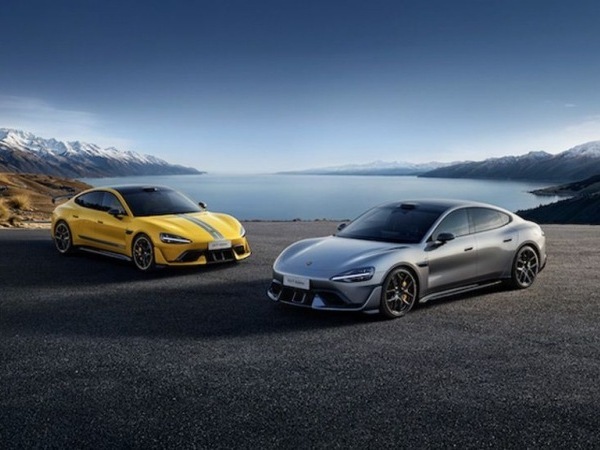
Xiaomi SU7 Ultra priced at RM32,000, plans to sell globally in 2027
Kevin WongMar 5, 2025
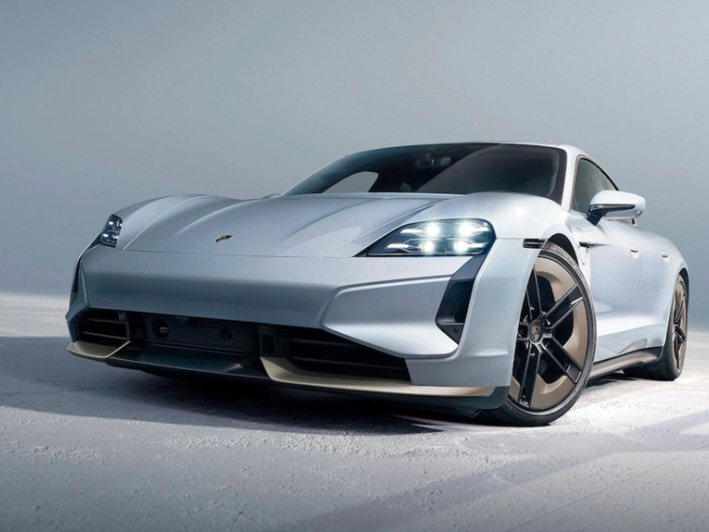
2024 Porsche Taycan officially released, prices start from RM 575,000
LienJun 20, 2024

Porsche Cayenne S Electric released, offering 653 kilometers WLTP range and wireless charging feature
WilliamMar 11, 2026

A price difference of RM500,000, Zeekr 7X or Porsche Cayenne S E-Hybrid?
RobertFeb 9, 2026

Porsche 718 models will be available in both electric and fuel-powered versions
JamesDec 19, 2025
View More
Pros
Cons