
Q
How much horsepower does the BMW M5 produce?
 TiaOct 15, 2025, 05:26 PM
The BMW M5 has always been a head-turner for car enthusiasts, with its performance figures being the main talking point. Here in Malaysia, the M5 Competition variant takes center stage, packing a 4.4-liter V8 twin-turbo engine that cranks out a whopping 625 horsepower and 750 Nm of torque. Paired with the 8-speed M Steptronic gearbox and M xDrive all-wheel-drive system, this beast sprints from 0-100km/h in just 3.3 seconds. Flat out, it's electronically limited to 250km/h, but tick the box for the M Driver's Package and you can unlock a top speed of 305km/h – numbers that make it a serious contender in its class.
For Malaysian buyers, there's more to consider than just raw power. Our hot climate can be tough on turbocharged engines, so keeping the cooling system well-maintained is key to keeping that performance consistent. Then there's our roads – twisty, often congested – but the M5's multiple drive modes have you covered, whether you're cruising comfortably or pushing it hard. And let's not forget the elephant in the room: Malaysia's tax structure hits big-displacement cars pretty hard. That's a practical factor potential owners can't ignore.
Special Disclaimer: This content is published by users and does not represent the views or position of PCauto.
Related Q&A
Q
What gen is the 2019 M5?
The 2019 BMW M5 represents the sixth generation (F90 chassis code) of this iconic performance sedan. Launched in 2017, this iteration made history as the first M5 to feature the M xDrive all-wheel-drive system – a game-changer that blends track-ready dynamics with everyday usability.
Under the hood lies a snarling 4.4-liter V8 twin-turbocharged engine pumping out 600 horsepower, rocketing the M5 from 0-100 km/h in just 3.4 seconds. For purists craving tail-happy thrills, the clever rear-wheel-drive mode delivers the classic M-car experience.
Tech takes a leap forward with a fully digital instrument cluster, gesture controls, and cutting-edge driver assistance systems. Don’t let the more comfort-oriented chassis tuning fool you – the adaptive M suspension serves up razor-sharp handling when pushed, making this M5 equally at home on cross-continental journeys or backroad blasts.
For those demanding even sharper performance, BMW later unleashed the 625-hp M5 Competition with retuned suspension and heightened responsiveness. Widely regarded as the modern benchmark for do-it-all super sedans, this generation M5 strikes a rare balance between brute force and Bavarian sophistication.
 BethDec 1, 2025
Q
Does the 2019 M5 have launch control?
The 2019 BMW M5 does come equipped with launch control – a common performance feature that helps maximize traction and power delivery during straight-line acceleration.
Here's how it works: Switch to Sport+ or Track mode, disable DSC stability control, then firmly press the brake with your left foot while flooring the throttle with your right. Hold until the engine stabilizes, release the brake, and you're off. The system manages torque and shift timing to unleash the full 600 horsepower from that 4.4L V8 twin-turbo, hitting 0-100 km/h in just 3.4 seconds.
Fair warning – overusing launch control puts extra stress on the drivetrain. BMW recommends following the cooldown intervals in the manual. You'll find similar systems in most German performance cars (all called "Launch Control"), while Japanese brands sometimes use terms like "LC" or "Launch Mode." Different names, same idea: electronics optimizing your takeoff. For drivers who love brutal acceleration, it's a must-have feature.
 AvaDec 1, 2025
Q
How much is the BMW M5 2019?
Here’s a natural, human-sounding translation for a car editor:
*"A used 2019 BMW M5 typically ranges between RM500k to RM700k, depending on factors like condition, mileage, specs, and service history. This beast packs a 4.4L V8 twin-turbo pushing 600hp, hitting 0-100km/h in just 3.4 seconds—making it a top-tier performance sedan. It comes loaded with xDrive AWD, rear-wheel steering for razor-sharp handling, and a cabin dressed in premium leather and carbon fiber. Tech highlights include a full digital cockpit and advanced driver aids.
Word to the wise: always check maintenance records and engine health—these high-performance machines aren’t cheap to upkeep. Also, pay attention to tire and brake wear. Ideal for buyers who want supercar thrills with daily-driver practicality, the M5 delivers track-ready performance without sacrificing comfort."*
This version keeps it conversational, drops the robotic tone, and flows like a real car magazine write-up. Let me know if you'd tweak any phrasing!
 ZoeDec 1, 2025
Q
What engine does a 2019 BMW M5 have?
The 2019 BMW M5 is powered by a beastly 4.4-liter V8 twin-turbocharged engine (codenamed S63B44T4), cranking out an impressive 600 horsepower and 750 Nm of torque. Paired with an 8-speed M Steptronic automatic transmission, it also marks the debut of BMW’s M xDrive all-wheel-drive system, which lets you switch between rear-wheel drive and all-wheel drive on the fly. The car rockets from 0-100 km/h in just 3.4 seconds—seriously quick for a four-door saloon.
What makes this engine special is BMW’s TwinPower Turbo tech, combining twin-scroll turbos, Valvetronic variable valve lift, and Double-VANOS variable cam timing. The result? Brutal acceleration without completely sacrificing fuel efficiency. And let’s not forget that V8 growl—it’s addictive, with instant throttle response that enthusiasts love. Plus, this engine’s proven to be reliable as long as you stick to the recommended maintenance schedule.
If you’re into high-performance sedans, it’s worth cross-shopping rivals like the Mercedes-AMG E63 or Audi RS7—each has its own tech highlights and driving character. But the M5? It’s a proper driver’s machine with just the right amount of savagery.
 YukiDec 1, 2025
Q
What is the maintenance cost of a 2019 M5?
The 2019 M5, as a high-performance luxury sedan, comes with relatively steep maintenance costs that largely depend on usage and service items. A routine oil and filter change typically runs around RM2,000 to RM3,000, while a major 20,000km service—including transmission fluid, brake fluid, and other consumables—can cost RM5,000 to RM8,000. Costs climb higher if performance components like the carbon-ceramic braking system or sport suspension need attention.
For tires, the factory high-performance set retails at roughly RM2,000 to RM3,000 per tire, with replacements recommended every 30,000km to maintain optimal grip. Given the M5’s engineering, it’s worth sticking to 98-octane fuel and genuine parts to avoid potential issues.
Regular maintenance isn’t just about longevity—it’s key to preserving the M5’s driving dynamics. Stick to the manufacturer’s service schedule and use certified workshops to ensure quality. If the budget allows, consider an extended factory warranty to mitigate long-term ownership costs.
 XenaDec 1, 2025
Q
What is the value of a 2019 BMW M5?
Here’s a natural, human-sounding translation for a car editor:
*"The current used market value of a 2019 BMW M5 in Malaysia ranges between RM400k to RM550k, depending on factors like condition, mileage, specs, and service history. Under the hood, it packs a 4.4-litre V8 twin-turbo pumping out 600 horsepower—hitting 0-100 km/h in just 3.4 seconds. This thing’s a beast. As a high-performance luxury sedan, it nails the balance between plush comfort and track-ready handling, making it a sweet pick for driving enthusiasts.
In the used market, the M5 holds its value well, especially well-kept examples with the Competition Package. Always get a professional inspection before buying, and dig into the full maintenance records to rule out major accidents or hidden issues. Fair warning though: upkeep isn’t cheap, particularly for performance parts. If your budget allows, consider a certified pre-owned (CPO) unit for that extra peace of mind with extended warranty."*
This keeps it conversational, avoids robotic phrasing, and flows like genuine editorial advice.
 WrenDec 1, 2025
Q
What engine is in the 2019 M5?
The 2019 BMW M5 is powered by a 4.4-liter V8 twin-turbocharged engine, codenamed S63B44T4. This beast features BMW’s M TwinPower Turbo technology, delivering a whopping 600 horsepower and 750 Nm of torque. Paired with an 8-speed M Steptronic automatic transmission and the M xDrive all-wheel-drive system, it rockets from 0-100 km/h in just 3.4 seconds—seriously impressive stuff.
What sets this engine apart isn’t just raw power. BMW fine-tuned the turbocharging and cooling systems for sharper throttle response and better durability, making it a dream for drivers who crave performance. And let’s be real, the M5’s engine tech has always been a class leader. That signature exhaust note and precision tuning? Pure ear candy for enthusiasts.
If you’re into high-performance sedans, this engine deserves your attention. Whether you’re daily driving or hitting the track, it’s got the chops to deliver.
 VivDec 1, 2025
Q
What is special about the 2019 BMW M5?
The 2019 BMW M5 stands out as a high-performance luxury sedan with a game-changing feature: the first-ever M xDrive all-wheel-drive system that lets drivers switch between rear-wheel and all-wheel drive for the perfect balance of thrill and grip. Under the hood lies a beastly 4.4L V8 twin-turbo pumping out 600 horsepower, rocketing from 0-100km/h in just 3.4 seconds – making it one of the fastest four-door machines of its time.
Inside, you'll find carbon fiber trims hugging Merino leather sport seats, while the cockpit gets serious tech cred with a standard 12.3-inch digital cluster and iDrive 7.0. The M-specific exhaust snarls on demand, and adaptive dampers let you tweak the ride between civilized and savage.
Here’s the kicker for hardcore drivers: the optional Competition Package bumps output to 625 hp with retuned chassis dynamics. Tuners love the S63 engine’s potential, with aftermarket shops offering serious power upgrades. And if you spring for the factory M Driver’s Package? That electronic limiter vanishes, unlocking a 305km/h top speed – because track DNA shouldn’t come with training wheels.
 UlaDec 1, 2025
Q
How reliable is a 2019 M5?
The 2019 BMW M5 has proven to be quite reliable in real-world use. Its 4.4-liter V8 twin-turbo engine and 8-speed automatic transmission are well-sorted packages—delivering consistent power while being durable enough for daily driving. Stick to the maintenance schedule, particularly for the turbocharging and cooling systems, and you're unlikely to face major mechanical headaches.
The iDrive infotainment system occasionally hiccups, but it's more stable than earlier iterations. Keep in mind that the sport-tuned suspension, though rewarding for driving dynamics, means you'll want to monitor shock absorbers and tire wear more closely, especially on rougher roads.
Pro tip: Performance cars like this demand proper care. Always opt for OEM or certified service centers using specified fluids and parts. For used buyers, pay special attention to engine health, transmission smoothness, and unusual chassis noises—these are telltale signs of how the car's been treated.
Bottom line? The 2019 M5 strikes that sweet spot between thrills and dependability, making it a solid pick for drivers who want performance without constant workshop visits.
 ModelPoseDec 1, 2025
Q
How much HP does a 2019 M5 have?
The 2019 BMW M5 is powered by a 4.4-liter V8 twin-turbocharged engine, delivering an impressive 600 horsepower and 750 Nm of torque. Paired with an 8-speed M Steptronic automatic transmission and the M xDrive all-wheel-drive system, it rockets from 0-100 km/h in just 3.4 seconds—pure performance.
What’s even cooler? It offers multiple driving modes, including a rear-wheel-drive setting, letting you tweak the car’s dynamics to match your mood. As a high-performance luxury sedan, the M5 doesn’t just brute-force its way down the road; it keeps daily driving comfortable, too. Inside, you’ll find premium materials and top-tier tech like a full digital cockpit and a large infotainment screen.
For enthusiasts who crave power without sacrificing practicality, the M5 strikes the perfect balance. Its combination of raw speed, precision handling, and upscale comfort puts it at the top of its class—ideal for drivers who want both thrills and refinement.
 MysteryDec 1, 2025
Popular Cars
Model Year
Car Compare
Car Photo
Related Models
 Cars
CarsLatest Q&A
Q
How to tell if a car needs an air filter?
To determine whether a car's air filter needs replacement, a multi-dimensional comprehensive assessment can be conducted. First, perform a visual inspection: after removing the filter, if the filter paper appears uniformly gray-black, shows oil stains or stubborn dirt deposits, or exhibits physical damage such as tears or deformation, immediate replacement is required. Second, monitor the vehicle's performance: symptoms like abnormal fuel consumption increase, starting difficulties, sluggish acceleration, blackened exhaust emissions, or illumination of the engine warning light may indicate restricted airflow due to filter clogging. Furthermore, operating conditions significantly affect filter longevity. For vehicles regularly driven in harsh environments like sandy or construction zones, early inspection and replacement are advised even before reaching the standard 15,000-30,000 kilometer service interval. Practically, you may lightly tap the filter to assess dust accumulation or use reverse-flow compressed air cleaning to evaluate residual contamination. Replacement is mandatory if the filter media structure is compromised or the sealing gasket shows aging. Regular filter inspections every 5,000 kilometers are recommended to maintain optimal engine air intake efficiency and combustion stability.
 CinJan 30, 2026
Q
When to know to change air filter in car?
The replacement cycle of a car's air filter needs to be comprehensively considered based on driving mileage, usage environment, and manufacturer's recommendations. It is usually recommended to replace it every 10,000 to 15,000 kilometers driven or once a year. If the vehicle is often driven in harsh environments such as dusty areas, hazy conditions, or rural roads, the replacement interval should be shortened to every 5,000 to 8,000 kilometers or every 3 to 6 months. For highway driving, the interval can be extended to 20,000 to 30,000 kilometers. Dry filters (adopted by mainstream models) can be cleaned of light dirt with compressed air, but they need to be replaced immediately if severely dirty or damaged. A clogged filter will lead to insufficient air intake and reduced combustion efficiency, manifesting as decreased power, increased fuel consumption, and unstable idling. The maintenance manuals of different brand models may vary; for example, some turbocharged models have higher requirements for air cleanliness and need more frequent replacement. It is recommended to check the filter status during each maintenance, especially after rainy seasons or sand and dust weather, to ensure the engine's optimal performance and extend its service life.
 XoeJan 30, 2026
Q
How often do you need to change your car air filter?
The replacement cycle of a car's air filter should be flexibly adjusted according to the driving environment and usage conditions. The general recommendation is to replace it every 10,000 to 15,000 kilometers or 12 months, whichever comes first. If the vehicle is frequently driven in dusty, gravelly, or heavily polluted areas such as construction sites or industrial zones, it is recommended to shorten the replacement interval to every 5,000 to 8,000 kilometers or 3 to 6 months; in extreme cases, the filter should be inspected every 3,000 kilometers and replaced promptly if necessary. In humid coastal areas, extra attention should be paid to filter moisture or mold growth, and an inspection every 3 to 4 months is advised. Routinely, you can determine the replacement timing by observing whether the filter has darkened, accumulated excessive dust, or shows reduced light permeability. If the engine exhibits symptoms like power loss, abnormally increased fuel consumption, or unstable idling, the filter condition should be prioritized for inspection. For turbocharged models, it is recommended to increase the inspection frequency and prioritize the use of original equipment manufacturer (OEM) filters to ensure optimal filtration performance. If the filter becomes damp after driving through water, it must be replaced immediately to prevent the paper structure from swelling and obstructing the air intake. Regular maintenance of the air filter not only protects the engine from dust-induced wear but also optimizes fuel efficiency and power output. Car owners are advised to incorporate filter inspection into routine maintenance and develop a customized replacement schedule based on the manufacturer's manual and actual driving conditions.
 IkeJan 30, 2026
Q
Is an air filter necessary?
The air filter is an indispensable key component in the automobile engine system. Its main function is to filter out solid impurities such as dust, sand particles, and pollen from the air entering the engine, preventing these particles from entering the cylinder and causing abnormal wear of the piston group and cylinder wall, thereby avoiding serious mechanical failures such as "cylinder scuffing". Through multiple filtration mechanisms including interception and electrostatic adsorption, it ensures the engine receives clean air, maintaining the optimal air-fuel ratio, improving combustion efficiency, reducing fuel consumption and exhaust emissions, while also minimizing intake noise and enhancing driving comfort. Depending on the vehicle's operating environment, it is recommended to replace the filter element every 15,000 kilometers. For vehicles frequently driven in dusty or sandy areas, the replacement interval should be reduced to within 10,000 kilometers. A clogged filter left unchanged for an extended period will result in increased intake resistance, diminished engine power, higher fuel consumption, and may even cause operational instability issues like engine vibration. Currently, the replacement cost for air filters in standard vehicle models ranges between 50 to 100 Malaysian Ringgit. Regular maintenance not only prolongs engine lifespan but also optimizes overall vehicle performance.
 QuirkyJan 30, 2026
Q
How often should you change your air filter?
The replacement cycle of a car's air filter should be determined based on both the vehicle's operating environment and the manufacturer's recommendations. Generally, it is recommended to replace the filter every 10,000 to 15,000 kilometers or annually. For vehicles frequently driven on highways in clean environments, the interval may be extended to 20,000 to 30,000 kilometers. Conversely, in harsh conditions such as dusty, polluted, or rural areas, the replacement interval should be reduced to 5,000 to 10,000 kilometers or every 2 to 3 months. Dry-type filters (commonly used in mainstream vehicles) can be cleaned with compressed air when lightly soiled, but must be replaced if heavily contaminated to prevent issues like restricted airflow, incomplete combustion, power loss, and increased fuel consumption. Since maintenance requirements vary by brand and model, always consult the specific instructions in the vehicle owner's manual. Regular inspection and timely replacement of the air filter will help maintain engine performance and prolong its lifespan.
 LovelyJan 30, 2026
Related News

Audi RS6 sedan version may return to compete fully with the BMW M5
WilliamNov 21, 2025

Meet the New BMW M5 G90: Rear-Wheel Steering & RM1.18M Price Tag
AshleyJun 16, 2025
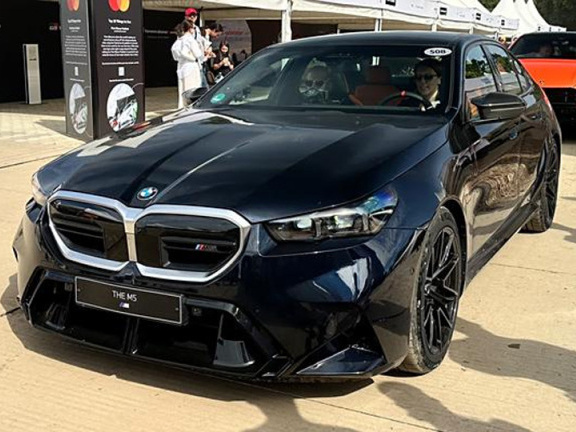
2024 Goodwood Festival of Speed: The All-New Generation BMW M5 Makes Its Debut!
AshleyJul 12, 2024

The all-new BMW i5 eDrive40 M Sport Pro lands in Malaysia
LienJan 16, 2026

Neue Klasse platform's first mass-produced vehicle, the all-new BMW iX3 makes its debut, looks just like a concept car
LienSep 8, 2025
View More
Pros
Cons