
Q
How much horsepower does the 2024 BMW M3 have?
 SapphireStrikeFeb 16, 2026, 11:53 AM
The 2024 BMW M3 offers two powertrain versions in the Malaysian market. The standard version is equipped with a 3.0-liter inline-six twin-turbocharged engine, which can deliver a maximum power of 473 horsepower (353 kilowatts). The Competition version, on the other hand, has been further tuned to 503 horsepower (375 kilowatts). Both versions are paired with an 8-speed M Steptronic transmission and come standard with a rear-wheel-drive system (M xDrive all-wheel drive is optional).
It's worth mentioning that this S58 engine features track-oriented designs such as a forged crankshaft and a water-cooled intercooler. Not only does it meet the Euro 7 emissions standard, but its high-revving engine sound and precise throttle response also carry on the driving pleasure of the M family. For Malaysian car enthusiasts, if they choose the Competition version, its 0 - 100km/h acceleration time of 4.1 seconds (rear-wheel-drive version) is more than enough to meet the needs of local mountain roads or track days. And after installing the M Driver's Package, the top speed can be unlocked to 290km/h.
While competitors in the same class, such as the Mercedes - AMG C 63 S, have switched to hybrid power, the M3 still adheres to a pure gasoline - powered setup, which is quite appealing to consumers who prefer traditional performance cars. Moreover, BMW Malaysia offers a 5 - year unlimited - mileage warranty, providing both performance and after - sales support.
Special Disclaimer: This content is published by users and does not represent the views or position of PCauto.
Related Q&A
Q
Is the 2024 BMW M3 AWD?
The 2024 BMW M3 offers the xDrive all - wheel - drive version in some markets. However, the specific configuration in Malaysia should be subject to the official information released by local dealers. As a high - performance sedan, the BMW M3 is equipped with a 3.0 - liter inline six - cylinder twin - turbocharged engine, paired with an 8 - speed M Steptronic transmission. The xDrive system can actively distribute torque between the front and rear axles, enhancing handling stability on slippery roads. It's worth noting that Malaysia has a tropical rainforest climate with frequent heavy rains. The all - wheel - drive system can provide better traction when driving in the rain, but it will also slightly increase fuel consumption. The M3 also offers a rear - wheel - drive version, which is more suitable for owners who pursue pure driving pleasure. It is recommended that potential buyers choose the drive type according to their own driving habits and needs and experience the differences through test drives in person. BMW Malaysia usually holds test - drive events after the release of new cars, which is the best way to understand the vehicle's performance.
 SkyeSep 12, 2025
Q
How long do M3 2024 engines last?
The S58 inline-six turbocharged engine equipped in the 2024 BMW M3 is well-known for its high performance and durability. Under normal maintenance and reasonable driving conditions, this type of engine can usually cover a mileage of 200,000 to 300,000 kilometers or even more. The specific lifespan depends on the maintenance frequency, driving habits, and the impact of Malaysia's hot and humid climate on the cooling system and lubrication.
It is recommended that car owners follow BMW's official maintenance schedule, use the engine oil specified by the manufacturer (pay particular attention to the high - temperature viscosity index), and regularly check the turbocharging system and heat - dissipation components. The tropical environment may accelerate the aging of rubber pipelines and coolant.
It's worth noting that although high - performance engines are primarily designed for power output, BMW's engineering team has enhanced their durability through technologies such as forged crankshafts and closed - deck cylinder blocks. If the car is used for daily commuting rather than frequent intense track driving, its engine lifespan can be close to that of an ordinary family car.
Malaysian users also need to pay special attention to the impact of water wading during the rainy season on the intake system and the problem of oil dilution caused by long - term short - distance driving. These factors may indirectly shorten the engine lifespan.
Overall, as long as scientific maintenance is carried out, the engine of the 2024 M3 can definitely provide long - term and stable performance.
 StarSep 12, 2025
Q
What is the top speed of the BMW M3 2024?
The top speed of the 2024 BMW M3 varies depending on the configuration. The standard rear - wheel - drive version has an electronic speed limit of 250 km/h. If you opt for the M Driver's Package, it can be unlocked to 290 km/h. The Competition xDrive all - wheel - drive version can also reach 280 km/h after installing the performance package. This high - performance sedan is equipped with a 3.0 - liter inline - six twin - turbocharged engine, with a maximum output of 503 horsepower (Competition version), and is paired with an 8 - speed M Steptronic transmission. It can accelerate from 0 to 100 km/h in just 3.5 seconds (xDrive version).
For car enthusiasts in Malaysia, it should be noted that such extreme speed performance is more suitable for closed - circuit tracks. In the local tropical climate, when driving aggressively, it is recommended to closely monitor the tire condition and the efficiency of the cooling system. At the same time, high - powered rear - wheel - drive cars require extra caution on wet roads during the rainy season.
The BMW M3 has always been known for its precise handling. The 2024 model has also upgraded the M - specific differential and adaptive suspension. Even on the winding mountain roads in Malaysia like Genting Highlands, it can show excellent dynamic performance. However, for daily driving, it is recommended to use the M mode buttons on the steering wheel reasonably to adjust the intensity of power response.
 MoonSep 12, 2025
Q
What is the residual value of the BMW M3 in 2024?
The residual value of the 2024 BMW M3 in Malaysia depends on factors such as the vehicle's age, mileage, condition, and market demand. Generally, the residual value rate of a 3 - year - old M3 is about 50% - 60% of the original price, but the specific figure needs to be evaluated based on the actual vehicle. As a high - performance sedan, the BMW M3 has a relatively stable residual value performance. This is thanks to its powerful S58 inline - six engine, excellent handling performance, and brand premium. Especially in the Malaysian market, BMW enjoys high recognition, which further supports the second - hand prices.
Factors affecting the residual value also include maintenance records, accident history, and optional configurations. For example, a carbon fiber roof or a sports package may increase the residual value. For potential buyers, it is recommended to obtain an accurate valuation through authoritative used - car platforms or BMW's officially certified used - car channels. At the same time, regular maintenance should be carried out to maintain the vehicle's condition.
If you are considering long - term ownership, the M3 has better value retention than ordinary models. However, the maintenance cost of high - performance cars is relatively high and should be included in the budget plan.
 SunnySep 12, 2025
Q
What kind of engine is in the BMW M3 2024?
The 2024 BMW M3 is powered by a 3.0-liter inline-six twin-turbocharged engine with the code name S58. This high-performance engine can deliver 473 horsepower in the standard version, while in the Competition version, the power is boosted to 503 horsepower. It's paired with an 8-speed M Steptronic transmission or a 6-speed manual transmission (depending on the configuration), showcasing amazing acceleration performance and driving pleasure.
For car enthusiasts in Malaysia, this engine not only inherits the high-revving characteristics of the BMW M series but also optimizes the low-speed torque output through twin-turbo technology, which is very suitable for the local winding roads and high-speed cruising needs. It's worth mentioning that the S58 engine adopts advanced technologies such as a forged crankshaft and a 3D-printed cylinder head. Its heat dissipation and durability have also passed the rigorous tests on the Nürburgring track and can adapt to the tropical climate.
When comparing with performance cars in the same class, this type of inline-six engine has always been highly regarded in the Malaysian car enthusiast circle because of its smoothness and modification potential. Moreover, BMW's Valvetronic variable valve technology further balances fuel economy, which is an added bonus for car owners who consider daily commuting.
 MidnightRiderSep 12, 2025
Q
How fast is a 2024 BMW M3?
The 2024 BMW M3 boasts outstanding performance. Its Competition version is equipped with a 3.0-liter inline six-cylinder twin-turbocharged engine and a peak torque of 650 Nm. Paired with an 8-speed M Steptronic transmission, it can accelerate from 0 to 100 km/h in just 3.5 seconds. The top speed is electronically limited to 250 km/h, but if you opt for the M Driver's Package, the top speed can be increased to 290 km/h. For the driving environment in Malaysia, such performance is more than sufficient, offering a powerful driving experience whether on the highway or the racetrack.
It's worth mentioning that the M3 is also fitted with the M xDrive all-wheel-drive system, which provides better grip and handling stability. Especially in Malaysia's rainy climate, the all-wheel-drive system can effectively enhance driving safety. Moreover, the chassis tuning and suspension system of the M3 have been carefully optimized to balance the comfort of daily driving and the aggressive requirements of track driving.
For Malaysian car enthusiasts who are after high-performance sedans, the 2024 BMW M3 is undoubtedly a choice worth considering. It not only has excellent acceleration capabilities but also showcases the profound expertise of the BMW M series in terms of handling and technological features.
 ForestrySep 12, 2025
Q
How reliable is the 2024 BMW M3?
The 2024 BMW M3 performs quite well in terms of reliability. It inherits the consistent high-performance and engineering quality of the BMW M series. The 3.0-liter inline-six twin-turbocharged engine it is equipped with has been optimized over the years. Its power output is stable, and its durability has been verified. The 8-speed M Steptronic transmission it comes with is also well - known for its smoothness and reliability.
Under the climatic conditions in Malaysia, the cooling system and electronic devices of the M3 have been specifically tuned to adapt to the high-temperature and high-humidity environment, reducing the risk of breakdowns. In addition, the official warranty and maintenance plan provided by BMW Malaysia (including a 5-year unlimited-mileage warranty) further boosts the confidence of car owners.
It's worth mentioning that the chassis and suspension system of the M3 use a large amount of lightweight materials and feature a reinforced design, balancing the comfort of daily driving and track performance. However, it is recommended to regularly check the tires and braking system to ensure safety during high-performance driving.
When it comes to the second - hand resale value, the M3 performs stably in the Malaysian market, but a specific assessment needs to be based on the vehicle's condition and mileage. For potential buyers, it is recommended to obtain detailed technical parameters and take a test drive through an authorized BMW dealer to fully understand the vehicle's characteristics.
 FlameFangSep 12, 2025
Q
How fast does a 2024 BMW M3 go from 0 to 60?
The 2024 BMW M3 can accelerate from 0 to 60 mph (about 96 km/h) in approximately 3.4 seconds. This performance is thanks to its powerful 3.0-liter inline-six twin-turbocharged engine. It's paired with an 8-speed M Steptronic automatic transmission or a 6-speed manual transmission (in the rear-wheel-drive version), offering drivers an ultimate acceleration experience.
For car enthusiasts in Malaysia, this high-performance sedan isn't just suitable for daily driving. It can also showcase its excellent dynamic performance on the racetrack. In particular, its M xDrive all-wheel-drive system (optional) provides better traction on slippery roads, making it a great fit for the local variable climate.
It's worth mentioning that the M3 is also equipped with advanced chassis technology and lightweight design, further enhancing the handling precision. Its competitors, such as the Mercedes-AMG C63 and Audi RS5, also have strong performance. However, the M3 has more advantages in driving pleasure and personalized configuration. Especially in the Malaysian market, BMW's after-sales service network and parts supply are relatively well-established, providing more convenience for car owners.
 TitaniumStrikeSep 12, 2025
Q
Where is the 2024 BMW M3 built?
The 2024 BMW M3 is primarily produced at the main factory of the BMW Group in Munich, Germany. This factory is renowned for its high-standard manufacturing processes and advanced technologies, ensuring that the vehicle's performance and quality meet the brand's globally unified standards. For Malaysian car enthusiasts, this high-performance model is expected to be introduced through official import channels. Local consumers can enjoy the same configurations and after-sales services as those in the global market.
As an iconic model of the brand, the BMW M3 is equipped with a 3.0-liter inline six-cylinder twin-turbocharged engine and it comes with rear-wheel drive or the M xDrive all-wheel drive system, catering to both track performance and daily driving needs.
It's worth mentioning that the hot and rainy climate in Malaysia places certain requirements on the heat dissipation of high-performance cars and tire selection. It is recommended that car owners conduct regular maintenance checks, especially on the cooling system and braking components, to ensure that the vehicle is always in optimal condition. If you're interested in purchasing, you can visit authorized dealers in Malaysia to inquire about specific configurations and prices. Some models may also offer personalized optional equipment services.
 BronzeFangSep 12, 2025
Q
What is the BMW 2024 rumor?
Regarding the rumors about BMW's new cars in 2024, the most anticipated ones at present are the launch of the all-new generation 5 Series (G60) and the electric i5. They are expected to be equipped with a more advanced autonomous driving assistance system and the upgraded iDrive 8.5 infotainment system. Meanwhile, a battery pack with higher energy density might be introduced to improve the range performance. The Malaysian market may introduce these two models in the second half of 2024.
In addition, BMW might also launch a mid-cycle facelift version of the X3. The exterior will feature a more aggressive design language and it may be equipped with a 48V mild-hybrid system to enhance fuel economy. For Malaysian consumers, these new cars may continue BMW's consistent strategy in the local market, which means offering a wide range of configuration options and local tuning to adapt to the tropical climate and road conditions.
It's worth mentioning that with the continuous promotion of new energy vehicle policies by the Malaysian government, BMW may strengthen the local layout of electric models. For example, it could increase cooperation on charging facilities or introduce more competitive after-sales service plans. However, the specific details still need to wait for further official announcements.
 PhoenixWingSep 12, 2025
Popular Cars
Model Year
Car Compare
Car Photo
Related Models
 Cars
CarsLatest Q&A
Q
Is AMT similar to automatic?
There are significant differences between AMT transmissions and automatic transmissions (AT) in terms of core structure and driving experience. AMT is essentially an electronically automated version of a manual transmission, simulating manual clutch operation and gear shifting through a computerized control system while retaining the gear set structure of manual transmissions. As a result, it offers higher transmission efficiency, with fuel consumption approximately 8%-12% lower than AT, making it particularly suitable for highway or long-distance driving. However, it may exhibit jerking similar to manual transmissions during low-speed gear shifts, especially noticeable in congested traffic conditions.
AT transmissions rely on torque converters for power transfer, delivering smooth and seamless gear shifts that appeal to comfort-oriented users. However, their complex structure (incorporating planetary gear sets, hydraulic systems, etc.) results in higher maintenance costs. A single service may cost between 800 to 1,500 ringgit, whereas AMT only requires gear oil replacement at approximately 400 ringgit.
From a market perspective, AMT is predominantly used in budget vehicles or commercial models priced below 80,000 ringgit, while AT is typically featured in mid-to-high-end vehicles. Consumers should select based on actual needs: AMT suits those prioritizing fuel efficiency and low maintenance costs, while AT better serves those valuing comfort. Notably, recent advancements in AMT electronic control technology have significantly mitigated jerking issues, though test drives should still emphasize low-speed performance evaluation.
 AriaMar 26, 2026
Q
Which is better, DCT or AT?
DCT (Dual-Clutch Transmission) and AT (Automatic Transmission) each have their own advantages and disadvantages, and the choice should be based on personal driving needs. AT transmissions transfer power through a torque converter, offering excellent shift smoothness, making them suitable for urban commuting or novice drivers. However, they tend to have higher fuel consumption, and vehicles equipped with them are usually more expensive. DCT transmissions utilize a dual-clutch structure, featuring fast shift speeds and high power transmission efficiency, which provides a more direct driving experience—particularly suitable for users seeking a sporty feel. However, they may exhibit jerking at low speeds and have relatively high maintenance costs. If durability and comfort are priorities, AT is the more reliable choice; if power responsiveness and driving pleasure are preferred, wet DCT (such as Volkswagen DSG) performs better, though dry DCT models should be avoided in prolonged stop-and-go traffic conditions. Additionally, CVT transmissions excel in smoothness and fuel efficiency, making them ideal for daily commuting, but they lack driving excitement. It is recommended to test-drive before purchasing, as tuning varies significantly across brands, and real-world experience is more important than theoretical specifications.
 FlutteringMar 26, 2026
Q
Is Amt good or bad?
AMT gearboxes have a significant cost advantage in the local market, typically being around 5,000 Ringgit cheaper than models equipped with conventional automatic transmissions. Their fuel efficiency is comparable to manual transmissions, resulting in long-term fuel savings. Featuring a straightforward design, they achieve transmission efficiency exceeding 90% with relatively low maintenance costs, making them ideal for practicality-oriented consumers. However, their shifting logic contains inherent limitations: gear changes between 1st and 2nd cause 0.3-0.5 second power interruptions, while unintended upshifts on inclines may reduce engine speed by 15%-20%, compromising driving smoothness. For urban commuters or budget-conscious buyers, AMT offers excellent value, though those prioritizing premium driving dynamics should consider alternative transmission types. Some domestic models like the Perodua Axia employ enhanced AMT systems, where optimized shift programming has reduced gearshift shock by approximately 30%.
 RainbowsMar 26, 2026
Q
Which gives better mileage, CVT or AMT?
From the perspective of fuel economy, CVT transmissions generally perform better under urban driving conditions. Their continuously variable design allows the engine to consistently operate within the optimal speed range, significantly reducing fuel consumption during frequent starts and stops. Test data shows that their fuel consumption in urban driving conditions is 10% to 15% lower than that of comparable models. AMT transmissions, on the other hand, inherit the high transmission efficiency of manual transmissions, delivering fuel efficiency close to manual transmissions during high-speed cruising. This makes them particularly suitable for long-distance driving in large-displacement vehicles. However, due to power interruption during gear shifts, their overall fuel consumption may be 5% to 8% higher than CVTs.
The difference in fuel-saving characteristics between the two transmissions stems from their technical principles: CVTs achieve continuous variability through steel belts and pulleys, eliminating the fixed gear ratio limitations of traditional transmissions; AMTs simulate manual gear changes via electronic control systems while maintaining the mechanical efficiency of gear transmission. Notably, actual fuel consumption is also influenced by driving habits. Smooth acceleration and anticipatory deceleration can maximize the transmissions' fuel-saving potential. If the vehicle budget permits and urban commuting is the primary use, CVTs offer a more economical choice. For frequent highway driving with an emphasis on cost-effectiveness, AMTs are equally worth considering.
 RubyBlazeMar 26, 2026
Q
Which is cheaper, AMT or CVT?
In terms of gearbox cost, AMT is usually more economical than CVT. Essentially, AMT is a manual transmission equipped with an electronic control unit, featuring a simple structure and low maintenance costs. The unit price ranges from approximately 5,000 to 8,000 ringgit, making it suitable for budget-conscious consumers or those who prioritize long-term operating costs. CVT incurs higher manufacturing costs due to its precision steel belt transmission system and continuous variable transmission technology, with a unit price of about 7,000 to 10,000 ringgit. However, it delivers a smoother driving experience and superior fuel efficiency. The primary differences between the two lie in technical complexity: AMT retains the gear-shifting mechanism, resulting in noticeable shift shock; CVT achieves linear power output through stepless speed variation but requires periodic belt inspection and incurs higher maintenance expenses. For those prioritizing initial cost and basic transportation needs, AMT offers better value; if comfort and long-term fuel economy are priorities, CVT represents a more worthwhile investment. Note that actual prices may vary based on vehicle model, brand, and local supply chain factors.
 ShadowProwlMar 26, 2026
Related News
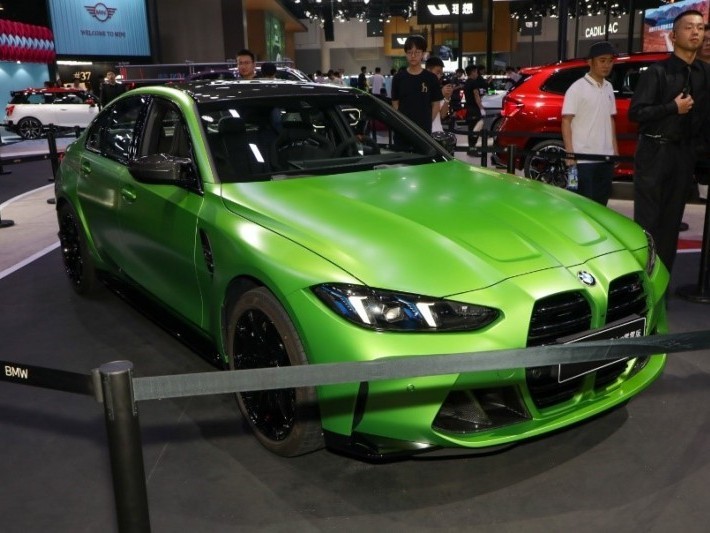
The new BMW M3 will retain the S58 engine, but it's uncertain whether it will be a hybrid model?
LienOct 11, 2024

The all-new BMW i5 eDrive40 M Sport Pro lands in Malaysia
LienJan 16, 2026

Audi RS6 sedan version may return to compete fully with the BMW M5
WilliamNov 21, 2025

Neue Klasse platform's first mass-produced vehicle, the all-new BMW iX3 makes its debut, looks just like a concept car
LienSep 8, 2025

BMW X5 will become BMW's first model equipped with a hydrogen fuel cell, with a range of 504 kilometers
JamesSep 8, 2025
View More
Pros
Cons