
Q
how much is a byd dolphin
 FriendSep 28, 2025, 11:27 AM
The BYD Dolphin is priced between roughly RM100,000 to RM130,000 in Malaysia, depending on the trim level. Of course, the actual sticker price might wiggle a bit based on dealer promotions or any government subsidy sweeteners that come into play. Slotted as a compact hatchback, this EV packs BYD's in-house Blade Battery tech, serving up around 400km of range on the NEDC cycle – more than enough juice for your daily urban grind.
Here's the kicker for Malaysian buyers: the government's offering tax breaks on EVs. That means you're looking at savings on import duties and sales tax, so the on-the-road price could end up being nicer than the listed MSRP. When stacked against rivals like the Honda Jazz or Toyota Yaris – your usual petrol-powered suspects in this segment – the Dolphin's big ace is its running costs. We're talking pennies per kilometer for electricity, which is way kinder to your wallet than frequent trips to the pumps.
A heads-up though: EV charging infrastructure in Malaysia is still catching on. Before you take the plunge, it's smart to check how easy (or not) it is to plug in at home or near your workplace. For peace of mind, BYD's distributed here by Sime Darby Motors, so their after-sales network covers major cities. And as for warranties, you're typically looking at 8 years or 150,000km coverage for the battery pack – that's a solid safety net.
Special Disclaimer: This content is published by users and does not represent the views or position of PCauto.
Related Q&A
Q
What Segment is BYD Dolphin?
The BYD Dolphin belongs to the B-Segment category. This segment usually covers small cars. The Dolphin measures 4,290mm in length, 1,770mm in width, and 1,570mm in height, with a wheelbase of 2,700mm. Its overall dimensions meet the characteristics of the B-Segment. Small cars like this have obvious advantages in city commuting. Their compact and flexible bodies make it easy to maneuver through narrow streets and park in crowded parking spaces. Moreover, a smaller body also means relatively lower energy consumption. As a pure electric vehicle, the Dolphin offers a great option for consumers in the B-Segment, thanks to its stylish exterior, comfortable interior, and rich configurations. It's suitable for those who pursue practical and convenient transportation. Whether it's for daily work, shopping, or picking up kids, the Dolphin can handle it with ease.
 WanderzzJul 17, 2025
Q
What is the Reslae Value of BYD Dolphin?
As a pure electric vehicle, the second-hand resale value of the BYD Dolphin in the Malaysian market will be influenced by factors such as brand recognition, battery life, local policy support, and the popularity of electric vehicles. Currently, electric vehicles in Malaysia are still in the development stage, and the acceptance of them in the second-hand market may be slightly lower than that of traditional fuel-powered vehicles. However, with BYD's global brand influence and mature battery technology, the Dolphin is expected to have better resale performance than some niche electric vehicles. It is recommended that owners regularly maintain the battery system and keep complete maintenance records, which can significantly increase the resale value. The Malaysian government has gradually introduced incentives such as tax exemptions for electric vehicles in recent years, which will help boost the demand for electric vehicles in the second-hand market in the long run. Among vehicles in the same class, electric vehicles usually have lower maintenance costs than fuel-powered vehicles, which is also a factor that potential buyers will consider. If you plan to change your car in the next few years, you can choose BYD's official buy-back program (if available), which often better protects the residual value than private transactions.
 FriendshipJul 17, 2025
Q
What is the PCD Size of BYD Dolphin?
The PCD (Pitch Circle Diameter) size of the BYD Dolphin is 5x114.3 millimeters. This is one of the common wheel hub specifications in the Malaysian market and is suitable for most mainstream wheel hub designs. PCD is an important parameter for wheel hub installation as it determines whether the wheel hub can perfectly match the vehicle's axle head. Selecting the correct PCD size can ensure driving safety and stability. For Malaysian car owners, if they need to replace or upgrade the wheel hubs, besides the PCD, they also need to pay attention to data such as the center bore (CB) and offset (ET). It is recommended to refer to the original factory manual or consult a professional technician. As an electric vehicle, the wheel hub design of the BYD Dolphin also takes into account lightweight and low wind resistance, which helps to improve the vehicle's range. If the car owner plans to replace the wheel hubs, they can choose certified and compliant products and ensure that dynamic balance testing is carried out after installation to maintain the vehicle's optimal performance.
 ShadowShiftJul 17, 2025
Q
Does BYD Dolphin Have Apple Carplay?
Yes, the version of BYD Dolphin launched in the Malaysian market indeed supports the Apple CarPlay feature. This allows iPhone users to more conveniently connect to the in - car system and enjoy smart services such as navigation, music, and calls. As an electric vehicle targeting the young market, BYD Dolphin is not only equipped with the advanced DiLink intelligent connectivity system but also compatible with Apple CarPlay and Android Auto, meeting the needs of different mobile phone users. In Malaysia, many consumers attach great importance to in - car connectivity features, and this configuration of the Dolphin undoubtedly enhances its competitiveness.
Moreover, BYD Dolphin also has good range performance and a rich set of safety features, such as a 360 - degree panoramic camera and multiple driving assistance functions, making it very suitable for urban commuting. If you're considering an electric vehicle with high cost - performance and a strong sense of technology, BYD Dolphin is worth being on your shortlist. In particular, its support for Apple CarPlay will make daily driving more convenient and intelligent.
 BlazingTrailJul 17, 2025
Q
What is the Tyre Brand of BYD Dolphin?
The original - equipped tire brands of the BYD Dolphin in the Malaysian market may vary depending on the vehicle model version or year. Common configurations include Chinese brands such as Atlas (under the Linglong Tire brand) or the Comfort series. These tires are characterized by economic practicality and low rolling resistance, which meet the energy - saving requirements of electric vehicles.
For Malaysian users, the local hot and rainy climate places high demands on the tire's water drainage and high - temperature resistance. It is recommended to regularly check the tire pressure and tread depth to ensure safety. When it comes to tire replacement, international brands like Michelin Pilot Sport 4 or Bridgestone Turanza T005 can be considered. They offer both wet - grip performance and comfort, but it's necessary to pay attention to matching the original factory specifications (e.g., 195/60 R16).
Due to the large instantaneous torque of electric vehicles, when selecting tires, you can give priority to the Treadwear index and Traction grade. These parameters are usually marked on the sidewall of the tire, which can assist car owners in making more appropriate choices.
 IronBeastJul 17, 2025
Q
Is BYD Dolphin a Good Car? Learn the Pros and Cons Here
As a pure electric vehicle, the BYD Dolphin has good competitiveness in the Malaysian market. Its advantages include an efficient electric drive system, which provides a smooth driving experience and low daily usage costs. It's especially suitable for urban commuting. Meanwhile, its interior design is modern and it's equipped with a wealth of technological features, such as a large - sized central control screen and intelligent connectivity functions, which enhance the convenience of using the vehicle. In addition, the BYD Dolphin's range performance is average among similar models, which can meet the daily needs of most users.
However, its drawback is that the charging infrastructure in Malaysia is not fully popularized yet, which may affect the convenience of long - distance travel. Also, compared with traditional fuel - powered vehicles, the resale value of electric vehicles still needs further observation. For Malaysian consumers, if their daily usage is mainly for short - distance trips and they can utilize home or public charging facilities, the BYD Dolphin is an eco - friendly option worth considering. But before purchasing, it's recommended to thoroughly understand the local charging network and after - sales service support to ensure a trouble - free car - using experience.
 VenomFangJul 17, 2025
Q
What is the Width of BYD Dolphin?
The body width of the BYD Dolphin is 1,770 millimeters. This dimension is above average among compact electric vehicles, offering a relatively comfortable seating space, which is especially suitable for the driving needs on Malaysian city roads. As an electric vehicle targeting the young market, the BYD Dolphin not only has a trendy exterior design but also comes with a number of intelligent technology features, such as the DiLink intelligent connectivity system and L2-level driving assistance functions. All these can bring a more convenient driving experience to Malaysian users. Moreover, the 1,770-millimeter body width ensures the vehicle's flexibility on narrow streets or in crowded parking lots while taking into account the practicality of the interior space. The BYD Dolphin uses blade battery technology, which is highly safe, and its range performance can meet the daily commuting needs. It's a cost - effective choice for Malaysian consumers. If you're interested in electric vehicles, you can also check out other models in the same class, like the Tesla Model 3 or the Nissan Leaf. They each have their own advantages in different aspects, but the BYD Dolphin is more competitive in terms of price and configuration.
 MoonlightSlashJul 17, 2025
Q
What is the Road Tax Price of BYD Dolphin? How to Calculate?
In Malaysia, as a pure electric vehicle, the road tax price of the BYD Dolphin is calculated based on the motor power (kW). You can refer to the electric vehicle road tax standards announced by JPJ for the specific fees: the annual fee for a motor with a power of no more than 60kW is RM60, for 60kW to 100kW it's RM190, for 100kW to 150kW it's RM280, and for those above 150kW, an additional RM3.50 is charged for each kW. Take the standard version of the BYD Dolphin (with a 70kW motor) as an example. The annual road tax is about RM190, while the high - performance version (150kW) needs to pay about RM280. It should be noted that electric vehicles currently enjoy government preferential policies on road tax, which is lower compared to fuel - powered vehicles, and there's no need to consider the engine displacement factor. In addition, car owners can inquire about the specific amount online through the JPJ official website or the MyEG platform. They just need to enter the vehicle model and motor power, and the fees will be automatically generated. While getting to know the road tax calculation, it is recommended that car owners also pay attention to relevant preferential policies for electric vehicles, such as import tax exemptions and subsidies for charging facilities. These can further reduce the cost of vehicle use. As a representative of new energy vehicles, the BYD Dolphin's low road tax and environmental - friendly features are gradually becoming a popular choice among Malaysian consumers.
 SolarEclipseJul 17, 2025
Q
What is the Second Hand Price of BYD Dolphin? Check Used Price Here
Currently, the price of BYD Dolphin in the Malaysian second - hand market is approximately between 80,000 and 120,000 Malaysian ringgit. The specific price depends on factors such as the vehicle age, mileage, condition, and configuration version. Vehicles from the 2022 or 2023 models with lower mileage usually come with a higher price tag.
As a pure electric vehicle, the Dolphin is gradually gaining attention in the Malaysian second - hand car market thanks to its e - Platform 3.0 technology, a maximum range of 490 kilometers (NEDC standard), and the safety of its blade battery. It is particularly suitable for urban commuting needs.
When making a purchase, it is recommended to conduct transactions through BYD's officially certified second - hand car channels or reliable platforms to ensure that the battery health inspection report is complete. Meanwhile, pay attention to the remaining warranty period (usually, the first - owner enjoys a 6 - year/150,000 - kilometer vehicle warranty and an 8 - year/150,000 - kilometer battery warranty, and the rights and interests of second - hand car owners may vary).
In addition, the Malaysian government's policy of exempting electric vehicles from import duties and consumption taxes has made the second - hand prices of electric vehicles relatively stable. However, it is advisable to compare the prices of new cars in the same price range (for example, the new standard version of the Dolphin starts at around 100,000 Malaysian ringgit) and the coverage of charging facilities before making a decision.
 WildernessRiderJul 17, 2025
Q
What is the Tyre Pressure of BYD Dolphin?
The recommended standard tire pressure for the BYD Dolphin is between 2.3 and 2.5 bar (about 33 to 36 psi). The specific value may vary slightly due to vehicle model configurations or tire specifications. It is recommended that car owners refer to the vehicle user manual or the tire pressure label on the door frame for accurate information. In Malaysia's hot climate, the tire pressure will increase slightly as the temperature rises. Therefore, it's most accurate to measure the tire pressure when the tires are cold. If the tire pressure is found to be too high, you can release a small amount of air appropriately.
Regularly checking the tire pressure can not only improve driving safety and comfort but also extend the tire life and optimize energy consumption. Especially for electric vehicles, maintaining the correct tire pressure can reduce rolling resistance and thus increase the driving range. It is recommended to check the tire pressure at least once a month and make sure to confirm it before long - distance driving. If you often carry heavy loads or drive at high speeds, you can increase the tire pressure by 0.1 to 0.2 bar as appropriate.
Be aware of the alarm prompts from the tire pressure monitoring system (if available), but don't rely entirely on electronic devices. A traditional mechanical tire pressure gauge is still recommended as a backup detection tool.
 FrostbiteJul 17, 2025
Popular Cars
Model Year
Car Compare
Car Photo
Related Models
 Cars
CarsLatest Q&A
Q
Is AMT similar to automatic?
There are significant differences between AMT transmissions and automatic transmissions (AT) in terms of core structure and driving experience. AMT is essentially an electronically automated version of a manual transmission, simulating manual clutch operation and gear shifting through a computerized control system while retaining the gear set structure of manual transmissions. As a result, it offers higher transmission efficiency, with fuel consumption approximately 8%-12% lower than AT, making it particularly suitable for highway or long-distance driving. However, it may exhibit jerking similar to manual transmissions during low-speed gear shifts, especially noticeable in congested traffic conditions.
AT transmissions rely on torque converters for power transfer, delivering smooth and seamless gear shifts that appeal to comfort-oriented users. However, their complex structure (incorporating planetary gear sets, hydraulic systems, etc.) results in higher maintenance costs. A single service may cost between 800 to 1,500 ringgit, whereas AMT only requires gear oil replacement at approximately 400 ringgit.
From a market perspective, AMT is predominantly used in budget vehicles or commercial models priced below 80,000 ringgit, while AT is typically featured in mid-to-high-end vehicles. Consumers should select based on actual needs: AMT suits those prioritizing fuel efficiency and low maintenance costs, while AT better serves those valuing comfort. Notably, recent advancements in AMT electronic control technology have significantly mitigated jerking issues, though test drives should still emphasize low-speed performance evaluation.
 AriaMar 26, 2026
Q
Which is better, DCT or AT?
DCT (Dual-Clutch Transmission) and AT (Automatic Transmission) each have their own advantages and disadvantages, and the choice should be based on personal driving needs. AT transmissions transfer power through a torque converter, offering excellent shift smoothness, making them suitable for urban commuting or novice drivers. However, they tend to have higher fuel consumption, and vehicles equipped with them are usually more expensive. DCT transmissions utilize a dual-clutch structure, featuring fast shift speeds and high power transmission efficiency, which provides a more direct driving experience—particularly suitable for users seeking a sporty feel. However, they may exhibit jerking at low speeds and have relatively high maintenance costs. If durability and comfort are priorities, AT is the more reliable choice; if power responsiveness and driving pleasure are preferred, wet DCT (such as Volkswagen DSG) performs better, though dry DCT models should be avoided in prolonged stop-and-go traffic conditions. Additionally, CVT transmissions excel in smoothness and fuel efficiency, making them ideal for daily commuting, but they lack driving excitement. It is recommended to test-drive before purchasing, as tuning varies significantly across brands, and real-world experience is more important than theoretical specifications.
FlutteringMar 26, 2026Q
Is Amt good or bad?
AMT gearboxes have a significant cost advantage in the local market, typically being around 5,000 Ringgit cheaper than models equipped with conventional automatic transmissions. Their fuel efficiency is comparable to manual transmissions, resulting in long-term fuel savings. Featuring a straightforward design, they achieve transmission efficiency exceeding 90% with relatively low maintenance costs, making them ideal for practicality-oriented consumers. However, their shifting logic contains inherent limitations: gear changes between 1st and 2nd cause 0.3-0.5 second power interruptions, while unintended upshifts on inclines may reduce engine speed by 15%-20%, compromising driving smoothness. For urban commuters or budget-conscious buyers, AMT offers excellent value, though those prioritizing premium driving dynamics should consider alternative transmission types. Some domestic models like the Perodua Axia employ enhanced AMT systems, where optimized shift programming has reduced gearshift shock by approximately 30%.
 RainbowsMar 26, 2026
Q
Which gives better mileage, CVT or AMT?
From the perspective of fuel economy, CVT transmissions generally perform better under urban driving conditions. Their continuously variable design allows the engine to consistently operate within the optimal speed range, significantly reducing fuel consumption during frequent starts and stops. Test data shows that their fuel consumption in urban driving conditions is 10% to 15% lower than that of comparable models. AMT transmissions, on the other hand, inherit the high transmission efficiency of manual transmissions, delivering fuel efficiency close to manual transmissions during high-speed cruising. This makes them particularly suitable for long-distance driving in large-displacement vehicles. However, due to power interruption during gear shifts, their overall fuel consumption may be 5% to 8% higher than CVTs.
The difference in fuel-saving characteristics between the two transmissions stems from their technical principles: CVTs achieve continuous variability through steel belts and pulleys, eliminating the fixed gear ratio limitations of traditional transmissions; AMTs simulate manual gear changes via electronic control systems while maintaining the mechanical efficiency of gear transmission. Notably, actual fuel consumption is also influenced by driving habits. Smooth acceleration and anticipatory deceleration can maximize the transmissions' fuel-saving potential. If the vehicle budget permits and urban commuting is the primary use, CVTs offer a more economical choice. For frequent highway driving with an emphasis on cost-effectiveness, AMTs are equally worth considering.
 RubyBlazeMar 26, 2026
Q
Which is cheaper, AMT or CVT?
In terms of gearbox cost, AMT is usually more economical than CVT. Essentially, AMT is a manual transmission equipped with an electronic control unit, featuring a simple structure and low maintenance costs. The unit price ranges from approximately 5,000 to 8,000 ringgit, making it suitable for budget-conscious consumers or those who prioritize long-term operating costs. CVT incurs higher manufacturing costs due to its precision steel belt transmission system and continuous variable transmission technology, with a unit price of about 7,000 to 10,000 ringgit. However, it delivers a smoother driving experience and superior fuel efficiency. The primary differences between the two lie in technical complexity: AMT retains the gear-shifting mechanism, resulting in noticeable shift shock; CVT achieves linear power output through stepless speed variation but requires periodic belt inspection and incurs higher maintenance expenses. For those prioritizing initial cost and basic transportation needs, AMT offers better value; if comfort and long-term fuel economy are priorities, CVT represents a more worthwhile investment. Note that actual prices may vary based on vehicle model, brand, and local supply chain factors.
 ShadowProwlMar 26, 2026
Related News

BYD's new Dolphin and Seagulls models will come equipped with LiDAR technology
WilliamJan 12, 2026

On one side is Dolphin, on the other side is Firefly, which is like the iPhone camera, which one should I choose?
JamesNov 26, 2025
BYD Dolphin interior design revealed: A perfect blend of ocean aesthetics and practical technology
JamesJul 25, 2025
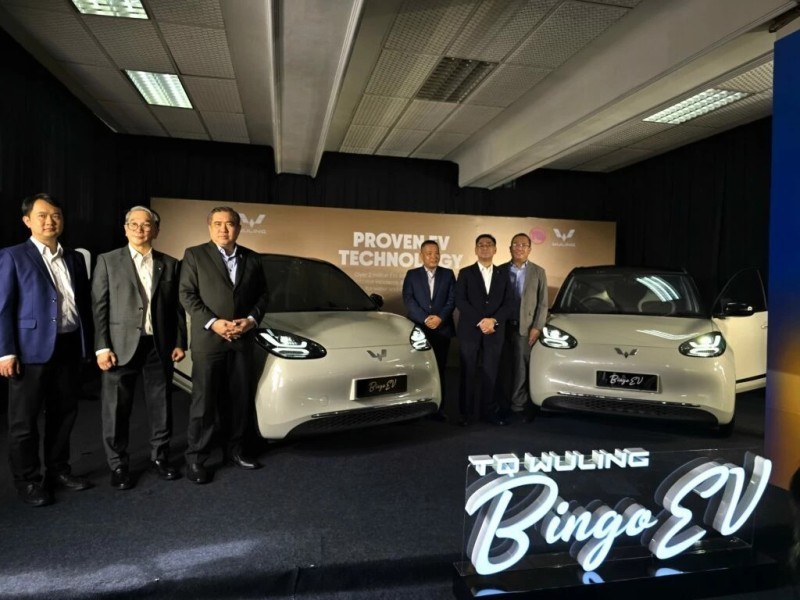
Wuling Bingo is Set to Launch in Malaysia as a Price Competitor Against BYD
JohnMay 7, 2025
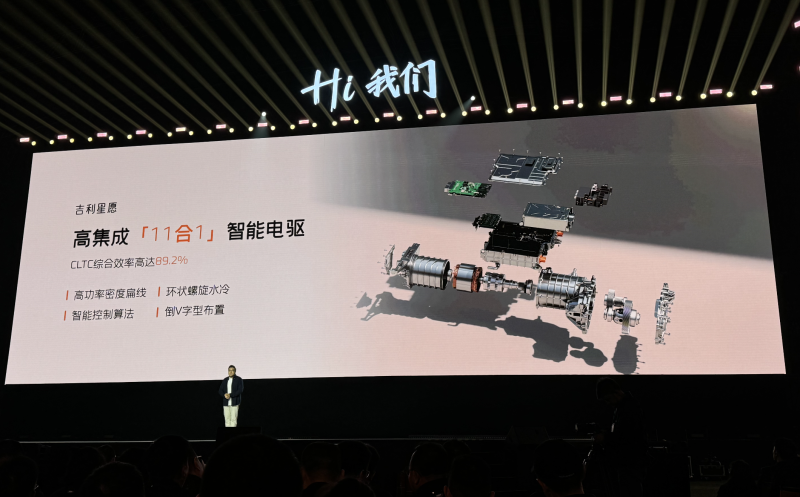
Geely Xingyuan officially hits the market, is it coming as the strongest competitor to BYD Dolphin?
MichaelOct 10, 2024
View More
Pros
Cons