
Q
What is the price of Hyundai Creta?
 EonOct 15, 2025, 05:37 PM
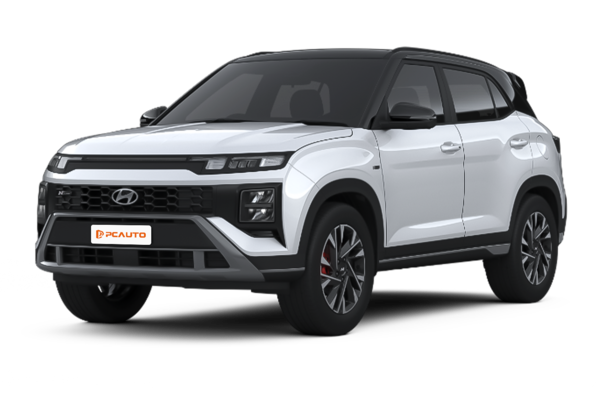
In Malaysia, the Hyundai Creta's pricing varies depending on the trim and specs, typically ranging from RM 108,888 to RM 132,888. Keep in mind though, actual prices might shift slightly due to promotions or dealer-specific policies across different regions.
As one of Hyundai's most popular compact SUVs, the Creta offers two engine choices to suit different driving styles: a 1.5L naturally aspirated unit and a peppy 1.4L turbocharged option. Transmission-wise, you've got the 6-speed manual for those who prefer shifting gears themselves, or the smooth 7-speed dual-clutch auto for effortless cruising.
Step inside, and the Creta focuses on practicality without skimping on tech. There's an 8-inch touchscreen infotainment system that hooks up seamlessly with Apple CarPlay and Android Auto—handy for staying connected on the go. Safety hasn't been overlooked either, with 6 airbags, vehicle stability control, and a rearview camera as standard fare.
For Malaysian drivers, the Creta checks a lot of local boxes: its fuel efficiency and decent ground clearance make it a solid fit for our roads, whether you're navigating city traffic or tackling the occasional rough patch. Plus, Hyundai's 5-year unlimited mileage warranty adds that extra peace of mind—always a big plus when buying a new ride.
If you're hunting for a compact SUV that balances value and versatility, the Creta should definitely be on your shortlist. Do yourself a favor and swing by your nearest Hyundai dealership for a test drive—nothing beats getting behind the wheel to really feel if it's the right fit for you.
Special Disclaimer: This content is published by users and does not represent the views or position of PCauto.
Related Q&A
Q
What type of car is Hyundai Creta?
The Hyundai Creta is a subcompact SUV (Sport Utility Vehicle) designed primarily for city driving and family use, blending practicality with a stylish exterior. It's pretty popular here in Malaysia, and it's easy to see why. It offers a nice high driving position, a roomy interior, and good fuel economy – all things that work really well with our local road conditions and family needs.
Creta usually comes packed with Hyundai's latest tech, like touchscreen infotainment systems, smart key entry, and a bunch of safety features. That makes it a solid competitor in its class. Subcompact SUVs have been blowing up in popularity worldwide lately, and Malaysia's no exception. Their flexibility and versatility make them a top pick for a lot of shoppers.
Hyundai's got plenty of experience under its belt when it comes to designing and building small SUVs, and the Creta is a great example of that expertise. It's perfect for buyers who want the utility of an SUV but don't want to compromise on easy maneuverability or fuel efficiency. If you're in the market for an affordable, well-rounded SUV, the Hyundai Creta is definitely one to check out.
 DipOct 15, 2025
Q
How to Update the Navigation Maps in the Hyundai Creta?
To update the navigation system maps in your Hyundai Creta, start by grabbing a USB drive formatted to FAT32. Head over to Hyundai Malaysia's official website, navigate to their navigation update page, and download the latest map data specifically for the Creta. Unzip that file directly to the root folder of your USB drive—don't bury it in subfolders. Next, plug the USB into the center console's USB port, fire up the car, and go into the navigation system's settings menu. Look for the "Update Map" option, then just follow the on-screen prompts to finish the job. The whole process usually takes between 30 minutes to an hour, so it's smart to keep the engine running to avoid draining the battery.
Pro tip: Hyundai typically rolls out map updates for the Creta every six months or so. Signing up as a member on Hyundai Malaysia's site is a good move—they'll shoot you a heads-up when new updates drop. Your local Hyundai dealer should also remind you about map updates during regular service visits.
If you're not keen on the official update route, remember the Creta's infotainment system supports Apple CarPlay and Android Auto. That means you can just mirror your phone's navigation apps like Google Maps or Waze. These apps update automatically and show real-time traffic, which is super handy in Malaysia where road layouts can change pretty frequently.
One last thing: Before hitting the road for a long trip—especially if you're heading to East Malaysia or areas with newly built roads—double-check your map version. It’s better to be safe than sorry and end up with outdated directions when you need them most.
 XipOct 15, 2025
Q
How many kilometers can the Hyundai Creta travel on one liter of fuel?
When it comes to the fuel efficiency of the Hyundai Creta with the 1-liter engine, how many kilometers does it get per liter? Well, its fuel consumption really depends on the specific trim and your driving conditions. Official figures peg its fuel efficiency at around 14 to 16 kilometers per liter, though your real-world mileage might vary. For a compact SUV, that's actually pretty solid—it strikes a nice balance between city commuting and highway cruising.
A bunch of factors can affect how much fuel it burns, like your driving style, road conditions, how much weight you're carrying, and even using the AC. If you want to squeeze out better mileage, try accelerating smoothly and easing up on sudden braking. Also, keeping up with regular maintenance—stuff like changing the air filter and making sure your tires are properly inflated—goes a long way in maintaining that fuel efficiency.
The Creta's Smartstream engine technology is all about efficient combustion and lower emissions, and when you pair that with the lightweight body design, it really helps boost the fuel economy. If you're into more fuel-efficient models, you might want to check out Hyundai's hybrid or electric options too—they can be even better for the environment and long-term running costs.
 HikerOct 15, 2025
Q
What is the displacement of Hyundai Creta?
The Hyundai Creta hits Malaysian roads with two engine choices: a 1.5-liter naturally aspirated petrol and a 1.5-liter turbocharged diesel. The petrol unit, displacing 1497cc, cranks out 115 hp and 144 Nm of torque. The diesel, also 1497cc, matches the 115 hp but ups the ante with a meaty 250 Nm of torque. Both mills come mated to either a 6-speed manual or automatic gearbox, striking a balance between fuel efficiency and everyday driveability.
As Hyundai's main SUV player in Southeast Asia, the Creta's engine is tuned to deliver strong low-end torque – perfect for Malaysia's mix of city streets and occasional weekend getaways out of town. It also gets Hyundai's Smartstream tech, which optimizes combustion to keep fuel consumption in check. For Malaysian buyers, that 1.5-liter displacement sweet spot means it's great for daily commutes while keeping running costs low, especially with fuel tax considerations.
Rivals like the Honda HR-V and Toyota Corolla Cross play in the same displacement ballpark, but the Creta fights back with a longer warranty and a solid list of standard features, giving it an edge when it comes to bang for your buck.
 SwimmerOct 15, 2025
Q
What is the price of Hyundai Creta?
The Hyundai Creta Trend is currently priced at around RM 115,888 in Malaysia (excluding insurance and road tax), though this figure might vary slightly depending on ongoing promotions or any optional extras you might add. This B-segment SUV is powered by a 1.5L naturally aspirated engine churning out 115PS and 144Nm, paired with an IVT transmission. You get LED head and tail lights as standard, along with an 8-inch touchscreen that supports Apple CarPlay and Android Auto, plus a reverse camera. The 2,610mm wheelbase translates to a pretty roomy rear cabin, which is a strong point in its class.
One thing that really stands out is that all Creta variants come standard with Hyundai SmartSense driver assistance suite. That means you're getting features like Lane Keeping Assist and Autonomous Emergency Braking right from the get-go – a definite advantage over some Japanese competitors in the same price bracket. If your budget is a bit tighter, the entry-level Creta Lite (around RM 108k) is worth a look, though you will miss out on some creature comforts like power-adjustable seats. On the flip side, if you're craving more punch under the hood, keep an eye out for the upcoming 1.4T turbocharged version.
As always, I'd strongly recommend heading down to an authorized Hyundai dealer for a test drive. It's also a good idea to cross-shop with rivals like the Proton X70 and Honda HR-V to really get a feel for the differences in space and tech offerings. Hyundai's 5-year unlimited mileage warranty in Malaysia is another big plus, especially for buyers who are conscious about long-term ownership costs.
 TipOct 15, 2025
Q
Which country is Hyundai Creta made in ?
The Hyundai Creta is an SUV sold in multiple markets worldwide, with its production location depending on the specific sales region. The Hyundai Creta sold in Malaysia is mainly imported from India, as India is one of Hyundai's key production hubs, specifically manufacturing this model for the Asian market. The Indian plant adheres to global uniform production standards, ensuring vehicle quality meets international benchmarks while also better satisfying Malaysian consumers' demand for a high-value-for-money SUV. With its sleek design, spacious interior, and generous features, the Creta has gained quite a following among family buyers in Malaysia. It's worth noting that Hyundai has numerous production bases globally, and this global footprint allows the brand to efficiently supply different markets with suitable models. For instance, besides India, Indonesia and South Korea also produce some Hyundai models, but the Creta supplied to Malaysia currently remains predominantly Indian-made. For Malaysian consumers, choosing the Creta means not only accessing Hyundai's latest technology but also enjoying a more competitive price advantage.
 ChromeCrusherOct 15, 2025
Q
How many seats in Hyundai Creta?
The Hyundai Creta is a five-seater compact SUV that’s perfect for Malaysian families or daily commuting. Its roomy interior and smart seat layout ensure passenger comfort, with rear legroom that’s actually pretty decent – even on longer drives, you won’t feel cramped. It’s super popular in the Malaysian market, and that’s not just down to its practical five-seat setup. It also packs a good amount of tech and efficient powertrain options, like the 1.5-liter naturally aspirated petrol engine and 1.5-liter diesel. These engines strike a nice balance between fuel economy and performance.
On top of that, the Creta comes with advanced smart driving assists, things like Lane Keeping Assist and Autonomous Emergency Braking, which really boost safety on the road. Another big plus for Malaysian buyers is its generous ground clearance, making it easy to handle our country’s sometimes unpredictable road conditions – whether you’re zipping around the city or heading out for the occasional weekend trip out of town, it can handle it. If you’re in the market for an SUV that offers great value, plenty of space, and a solid list of features, the Hyundai Creta is definitely one to consider. Its all-around package ticks most boxes for what a family would need.
 AimOct 15, 2025
Q
How many cc is a 1.4 engine?
A 1.4-liter engine typically has a displacement ranging from 1390cc to 1400cc, with the exact figure sometimes varying slightly depending on the automaker's tuning – you might see specs like 1396cc or 1398cc on certain models. In the Malaysian market, 1.4L engines are commonly found in economy cars and small SUVs, think local favorites like the Perodua Myvi and Proton Saga, along with select international brand models. These engines strike a nice balance between fuel efficiency and everyday power, making them perfect for city driving.
Displacement (cc) measures the total volume of the engine's cylinders; generally, a higher number means more power, but it also tends to gulp more fuel. The 1.4L sits in the small-to-mid displacement category, aligning well with Malaysian buyers' focus on practicality and fuel savings. Plus, modern 1.4L engines often come with turbocharging (badged as 1.4T), which boosts power without upping the displacement. If you're car shopping, it’s worth comparing the performance differences between naturally aspirated and turbo versions to see which fits your needs better.
 YipOct 15, 2025
Q
What is the displacement of Creta?
In the Malaysian market, the Hyundai Creta comes with two engine options: a 1.5-liter naturally aspirated petrol and a 1.5-liter turbocharged diesel, both displacing 1,500cc. The petrol unit cranks out 115 horsepower, while the diesel variant pushes out around 115 hp or more, depending on the specific tuning. As a popular compact SUV, the Creta's engine displacement strikes a nice balance between everyday fuel efficiency and decent power, making it a solid fit for Malaysia's urban roads and short getaways.
It's worth keeping in mind that while cc (cubic capacity) gives you an idea of engine size, real-world performance depends on a mix of factors like turbocharging tech and fuel injection systems. Take rivals like the Honda HR-V or Toyota Corolla Cross, for example—they also use similar displacements but tune their engines to prioritize different aspects of performance. So, when shoppers are checking out the Creta, they should look beyond just cc; torque output, transmission pairing, and real-world fuel economy all play a big role in how the car actually drives.
 BinOct 15, 2025
Q
How many cc is a Creta 1.4 engine?
The Modern Creta's 1.4-liter turbocharged gasoline engine actually displaces 1353cc, a unit you'll typically find under the hood of the mid-to-high spec Creta models here in Malaysia. It cranks out a solid 140 horsepower and a meaty 242 Nm of torque, paired with a 7-speed dual-clutch transmission. This setup delivers more than enough pep for city commutes and handles light off-road jaunts with ease.
Now, it's worth remembering that while displacement (cc) gives you a sense of an engine's size, real-world performance is a mix of turbocharging tech, fuel injection systems, and more. Take the Creta 1.4T, for example – it might have a smaller displacement than a naturally aspirated 1.5-liter engine, but that turbocharger helps it punch above its weight in terms of efficiency and power.
For Malaysian car buyers, here's the lowdown: smaller turbo engines often win when it comes to fuel economy and road tax savings. That extra efficiency really shines when local fuel prices start bouncing around, keeping more cash in your pocket. And don't forget – regular maintenance on that turbo system is key to keeping it running strong for the long haul.
 SipOct 15, 2025
Popular Cars
Model Year
Car Compare
Car Photo
Related Models
 Cars
CarsLatest Q&A
Q
Is AMT similar to automatic?
There are significant differences between AMT transmissions and automatic transmissions (AT) in terms of core structure and driving experience. AMT is essentially an electronically automated version of a manual transmission, simulating manual clutch operation and gear shifting through a computerized control system while retaining the gear set structure of manual transmissions. As a result, it offers higher transmission efficiency, with fuel consumption approximately 8%-12% lower than AT, making it particularly suitable for highway or long-distance driving. However, it may exhibit jerking similar to manual transmissions during low-speed gear shifts, especially noticeable in congested traffic conditions.
AT transmissions rely on torque converters for power transfer, delivering smooth and seamless gear shifts that appeal to comfort-oriented users. However, their complex structure (incorporating planetary gear sets, hydraulic systems, etc.) results in higher maintenance costs. A single service may cost between 800 to 1,500 ringgit, whereas AMT only requires gear oil replacement at approximately 400 ringgit.
From a market perspective, AMT is predominantly used in budget vehicles or commercial models priced below 80,000 ringgit, while AT is typically featured in mid-to-high-end vehicles. Consumers should select based on actual needs: AMT suits those prioritizing fuel efficiency and low maintenance costs, while AT better serves those valuing comfort. Notably, recent advancements in AMT electronic control technology have significantly mitigated jerking issues, though test drives should still emphasize low-speed performance evaluation.
 AriaMar 26, 2026
Q
Which is better, DCT or AT?
DCT (Dual-Clutch Transmission) and AT (Automatic Transmission) each have their own advantages and disadvantages, and the choice should be based on personal driving needs. AT transmissions transfer power through a torque converter, offering excellent shift smoothness, making them suitable for urban commuting or novice drivers. However, they tend to have higher fuel consumption, and vehicles equipped with them are usually more expensive. DCT transmissions utilize a dual-clutch structure, featuring fast shift speeds and high power transmission efficiency, which provides a more direct driving experience—particularly suitable for users seeking a sporty feel. However, they may exhibit jerking at low speeds and have relatively high maintenance costs. If durability and comfort are priorities, AT is the more reliable choice; if power responsiveness and driving pleasure are preferred, wet DCT (such as Volkswagen DSG) performs better, though dry DCT models should be avoided in prolonged stop-and-go traffic conditions. Additionally, CVT transmissions excel in smoothness and fuel efficiency, making them ideal for daily commuting, but they lack driving excitement. It is recommended to test-drive before purchasing, as tuning varies significantly across brands, and real-world experience is more important than theoretical specifications.
FlutteringMar 26, 2026Q
Is Amt good or bad?
AMT gearboxes have a significant cost advantage in the local market, typically being around 5,000 Ringgit cheaper than models equipped with conventional automatic transmissions. Their fuel efficiency is comparable to manual transmissions, resulting in long-term fuel savings. Featuring a straightforward design, they achieve transmission efficiency exceeding 90% with relatively low maintenance costs, making them ideal for practicality-oriented consumers. However, their shifting logic contains inherent limitations: gear changes between 1st and 2nd cause 0.3-0.5 second power interruptions, while unintended upshifts on inclines may reduce engine speed by 15%-20%, compromising driving smoothness. For urban commuters or budget-conscious buyers, AMT offers excellent value, though those prioritizing premium driving dynamics should consider alternative transmission types. Some domestic models like the Perodua Axia employ enhanced AMT systems, where optimized shift programming has reduced gearshift shock by approximately 30%.
 RainbowsMar 26, 2026
Q
Which gives better mileage, CVT or AMT?
From the perspective of fuel economy, CVT transmissions generally perform better under urban driving conditions. Their continuously variable design allows the engine to consistently operate within the optimal speed range, significantly reducing fuel consumption during frequent starts and stops. Test data shows that their fuel consumption in urban driving conditions is 10% to 15% lower than that of comparable models. AMT transmissions, on the other hand, inherit the high transmission efficiency of manual transmissions, delivering fuel efficiency close to manual transmissions during high-speed cruising. This makes them particularly suitable for long-distance driving in large-displacement vehicles. However, due to power interruption during gear shifts, their overall fuel consumption may be 5% to 8% higher than CVTs.
The difference in fuel-saving characteristics between the two transmissions stems from their technical principles: CVTs achieve continuous variability through steel belts and pulleys, eliminating the fixed gear ratio limitations of traditional transmissions; AMTs simulate manual gear changes via electronic control systems while maintaining the mechanical efficiency of gear transmission. Notably, actual fuel consumption is also influenced by driving habits. Smooth acceleration and anticipatory deceleration can maximize the transmissions' fuel-saving potential. If the vehicle budget permits and urban commuting is the primary use, CVTs offer a more economical choice. For frequent highway driving with an emphasis on cost-effectiveness, AMTs are equally worth considering.
 RubyBlazeMar 26, 2026
Q
Which is cheaper, AMT or CVT?
In terms of gearbox cost, AMT is usually more economical than CVT. Essentially, AMT is a manual transmission equipped with an electronic control unit, featuring a simple structure and low maintenance costs. The unit price ranges from approximately 5,000 to 8,000 ringgit, making it suitable for budget-conscious consumers or those who prioritize long-term operating costs. CVT incurs higher manufacturing costs due to its precision steel belt transmission system and continuous variable transmission technology, with a unit price of about 7,000 to 10,000 ringgit. However, it delivers a smoother driving experience and superior fuel efficiency. The primary differences between the two lie in technical complexity: AMT retains the gear-shifting mechanism, resulting in noticeable shift shock; CVT achieves linear power output through stepless speed variation but requires periodic belt inspection and incurs higher maintenance expenses. For those prioritizing initial cost and basic transportation needs, AMT offers better value; if comfort and long-term fuel economy are priorities, CVT represents a more worthwhile investment. Note that actual prices may vary based on vehicle model, brand, and local supply chain factors.
 ShadowProwlMar 26, 2026
Related News

Malaysia Hyundai Staria 2026 model optimized 10-seater layout, central console upgraded
Kevin WongJan 28, 2026

Hyundai STARIA Electric Version Unveiled: Spacious MPV, Southeast Asian Families Should Look Forward to it!
WilliamJan 12, 2026

2026 Toyota HiLux receives five-star ANCAP safety rating in ANCAP
MichaelDec 12, 2025

In Malaysia, which sliding door MPVs are available?
MichaelOct 30, 2025

Modern Ioniq 5 N Lands in Malaysia: Track-Level Performance Electric Vehicle is Here, Priced Possibly Below RM 400,000?
JohnSep 10, 2025
View More
Pros
Cons