
Q
How much is the 2021 Land Cruiser?
 BlueyOct 23, 2025, 10:14 AM
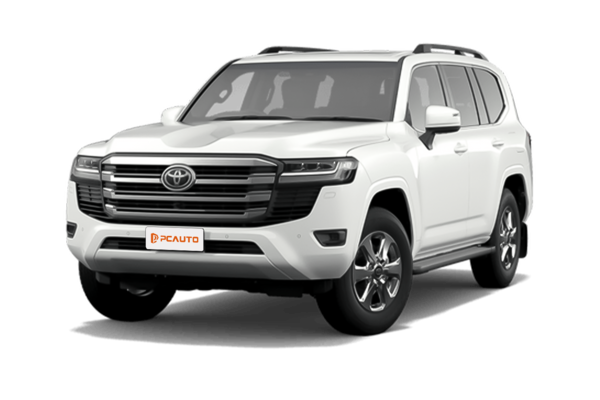
The 2021 Toyota Land Cruiser's pricing in Malaysia varies depending on the trim and configuration, generally falling in the range of RM400,000 to RM600,000. Exact figures will depend on your choice of options and any dealer promotions available at the time. As a legendary off - roader in Toyota's lineup, the Land Cruiser has earned a strong following among Malaysian buyers thanks to its rugged off - road capability, bulletproof mechanical reliability, and plush interior appointments – traits that make it perfectly suited to the country's diverse terrain and climate conditions. Under the hood, you'll find either a 4.5 - liter V8 turbo diesel engine or a 4.6 - liter V8 petrol unit, both mated to a smooth - shifting 6 - speed automatic transmission. This combination delivers ample power for any situation while still maintaining decent fuel efficiency for its class. Off - road prowess is further enhanced by Toyota's advanced 4WD system and multi - terrain select function, which lets drivers tackle everything from muddy trails to rocky inclines with confidence. In Malaysia, the Land Cruiser has become a top pick among serious off - road enthusiasts and business professionals alike, and it maintains a relatively high resale value in the used - car market. If you are considering purchasing one, it is advisable to reach out to your local authorized Toyota dealer for the latest pricing and to schedule a test drive. It is also worthwhile checking out used models from previous years – you may find a better value proposition there.
Special Disclaimer: This content is published by users and does not represent the views or position of PCauto.
Related Q&A
Q
Is the Toyota Prado 2022 a good family car?
The 2022 Toyota Prado is a fantastic SUV for family use, especially shining in Malaysia's varied driving conditions. Under the hood, it packs a robust 2.8-liter turbo diesel engine that delivers impressive low-end torque—perfect for both city commutes and long road trips—while still managing decent fuel economy. Inside, the space is generous, with a three-row seating setup that comfortably fits seven people. The trunk is roomy enough too, making it ideal for family getaways or hauling lots of luggage. When it comes to safety, the Prado 2022 comes with Toyota Safety Sense, which includes pre-collision systems, lane departure alerts, and adaptive cruise control—all working together to keep your whole family protected on the road. What’s more, its body-on-frame construction and four-wheel-drive system ensure stable performance on Malaysia’s rural roads or slippery surfaces during the rainy season. It’s also super reliable, and with Toyota’s widespread service network across the country, maintenance is a breeze. If you’re after a vehicle that handles daily family duties but can also tackle rough terrain, the 2022 Prado is definitely worth considering—especially if your family loves outdoor adventures or frequently takes long drives.
 CuriousMindInvestigatorNov 5, 2025
Q
How much horsepower does a 2022 Land Cruiser Prado have?
The 2022 Land Cruiser Prado in the Malaysian market comes with a 2.8-liter turbocharged diesel engine, churning out 204 horsepower and a peak torque of 500 Newton-meters, paired with a 6-speed automatic transmission. This engine, known for its durability and strong low-end torque, is perfect for off-roading and long-distance drives. As a classic SUV under Toyota, the Land Cruiser Prado not only delivers impressive power but also features a full-time 4WD system, Multi-Terrain Select, and KDSS dynamic suspension system, ensuring excellent handling and comfort even on challenging roads. For Malaysian consumers, the Prado's diesel engine stands out for its fuel efficiency and long cruising range, making it especially ideal for those who frequently tackle rural roads or outdoor adventures. Additionally, the Prado's high resale value and Toyota's extensive after-sales service network in Malaysia are key reasons many owners choose it. If you're craving more off-road capability, you can opt for extras like a rear differential lock to further enhance the vehicle's ability to get out of tough spots in extreme conditions.
 BraveExplorerAdventurerNov 5, 2025
Q
Did Toyota make a 2022 Land Cruiser?
Toyota did launch the Land Cruiser in 2022, but it was mainly targeted at select overseas markets like the Middle East and Japan. This is the all-new J300 generation, built on the TNGA-F platform. It comes with either a 3.5-liter V6 twin-turbo gasoline engine or a 3.3-liter V6 turbo diesel, mated to a 10-speed automatic transmission. Off-road tech got an upgrade too, with things like an improved Multi-Terrain Select system and Electronic Dynamic Suspension. It's worth noting, though, that Malaysia didn't get this J300 Land Cruiser in 2022. Over there, you're more likely to see the Land Cruiser Prado or older J200 series models brought in through parallel imports. The Land Cruiser has a long history as Toyota's tough off-roader, known for durability and go-anywhere ability since 1951. The new J300 keeps that body-on-frame ruggedness but steps up the on-road comfort and tech. Stuff like the standard TSS safety suite and 12.3-inch infotainment screen shows Toyota's balancing act—keeping that off-road DNA while meeting modern buyers' demands. Malaysian folks interested in the J300 should check with official dealers about future launch plans or look into the legality and warranty options for parallel-imported versions.
LonelyHeartsHealerNov 5, 2025Q
What is the spec of the Toyota Land Cruiser 2022?
The 2022 Toyota Land Cruiser hits the Malaysian market with a robust 4.5-liter V8 turbo diesel engine, churning out 204kW (272hp) of max power and a meaty 650Nm of peak torque. It's paired with a 6-speed automatic gearbox and a full-time 4WD system, delivering top-notch off-road performance, thanks to the KDSS dynamic suspension system and Multi-Terrain Select function that tackle all kinds of road conditions. Inside, you'll find a 9-inch touchscreen, Apple CarPlay/Android Auto, JBL sound system, three-zone auto climate control, and leather seats. On the safety front, it comes standard with the Toyota Safety Sense suite, including pre-collision system, lane keeping assist, and adaptive cruise control. As Toyota's flagship SUV, the Land Cruiser is a hit among Malaysian buyers for its legendary durability and reliability, making it perfect for long road trips and off-road adventures. It also holds its value well, cementing its spot as one of the top choices locally. The SUV performs steadily in Southeast Asia's sweltering heat, with AC that cools like a champ, suiting both family and business needs. Plus, maintenance is a breeze at Toyota's authorized service centers.
 GoldenSunbeamCatcherNov 5, 2025
Q
How does the 2022 Land Cruiser hold its value?
The 2022 Land Cruiser holds its value exceptionally well in the Malaysian market, thanks largely to its tough, durable body structure, reliable powertrain, and Toyota's long-standing strong reputation. The 4.0-liter V6 engine and full-time 4WD system under the hood have proven themselves over the years, delivering outstanding stability both off-road and in daily driving—perfect for Malaysia's varied terrain. Plus, as Toyota's flagship SUV, it benefits from an extensive after-sales network and high parts commonality, which seriously cut down on long-term ownership costs and further boost its used car residual value. It’s also worth noting that demand for the Land Cruiser stays strong across Southeast Asia; its generous ground clearance and wading capability are big hits with tropical users, and Toyota’s limited supply strategy has only added to its exclusivity. For buyers eyeing resale value, regular service records and original warranty status make a huge difference to resale prices. I’d recommend going through Toyota’s official channels for certified pre-owned models to get that extra peace of mind. Among its peers, the Land Cruiser typically retains 15-20% more value over five years than urban-focused SUVs—no surprise, given how it nails the balance between workhorse practicality and luxury amenities.
 IvyLeagueThinkerNov 5, 2025
Q
What engine does the 2022 Land Cruiser have?
The 2022 Land Cruiser in the Malaysian market mainly offers two powertrain options: a 4.0-liter V6 naturally aspirated petrol engine (1GR-FE) and a 4.5-liter V8 turbocharged diesel engine (1VD-FTV). Both engines are renowned for their reliability and durability. The petrol engine delivers a maximum output of 271 horsepower and 385 Nm of torque, while the diesel engine offers a more robust 268 horsepower and 650 Nm of torque, making it particularly suitable for off-roading and heavy-duty needs. The Land Cruiser has long been Toyota's flagship SUV, with its engine design focusing on high torque output at low revs, perfectly suited for Malaysia's diverse road conditions, easily handling both city driving and off-road adventures in remote areas. Additionally, the Land Cruiser's engine technology is equipped with advanced cooling systems and fuel injection technology, ensuring efficient operation even in high-temperature and high-humidity environments. For Malaysian consumers, choosing a Land Cruiser not only means owning a high-performance SUV but also enjoying Toyota's consistent reliable after-sales service and a well-established spare parts supply network.
 SapphireTideSurferNov 5, 2025
Q
How long will a 2022 Land Cruiser last?
The 2022 Land Cruiser is renowned for its exceptional durability and reliability. Here in Malaysia, with its diverse road conditions, it can easily clock over 300,000 kilometers and often last more than 15 years with regular servicing and maintenance. It’s built on Toyota’s time-tested chassis tech and features an efficient engine design, which really shine when tackling Malaysia’s tropical climate and tricky terrain. The tough body structure and high-quality parts also play a big role in extending its lifespan. To keep your Land Cruiser in top shape for the long haul, stick strictly to the maintenance manual—regular oil changes, cooling system checks, and chassis component inspections are a must. And using genuine parts definitely helps maintain its performance. The Land Cruiser has always held strong resale value in the Malaysian market, which just goes to show how reliable it is over time. If you’re someone who drives long distances often or needs to handle rough roads, this is one trusty ride you can count on.
 LeafyTrailBlazerNov 5, 2025
Q
What is the fuel economy of the Land Cruiser 2022?
The 2022 Toyota Land Cruiser delivers average fuel economy, with specific figures varying by market and configuration. Take Malaysia's common 4.0L V6 petrol engine version as an example – it returns around 10-12 liters per 100 kilometers combined. The diesel-powered 3.3L V6 turbocharged engine is more fuel-efficient, averaging about 8-9 liters per 100 kilometers combined. Real-world fuel consumption depends on driving habits, road conditions, and vehicle load. As a rugged off-roader, the Land Cruiser's fuel economy can't match city SUVs, but given its robust off-road capability and reliability, it remains competitive among peers. For Malaysian buyers, if you mostly drive in urban areas, the diesel variant is recommended for better fuel efficiency, while the petrol version suits those prioritizing smooth power delivery. It's worth noting that hybrid versions are available in some markets for even lower consumption, though they haven't launched in Malaysia yet. No matter which engine you choose, regular maintenance and proper driving habits help optimize fuel efficiency – owners should follow the official service manual and adopt a smooth driving style.
EmeraldGazeSeekerNov 5, 2025Q
How much is the 2022 Toyota Land Cruiser?
The 2022 Toyota Land Cruiser's price in the Malaysian market varies depending on the model and configuration, generally ranging from RM500,000 to RM700,000. The exact price depends on selected features such as engine type, drive system, and interior luxury level. This vehicle is renowned for its robust off-road capabilities, reliable durability, and spacious interior, making it perfect for Malaysia's diverse terrain and family needs. Equipped with an advanced four-wheel-drive system and multiple driving modes, the Land Cruiser handles both city roads and rough rural terrains with ease. Meanwhile, its high-quality interior and rich technological configuration provide a comfortable riding experience for both drivers and passengers. In Malaysia, Toyota has an extensive after-sales service network, making maintenance relatively convenient, which is one of the important reasons many consumers choose the Land Cruiser. If you're interested in this vehicle, it's recommended to visit a nearby Toyota dealership for a test drive to fully assess whether its performance and configuration meet your needs.
TwilightShadowsDancerNov 5, 2025Q
Is the Land Cruiser considered luxury?
The Toyota Land Cruiser is generally regarded as a high-end SUV in the Malaysian market, but whether it qualifies as a luxury vehicle depends on the specific model and configuration. For instance, top-tier versions like the Land Cruiser VX or GR Sport come equipped with premium leather seats, panoramic sunroofs, advanced driver assistance systems, and luxury interior material, which do meet luxury car standards. However, compared to traditional luxury SUVs such as the Mercedes-Benz G-Class or Range Rover, the Land Cruiser places greater emphasis on off-road performance and durability, making it somewhat more practical in terms of luxury feel. In Malaysia, the Land Cruiser is particularly favored by consumers who need to balance city driving with outdoor adventures. Its robust four-wheel-drive system and reliable reputation make it an ideal choice for rainforest terrain and long-distance trips. It's worth noting that the definition of a luxury car isn't limited to specifications and price; it also includes brand premium and user experience. In this regard, the Land Cruiser leans more towards "high-end practicality" rather than "pure luxury."
ChocolateFreakFanaticOct 30, 2025Popular Cars
Model Year
Car Compare
Car Photo
Related Models
 Cars
CarsLatest Q&A
Q
Is AMT similar to automatic?
There are significant differences between AMT transmissions and automatic transmissions (AT) in terms of core structure and driving experience. AMT is essentially an electronically automated version of a manual transmission, simulating manual clutch operation and gear shifting through a computerized control system while retaining the gear set structure of manual transmissions. As a result, it offers higher transmission efficiency, with fuel consumption approximately 8%-12% lower than AT, making it particularly suitable for highway or long-distance driving. However, it may exhibit jerking similar to manual transmissions during low-speed gear shifts, especially noticeable in congested traffic conditions.
AT transmissions rely on torque converters for power transfer, delivering smooth and seamless gear shifts that appeal to comfort-oriented users. However, their complex structure (incorporating planetary gear sets, hydraulic systems, etc.) results in higher maintenance costs. A single service may cost between 800 to 1,500 ringgit, whereas AMT only requires gear oil replacement at approximately 400 ringgit.
From a market perspective, AMT is predominantly used in budget vehicles or commercial models priced below 80,000 ringgit, while AT is typically featured in mid-to-high-end vehicles. Consumers should select based on actual needs: AMT suits those prioritizing fuel efficiency and low maintenance costs, while AT better serves those valuing comfort. Notably, recent advancements in AMT electronic control technology have significantly mitigated jerking issues, though test drives should still emphasize low-speed performance evaluation.
 AriaMar 26, 2026
Q
Which is better, DCT or AT?
DCT (Dual-Clutch Transmission) and AT (Automatic Transmission) each have their own advantages and disadvantages, and the choice should be based on personal driving needs. AT transmissions transfer power through a torque converter, offering excellent shift smoothness, making them suitable for urban commuting or novice drivers. However, they tend to have higher fuel consumption, and vehicles equipped with them are usually more expensive. DCT transmissions utilize a dual-clutch structure, featuring fast shift speeds and high power transmission efficiency, which provides a more direct driving experience—particularly suitable for users seeking a sporty feel. However, they may exhibit jerking at low speeds and have relatively high maintenance costs. If durability and comfort are priorities, AT is the more reliable choice; if power responsiveness and driving pleasure are preferred, wet DCT (such as Volkswagen DSG) performs better, though dry DCT models should be avoided in prolonged stop-and-go traffic conditions. Additionally, CVT transmissions excel in smoothness and fuel efficiency, making them ideal for daily commuting, but they lack driving excitement. It is recommended to test-drive before purchasing, as tuning varies significantly across brands, and real-world experience is more important than theoretical specifications.
FlutteringMar 26, 2026Q
Is Amt good or bad?
AMT gearboxes have a significant cost advantage in the local market, typically being around 5,000 Ringgit cheaper than models equipped with conventional automatic transmissions. Their fuel efficiency is comparable to manual transmissions, resulting in long-term fuel savings. Featuring a straightforward design, they achieve transmission efficiency exceeding 90% with relatively low maintenance costs, making them ideal for practicality-oriented consumers. However, their shifting logic contains inherent limitations: gear changes between 1st and 2nd cause 0.3-0.5 second power interruptions, while unintended upshifts on inclines may reduce engine speed by 15%-20%, compromising driving smoothness. For urban commuters or budget-conscious buyers, AMT offers excellent value, though those prioritizing premium driving dynamics should consider alternative transmission types. Some domestic models like the Perodua Axia employ enhanced AMT systems, where optimized shift programming has reduced gearshift shock by approximately 30%.
 RainbowsMar 26, 2026
Q
Which gives better mileage, CVT or AMT?
From the perspective of fuel economy, CVT transmissions generally perform better under urban driving conditions. Their continuously variable design allows the engine to consistently operate within the optimal speed range, significantly reducing fuel consumption during frequent starts and stops. Test data shows that their fuel consumption in urban driving conditions is 10% to 15% lower than that of comparable models. AMT transmissions, on the other hand, inherit the high transmission efficiency of manual transmissions, delivering fuel efficiency close to manual transmissions during high-speed cruising. This makes them particularly suitable for long-distance driving in large-displacement vehicles. However, due to power interruption during gear shifts, their overall fuel consumption may be 5% to 8% higher than CVTs.
The difference in fuel-saving characteristics between the two transmissions stems from their technical principles: CVTs achieve continuous variability through steel belts and pulleys, eliminating the fixed gear ratio limitations of traditional transmissions; AMTs simulate manual gear changes via electronic control systems while maintaining the mechanical efficiency of gear transmission. Notably, actual fuel consumption is also influenced by driving habits. Smooth acceleration and anticipatory deceleration can maximize the transmissions' fuel-saving potential. If the vehicle budget permits and urban commuting is the primary use, CVTs offer a more economical choice. For frequent highway driving with an emphasis on cost-effectiveness, AMTs are equally worth considering.
 RubyBlazeMar 26, 2026
Q
Which is cheaper, AMT or CVT?
In terms of gearbox cost, AMT is usually more economical than CVT. Essentially, AMT is a manual transmission equipped with an electronic control unit, featuring a simple structure and low maintenance costs. The unit price ranges from approximately 5,000 to 8,000 ringgit, making it suitable for budget-conscious consumers or those who prioritize long-term operating costs. CVT incurs higher manufacturing costs due to its precision steel belt transmission system and continuous variable transmission technology, with a unit price of about 7,000 to 10,000 ringgit. However, it delivers a smoother driving experience and superior fuel efficiency. The primary differences between the two lie in technical complexity: AMT retains the gear-shifting mechanism, resulting in noticeable shift shock; CVT achieves linear power output through stepless speed variation but requires periodic belt inspection and incurs higher maintenance expenses. For those prioritizing initial cost and basic transportation needs, AMT offers better value; if comfort and long-term fuel economy are priorities, CVT represents a more worthwhile investment. Note that actual prices may vary based on vehicle model, brand, and local supply chain factors.
 ShadowProwlMar 26, 2026
Related News

Toyota Land Cruiser Buying Guide: From LC300 to LC70, which versions are worth buying? Are the maintenance costs for used ones high?
JohnMar 17, 2026

The Toyota Land Cruiser 300 HEV with added motor remains reliable
AshleyJan 22, 2026

Toyota Unveils 'Newscape' Genuine Refurbishment Kit for Older 150 Series Prado Models
Kevin WongJan 12, 2026

Toyota is developing two new Land Cruiser models, will Land Cruiser become an independent brand in the future?
JamesNov 20, 2025

2026 Toyota Land Cruiser released in North America, offering the 1958 edition as a tribute to history
JohnSep 15, 2025
View More
Pros
Cons