
Q
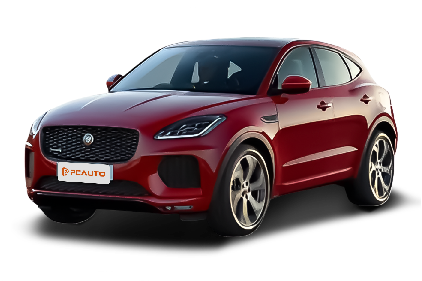
How much is the new Jaguar E-Pace?
 EmeraldsOct 17, 2025, 12:14 PM
The all-new Jaguar E-Pace hits Malaysian shores with a price tag that varies depending on the trim you pick. The entry-level model starts at around RM 398,000, while the fully-loaded versions can nudge closer to RM 450,000. For the most up-to-date figures and any ongoing promotions, your best bet is to swing by your local authorized Jaguar dealer – they’ll have the latest scoop.
As a luxury compact SUV, the E-Pace turns heads with its sporty looks, a seriously sharp interior, and all the tech you’d expect. Under the hood, you’ll find Jaguar’s Ingenium turbocharged engine, which dishes out more than enough grunt for spirited drives. Pair that with the Jaguar Drive Control system, and you’ve got a ride that adapts to just about any road condition you throw at it – handy for Malaysia’s mix of highways and backroads. Speaking of local roads, the E-Pace also boasts a decent ground clearance, making those occasional rough patches a breeze. Safety hasn’t been skimped on either, with features like adaptive cruise control and emergency brake assist coming standard.
To top it off, Jaguar Malaysia is offering a range of financing options and warranty packages, making it that much easier to get behind the wheel of this British luxury SUV.
Special Disclaimer: This content is published by users and does not represent the views or position of PCauto.
Related Q&A
Q
Which country is Jaguar E- Pace made in?
The Jaguar E-PACE is a luxury compact SUV built in several locations worldwide, with its primary production hub at Magna Steyr's plant in Graz, Austria – a facility renowned for crafting high-quality vehicles under contract, including models for other major brands. For the Malaysian market, the E-PACE arrives via import, guaranteeing it meets Jaguar's stringent global standards. As Jaguar's first foray into the compact SUV segment, the E-PACE showcases the brand's signature design language paired with advanced powertrain tech, such as the Ingenium range of turbocharged engines. These units strike a fine balance between performance and fuel efficiency, making them well-suited for both Malaysian city commutes and longer road trips. Malaysian buyers can purchase with confidence, too; every imported E-PACE undergoes rigorous quality checks and is backed by Jaguar's comprehensive after-sales network, which includes regular servicing and expert technical support to keep your vehicle running in top condition.
 WolfOct 17, 2025
Q
What is the difference between Jaguar E-Pace and F-pace?
The Jaguar E-PACE and F-PACE are two SUVs with distinct personalities, each tailored to different needs. The key differences lie in their size, power, and intended use.
The E-PACE is Jaguar's compact SUV offering. Its smaller footprint makes it a nimble companion for city driving, where squeezing into tight parking spots and zipping through traffic is a breeze. Under the hood, you'll find a 2.0-liter turbocharged engine, which delivers peppy performance paired with decent fuel efficiency – perfect for young families or those who commute daily and value agility.
Step up to the F-PACE, and you're in the realm of a mid-size SUV. This means more interior space, particularly noticeable in the rear seats and a more generous cargo area, making it ideal for folks who regularly haul passengers or need extra room for luggage and gear. The F-PACE also ups the ante on power, with options like the punchy 3.0-liter six-cylinder engine, catering to those who enjoy longer road trips or crave a more spirited driving experience.
Both SUVs boast Jaguar's signature luxurious design language and interiors that feel premium to the touch. However, the F-PACE edges ahead when it comes to cutting-edge tech and overall opulence. Think optional upgraded sound systems and a more comprehensive suite of driver assistance features for that extra layer of sophistication and convenience.
Here in Malaysia, the E-PACE really comes into its own on our narrower city streets, where its maneuverability is a big plus. The F-PACE, on the other hand, shines as a family hauler or for drivers who love weekend getaways and exploring beyond city limits.
On top of that, Jaguar's local after-sales network is quite solid, so both models benefit from the brand's professional maintenance services. Ultimately, the choice between them boils down to your individual lifestyle and what you prioritize most in a vehicle.
 AmberliteOct 17, 2025
Q
How to replace the rear wiper blade on the Jaguar E-Pace?
Changing the rear wiper blade on your Jaguar E-Pace is actually a piece of cake. First off, you'll need to pick up a wiper blade specifically designed for this model. You can find OEM or compatible options at Jaguar authorized dealers in Malaysia or big auto parts stores – I’d recommend going for one with a rubber protective coating to make it last longer. When you’re ready to do the swap, gently lift the wiper arm up to a vertical position. Be careful not to let it snap back suddenly, as that could damage the glass. Next, locate the release tab on the wiper blade connector (it’s usually in the middle), press it down, and slide the old blade out towards the end of the wiper arm. Then, line up the new blade with the slot and push it in the opposite direction until you hear a "click" – that means it’s locked in place. Finally, just gently lower the wiper arm back down.
One thing to note: Malaysia’s rainy season is pretty long, so it’s a good idea to replace your wiper blades every 6-12 months. If you start noticing streaks, skipping, or weird noises when they’re wiping, swap them out right away. Also, when parking, try to lift the wiper arms up to keep the rubber from warping in the heat. Oh, and heads up – the wiper blade specs might be different between the 2017-2020 models and the facelifted versions from 2021 onwards. If you’re not sure which one you need, just give your VIN to the parts supplier and they can check for you.
 GoldenshOct 17, 2025
Q
What are the differences between the Jaguar E-PACE and F-PACE?
The Jaguar E-Pace and F-Pace are two SUVs under the Jaguar brand, with the main differences lying in their positioning and size. The E-Pace is a compact SUV, boasting a more小巧灵活 (nimble and compact) body that makes it ideal for city driving and squeezing through tight roads. It's powered by a 2.0-liter turbocharged engine, delivering better fuel efficiency – perfect for young families or daily commuters.
The F-Pace, on the other hand, is a mid-size SUV offering significantly more space, especially in the rear seats and boot, making it a great choice for long road trips or users needing extra cargo capacity. It also comes with a wider range of powertrain options, including the punchy 3.0-liter supercharged performance variant.
Both models feature Jaguar's signature luxurious interior design and cutting-edge tech, but the F-Pace leans more towards a premium experience in terms of comfort and driving dynamics.
In the Malaysian market, the E-Pace comes with a relatively lower price tag, making it more accessible for budget-conscious buyers, while the F-Pace caters to those seeking more space and stronger performance. Both SUVs are available with all-wheel drive, which is well-suited to Malaysia's varied road conditions, allowing consumers to choose based on their actual needs. Additionally, Jaguar has a well-established after-sales service network in Malaysia, providing reliable peace of mind for owners.
 AmberGlowOct 17, 2025
Popular Cars
Model Year
Car Compare
Car Photo
Related Models
 Cars
CarsLatest Q&A
Q
Is AMT similar to automatic?
There are significant differences between AMT transmissions and automatic transmissions (AT) in terms of core structure and driving experience. AMT is essentially an electronically automated version of a manual transmission, simulating manual clutch operation and gear shifting through a computerized control system while retaining the gear set structure of manual transmissions. As a result, it offers higher transmission efficiency, with fuel consumption approximately 8%-12% lower than AT, making it particularly suitable for highway or long-distance driving. However, it may exhibit jerking similar to manual transmissions during low-speed gear shifts, especially noticeable in congested traffic conditions.
AT transmissions rely on torque converters for power transfer, delivering smooth and seamless gear shifts that appeal to comfort-oriented users. However, their complex structure (incorporating planetary gear sets, hydraulic systems, etc.) results in higher maintenance costs. A single service may cost between 800 to 1,500 ringgit, whereas AMT only requires gear oil replacement at approximately 400 ringgit.
From a market perspective, AMT is predominantly used in budget vehicles or commercial models priced below 80,000 ringgit, while AT is typically featured in mid-to-high-end vehicles. Consumers should select based on actual needs: AMT suits those prioritizing fuel efficiency and low maintenance costs, while AT better serves those valuing comfort. Notably, recent advancements in AMT electronic control technology have significantly mitigated jerking issues, though test drives should still emphasize low-speed performance evaluation.
 AriaMar 26, 2026
Q
Which is better, DCT or AT?
DCT (Dual-Clutch Transmission) and AT (Automatic Transmission) each have their own advantages and disadvantages, and the choice should be based on personal driving needs. AT transmissions transfer power through a torque converter, offering excellent shift smoothness, making them suitable for urban commuting or novice drivers. However, they tend to have higher fuel consumption, and vehicles equipped with them are usually more expensive. DCT transmissions utilize a dual-clutch structure, featuring fast shift speeds and high power transmission efficiency, which provides a more direct driving experience—particularly suitable for users seeking a sporty feel. However, they may exhibit jerking at low speeds and have relatively high maintenance costs. If durability and comfort are priorities, AT is the more reliable choice; if power responsiveness and driving pleasure are preferred, wet DCT (such as Volkswagen DSG) performs better, though dry DCT models should be avoided in prolonged stop-and-go traffic conditions. Additionally, CVT transmissions excel in smoothness and fuel efficiency, making them ideal for daily commuting, but they lack driving excitement. It is recommended to test-drive before purchasing, as tuning varies significantly across brands, and real-world experience is more important than theoretical specifications.
FlutteringMar 26, 2026Q
Is Amt good or bad?
AMT gearboxes have a significant cost advantage in the local market, typically being around 5,000 Ringgit cheaper than models equipped with conventional automatic transmissions. Their fuel efficiency is comparable to manual transmissions, resulting in long-term fuel savings. Featuring a straightforward design, they achieve transmission efficiency exceeding 90% with relatively low maintenance costs, making them ideal for practicality-oriented consumers. However, their shifting logic contains inherent limitations: gear changes between 1st and 2nd cause 0.3-0.5 second power interruptions, while unintended upshifts on inclines may reduce engine speed by 15%-20%, compromising driving smoothness. For urban commuters or budget-conscious buyers, AMT offers excellent value, though those prioritizing premium driving dynamics should consider alternative transmission types. Some domestic models like the Perodua Axia employ enhanced AMT systems, where optimized shift programming has reduced gearshift shock by approximately 30%.
 RainbowsMar 26, 2026
Q
Which gives better mileage, CVT or AMT?
From the perspective of fuel economy, CVT transmissions generally perform better under urban driving conditions. Their continuously variable design allows the engine to consistently operate within the optimal speed range, significantly reducing fuel consumption during frequent starts and stops. Test data shows that their fuel consumption in urban driving conditions is 10% to 15% lower than that of comparable models. AMT transmissions, on the other hand, inherit the high transmission efficiency of manual transmissions, delivering fuel efficiency close to manual transmissions during high-speed cruising. This makes them particularly suitable for long-distance driving in large-displacement vehicles. However, due to power interruption during gear shifts, their overall fuel consumption may be 5% to 8% higher than CVTs.
The difference in fuel-saving characteristics between the two transmissions stems from their technical principles: CVTs achieve continuous variability through steel belts and pulleys, eliminating the fixed gear ratio limitations of traditional transmissions; AMTs simulate manual gear changes via electronic control systems while maintaining the mechanical efficiency of gear transmission. Notably, actual fuel consumption is also influenced by driving habits. Smooth acceleration and anticipatory deceleration can maximize the transmissions' fuel-saving potential. If the vehicle budget permits and urban commuting is the primary use, CVTs offer a more economical choice. For frequent highway driving with an emphasis on cost-effectiveness, AMTs are equally worth considering.
 RubyBlazeMar 26, 2026
Q
Which is cheaper, AMT or CVT?
In terms of gearbox cost, AMT is usually more economical than CVT. Essentially, AMT is a manual transmission equipped with an electronic control unit, featuring a simple structure and low maintenance costs. The unit price ranges from approximately 5,000 to 8,000 ringgit, making it suitable for budget-conscious consumers or those who prioritize long-term operating costs. CVT incurs higher manufacturing costs due to its precision steel belt transmission system and continuous variable transmission technology, with a unit price of about 7,000 to 10,000 ringgit. However, it delivers a smoother driving experience and superior fuel efficiency. The primary differences between the two lie in technical complexity: AMT retains the gear-shifting mechanism, resulting in noticeable shift shock; CVT achieves linear power output through stepless speed variation but requires periodic belt inspection and incurs higher maintenance expenses. For those prioritizing initial cost and basic transportation needs, AMT offers better value; if comfort and long-term fuel economy are priorities, CVT represents a more worthwhile investment. Note that actual prices may vary based on vehicle model, brand, and local supply chain factors.
 ShadowProwlMar 26, 2026
Related News

The era of Jaguar fuel-powered cars has ended: the last F-PACE SVR has rolled off the production line, marking a full transition to electrification.
MichaelDec 26, 2025
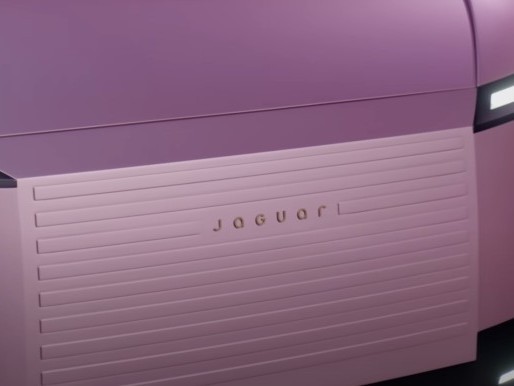
Jaguar Type 00 concept car stuns appearance! "Copy Nothing" design concept!
MichaelDec 4, 2024

Jaguar's brand new LOGO is revealed, possibly for the new model set to be released on December 2nd!
AshleyNov 20, 2024

New spy photos of JAGUAR's all-electric car model are revealed for the first time, aiming at Porsche and Maserati!
RobertNov 18, 2024
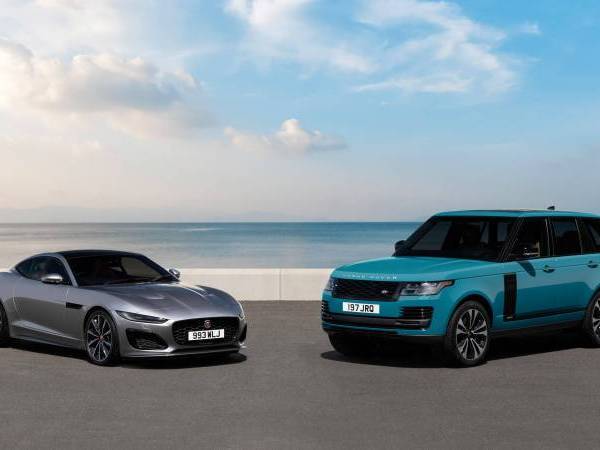
Supply chain crisis! The production of Jaguar Land Rover could be affected by aluminium shortage!
AshleyAug 7, 2024
Pros
Cons