
Q
How much is the Volvo C40 in Malaysia?
 ReaderNookEscapeOct 17, 2025, 03:17 PM
In Malaysia, the official starting price of the Volvo C40 Recharge is around RM 288,888, though the exact figure can vary based on specifications, optional extras, or ongoing promotions. For the latest quotes and to book a test drive, it’s best to reach out directly to authorized Volvo Malaysia dealerships.
As a fully electric SUV, the C40 Recharge packs a dual-motor all-wheel-drive setup, delivering an estimated WLTP range of about 450 km. It also supports fast charging, allowing you to top up to 80% battery in just 30 minutes – perfect for Malaysian drivers tackling daily city commutes or short getaways.
True to Volvo’s legacy, safety is front and center here. The C40 Recharge comes standard with City Safety and Pilot Assist driver assistance systems. Plus, its eco-friendly interior materials align nicely with local buyers’ growing focus on sustainable mobility.
A big plus for Malaysian EV shoppers: the government’s incentives, including exemptions on import and excise duties, which help lower the entry barrier. On top of that, several banks have rolled out low-interest green financing schemes lately, so it’s worth shopping around for the best deal.
If you’re eyeing an EV, don’t forget to check your home or office charging setup and Volvo’s charging network coverage across Malaysia – these factors will directly shape your day-to-day ownership experience.
Special Disclaimer: This content is published by users and does not represent the views or position of PCauto.
Related Q&A
Q
What kind of battery is in the Volvo C40 2024?
The 2024 Volvo C40, as a fully electric model, packs an advanced lithium-ion battery pack. The exact capacity depends on the trim level, with 78kWh for the standard version and 82kWh for the long-range variant. It utilizes CATL's NCM (Nickel-Cobalt-Manganese) battery technology, which excels in energy density and low-temperature performance – perfect for Malaysia's tropical climate, delivering an estimated WLTP range of around 500 kilometers. It's worth highlighting that Volvo backs the C40's battery with an impressive 8-year or 160,000-kilometer warranty (whichever comes first), offering owners peace of mind for the long haul. For Malaysian users, this range is more than sufficient for daily commutes or intercity getaways. What's more, the C40 supports 150kW DC fast charging, allowing you to juice up from 10% to 80% in approximately 40 minutes. This, combined with the steadily improving local charging infrastructure, makes it a convenient choice. If you're wondering about battery care, a good rule of thumb is to regularly charge within the recommended 20%-80% window to help prolong its lifespan. Also, try to avoid leaving it parked in extreme heat for extended periods. While the battery management system does feature active cooling, sensible usage will go a long way in keeping it performing optimally.
 TitanCrushOct 23, 2025
Q
Is the Volvo C40 safe?
The Volvo C40, as a pure electric SUV, carries forward the brand's legendary high safety standards, making it a perfect fit for Malaysian consumers who value both safety and environmental consciousness. Built on the CMA platform, this SUV features a body constructed with high-strength steel and multiple energy-absorbing structures. It comes standard with the City Safety system, which effectively detects pedestrians, cyclists, and large animals. When paired with Pilot Assist, it significantly reduces collision risks, whether you're navigating congested city streets or cruising on the highway.
As an electric vehicle, its battery pack has undergone rigorous fire and collision testing and is equipped with a collision power cut-off protection mechanism. Notably, the C40 achieved a five-star rating in Euro NCAP testing, with particularly impressive performance in side impact protection and AEB (Autonomous Emergency Braking).
For Malaysian users, Volvo has an established after-sales network in major cities like Kuala Lumpur. Additionally, electric vehicles enjoy tax incentives locally, and charging infrastructure is gradually improving. If you're considering an electric model, it's worth comparing the range and charging compatibility with other same level competitors. However, Volvo's heritage and expertise in passive safety technologies and accident prevention systems truly place it at the forefront of the industry.
 CrimsonBladeOct 23, 2025
Q
How much is the Volvo C40 in 2024?
The 2024 Volvo C40 is expected to carry an official price tag in Malaysia ranging from RM250,000 to RM300,000. Of course, the final figure might shift a bit depending on the chosen trim level, any optional extras you throw in, and potential tweaks to tax policies.
As Volvo's pure electric SUV offering, the C40 stays true to the brand's signature Scandinavian design language. Under the skin, it packs a 78kWh battery pack, delivering an estimated WLTP range of around 440 kilometers. Charging-wise, it supports 150kW fast charging, which means you can top it up from 10% to 80% in about 40 minutes.
Malaysian buyers should keep an eye on Volvo Cars Malaysia's official website or authorized dealers for the latest promotions. Things like sales tax exemptions or free charging packages are often on the table.
It's worth noting that the C40 shares the same CMA platform as the XC40 Recharge. However, its sloping fastback roofline helps optimize the drag coefficient to 0.32Cd, which genuinely contributes to improving the electric range.
When stacked up against other luxury electric SUVs in its class, the C40's Thor's Hammer LED headlights and the native Google infotainment system stand out as key differentiators. Additionally, Volvo's growing charging network infrastructure in Malaysia goes a long way in easing any range anxiety for potential owners.
If you're considering a test drive, I'd recommend paying special attention to how you adapt to the one-pedal driving mode. It's one of those unique driving characteristics that defines the Volvo electric experience.
 EonOct 23, 2025
Q
What are the changes in the Volvo C40 in 2024?
The 2024 Volvo C40, the brand's pure electric SUV, focuses its upgrades on range, tech features, and design tweaks. For the Malaysian market, we're looking at a potential battery capacity boost to 82kWh, which should push the WLTP range up to around 500km – a welcome improvement for those longer drives locals often take. On top of that, faster DC charging support means less time twiddling your thumbs at the plug.
Inside, it's that classic Scandinavian minimalism we know, but with a new-gen infotainment system stealing the show. Google services are baked right in – think Maps and voice assistant – and you'll probably get a 12.3-inch digital driver's display and a 9-inch central touchscreen as standard, upping the tech ante nicely.
Outside, there are fresh exclusive wheel designs and paint options to give it a sportier edge. Now, for Malaysian customers, a big focus here is tropical climate adaptability. That means a beefed-up battery thermal management system to keep things stable when the mercury rises. And of course, Volvo's legendary high safety standards aren't going anywhere, complete with the full suite of driver assistance systems.
If you're considering an EV, don't forget to factor in Malaysia's government tax incentives for EVs and how the charging infrastructure is shaping up – both will play a big role in your day-to-day experience. When you're sizing it up against rivals like the Mercedes EQA or BMW iX1, it's all about balancing your budget and what you really need from your ride.
 HappySlugOct 23, 2025
Q
Is the Volvo C40 Recharge being discontinued?
Volvo hasn't officially announced any plans to discontinue the C40 Recharge just yet. The all-electric SUV is still on sale in select markets, though for folks in Malaysia, the best bet is to check with local dealerships for the latest on availability. As a key player in Volvo's electrification push, the C40 Recharge packs a 78kWh battery, delivering around 440 kilometers of WLTP range. The dual-motor setup cranks out 408 horsepower, really showcasing Volvo's tech chops in the EV space.
If you're a Malaysian car shopper with your eye on the C40 Recharge, I'd strongly suggest reaching out to authorized Volvo dealers directly. They'll have the most up-to-date info on stock levels and ordering options. And while you're at it, keep an eye on Volvo's upcoming EVs, like the EX30. These new models are likely to bring even snazzier tech and improved range to the table.
Malaysia's government is actively pushing for wider EV adoption too, with incentives like import tax breaks and investments in charging infrastructure. That means we might see more Volvo electric models hitting local shores in the future. So, stay tuned to Volvo's announcements and any shifts in government policies – it could be worth the wait.
 FireflyChaseIlluminatorOct 23, 2025
Q
What is the range of the Volvo C40 Recharge 2024?
The 2024 Volvo C40 Recharge, as a pure electric SUV, delivers an approximate WLTP range of 476 kilometers. Now, real-world figures can vary depending on how you drive, the roads you take, and the weather – Malaysia's hot and humid climate might nudge battery efficiency down a touch, but Volvo's battery management system has been tuned to handle those high-temperature conditions pretty well.
Under the floor, there's a 78kWh battery pack that supports 150kW fast charging. That means you can go from 10% to 80% charge in around 40 minutes, which lines up nicely with Malaysia's growing charging infrastructure. A heads-up though: using the air-con a lot can really eat into your range, so if you're planning a long drive, it's smart to map out your charging stops beforehand.
Rivals like the Mercedes-Benz EQA or BMW iX1 offer similar range numbers, but the C40 Recharge stands out in the Malaysian market with its Scandinavian minimalist design and Volvo's legendary safety tech. With the Malaysian government pushing for wider EV adoption, models with over 400km of range are becoming a practical choice for both city commutes and intercity trips.
 RosePetalsCollectorOct 23, 2025
Q
What is the maximum charging rate of the Volvo C40 Recharge?
The maximum charging rate of the Volvo C40 Recharge depends on whether AC (alternating current) or DC (direct current) charging is used. The C40's maximum AC charging rate is 11 kW. The 2024 model year has improvements in DC charging, with the maximum charging rate increased to 200 kW—a significant upgrade from the previous 150 kW.
This faster DC charging capability allows the vehicle to charge from 10% to 80% in just 27 minutes, greatly enhancing the charging experience during long-distance travel. The 2024 Volvo C40 Recharge's enhancements include the upgrade of charging speed, a larger battery and optimized power distribution.
 InventorMindMay 15, 2025
Q
What are the differences between Volvo C40 and XC40?
The Volvo C40 and XC40 are not the same. In appearance, the C40 adopts a fastback design with smooth lines, showing a more sporty and coupe-like style, while the XC40 has a compact and stylish shape with a youthful look. Regarding space, the C40 has body dimensions of 4440×1873×1596mm, with a trunk volume of 413L , though rear headroom is slightly limited. The XC40, on the other hand, has dimensions of 4,440 × 1,863 × 1,657 mm and a 443-liter trunk, offering a compact yet well-utilized interior layout. In price, the C40 has a suggested retail price of RM 288,888, while the 2025 XC40 B3 Smart Edition starts at RM 269,800. For powertrain and range, the C40 delivers a combined motor output of 308 kW and an official electric range of 550 km, while the XC40 Pure Electric Long Range PRO model is equipped with a single front-mounted motor delivering 170 kW and a CLTC-rated range of 529 km. Each model has its own strengths, allowing consumers to choose based on their preferences and budget.
 GoldenSunsetHorizonMay 15, 2025
Q
What are the differences between Volvo C40 Recharge core and plus?
There is no specific information on the differences between the Volvo C40 Recharge Core and Plus versions. However, looking at the overall model updates, the 2024 version has undergone several upgrades compared to previous years.
The 2024 Volvo C40 Recharge is priced at RM 288,888, with an official 0-100 km/h acceleration time of 4.7 seconds, a top speed of 180 km/h, and an official pure electric range of 550 km. Compared to the 2023 model, it has become lighter (reduced from 2,620 kg to 2,185 kg), the total motor power has increased (from 300 kW to 308 kW), the combined torque remains the same but horsepower is improved (from 408 PS to 419 PS), the battery capacity is expanded (from 78 kWh to 82 kWh), energy consumption per 100 km has decreased (from 16.2 kWh/100 km to 15.1 kWh/100 km), and fast-charging time has significantly been shortened (from 10 hours to 0.46 hours).
Additionally, the 2024 model features upgrades such as a 360-degree parking camera system, a 9-inch central control screen, and possible changes to the speaker brand. If you can provide more detailed information about the Core and Plus versions, I can offer a more precise answer.
 ModelPoseMay 15, 2025
Q
How much horsepower does C40 Volvo deliver?
The horsepower of the Volvo C40 varies depending on the model version. The 2023 Volvo C40 Pure Electric has a combined system output of 408 horsepower, while the 2024 Volvo C40 Pure Electric delivers 419 horsepower. These vehicles' electric motor power is provided by permanent magnet synchronous motors.
Horsepower is a crucial factor influencing an electric vehicle's performance, particularly in acceleration and driving dynamics. Generally, higher horsepower means better acceleration, which offers a more powerful driving experience during starts or overtaking, allowing drivers to enjoy a more dynamic drive.
 DesignerArtMay 15, 2025
Popular Cars
Model Year
Car Compare
Car Photo
Related Models

 Cars
CarsLatest Q&A
Q
Is AMT similar to automatic?
There are significant differences between AMT transmissions and automatic transmissions (AT) in terms of core structure and driving experience. AMT is essentially an electronically automated version of a manual transmission, simulating manual clutch operation and gear shifting through a computerized control system while retaining the gear set structure of manual transmissions. As a result, it offers higher transmission efficiency, with fuel consumption approximately 8%-12% lower than AT, making it particularly suitable for highway or long-distance driving. However, it may exhibit jerking similar to manual transmissions during low-speed gear shifts, especially noticeable in congested traffic conditions.
AT transmissions rely on torque converters for power transfer, delivering smooth and seamless gear shifts that appeal to comfort-oriented users. However, their complex structure (incorporating planetary gear sets, hydraulic systems, etc.) results in higher maintenance costs. A single service may cost between 800 to 1,500 ringgit, whereas AMT only requires gear oil replacement at approximately 400 ringgit.
From a market perspective, AMT is predominantly used in budget vehicles or commercial models priced below 80,000 ringgit, while AT is typically featured in mid-to-high-end vehicles. Consumers should select based on actual needs: AMT suits those prioritizing fuel efficiency and low maintenance costs, while AT better serves those valuing comfort. Notably, recent advancements in AMT electronic control technology have significantly mitigated jerking issues, though test drives should still emphasize low-speed performance evaluation.
 AriaMar 26, 2026
Q
Which is better, DCT or AT?
DCT (Dual-Clutch Transmission) and AT (Automatic Transmission) each have their own advantages and disadvantages, and the choice should be based on personal driving needs. AT transmissions transfer power through a torque converter, offering excellent shift smoothness, making them suitable for urban commuting or novice drivers. However, they tend to have higher fuel consumption, and vehicles equipped with them are usually more expensive. DCT transmissions utilize a dual-clutch structure, featuring fast shift speeds and high power transmission efficiency, which provides a more direct driving experience—particularly suitable for users seeking a sporty feel. However, they may exhibit jerking at low speeds and have relatively high maintenance costs. If durability and comfort are priorities, AT is the more reliable choice; if power responsiveness and driving pleasure are preferred, wet DCT (such as Volkswagen DSG) performs better, though dry DCT models should be avoided in prolonged stop-and-go traffic conditions. Additionally, CVT transmissions excel in smoothness and fuel efficiency, making them ideal for daily commuting, but they lack driving excitement. It is recommended to test-drive before purchasing, as tuning varies significantly across brands, and real-world experience is more important than theoretical specifications.
 FlutteringMar 26, 2026
Q
Is Amt good or bad?
AMT gearboxes have a significant cost advantage in the local market, typically being around 5,000 Ringgit cheaper than models equipped with conventional automatic transmissions. Their fuel efficiency is comparable to manual transmissions, resulting in long-term fuel savings. Featuring a straightforward design, they achieve transmission efficiency exceeding 90% with relatively low maintenance costs, making them ideal for practicality-oriented consumers. However, their shifting logic contains inherent limitations: gear changes between 1st and 2nd cause 0.3-0.5 second power interruptions, while unintended upshifts on inclines may reduce engine speed by 15%-20%, compromising driving smoothness. For urban commuters or budget-conscious buyers, AMT offers excellent value, though those prioritizing premium driving dynamics should consider alternative transmission types. Some domestic models like the Perodua Axia employ enhanced AMT systems, where optimized shift programming has reduced gearshift shock by approximately 30%.
 RainbowsMar 26, 2026
Q
Which gives better mileage, CVT or AMT?
From the perspective of fuel economy, CVT transmissions generally perform better under urban driving conditions. Their continuously variable design allows the engine to consistently operate within the optimal speed range, significantly reducing fuel consumption during frequent starts and stops. Test data shows that their fuel consumption in urban driving conditions is 10% to 15% lower than that of comparable models. AMT transmissions, on the other hand, inherit the high transmission efficiency of manual transmissions, delivering fuel efficiency close to manual transmissions during high-speed cruising. This makes them particularly suitable for long-distance driving in large-displacement vehicles. However, due to power interruption during gear shifts, their overall fuel consumption may be 5% to 8% higher than CVTs.
The difference in fuel-saving characteristics between the two transmissions stems from their technical principles: CVTs achieve continuous variability through steel belts and pulleys, eliminating the fixed gear ratio limitations of traditional transmissions; AMTs simulate manual gear changes via electronic control systems while maintaining the mechanical efficiency of gear transmission. Notably, actual fuel consumption is also influenced by driving habits. Smooth acceleration and anticipatory deceleration can maximize the transmissions' fuel-saving potential. If the vehicle budget permits and urban commuting is the primary use, CVTs offer a more economical choice. For frequent highway driving with an emphasis on cost-effectiveness, AMTs are equally worth considering.
 RubyBlazeMar 26, 2026
Q
Which is cheaper, AMT or CVT?
In terms of gearbox cost, AMT is usually more economical than CVT. Essentially, AMT is a manual transmission equipped with an electronic control unit, featuring a simple structure and low maintenance costs. The unit price ranges from approximately 5,000 to 8,000 ringgit, making it suitable for budget-conscious consumers or those who prioritize long-term operating costs. CVT incurs higher manufacturing costs due to its precision steel belt transmission system and continuous variable transmission technology, with a unit price of about 7,000 to 10,000 ringgit. However, it delivers a smoother driving experience and superior fuel efficiency. The primary differences between the two lie in technical complexity: AMT retains the gear-shifting mechanism, resulting in noticeable shift shock; CVT achieves linear power output through stepless speed variation but requires periodic belt inspection and incurs higher maintenance expenses. For those prioritizing initial cost and basic transportation needs, AMT offers better value; if comfort and long-term fuel economy are priorities, CVT represents a more worthwhile investment. Note that actual prices may vary based on vehicle model, brand, and local supply chain factors.
 ShadowProwlMar 26, 2026
Related News

Volvo EX60 as the electric successor to the XC60, embodies the pragmatic approach of the brand’s transformation
MichaelJan 23, 2026

Will the Volvo EX60, equipped with Google Gemini AI, make Volvo's electric cars more popular?
AshleyJan 15, 2026

Volvo ES90 will be officially launched in Malaysia in the first quarter of 2026
JohnJan 5, 2026
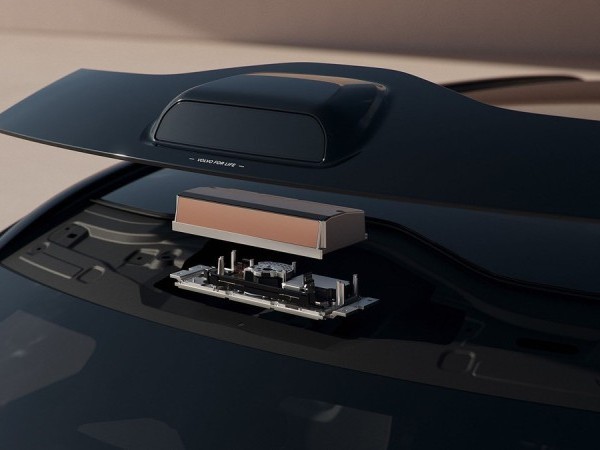
Warning: Vehicle LiDAR Can Damage Your Phone Camera!
AshleyMay 19, 2025

Well-Planned Space: The Exceptional Practicality of the Volvo XC60
Kevin WongMay 16, 2025
View More
Pros
Cons