
Q
Is the 2023 BMW X7 a good car?
 RainbowSpectrumDec 05, 2025, 10:54 AM
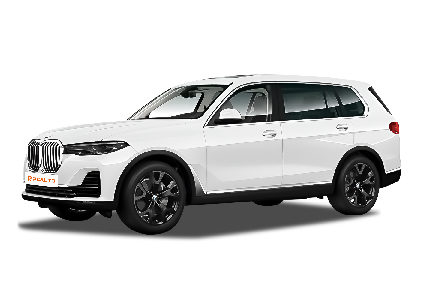
The 2023 BMW X7 is a well-rounded luxury SUV that truly delivers. Under the hood, you've got your choice of a punchy 3.0L inline-six or a brawny 4.4L V8 turbo – both paired with that buttery-smooth 8-speed automatic that BMW does so well.
Inside, it's pure premium with high-end materials and plenty of room for the whole family across three rows. Tech-wise, you're looking at the latest iDrive 8 system, a crisp 12.3-inch digital cluster, and a massive 14.9-inch touchscreen that's actually intuitive to use. Safety? Covered. Think automatic emergency braking, lane-keeping assist, and adaptive cruise – all the good stuff.
Where the X7 really shines is how it balances comfort and agility. The suspension soaks up bumps like a champ but still feels planted when you want to push it. If you're after that perfect mix of luxury, driving dynamics, and tech, this is the one to beat. Sure, the Mercedes GLS and Audi Q7 are solid alternatives, but the X7 takes the lead when it comes to driver engagement and cutting-edge features.
Special Disclaimer: This content is published by users and does not represent the views or position of PCauto.
Related Q&A
Q
Is the 2023 BMW X7 a good family car?
The 2023 BMW X7 is a premium SUV that's perfect for families. With its spacious three-row seating, it comfortably accommodates up to seven passengers—the second row offers generous legroom, while the third row works well for kids or even adults on shorter trips. Inside, you'll find a top-notch entertainment setup, including rear-seat screens and multiple USB ports, keeping everyone happy on the road.
Safety-wise, the X7 comes standard with features like automatic emergency braking, lane-keeping assist, and blind-spot monitoring, adding peace of mind for family adventures. Under the hood, it packs a punch with either a 3.0-liter inline-six or a 4.4-liter V8, paired with an 8-speed automatic transmission—delivering smooth power and plenty of oomph when you need it.
The suspension is tuned for comfort, soaking up bumps effortlessly, making it ideal for long hauls. If you're after a blend of luxury and practicality—something that handles the daily commute just as well as weekend getaways—the X7's versatility and BMW's premium appeal make it a strong contender.
 HelperHandDec 5, 2025
Q
How many cc engine is in the BMW X7 2023?
The 2023 BMW X7 offers a range of engine options to suit diverse needs. Gasoline variants include a 3.0L inline-six turbocharged engine (B58) with a 2,998cc displacement, delivering 380 hp, and a 4.4L V8 twin-turbo (N63) with 4,395cc, pushing out 523 hp. Diesel lovers get a 3.0L inline-six turbo-diesel (B57) at 2,993cc, producing 340 hp. All engines pair with an 8-speed Steptronic automatic transmission and xDrive all-wheel drive, balancing performance and efficiency.
For driving enthusiasts, displacement is just one part of the story. Modern turbocharging tech lets smaller engines punch above their weight—BMW’s TwinPower Turbo is a prime example, using twin-scroll turbos, direct injection, and Valvetronic variable valve timing for sharper response. The X7 also features a 48V mild-hybrid system, smoothing out low-speed driving and start-stop transitions. If you crave more thrills, the X7 M60i’s V8 delivers even fiercer acceleration.
When choosing, consider your daily needs and budget—then test drive to feel the differences firsthand. No spec sheet beats seat time.
 OceanBreezeDec 5, 2025
Q
How much horsepower does a 2023 BMW X7 have?
The 2023 BMW X7 offers multiple power outputs across its lineup. The xDrive40i variant packs a 3.0-liter turbocharged inline-six, delivering 375 horsepower and 519 Nm of torque. For those craving more performance, the M60i xDrive comes with a 4.4-liter twin-turbo V8 that pushes 523 hp and 750 Nm – both paired with an 8-speed Steptronic transmission and xDrive all-wheel drive.
This full-size luxury SUV isn’t just about raw power; it’s loaded with cutting-edge tech like adaptive air suspension and Integral Active Steering, balancing comfort and sharp handling. If you want even more dynamic prowess, the optional M Sport package dials things up a notch.
What’s interesting is how different drive modes transform the X7’s character—from relaxed efficiency in Eco Pro to sharp throttle response in Sport. The 48V mild-hybrid system also smoothes out stop-start operation and helps with fuel economy.
For local driving conditions, here’s the real-world take: the six-cylinder is more than enough for city commutes, but if you frequently hit the highway or love that V8 shove, the M60i is the way to go.
 HealerHeartDec 5, 2025
Q
How much does a 2023 BMW X7 cost?
The 2023 BMW X7's price varies depending on trim levels—the entry-level xDrive40i starts at around RM600,000, while the range-topping M60i xDrive can exceed RM800,000, with final pricing subject to optional packages and dealer incentives. This full-size luxury SUV packs either a 3.0L inline-six or a 4.4L twin-turbo V8, churning out 335hp and 523hp respectively, paired with an 8-speed automatic and xDrive all-wheel drive for a balanced mix of performance and comfort.
What sets the X7 apart is its spacious three-row seating, premium interior materials, and cutting-edge tech like the 12.3-inch dual-screen display, panoramic sunroof, and adaptive air suspension—making it ideal for families who won’t compromise on luxury or practicality. Plus, its advanced driver-assistance systems, including adaptive cruise control, lane-keeping assist, and automated parking, add an extra layer of safety and convenience.
If you’re considering the X7, I’d recommend booking a test drive at your local dealership to truly experience its capabilities firsthand. Nothing beats feeling that power and refinement on the road.
 OliDec 5, 2025
Popular Cars
Model Year
Car Compare
Car Photo
Related Models
 Cars
CarsLatest Q&A
Q
Is AMT similar to automatic?
There are significant differences between AMT transmissions and automatic transmissions (AT) in terms of core structure and driving experience. AMT is essentially an electronically automated version of a manual transmission, simulating manual clutch operation and gear shifting through a computerized control system while retaining the gear set structure of manual transmissions. As a result, it offers higher transmission efficiency, with fuel consumption approximately 8%-12% lower than AT, making it particularly suitable for highway or long-distance driving. However, it may exhibit jerking similar to manual transmissions during low-speed gear shifts, especially noticeable in congested traffic conditions.
AT transmissions rely on torque converters for power transfer, delivering smooth and seamless gear shifts that appeal to comfort-oriented users. However, their complex structure (incorporating planetary gear sets, hydraulic systems, etc.) results in higher maintenance costs. A single service may cost between 800 to 1,500 ringgit, whereas AMT only requires gear oil replacement at approximately 400 ringgit.
From a market perspective, AMT is predominantly used in budget vehicles or commercial models priced below 80,000 ringgit, while AT is typically featured in mid-to-high-end vehicles. Consumers should select based on actual needs: AMT suits those prioritizing fuel efficiency and low maintenance costs, while AT better serves those valuing comfort. Notably, recent advancements in AMT electronic control technology have significantly mitigated jerking issues, though test drives should still emphasize low-speed performance evaluation.
 AriaMar 26, 2026
Q
Which is better, DCT or AT?
DCT (Dual-Clutch Transmission) and AT (Automatic Transmission) each have their own advantages and disadvantages, and the choice should be based on personal driving needs. AT transmissions transfer power through a torque converter, offering excellent shift smoothness, making them suitable for urban commuting or novice drivers. However, they tend to have higher fuel consumption, and vehicles equipped with them are usually more expensive. DCT transmissions utilize a dual-clutch structure, featuring fast shift speeds and high power transmission efficiency, which provides a more direct driving experience—particularly suitable for users seeking a sporty feel. However, they may exhibit jerking at low speeds and have relatively high maintenance costs. If durability and comfort are priorities, AT is the more reliable choice; if power responsiveness and driving pleasure are preferred, wet DCT (such as Volkswagen DSG) performs better, though dry DCT models should be avoided in prolonged stop-and-go traffic conditions. Additionally, CVT transmissions excel in smoothness and fuel efficiency, making them ideal for daily commuting, but they lack driving excitement. It is recommended to test-drive before purchasing, as tuning varies significantly across brands, and real-world experience is more important than theoretical specifications.
 FlutteringMar 26, 2026
Q
Is Amt good or bad?
AMT gearboxes have a significant cost advantage in the local market, typically being around 5,000 Ringgit cheaper than models equipped with conventional automatic transmissions. Their fuel efficiency is comparable to manual transmissions, resulting in long-term fuel savings. Featuring a straightforward design, they achieve transmission efficiency exceeding 90% with relatively low maintenance costs, making them ideal for practicality-oriented consumers. However, their shifting logic contains inherent limitations: gear changes between 1st and 2nd cause 0.3-0.5 second power interruptions, while unintended upshifts on inclines may reduce engine speed by 15%-20%, compromising driving smoothness. For urban commuters or budget-conscious buyers, AMT offers excellent value, though those prioritizing premium driving dynamics should consider alternative transmission types. Some domestic models like the Perodua Axia employ enhanced AMT systems, where optimized shift programming has reduced gearshift shock by approximately 30%.
 RainbowsMar 26, 2026
Q
Which gives better mileage, CVT or AMT?
From the perspective of fuel economy, CVT transmissions generally perform better under urban driving conditions. Their continuously variable design allows the engine to consistently operate within the optimal speed range, significantly reducing fuel consumption during frequent starts and stops. Test data shows that their fuel consumption in urban driving conditions is 10% to 15% lower than that of comparable models. AMT transmissions, on the other hand, inherit the high transmission efficiency of manual transmissions, delivering fuel efficiency close to manual transmissions during high-speed cruising. This makes them particularly suitable for long-distance driving in large-displacement vehicles. However, due to power interruption during gear shifts, their overall fuel consumption may be 5% to 8% higher than CVTs.
The difference in fuel-saving characteristics between the two transmissions stems from their technical principles: CVTs achieve continuous variability through steel belts and pulleys, eliminating the fixed gear ratio limitations of traditional transmissions; AMTs simulate manual gear changes via electronic control systems while maintaining the mechanical efficiency of gear transmission. Notably, actual fuel consumption is also influenced by driving habits. Smooth acceleration and anticipatory deceleration can maximize the transmissions' fuel-saving potential. If the vehicle budget permits and urban commuting is the primary use, CVTs offer a more economical choice. For frequent highway driving with an emphasis on cost-effectiveness, AMTs are equally worth considering.
 RubyBlazeMar 26, 2026
Q
Which is cheaper, AMT or CVT?
In terms of gearbox cost, AMT is usually more economical than CVT. Essentially, AMT is a manual transmission equipped with an electronic control unit, featuring a simple structure and low maintenance costs. The unit price ranges from approximately 5,000 to 8,000 ringgit, making it suitable for budget-conscious consumers or those who prioritize long-term operating costs. CVT incurs higher manufacturing costs due to its precision steel belt transmission system and continuous variable transmission technology, with a unit price of about 7,000 to 10,000 ringgit. However, it delivers a smoother driving experience and superior fuel efficiency. The primary differences between the two lie in technical complexity: AMT retains the gear-shifting mechanism, resulting in noticeable shift shock; CVT achieves linear power output through stepless speed variation but requires periodic belt inspection and incurs higher maintenance expenses. For those prioritizing initial cost and basic transportation needs, AMT offers better value; if comfort and long-term fuel economy are priorities, CVT represents a more worthwhile investment. Note that actual prices may vary based on vehicle model, brand, and local supply chain factors.
 ShadowProwlMar 26, 2026
Related News

The all-new BMW i5 eDrive40 M Sport Pro lands in Malaysia
LienJan 16, 2026

Audi RS6 sedan version may return to compete fully with the BMW M5
WilliamNov 21, 2025

Neue Klasse platform's first mass-produced vehicle, the all-new BMW iX3 makes its debut, looks just like a concept car
LienSep 8, 2025

BMW X5 will become BMW's first model equipped with a hydrogen fuel cell, with a range of 504 kilometers
JamesSep 8, 2025

BMW's all-new iX3 to be unveiled on September 5, built on the Neue Klasse platform
Kevin WongSep 1, 2025
View More
Pros
Cons