
Q
Is the Hyundai i10 a hatchback or SUV?
 TravelJunkieWandererAug 11, 2025, 12:19 PM
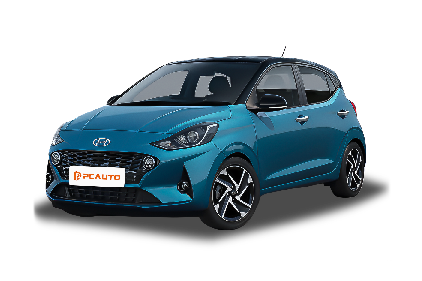
The Hyundai i10 is a typical urban subcompact hatchback, not an SUV. It's highly favored by urban users in Malaysia for its compact and agile body size and excellent fuel efficiency. It's particularly well-suited for narrow roads and crowded parking situations. The i10 features a five-door design, with a body length usually around 3.6 meters. It belongs to the A-segment. It's equipped with small-displacement engines of 1.0L or 1.2L, emphasizing practicality and cost-effectiveness. This type of vehicle is very common in the Malaysian market. For example, the Perodua Axia and Proton Saga also have similar positioning.
Compared with SUVs, hatchbacks generally have a lower chassis, a more stable center of gravity, and more flexible handling. However, they have a smaller ground clearance and cargo space. If you need higher passability or greater cargo-carrying capacity, you can consider small SUVs like the Hyundai Venue.
In Malaysia's hot and rainy climate, the i10's air-conditioning system performs well, and it has good durability. Also, its maintenance costs are relatively low, making it a great choice for young families on a budget or first-time car buyers.
Special Disclaimer: This content is published by users and does not represent the views or position of PCauto.
Related Q&A
Q
Hyundai i10 มีระบบเข้ารถแบบไม่ใช้กุญแจหรือไม่
Hyundai i10 บางรุ่นระดับสูงในตลาดมาเลเซียมาพร้อมระบบเข้ารถแบบไม่ใช้กุญแจ แต่การติดตั้งขึ้นอยู่กับปีและรุ่นของรถจึงควรสอบถามดีลเลอร์เพื่อยืนยันสเปกล่าสุด ระบบเข้ารถแบบไม่ใช้กุญแจช่วยปลดล็อกประตูอัตโนมัติเมื่อพกกุญแจอัจฉริยะ เพิ่มความสะดวกในชีวิตประจำวันโดยเฉพาะเวลาถือของหรือช่วงฝนตก โดยปกติจะทำงานร่วมกับระบบสตาร์ทเครื่องยนต์แบบปุ่มกด รุ่นพื้นฐานอาจยังใช้กุญแจแบบเดิม ในสภาพอากาศร้อนและฝนชุกของมาเลเซียควรตรวจสอบแบตเตอรี่กุญแจเป็นประจำและหลีกเลี่ยงวางกุญแจใกล้อุปกรณ์อิเล็กทรอนิกส์เพื่อป้องกันสัญญาณรบกวน รุ่นในระดับเดียวกันเช่น Perodua Axia และ Proton Saga ก็มีฟังก์ชันคล้ายกัน ผู้บริโภคสามารถเปรียบเทียบฟังก์ชันตามงบประมาณและความต้องการ หากเลือกซื้อ i10 มือสองควรตรวจสอบสเปกรถจากโรงงานเดิม เพราะบางคันอาจติดตั้งโมดูลเข้ารถแบบไม่ใช้กุญแจที่ไม่ใช่ของแท้ ความเสถียรและความปลอดภัยจึงต้องพิจารณาอย่างรอบคอบ
 CoffeeLoverAddictAug 11, 2025
Q
Hyundai i10 มีฟังก์ชัน Stop Start หรือไม่
ใช่แล้ว Hyundai i10 บางรุ่นมาพร้อมเทคโนโลยี Stop Start ฟังก์ชันนี้ช่วยปิดเครื่องยนต์อัตโนมัติเมื่อรถจอดชั่วคราวเพื่อลดการใช้เชื้อเพลิงและการปล่อยไอเสีย เหมาะอย่างยิ่งกับการขับขี่ในเมืองมาเลเซียที่ต้องจอดบ่อย แต่การมีฟังก์ชันนี้ขึ้นอยู่กับปีและรุ่นของรถเพราะแต่ละรุ่นอาจมีอุปกรณ์แตกต่างกัน เทคโนโลยี Stop Start เป็นการออกแบบเพื่อสิ่งแวดล้อมที่เริ่มพบได้ทั่วไปโดยเฉพาะในเส้นทางที่รถติดช่วยลดการใช้เชื้อเพลิงได้จริง แต่บางคนอาจกังวลว่าการสตาร์ทรถบ่อยจะกระทบแบตเตอรี่และมอเตอร์สตาร์ท แต่อย่างที่ทราบ Hyundai ได้ปรับปรุงชิ้นส่วนให้แข็งแรงทนทานเพื่อรองรับฟังก์ชันนี้ หากสนใจควรสอบถามรายละเอียดรุ่นและอุปกรณ์กับดีลเลอร์ Hyundai ในพื้นที่ก่อนซื้อและสามารถทดลองขับเพื่อสัมผัสการใช้งานจริงของระบบสตาร์ท-สต็อป
 VideoCreatorProducerAug 11, 2025
Q
Does the Hyundai i10 lock automatically?
Regarding the question of whether the Hyundai i10 has an automatic locking feature, the availability of this function in the i10 depends on the specific model year and configuration. Newer i10 models generally come with a speed-sensitive automatic door locking system. When the vehicle's speed exceeds a certain threshold (for example, 20 km/h), the doors will lock automatically. This design is highly practical in the Malaysian market as it enhances driving safety, especially for city driving where traffic congestion is common. However, the early basic versions may require manual locking. It is recommended that owners refer to the user manual or check through the vehicle settings menu on the steering wheel.
Hyundai has been increasingly emphasizing safety technology in recent years. Compact cars like the i10 have gradually added features such as smart key systems and anti-theft alarms. If your vehicle does not have an automatic locking function, you can consider installing an original-factory safety module. In Malaysia's hot and humid climate with frequent rainfall, it's also important to regularly check the waterproofing of the door lock motors and wiring harnesses to prevent poor contact due to long-term use.
 StoryTellerNarratorAug 11, 2025
Q
Does the Hyundai i10 have automatic transmission?
Yes, the Hyundai i10 in the Malaysian market offers an automatic transmission option. Specifically, it is equipped with a 4-speed automatic transmission (4AT). This transmission is easy to operate and has relatively low maintenance costs, making it suitable for urban commuting needs. As an economical small car, the automatic version of the i10 is quite popular locally, especially among novice drivers or those who often encounter congested traffic conditions.
Apart from the transmission choice, the i10 is also well-known for its flexible handling and compact body, which are highly suitable for the narrow streets and parking situations in Malaysia. It should be noted that the configurations of the i10 may vary slightly from year to year. It is recommended to confirm the latest specifications with an authorized dealer before purchasing.
In addition, although an automatic transmission provides driving convenience, regularly changing the transmission fluid and maintaining good driving habits can extend its service life. This is also an important maintenance aspect that all owners of automatic - transmission cars should pay attention to.
 MotorcyclistRiderAug 11, 2025
Q
Is the Hyundai i10 a timing belt or chain?
The Hyundai i10 uses a timing chain instead of a timing belt. This design has more advantages in terms of durability and maintenance cost. Usually, it doesn't need to be replaced regularly like a timing belt. You only need to regularly check the chain tensioner and lubrication condition, which makes it suitable for the hot and rainy climate in Malaysia.
Compared with the timing belt, the timing chain is more resistant to high temperatures and wear. Its service life is basically the same as that of the engine, reducing the risk of engine damage caused by belt breakage for car owners. However, the chain may be a bit noisier than the belt during operation.
It's very important for Malaysian car owners to know the type of timing system in their vehicles. Generally, the timing belt needs to be replaced every 60,000 to 100,000 kilometers, while the chain significantly reduces the maintenance frequency and cost in this regard. It is recommended that car owners still follow the manufacturer's maintenance manual for regular inspections to ensure the long - term stable operation of the engine.
 HeartHealerComforterAug 11, 2025
Q
Is the Hyundai i10 AMT or CVT?
In the Malaysian market, the Hyundai i10 offers the AMT (Automated Manual Transmission) as a transmission option instead of the CVT (Continuously Variable Transmission). Structurally, the AMT is similar to the traditional manual transmission, but it achieves automatic gear-shifting through an electronic control system. It features low cost and easy maintenance, making it suitable for city commuting. However, there might be a slight jerk during gear-shifting.
In contrast, the CVT achieves continuously variable transmission through a steel belt and conical pulleys. It provides better smoothness and generally has better fuel economy, but its manufacturing cost is relatively high. For Malaysian consumers, the i10 with the AMT version can balance economy and convenience, especially for users with limited budgets who value practicality. If you have higher requirements for driving smoothness, you can consider other models equipped with CVT. However, it's necessary to pay attention to the long-term maintenance costs and the compatibility with driving habits of different transmission types.
Hyundai optimizes its technology choices based on the vehicle's positioning and market demand. The AMT configuration of the i10 also reflects its consideration of the practicality of entry-level small cars.
 SuccessHunterPursuerAug 11, 2025
Q
Is the Hyundai i10 automatic?
Yes, the Hyundai i10 offers an automatic transmission version in the Malaysian market. Specifically, it is equipped with a 4-speed automatic transmission (4AT). This small car is mainly focused on economy and practicality, making it suitable for city commuting. Its automatic version is easy to operate and has a reasonable fuel consumption, which is very suitable for the congested traffic environment in Malaysia. As a B-segment vehicle, the Hyundai i10 has a compact body but a reasonably designed interior space. It is equipped with basic safety features such as dual airbags and ABS. Meanwhile, some high-end versions may also offer convenient features like a touchscreen entertainment system, and its cost-effectiveness is quite competitive in the local market. It's worth noting that although the 4AT technology is relatively old, it has the advantages of low maintenance costs and high stability, which is a good choice for consumers with limited budgets who value durability. If you're looking for a smoother driving experience, you can also pay attention to CVT transmission models of peer competitors such as the Perodua Axia or Proton Saga, but you need to weigh according to your personal budget and needs.
 SkyDiverFearlessAug 11, 2025
Q
Where is the Hyundai i10 made?
The production base of the Hyundai i10 is mainly at the Hyundai Motor India factory in Chennai, India. This factory is one of Hyundai's global strategic production bases and specializes in producing small cars to meet the demands of the Asian and some European markets. For the Malaysian market, the i10 sold locally is usually imported from India. However, the specific source of the vehicles may vary depending on the year or configuration. It is recommended that consumers confirm the latest information through the official channels of Hyundai in Malaysia.
It's worth mentioning that the Indian factory adopts global production standards to ensure that the quality and craftsmanship of the i10 are consistent with those of the versions in other regions. This model is well-known for its flexible handling and fuel efficiency, making it particularly suitable for the urban road conditions in Malaysia.
Hyundai also offers a five-year unlimited-mileage warranty policy in the Southeast Asian market, providing additional protection for local consumers. If you're considering purchasing the i10, you can visit an authorized dealer to experience its 1.2L Kappa engine and intelligent connectivity features. These configurations are quite competitive among models in the same class.
 MindMapperPlannerAug 11, 2025
Q
Which engine is the best for Hyundai i10?
The Hyundai i10 mainly offers a 1.2-liter Kappa four-cylinder naturally aspirated engine option in the Malaysian market. This engine delivers 82 horsepower and 118 Nm of torque. Paired with a 4-speed automatic or 5-speed manual transmission, it is highly suitable for urban commuting. Its low-speed torque tuning makes it more fuel - efficient in stop - and - go traffic, with an average fuel consumption of about 5.2 liters per 100 kilometers. Meanwhile, the maintenance cost is relatively low, making it a great choice for Malaysian consumers with limited budgets.
If you have higher requirements for power, you can consider the 1.0-liter T-GDI turbocharged version available in overseas markets. However, it should be noted that this version has not been officially introduced in Malaysia. When choosing an engine, it is recommended to give priority to local road conditions. The rainy climate and congested traffic in Malaysia are more suitable for the linear output of naturally aspirated engines. Turbocharged engines may increase the risk of carbon deposits during long-term low-speed driving.
In addition, the CVVD (Continuous Variable Valve Duration) system used in Hyundai's Smartstream engine technology can improve fuel efficiency. However, for daily maintenance, it is necessary to strictly follow the original manufacturer's recommendations and use low - ash oil to keep the engine in its best condition.
 PhotoHunterCapturerAug 11, 2025
Q
Is the i10 3-cylinder or 4-cylinder?
The Hyundai i10 models available in the Malaysian market are equipped with a 1.2-liter Kappa four-cylinder engine instead of a three-cylinder configuration. This naturally aspirated engine uses multi-point fuel injection technology, with a maximum power of 87 horsepower and a peak torque of 120 N·m. It is paired with a 5-speed manual or 4-speed automatic transmission, which is suitable for urban commuting needs. For Malaysian consumers, the smoothness and durability of four-cylinder engines are usually more favored, especially in congested sections with frequent stops and starts. Compared with three-cylinder engines, they produce less vibration and have relatively stable maintenance costs. It's worth noting that in recent years, some small cars have adopted a three-cylinder design to reduce fuel consumption, but the four-cylinder structure still has advantages in terms of the linearity of power output and high-speed stability. It is recommended to make a choice based on your own driving habits and budget before buying a car. At the same time, you can refer to the actual test comparisons of vehicles in the same class by Malaysian automotive media, such as the performance differences between the three-cylinder Perodua Axia and the four-cylinder Proton Saga, to make a more comprehensive decision.
 SoulSearcherSeekerAug 11, 2025
Popular Cars
Model Year
Car Compare
Car Photo
Related Models
 Cars
CarsLatest Q&A
Q
Is AMT similar to automatic?
There are significant differences between AMT transmissions and automatic transmissions (AT) in terms of core structure and driving experience. AMT is essentially an electronically automated version of a manual transmission, simulating manual clutch operation and gear shifting through a computerized control system while retaining the gear set structure of manual transmissions. As a result, it offers higher transmission efficiency, with fuel consumption approximately 8%-12% lower than AT, making it particularly suitable for highway or long-distance driving. However, it may exhibit jerking similar to manual transmissions during low-speed gear shifts, especially noticeable in congested traffic conditions.
AT transmissions rely on torque converters for power transfer, delivering smooth and seamless gear shifts that appeal to comfort-oriented users. However, their complex structure (incorporating planetary gear sets, hydraulic systems, etc.) results in higher maintenance costs. A single service may cost between 800 to 1,500 ringgit, whereas AMT only requires gear oil replacement at approximately 400 ringgit.
From a market perspective, AMT is predominantly used in budget vehicles or commercial models priced below 80,000 ringgit, while AT is typically featured in mid-to-high-end vehicles. Consumers should select based on actual needs: AMT suits those prioritizing fuel efficiency and low maintenance costs, while AT better serves those valuing comfort. Notably, recent advancements in AMT electronic control technology have significantly mitigated jerking issues, though test drives should still emphasize low-speed performance evaluation.
 AriaMar 26, 2026
Q
Which is better, DCT or AT?
DCT (Dual-Clutch Transmission) and AT (Automatic Transmission) each have their own advantages and disadvantages, and the choice should be based on personal driving needs. AT transmissions transfer power through a torque converter, offering excellent shift smoothness, making them suitable for urban commuting or novice drivers. However, they tend to have higher fuel consumption, and vehicles equipped with them are usually more expensive. DCT transmissions utilize a dual-clutch structure, featuring fast shift speeds and high power transmission efficiency, which provides a more direct driving experience—particularly suitable for users seeking a sporty feel. However, they may exhibit jerking at low speeds and have relatively high maintenance costs. If durability and comfort are priorities, AT is the more reliable choice; if power responsiveness and driving pleasure are preferred, wet DCT (such as Volkswagen DSG) performs better, though dry DCT models should be avoided in prolonged stop-and-go traffic conditions. Additionally, CVT transmissions excel in smoothness and fuel efficiency, making them ideal for daily commuting, but they lack driving excitement. It is recommended to test-drive before purchasing, as tuning varies significantly across brands, and real-world experience is more important than theoretical specifications.
 FlutteringMar 26, 2026
Q
Is Amt good or bad?
AMT gearboxes have a significant cost advantage in the local market, typically being around 5,000 Ringgit cheaper than models equipped with conventional automatic transmissions. Their fuel efficiency is comparable to manual transmissions, resulting in long-term fuel savings. Featuring a straightforward design, they achieve transmission efficiency exceeding 90% with relatively low maintenance costs, making them ideal for practicality-oriented consumers. However, their shifting logic contains inherent limitations: gear changes between 1st and 2nd cause 0.3-0.5 second power interruptions, while unintended upshifts on inclines may reduce engine speed by 15%-20%, compromising driving smoothness. For urban commuters or budget-conscious buyers, AMT offers excellent value, though those prioritizing premium driving dynamics should consider alternative transmission types. Some domestic models like the Perodua Axia employ enhanced AMT systems, where optimized shift programming has reduced gearshift shock by approximately 30%.
 RainbowsMar 26, 2026
Q
Which gives better mileage, CVT or AMT?
From the perspective of fuel economy, CVT transmissions generally perform better under urban driving conditions. Their continuously variable design allows the engine to consistently operate within the optimal speed range, significantly reducing fuel consumption during frequent starts and stops. Test data shows that their fuel consumption in urban driving conditions is 10% to 15% lower than that of comparable models. AMT transmissions, on the other hand, inherit the high transmission efficiency of manual transmissions, delivering fuel efficiency close to manual transmissions during high-speed cruising. This makes them particularly suitable for long-distance driving in large-displacement vehicles. However, due to power interruption during gear shifts, their overall fuel consumption may be 5% to 8% higher than CVTs.
The difference in fuel-saving characteristics between the two transmissions stems from their technical principles: CVTs achieve continuous variability through steel belts and pulleys, eliminating the fixed gear ratio limitations of traditional transmissions; AMTs simulate manual gear changes via electronic control systems while maintaining the mechanical efficiency of gear transmission. Notably, actual fuel consumption is also influenced by driving habits. Smooth acceleration and anticipatory deceleration can maximize the transmissions' fuel-saving potential. If the vehicle budget permits and urban commuting is the primary use, CVTs offer a more economical choice. For frequent highway driving with an emphasis on cost-effectiveness, AMTs are equally worth considering.
 RubyBlazeMar 26, 2026
Q
Which is cheaper, AMT or CVT?
In terms of gearbox cost, AMT is usually more economical than CVT. Essentially, AMT is a manual transmission equipped with an electronic control unit, featuring a simple structure and low maintenance costs. The unit price ranges from approximately 5,000 to 8,000 ringgit, making it suitable for budget-conscious consumers or those who prioritize long-term operating costs. CVT incurs higher manufacturing costs due to its precision steel belt transmission system and continuous variable transmission technology, with a unit price of about 7,000 to 10,000 ringgit. However, it delivers a smoother driving experience and superior fuel efficiency. The primary differences between the two lie in technical complexity: AMT retains the gear-shifting mechanism, resulting in noticeable shift shock; CVT achieves linear power output through stepless speed variation but requires periodic belt inspection and incurs higher maintenance expenses. For those prioritizing initial cost and basic transportation needs, AMT offers better value; if comfort and long-term fuel economy are priorities, CVT represents a more worthwhile investment. Note that actual prices may vary based on vehicle model, brand, and local supply chain factors.
 ShadowProwlMar 26, 2026
Related News

Malaysia Hyundai Staria 2026 model optimized 10-seater layout, central console upgraded
Kevin WongJan 28, 2026

Hyundai STARIA Electric Version Unveiled: Spacious MPV, Southeast Asian Families Should Look Forward to it!
WilliamJan 12, 2026

2026 Toyota HiLux receives five-star ANCAP safety rating in ANCAP
MichaelDec 12, 2025

In Malaysia, which sliding door MPVs are available?
MichaelOct 30, 2025

Modern Ioniq 5 N Lands in Malaysia: Track-Level Performance Electric Vehicle is Here, Priced Possibly Below RM 400,000?
JohnSep 10, 2025
View More
Pros
Cons