
Q
Is the Peugeot 3008 made in China?
 PeachesOct 21, 2025, 05:48 PM
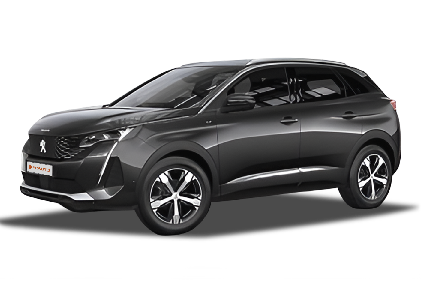
The Peugeot 3008 currently sold in Malaysia is primarily imported from France, not manufactured in China. This model is favored by local consumers for its fashionable design and advanced technological configurations. It's worth noting though that some Peugeot models like the 408 and 508 do have production lines in China and are exported globally, but the 3008 hasn't started production there yet. For Malaysian car owners, choosing the French - built 3008 means getting European craftsmanship standards, including the precisely calibrated body rigidity and the mature technology of the 1.6THP turbo engine. It's also advisable to check the Vehicle Identification Number (VIN) to confirm the specific origin before purchasing, as in the globalized auto manufacturing landscape, there might be production - location differences across different model years or special editions. However, the core quality still meets Peugeot's unified quality control standards.
Special Disclaimer: This content is published by users and does not represent the views or position of PCauto.
Related Q&A
Q
Are 2018 Peugeot 3008 reliable?
The 2018 Peugeot 3008 delivers average reliability, with its advanced design and tech features standing out. However, some owners report minor long-term issues like occasional infotainment screen glitches or slightly rough gear shifts from the transmission—though most can be resolved through software updates or routine maintenance. Its 1.6T and 2.0T engines offer solid performance, and fuel efficiency sits mid-pack for the class, making it suitable for both city commutes and road trips.
Inside, the cabin impresses with high-quality materials and Peugeot’s i-Cockpit digital dashboard, which adds a futuristic vibe. Space is practical for families, too. Just keep in mind that maintenance costs might run slightly higher than Japanese rivals, so stick to authorized service centers for proper parts and support.
If considering a used model, prioritize units with full service history and pay extra attention to the transmission and electronics. Among competitors, the 3008 shines with its sharp handling and bold styling—ideal for drivers who value engagement behind the wheel.
 HappyGrasshopperDec 8, 2025
Q
What is the fuel consumption of the 2018 Peugeot 3008?
The 2018 Peugeot 3008's fuel efficiency varies by powertrain. The 1.6L turbo petrol version delivers around 6.5L/100km combined, while the 2.0L diesel is more economical at roughly 4.8L/100km. Real-world figures may differ based on driving style, road conditions, and maintenance.
Built on Peugeot's Efficient Modular Platform, this SUV benefits from lightweight construction for better fuel economy. Its drive mode selector (including an Eco mode) further optimizes consumption. Worth noting: the petrol turbo drinks slightly more in stop-start city driving, whereas the diesel shines on highway runs.
To maintain optimal efficiency, stick to scheduled servicing – think air filter changes, correct oil viscosity, and proper tire pressure. Always follow the manual's maintenance intervals and use authorized service centers.
 HappyLadybugDec 8, 2025
Q
How much is the Peugeot 3008 2018?
The used 2018 Peugeot 3008 typically ranges between RM80,000 to RM120,000, depending on condition, mileage, and trim level—with the high-spec GT Line models often commanding higher prices.
Known for its standout design and tech-forward appeal, this SUV packs a 1.6L turbocharged engine that delivers solid performance and decent fuel efficiency. Inside, the i-Cockpit layout steals the show with a 12.3-inch digital cluster and an 8-inch touchscreen, giving it a properly modern vibe. Safety-wise, it’s loaded with features like automatic emergency braking and lane-keeping assist, making it a practical family pick.
If you’re shopping for one, always check the service history to confirm it’s been well looked after. Opting for an official certified used car program could also score you better warranty coverage and after-sales support. With steady demand in the used market, the 3008 remains a solid choice for anyone after a stylish, tech-savvy SUV.
 HappyBeetleDec 8, 2025
Q
Is the 2018 Peugeot 3008 a good car?
The 2018 Peugeot 3008 is a distinctively designed SUV that prioritizes driving experience. It features Peugeot's signature styling on the exterior, while the interior revolves around the i-Cockpit concept—complete with a compact steering wheel and a floating touchscreen for a tech-forward feel. The 1.6T and 2.0T diesel variants deliver smooth power delivery, making it well-suited for both city commutes and long trips. That said, some owners find the rear seating a bit tight for its class, though the seats themselves are comfortable.
In terms of features, it offers driver-assist tech like adaptive cruise control and lane-keeping assist, with safety ratings hitting Europe’s five-star NCAP standard. Maintenance costs run slightly higher than mainstream Japanese rivals, but the overall build quality justifies it. Resale value is mid-pack for European brands. If you’re after something with personality and engaging handling, the 3008 is worth a look. On a test drive, pay attention to transmission refinement and how responsive the infotainment system feels.
 WittyDec 8, 2025
Q
Is the 2019 Peugeot 3008 reliable?
The 2019 Peugeot 3008 holds up pretty well in terms of reliability in the Malaysian market. This SUV has won over many consumers with its distinctive design and generous equipment levels. The 1.6-liter turbocharged engine paired with the 8-speed automatic gearbox delivers a solid balance of power and fuel efficiency, making it a good fit for both city commutes and longer road trips. Peugeot has always excelled at tuning their chassis for comfort, and the 3008's suspension does a commendable job of ironing out road bumps, enhancing the overall ride quality.
Step inside, and the 3008 impresses with high-quality materials and that cool i-Cockpit digital setup, which gives the interior a nice tech-forward vibe. That said, some owners have mentioned occasional minor glitches with the electronic systems. It's a good idea to check for software updates during regular servicing to keep everything running smoothly.
For Malaysian buyers, Peugeot's after-sales network is relatively well-established, with authorized service centers in major cities and parts supply generally being timely. If you're looking at a used model, it's definitely worth checking the service history, and prioritizing ones with main dealer servicing will help reduce potential headaches down the line.
All in all, the 2019 Peugeot 3008 is a stylish and practical SUV. As long as you keep up with regular maintenance, its reliability should be more than adequate for everyday use.
 LivelyOct 21, 2025
Q
How much does it cost to replace a timing belt on a Peugeot 3008?
The cost to replace the timing belt on a Peugeot 3008 typically ranges from RM1500 to RM3000. The exact price depends on the model year, engine type, and where you choose to have the work done. Dealership service centers will generally charge more, while independent garages might offer more budget-friendly options. It's a good idea to shop around and get quotes from a few different places before making a decision.
The timing belt is a critical engine component, responsible for keeping the crankshaft and camshaft in sync. If it snaps, it can cause major engine damage, so it's crucial to follow the manufacturer's recommended replacement interval – usually between 60,000 to 100,000 kilometers – to avoid much bigger repair bills down the line. Malaysia's hot and humid climate can also speed up belt degradation, so regularly checking the belt's condition is especially important. If you notice any cracks or signs of wear, get it replaced promptly.
Additionally, when replacing the timing belt, it's generally advisable to swap out the water pump and tensioner at the same time. These parts work hand-in-hand with the belt, and replacing them together saves on future labor costs from having to disassemble everything again later, plus it ensures the long-term reliability of your engine.
 JoyfulOct 21, 2025
Q
Does the Peugeot 3008 have a wet belt?
Right, some diesel-powered Peugeot 3008 models do come with a wet timing belt setup, specifically the earlier 1.6-liter BlueHDi diesel engines. This design submerges the timing belt in engine oil, which helps cut down on noise and can potentially extend its lifespan. But here's the thing: you *must* stick to the manufacturer's recommended service intervals – usually around 100,000 kilometers or 6 years, whichever comes first – for inspections and replacement. Skip that, and you could be looking at belt degradation leading to oil contamination or, worse, catastrophic engine damage.
It's worth noting that Peugeot has moved towards the more traditional timing chain design in their newer petrol engines, like the 1.2T PureTech. For Malaysian 3008 diesel owners, nailing the wet belt maintenance means using the right oil – specifically low-ash stuff that meets Peugeot's specs, think 0W-30 C2 grade. Also, avoid lots of short, stop-start trips; that can lead to oil dilution issues. My advice? Regular visits to an authorized service center for diagnostics to keep that lubrication system in tip-top shape.
And hey, Peugeot isn't alone here – some Ford models use similar wet belt designs too. So, it's always a good idea to get familiar with your owner's manual and keep detailed records of your service history. That way, you stay ahead of the game.
 HappyOct 21, 2025
Q
How often should a Peugeot 3008 be serviced?
According to Peugeot's official guidelines, the standard service interval for the Peugeot 3008 is every 12 months or 15,000 to 20,000 kilometers, whichever comes first. This schedule applies to the common 1.6L turbocharged petrol and 2.0L diesel variants in Malaysia, though intervals might shift slightly depending on driving conditions or the vehicle's age. Malaysia's hot, humid climate and stop-start city traffic can speed up oil degradation – if you're mostly doing short trips or regularly pushing the engine hard, it's wise to check oil and filters around the 10,000km mark instead.
The 3008's PureTech and BlueHDi engines use long-life synthetic oil, but regular changes are still critical – especially since turbo systems demand super clean oil. We recommend keeping tabs on maintenance needs through the car's on-board service reminder or the MyPeugeot app. Also, with Malaysia's rainy seasons, don't forget to give your brakes and wiper blades extra checks before and after.
For 3008s over 5 years old, consider shortening service intervals a bit. This helps keep an eye on aging rubber components and hoses. And remember: sticking to the factory service manual isn't just about keeping your powertrain warranty valid – it also ensures systems like the AdBlue setup (on diesels) and stop-start function keep working reliably for the long haul.
 NatureOct 21, 2025
Q
Do Peugeot 3008 hold their value?
The Peugeot 3008 holds its value moderately well in the Malaysian market, pretty much on par with most European SUVs. Its resale worth tends to be influenced by brand perception, market demand, and fluctuations in new car prices. Compared to Japanese rivals like the Honda CR-V or Toyota RAV4, the 3008 might see a steeper initial depreciation hit in the used car market, but its medium to long-term value retention is relatively stable, especially for models in good condition with a complete service history.
What keeps the 3008 relevant for used car buyers is its standout design, generous tech features, and engaging driving dynamics – these factors still hold appeal among a specific group of consumers, which helps underpin its resale value. Additionally, the growing acceptance of European cars in Malaysia, coupled with Peugeot's official after-sales support locally, does help ease some of the concerns owners might have about future maintenance costs.
If you're considering a Peugeot 3008 and resale value is a key concern, here's the drill: stick with the more popular trim levels, keep up with regular servicing, and hold onto those complete service records. These steps can definitely give you a better shot at a higher price when it's time to sell. Also, it pays to understand what the Malaysian used car market is currently craving – generally, low-mileage examples and those still under the original factory warranty tend to be the hottest tickets.
 DaisyOct 21, 2025
Q
Is the Peugeot 3008 worth buying?
The Peugeot 3008 is a solid contender in Malaysia's mid-size SUV scene, especially if you're after something with sharp styling and a bit of driving flair. Under the hood, you've got a 1.6-liter turbo engine that delivers smooth power and reasonable fuel efficiency. Step inside, and the i-Cockpit design really ups the tech ante, while standard driver assists like lane keep assist and automatic emergency braking add a welcome layer of safety.
That said, it's worth noting that rear passenger space is a touch tighter compared to its Japanese rivals, and you might find maintenance costs edging slightly higher too. My advice? Definitely take it for a test drive first and get a sense of how well the local after-sales network is set up.
Malaysia's hot and rainy weather can be tough on cars, demanding good cooling and sealing. The 3008's air-con system and body sealing hold up well, but if you're keeping it long-term, regular checks on rubber components are a smart move.
So, if you value that European driving feel and have a bit of extra budget for a more individual choice, the 3008 fits the bill. But if practicality and lower running costs are your top priorities, it's worth cross-shopping with comparable Japanese or Korean models.
 WilderOct 21, 2025
Popular Cars
Model Year
Car Compare
Car Photo
Related Models
 Cars
CarsLatest Q&A
Q
Is AMT similar to automatic?
There are significant differences between AMT transmissions and automatic transmissions (AT) in terms of core structure and driving experience. AMT is essentially an electronically automated version of a manual transmission, simulating manual clutch operation and gear shifting through a computerized control system while retaining the gear set structure of manual transmissions. As a result, it offers higher transmission efficiency, with fuel consumption approximately 8%-12% lower than AT, making it particularly suitable for highway or long-distance driving. However, it may exhibit jerking similar to manual transmissions during low-speed gear shifts, especially noticeable in congested traffic conditions.
AT transmissions rely on torque converters for power transfer, delivering smooth and seamless gear shifts that appeal to comfort-oriented users. However, their complex structure (incorporating planetary gear sets, hydraulic systems, etc.) results in higher maintenance costs. A single service may cost between 800 to 1,500 ringgit, whereas AMT only requires gear oil replacement at approximately 400 ringgit.
From a market perspective, AMT is predominantly used in budget vehicles or commercial models priced below 80,000 ringgit, while AT is typically featured in mid-to-high-end vehicles. Consumers should select based on actual needs: AMT suits those prioritizing fuel efficiency and low maintenance costs, while AT better serves those valuing comfort. Notably, recent advancements in AMT electronic control technology have significantly mitigated jerking issues, though test drives should still emphasize low-speed performance evaluation.
 AriaMar 26, 2026
Q
Which is better, DCT or AT?
DCT (Dual-Clutch Transmission) and AT (Automatic Transmission) each have their own advantages and disadvantages, and the choice should be based on personal driving needs. AT transmissions transfer power through a torque converter, offering excellent shift smoothness, making them suitable for urban commuting or novice drivers. However, they tend to have higher fuel consumption, and vehicles equipped with them are usually more expensive. DCT transmissions utilize a dual-clutch structure, featuring fast shift speeds and high power transmission efficiency, which provides a more direct driving experience—particularly suitable for users seeking a sporty feel. However, they may exhibit jerking at low speeds and have relatively high maintenance costs. If durability and comfort are priorities, AT is the more reliable choice; if power responsiveness and driving pleasure are preferred, wet DCT (such as Volkswagen DSG) performs better, though dry DCT models should be avoided in prolonged stop-and-go traffic conditions. Additionally, CVT transmissions excel in smoothness and fuel efficiency, making them ideal for daily commuting, but they lack driving excitement. It is recommended to test-drive before purchasing, as tuning varies significantly across brands, and real-world experience is more important than theoretical specifications.
FlutteringMar 26, 2026Q
Is Amt good or bad?
AMT gearboxes have a significant cost advantage in the local market, typically being around 5,000 Ringgit cheaper than models equipped with conventional automatic transmissions. Their fuel efficiency is comparable to manual transmissions, resulting in long-term fuel savings. Featuring a straightforward design, they achieve transmission efficiency exceeding 90% with relatively low maintenance costs, making them ideal for practicality-oriented consumers. However, their shifting logic contains inherent limitations: gear changes between 1st and 2nd cause 0.3-0.5 second power interruptions, while unintended upshifts on inclines may reduce engine speed by 15%-20%, compromising driving smoothness. For urban commuters or budget-conscious buyers, AMT offers excellent value, though those prioritizing premium driving dynamics should consider alternative transmission types. Some domestic models like the Perodua Axia employ enhanced AMT systems, where optimized shift programming has reduced gearshift shock by approximately 30%.
 RainbowsMar 26, 2026
Q
Which gives better mileage, CVT or AMT?
From the perspective of fuel economy, CVT transmissions generally perform better under urban driving conditions. Their continuously variable design allows the engine to consistently operate within the optimal speed range, significantly reducing fuel consumption during frequent starts and stops. Test data shows that their fuel consumption in urban driving conditions is 10% to 15% lower than that of comparable models. AMT transmissions, on the other hand, inherit the high transmission efficiency of manual transmissions, delivering fuel efficiency close to manual transmissions during high-speed cruising. This makes them particularly suitable for long-distance driving in large-displacement vehicles. However, due to power interruption during gear shifts, their overall fuel consumption may be 5% to 8% higher than CVTs.
The difference in fuel-saving characteristics between the two transmissions stems from their technical principles: CVTs achieve continuous variability through steel belts and pulleys, eliminating the fixed gear ratio limitations of traditional transmissions; AMTs simulate manual gear changes via electronic control systems while maintaining the mechanical efficiency of gear transmission. Notably, actual fuel consumption is also influenced by driving habits. Smooth acceleration and anticipatory deceleration can maximize the transmissions' fuel-saving potential. If the vehicle budget permits and urban commuting is the primary use, CVTs offer a more economical choice. For frequent highway driving with an emphasis on cost-effectiveness, AMTs are equally worth considering.
 RubyBlazeMar 26, 2026
Q
Which is cheaper, AMT or CVT?
In terms of gearbox cost, AMT is usually more economical than CVT. Essentially, AMT is a manual transmission equipped with an electronic control unit, featuring a simple structure and low maintenance costs. The unit price ranges from approximately 5,000 to 8,000 ringgit, making it suitable for budget-conscious consumers or those who prioritize long-term operating costs. CVT incurs higher manufacturing costs due to its precision steel belt transmission system and continuous variable transmission technology, with a unit price of about 7,000 to 10,000 ringgit. However, it delivers a smoother driving experience and superior fuel efficiency. The primary differences between the two lie in technical complexity: AMT retains the gear-shifting mechanism, resulting in noticeable shift shock; CVT achieves linear power output through stepless speed variation but requires periodic belt inspection and incurs higher maintenance expenses. For those prioritizing initial cost and basic transportation needs, AMT offers better value; if comfort and long-term fuel economy are priorities, CVT represents a more worthwhile investment. Note that actual prices may vary based on vehicle model, brand, and local supply chain factors.
 ShadowProwlMar 26, 2026


Pros
Cons