
Q
Is the Peugeot 508 quiet?
 WanderzzAug 18, 2025, 09:47 AM
The Peugeot 508 performs exceptionally well in terms of noise insulation. This is mainly due to its meticulously designed soundproofing project, including the double-layer soundproof glass used for the front windshield and front-row windows, as well as the soundproof materials applied in multiple parts of the body. It can effectively reduce wind and road noise. Especially when driving at high speed, it can still maintain a quiet interior environment in the cabin, which meets the needs of long-distance driving in Malaysia or urban commuting. In addition, the chassis tuning of the 508 also leans towards comfort, further reducing the transmission of road vibrations and noise and enhancing the overall driving and riding quality. If you have high requirements for noise insulation, the 508 is a good choice among models in this class. It's worth mentioning that the noise-reduction performance of a vehicle not only depends on the soundproofing design but also on the choice of tires. It is recommended to regularly check the tire wear and replace the tires with quiet-type ones if necessary to get a better experience. In the hot and rainy climate of Malaysia, good soundproofing can also help reduce the noise of the air - conditioning system and improve comfort.
Special Disclaimer: This content is published by users and does not represent the views or position of PCauto.
Related Q&A
Q
How many cylinders is a Peugeot 508?
Sorry, I haven't found the specific information about the number of cylinders of the Peugeot 508. Generally speaking, for D-class sedans like the Peugeot 508, the engines commonly equipped usually have 4 cylinders. A 4-cylinder engine can strike a good balance between power and fuel economy, meeting the needs of daily driving and certain power requirements. If the vehicle is equipped with turbocharging technology, it can also improve the power output to a certain extent. However, to know the exact number of cylinders of the Peugeot 508, it is recommended to check the vehicle's official manual or consult an authorized Peugeot dealer, as they can provide accurate and detailed technical parameter information about this vehicle.
 RainbowSpectrumColorsAug 15, 2025
Q
Is the Peugeot 508 a big car?
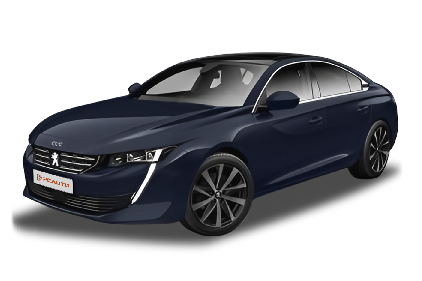
The Peugeot 508 belongs to the mid-sized sedan category (D-segment) in the Malaysian market. Its body dimensions are 4.75 meters in length, 1.86 meters in width, and 1.42 meters in height, with a wheelbase of 2.79 meters. Compared with traditional Class B sedans like the Honda Accord or Toyota Camry, it's slightly shorter in wheelbase but similar in width, and it's a European mid-sized car with a more sporty design. Although its fastback styling sacrifices some rear-seat headroom, the trunk volume reaches 487 liters. Paired with frameless doors and a low roofline, it looks more sleek and dynamic visually.
In the Malaysian road environment, the size of the 508 is suitable for city driving. It has better maneuverability in narrow alleys than real large-sized sedans (E-segment), yet still offers excellent stability on the highway. Competitors in the same class, such as the Volkswagen Passat or Mazda 6, have similar dimensions. However, the 508 improves space utilization through its i-Cockpit design. The driver's seat visibility and storage compartment layout are more suitable for Asian body types.
It should be noted that Malaysian consumers who often need to carry five adults on long-distance trips are advised to actually experience the rear-seat knee room. After all, European models focus more on the front-seat driving and riding experience. The handling flexibility of the 508 will show its advantages in the old cities of Penang or Kuala Lumpur. Meanwhile, its active safety systems like lane-keeping can also adapt to the complex road conditions in Malaysia.
 WhisperingWindCaressAug 15, 2025
Q
Is the Peugeot 508 petrol?
Yes, the Peugeot 508 is available with a gasoline engine version in the Malaysian market. Specifically, it is equipped with a 1.6-liter PureTech turbocharged gasoline engine. This engine is well-known for its high efficiency and low emissions. It can deliver a maximum output power of up to 165 horsepower and is paired with an 8-speed automatic transmission, offering a smooth driving experience.
As a mid-sized sedan, the Peugeot 508 not only focuses on power performance but also features a stylish exterior design and luxurious interior configuration. It is suitable for Malaysian consumers who pursue driving pleasure and comfort. Moreover, the 508 is also equipped with advanced driving assistance systems, such as adaptive cruise control and lane - keeping assist, which enhance driving safety.
In Malaysia, gasoline-powered cars remain the mainstream choice because of the well-developed gas station network and relatively stable gasoline prices. The gasoline version of the Peugeot 508 precisely meets this market demand. Meanwhile, its engine technology also complies with the current environmental protection trend, making it suitable for daily commuting and long-distance driving.
 RipplingStreamMelodyAug 15, 2025
Q
How to charge a Peugeot 508?
Charging the electric Peugeot 508 (like the plug-in hybrid 508 Hybrid) is a breeze. First, make sure to park your vehicle in a safe and well-ventilated area. Then, use the charging cable that comes with the car. Plug one end into the vehicle's charging port (usually located at the rear side of the car body) and the other end into a household power supply (220V) or a public charging station. While charging, the dashboard will show the charging status and the estimated time to finish. It's recommended to use a dedicated charging station to boost efficiency and protect the battery life.
In Malaysia, the network of public charging stations is gradually improving. You can find nearby charging points through local platforms such as ChargeNation or JomCharge. Also, it's a good idea to regularly check if the charging equipment is in good condition and avoid using damaged cables. If you choose the fast-charging mode, it takes about 2 hours to reach 80% charge. However, long-term use of fast charging may affect the battery health, so it's better to rely on slow charging in daily use.
Moreover, Peugeot's battery management system can optimize the charging efficiency. Owners don't need to worry too much about over-charging. But pulling out the plug in time after charging can save energy. As for the fuel-powered Peugeot 508, you need to refill gasoline at a gas station, which has nothing to do with charging.
No matter which powertrain system your Peugeot 508 has, regular maintenance can ensure the best performance of the vehicle.
 FlutteringButterflyKissAug 15, 2025
Q
Are Peugeot 508 expensive to insure?
In Malaysia, the insurance costs for the Peugeot 508 are generally slightly higher than those of ordinary Japanese or domestic models. This is mainly due to its positioning as a European mid-sized sedan, higher maintenance costs, and a relatively large proportion of imported parts. However, the specific insurance premiums still depend on the vehicle's age, engine specifications (such as 1.6T or plug-in hybrid versions), the owner's driving record, and the insurance company's policies. It is recommended that car owners compare quotes from different insurance companies before purchasing insurance and consider adding third-party fire and theft insurance for comprehensive protection.
In addition, the maintenance network for European cars in Malaysia is relatively limited, which may affect insurance assessments. But the Peugeot officially authorized maintenance centers can provide original parts and professional services, which helps to reduce the long-term maintenance risks. If the budget is limited, car owners can choose a higher excess to lower the insurance premiums. At the same time, regular vehicle maintenance to keep the car in good condition can also indirectly reduce insurance costs. The insurance costs of other European cars with similar positioning, such as the Volkswagen Passat or Skoda Superb, are also at a similar level. Car owners can make a comprehensive trade-off based on their personal needs.
 BuddyTimeAug 15, 2025
Q
What is the fuel consumption of Peugeot 508?
The fuel consumption performance of the Peugeot 508 varies depending on the model and powertrain configuration. Take the 1.6-liter PureTech turbocharged gasoline engine version commonly seen in the Malaysian market as an example. Its combined fuel consumption is approximately 6.0 to 6.5 liters per 100 kilometers. The 2.0-liter BlueHDi diesel engine version is even more fuel-efficient, with a combined fuel consumption of 4.5 to 5.0 liters per 100 kilometers. The specific figures are also affected by factors such as driving habits, road conditions, and vehicle load. For Malaysian consumers, choosing the diesel version may offer better fuel economy during long-distance driving, while the gasoline version is more suitable for urban commuting. It's worth mentioning that the Peugeot 508 adopts advanced engine technology and lightweight design, which not only improves fuel efficiency but also reduces emissions, meeting the current environmental protection trend. If you're particularly concerned about fuel consumption, it's recommended to maintain smooth acceleration and deceleration during actual driving and regularly service your vehicle, such as checking tire pressure and replacing the air filter. These small tips can help further optimize fuel consumption performance.
 SilentMidnightThoughtAug 15, 2025
Q
Is the Peugeot 508 electric?
Currently, the Peugeot 508 available in the Malaysian market is the traditional fuel-powered version, which includes a 1.6-liter turbocharged gasoline engine option. There is no all-electric vehicle model yet. However, Peugeot's parent company, the Stellantis Group, is actively promoting an electrification strategy. Electric vehicle models such as the e-208 and e-2008 have been launched in overseas markets, and it's expected that the 508 series will also get an electrified version in the future.
For Malaysian consumers, if they're considering European new energy vehicles, they can pay attention to all-electric models like the locally introduced BMW i4 and Mercedes-Benz EQE, or wait for Peugeot's future electric products in the Southeast Asian market. The Malaysian government encourages the popularization of electric vehicles through tax - exemption policies, but the charging infrastructure is still under construction. It's recommended to evaluate daily usage scenarios before buying a car. If short-distance commuting is the main need, plug-in hybrid models like the Peugeot 3008 PHEV can also be considered, which combines the convenience of fuel with partial all-electric driving capabilities.
 MoonlightNightAug 15, 2025
Q
How many cc is a Peugeot 508?
The Peugeot 508 offers a variety of engine options in the Malaysian market. The specific engine displacement depends on the model year and version. Currently, the common petrol version is equipped with a 1.6-litre PureTech turbocharged engine with an actual displacement of 1,598 cc, which can output approximately 180 horsepower. The diesel version, on the other hand, is fitted with a 2.0-litre BlueHDi engine with a displacement of 1,997 cc, offering around 180 horsepower. In addition, Peugeot 508 also has a plug-in hybrid version, which combines a 1.6-litre petrol engine and an electric motor, with a combined system power of up to 225 horsepower.
For Malaysian consumers, when choosing a car's engine displacement, they need to consider their daily usage requirements. A small-displacement turbocharged engine is suitable for urban commuting, taking into account fuel economy. A larger displacement engine is more suitable for long-distance driving or for those who pursue better power performance. The diverse power configurations of the 508 can meet different driving preferences.
Meanwhile, Malaysia's road tax system is graded based on engine displacement. It is recommended to understand in detail the road tax costs corresponding to each displacement before buying a car, so as to make a more cost-effective choice.
 RubyAug 15, 2025
Q
What kind of engine is in the Peugeot 508?
The Peugeot 508 offers a variety of powertrain options in the Malaysian market, including efficient petrol and diesel engine versions. The petrol engine is mainly a 1.6-liter PureTech turbocharged engine, which delivers 180 horsepower and 250 Nm of torque. It's paired with an 8-speed automatic transmission, balancing power and fuel economy. The diesel version, on the other hand, is equipped with a 2.0-liter BlueHDi engine, which has stronger torque output and is suitable for long-distance driving.
In addition, the Peugeot 508 also offers a plug - in hybrid electric vehicle (PHEV) version. It combines a 1.6-liter petrol engine with an electric motor, with a combined output of up to 225 horsepower. It has an all-electric range of about 50 kilometers, making it a great choice for environmentally-conscious consumers.
Peugeot's engine technology focuses on low emissions and high efficiency, meeting the global environmental protection trend. Meanwhile, its driving experience leans towards comfort and precise handling, which is suitable for the diverse road conditions in Malaysia.
For readers who want to know more about engine technology, they can focus on how turbocharging and hybrid systems enhance performance and energy-saving. These technologies are becoming more and more popular in the current automotive industry.
 MoonlitDreamyPathAug 15, 2025
Q
Does a Peugeot 508 have a timing belt or chain?
The Peugeot 508 has adopted different timing drive designs according to different years and engine models. The early 1.6-liter and 2.0-liter diesel engine versions usually use a timing belt, while the 1.6-liter THP gasoline engine versions launched in recent years have switched to a timing chain. These two designs each have their own advantages and disadvantages. The timing belt has a lower cost but needs to be replaced regularly (usually every 60,000 to 100,000 kilometers). On the other hand, the timing chain is more durable and basically maintenance-free, but it may be a bit noisier. Malaysian car owners should refer to the vehicle manual or consult an authorized service center to confirm the specific configuration of their vehicles. By the way, I'd like to remind everyone that regular inspections are very important regardless of which timing system is used, because once a failure occurs, it may cause serious damage to the engine. Additionally, in the hot and humid climate of Malaysia, the rubber timing belt will age faster, so it's even more necessary to strictly follow the maintenance schedule for inspections and replacements.
 OlaAug 15, 2025
Popular Cars
Model Year
Car Compare
Car Photo
Related Models
 Cars
CarsLatest Q&A
Q
Is AMT similar to automatic?
There are significant differences between AMT transmissions and automatic transmissions (AT) in terms of core structure and driving experience. AMT is essentially an electronically automated version of a manual transmission, simulating manual clutch operation and gear shifting through a computerized control system while retaining the gear set structure of manual transmissions. As a result, it offers higher transmission efficiency, with fuel consumption approximately 8%-12% lower than AT, making it particularly suitable for highway or long-distance driving. However, it may exhibit jerking similar to manual transmissions during low-speed gear shifts, especially noticeable in congested traffic conditions.
AT transmissions rely on torque converters for power transfer, delivering smooth and seamless gear shifts that appeal to comfort-oriented users. However, their complex structure (incorporating planetary gear sets, hydraulic systems, etc.) results in higher maintenance costs. A single service may cost between 800 to 1,500 ringgit, whereas AMT only requires gear oil replacement at approximately 400 ringgit.
From a market perspective, AMT is predominantly used in budget vehicles or commercial models priced below 80,000 ringgit, while AT is typically featured in mid-to-high-end vehicles. Consumers should select based on actual needs: AMT suits those prioritizing fuel efficiency and low maintenance costs, while AT better serves those valuing comfort. Notably, recent advancements in AMT electronic control technology have significantly mitigated jerking issues, though test drives should still emphasize low-speed performance evaluation.
 AriaMar 26, 2026
Q
Which is better, DCT or AT?
DCT (Dual-Clutch Transmission) and AT (Automatic Transmission) each have their own advantages and disadvantages, and the choice should be based on personal driving needs. AT transmissions transfer power through a torque converter, offering excellent shift smoothness, making them suitable for urban commuting or novice drivers. However, they tend to have higher fuel consumption, and vehicles equipped with them are usually more expensive. DCT transmissions utilize a dual-clutch structure, featuring fast shift speeds and high power transmission efficiency, which provides a more direct driving experience—particularly suitable for users seeking a sporty feel. However, they may exhibit jerking at low speeds and have relatively high maintenance costs. If durability and comfort are priorities, AT is the more reliable choice; if power responsiveness and driving pleasure are preferred, wet DCT (such as Volkswagen DSG) performs better, though dry DCT models should be avoided in prolonged stop-and-go traffic conditions. Additionally, CVT transmissions excel in smoothness and fuel efficiency, making them ideal for daily commuting, but they lack driving excitement. It is recommended to test-drive before purchasing, as tuning varies significantly across brands, and real-world experience is more important than theoretical specifications.
 FlutteringMar 26, 2026
Q
Is Amt good or bad?
AMT gearboxes have a significant cost advantage in the local market, typically being around 5,000 Ringgit cheaper than models equipped with conventional automatic transmissions. Their fuel efficiency is comparable to manual transmissions, resulting in long-term fuel savings. Featuring a straightforward design, they achieve transmission efficiency exceeding 90% with relatively low maintenance costs, making them ideal for practicality-oriented consumers. However, their shifting logic contains inherent limitations: gear changes between 1st and 2nd cause 0.3-0.5 second power interruptions, while unintended upshifts on inclines may reduce engine speed by 15%-20%, compromising driving smoothness. For urban commuters or budget-conscious buyers, AMT offers excellent value, though those prioritizing premium driving dynamics should consider alternative transmission types. Some domestic models like the Perodua Axia employ enhanced AMT systems, where optimized shift programming has reduced gearshift shock by approximately 30%.
 RainbowsMar 26, 2026
Q
Which gives better mileage, CVT or AMT?
From the perspective of fuel economy, CVT transmissions generally perform better under urban driving conditions. Their continuously variable design allows the engine to consistently operate within the optimal speed range, significantly reducing fuel consumption during frequent starts and stops. Test data shows that their fuel consumption in urban driving conditions is 10% to 15% lower than that of comparable models. AMT transmissions, on the other hand, inherit the high transmission efficiency of manual transmissions, delivering fuel efficiency close to manual transmissions during high-speed cruising. This makes them particularly suitable for long-distance driving in large-displacement vehicles. However, due to power interruption during gear shifts, their overall fuel consumption may be 5% to 8% higher than CVTs.
The difference in fuel-saving characteristics between the two transmissions stems from their technical principles: CVTs achieve continuous variability through steel belts and pulleys, eliminating the fixed gear ratio limitations of traditional transmissions; AMTs simulate manual gear changes via electronic control systems while maintaining the mechanical efficiency of gear transmission. Notably, actual fuel consumption is also influenced by driving habits. Smooth acceleration and anticipatory deceleration can maximize the transmissions' fuel-saving potential. If the vehicle budget permits and urban commuting is the primary use, CVTs offer a more economical choice. For frequent highway driving with an emphasis on cost-effectiveness, AMTs are equally worth considering.
 RubyBlazeMar 26, 2026
Q
Which is cheaper, AMT or CVT?
In terms of gearbox cost, AMT is usually more economical than CVT. Essentially, AMT is a manual transmission equipped with an electronic control unit, featuring a simple structure and low maintenance costs. The unit price ranges from approximately 5,000 to 8,000 ringgit, making it suitable for budget-conscious consumers or those who prioritize long-term operating costs. CVT incurs higher manufacturing costs due to its precision steel belt transmission system and continuous variable transmission technology, with a unit price of about 7,000 to 10,000 ringgit. However, it delivers a smoother driving experience and superior fuel efficiency. The primary differences between the two lie in technical complexity: AMT retains the gear-shifting mechanism, resulting in noticeable shift shock; CVT achieves linear power output through stepless speed variation but requires periodic belt inspection and incurs higher maintenance expenses. For those prioritizing initial cost and basic transportation needs, AMT offers better value; if comfort and long-term fuel economy are priorities, CVT represents a more worthwhile investment. Note that actual prices may vary based on vehicle model, brand, and local supply chain factors.
 ShadowProwlMar 26, 2026


Pros
Cons