
Q
Is the Suzuki Alto 2014 a good car?
 BooOct 23, 2025, 05:39 PM
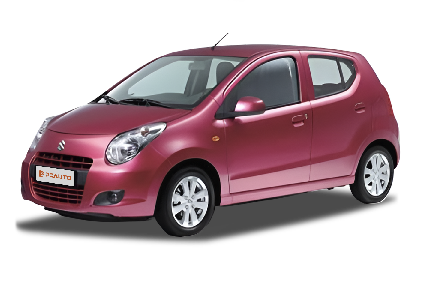
The 2014 Suzuki Alto is a solid little city runabout that really hits the mark for budget-conscious drivers, especially over in Malaysia where its fuel-sipping ways and tiny footprint make it a popular pick. Under the hood, you've got a 1.0-liter three-cylinder engine that delivers smooth, predictable power—perfect for your daily grind around town. And let's talk about that fuel economy: we're looking at roughly 5 liters per 100 kilometers, which is pretty hard to beat if you're watching every sen.
Sure, the interior's on the snug side, but Suzuki did a decent job with the layout. Front passengers will find it reasonably comfy, though the back seats are better suited for kids or short hops rather than full-grown adults on long drives. Equipment-wise, the base models come with the essentials: air-con to beat the Malaysian heat and a basic sound system to keep you entertained. Step up to the higher spec, and you might get some nice-to-haves like extra airbags and ABS, which is always good for peace of mind.
Now, a heads-up: since this is an older model, if you're looking at a used one, **always** check the condition and service history thoroughly. It's non-negotiable. On the flip side, the Alto scores points for being cheap to fix, and parts are pretty easy to come by in Malaysia, which is a big plus for long-term ownership.
So, if your main needs are zipping around the city without breaking the bank, the 2014 Alto is definitely worth a spot on your shortlist. But if you need more space or the latest tech, you might want to shop around for a newer model in the same class.
Special Disclaimer: This content is published by users and does not represent the views or position of PCauto.
Related Q&A
Q
What is the mileage of Alto car 2014?
The fuel efficiency of the 2014 Suzuki Alto varies depending on the specific trim and driving conditions. From what we've seen in official figures, the manual transmission models typically return a combined fuel consumption of around 4.6 to 5.0 liters per 100 kilometers. Step up to the automatic, and you're looking at roughly 5.0 to 5.4 liters per 100 kilometers. Of course, real-world numbers can fluctuate based on traffic, how you drive, and even how well the car's been maintained.
As a budget-friendly city runabout, the Alto has struck a chord with Malaysian buyers thanks to its sipping fuel habits and easy-on-the-pocket maintenance costs. It's a solid pick for daily urban commutes. Let's face it, with fuel prices and the usual traffic snarls in Malaysia, how much a car drinks is a big deal when you're car shopping – and that's where the Alto's fuel-sipping nature really shines.
Pro tip: Keeping up with regular servicing and adopting smooth driving habits – think gentle acceleration and avoiding sudden stops – can help you squeeze even better mileage out of it and keep the car running strong for longer. If you need the nitty-gritty on a specific Alto variant's fuel economy, your best bet is to check the owner's manual or have a chat with your local Suzuki dealer for the most accurate info.
 LeafyBranchOct 23, 2025
Q
How much is a 2014 Suzuki Alto?
If you're scouring Malaysia's used car market for a 2014 Suzuki Alto, you'll typically find prices hovering between RM15,000 and RM25,000. Of course, where exactly it lands in that range depends on the usual suspects: overall condition, mileage, service history, and trim level.
What really makes this little hatchback stand out is its wallet-friendly nature and impressive fuel sipping. It's a absolute gem for city commuting. Under the hood, you've got a peppy 1.0-liter three-cylinder engine that delivers smooth, predictable power while keeping those trips to the pump few and far between – we're talking around 5 liters per 100 km on average.
Running costs are easy on the budget too. Parts are readily available and affordable, which is no surprise given how many Altos are on Malaysian roads. That also means you've got a decent selection of used models to pick from. A pro tip though: always dig into the vehicle's history and give the mechanicals a thorough once-over before handing over cash. Splurging on a professional inspection to ensure everything's in good nick is never a bad idea.
On top of all that, its compact dimensions make weaving through city traffic and squeezing into tight parking spots a total breeze. All in all, it's a solid, value-for-money choice for anyone after an affordable entry-level runabout.
 DaisyMeadowOct 23, 2025
Q
What is the fuel average of Alto 2014?
According to official figures, the 2014 Suzuki Alto delivers a combined fuel economy of around 18 to 20 kilometers per liter here in Malaysia. Of course, your actual mileage will vary a bit depending on how you drive, the roads you take, and how well you keep up with maintenance. That little 660cc three-cylinder engine is all about being economical and practical—perfect for zipping around the city. Pair that with its lightweight body and either the 5-speed manual or 4-speed automatic gearbox, and it's no wonder it sips fuel so nicely.
Living with Malaysia's hot weather? Make sure you check the air filter and spark plugs regularly, and keep those tires properly inflated—around 200-220kPa is the sweet spot. Trust me, these small details really do make a difference to how much fuel you burn. And don't bother splurging on fancy high-octane stuff; good old RON95 is more than enough for this engine.
Want to stretch every liter even further? Easy—lay off the sudden acceleration and harsh braking, and try to cruise at a steady 60-80km/h when you can, that's where it really shines. Oh, and let's not forget the 35-liter fuel tank. Do the math, and that means a theoretical range of roughly 630 kilometers on a full tank. All in all, if you're a budget-conscious young driver or just need a reliable second car for the family, the 2014 Alto is definitely worth a look.
 HopOct 23, 2025
Q
What was the original price of the 2014 Alto?
Back in 2014, the Perodua Alto launched in Malaysia with an original price tag ranging from around RM34,000 to RM44,000, depending on the trim level and where you were buying it. Slotted as an affordable city runabout, this little hatchback was all about sipping fuel and getting the job done – perfect for young families on a tight budget or first-time car buyers.
Under the hood, you'd find a 1.0-liter three-cylinder engine, paired with either a manual or automatic gearbox. Power delivery? Smooth, but let's be real, it's more than enough for zipping around town. And that compact size? A total lifesaver when squeezing into those tiny parking spots on narrow city streets.
Since it's a joint effort between Perodua and Suzuki, the Alto was pretty well localized for Malaysia. That meant repair and maintenance costs were easy on the wallet, and spare parts were never hard to find – all factors that help keep its resale value holding up nicely in the used car market.
One thing worth noting: around 2014, the Malaysian government was pushing energy-efficient vehicle incentives. Some Alto variants might have qualified for tax breaks, which would have brought the actual selling price a bit below the official sticker. If you're eyeing a used Alto, I'd recommend checking the VIN (vehicle identification number) to dig up the specific specs and original tax records. That way, you can make sure you're getting a fair deal and know exactly what you're buying.
 DipOct 23, 2025
Q
What is the fuel consumption of a 2014 Suzuki Alto?
The 2014 Suzuki Alto, as a budget-friendly city car, really shines when it comes to fuel efficiency. From official specs and real-world driving, the manual transmission models clock in at around 4.5 to 5.0 liters per 100 kilometers combined, while the automatic versions are slightly thirstier, sitting at roughly 5.0 to 5.5 liters per 100 km. Of course, your actual mileage will vary depending on how you drive, the roads you take, and how well you keep up with maintenance.
Under the hood, there's a 1.0-liter three-cylinder engine. It's not going to win any drag races, but it's perfect for zipping around the city—especially in Malaysia's notorious traffic jams, where it’ll save you a pretty penny at the pump. For Malaysian drivers who prioritize fuel economy, the Alto makes a solid case. Plus, its compact size makes squeezing through tight streets and nailing parking spots a breeze.
Want to stretch those liters even further? Stick to regular maintenance, keep your tires properly inflated, and ease up on the sudden acceleration and hard braking. These simple tips don’t just boost fuel efficiency—they’ll help keep your Alto running strong for longer too.
 AceOct 23, 2025
Popular Cars
Model Year
Car Compare
Car Photo
Related Models
 Cars
CarsLatest Q&A
Q
Is AMT similar to automatic?
There are significant differences between AMT transmissions and automatic transmissions (AT) in terms of core structure and driving experience. AMT is essentially an electronically automated version of a manual transmission, simulating manual clutch operation and gear shifting through a computerized control system while retaining the gear set structure of manual transmissions. As a result, it offers higher transmission efficiency, with fuel consumption approximately 8%-12% lower than AT, making it particularly suitable for highway or long-distance driving. However, it may exhibit jerking similar to manual transmissions during low-speed gear shifts, especially noticeable in congested traffic conditions.
AT transmissions rely on torque converters for power transfer, delivering smooth and seamless gear shifts that appeal to comfort-oriented users. However, their complex structure (incorporating planetary gear sets, hydraulic systems, etc.) results in higher maintenance costs. A single service may cost between 800 to 1,500 ringgit, whereas AMT only requires gear oil replacement at approximately 400 ringgit.
From a market perspective, AMT is predominantly used in budget vehicles or commercial models priced below 80,000 ringgit, while AT is typically featured in mid-to-high-end vehicles. Consumers should select based on actual needs: AMT suits those prioritizing fuel efficiency and low maintenance costs, while AT better serves those valuing comfort. Notably, recent advancements in AMT electronic control technology have significantly mitigated jerking issues, though test drives should still emphasize low-speed performance evaluation.
 AriaMar 26, 2026
Q
Which is better, DCT or AT?
DCT (Dual-Clutch Transmission) and AT (Automatic Transmission) each have their own advantages and disadvantages, and the choice should be based on personal driving needs. AT transmissions transfer power through a torque converter, offering excellent shift smoothness, making them suitable for urban commuting or novice drivers. However, they tend to have higher fuel consumption, and vehicles equipped with them are usually more expensive. DCT transmissions utilize a dual-clutch structure, featuring fast shift speeds and high power transmission efficiency, which provides a more direct driving experience—particularly suitable for users seeking a sporty feel. However, they may exhibit jerking at low speeds and have relatively high maintenance costs. If durability and comfort are priorities, AT is the more reliable choice; if power responsiveness and driving pleasure are preferred, wet DCT (such as Volkswagen DSG) performs better, though dry DCT models should be avoided in prolonged stop-and-go traffic conditions. Additionally, CVT transmissions excel in smoothness and fuel efficiency, making them ideal for daily commuting, but they lack driving excitement. It is recommended to test-drive before purchasing, as tuning varies significantly across brands, and real-world experience is more important than theoretical specifications.
 FlutteringMar 26, 2026
Q
Is Amt good or bad?
AMT gearboxes have a significant cost advantage in the local market, typically being around 5,000 Ringgit cheaper than models equipped with conventional automatic transmissions. Their fuel efficiency is comparable to manual transmissions, resulting in long-term fuel savings. Featuring a straightforward design, they achieve transmission efficiency exceeding 90% with relatively low maintenance costs, making them ideal for practicality-oriented consumers. However, their shifting logic contains inherent limitations: gear changes between 1st and 2nd cause 0.3-0.5 second power interruptions, while unintended upshifts on inclines may reduce engine speed by 15%-20%, compromising driving smoothness. For urban commuters or budget-conscious buyers, AMT offers excellent value, though those prioritizing premium driving dynamics should consider alternative transmission types. Some domestic models like the Perodua Axia employ enhanced AMT systems, where optimized shift programming has reduced gearshift shock by approximately 30%.
 RainbowsMar 26, 2026
Q
Which gives better mileage, CVT or AMT?
From the perspective of fuel economy, CVT transmissions generally perform better under urban driving conditions. Their continuously variable design allows the engine to consistently operate within the optimal speed range, significantly reducing fuel consumption during frequent starts and stops. Test data shows that their fuel consumption in urban driving conditions is 10% to 15% lower than that of comparable models. AMT transmissions, on the other hand, inherit the high transmission efficiency of manual transmissions, delivering fuel efficiency close to manual transmissions during high-speed cruising. This makes them particularly suitable for long-distance driving in large-displacement vehicles. However, due to power interruption during gear shifts, their overall fuel consumption may be 5% to 8% higher than CVTs.
The difference in fuel-saving characteristics between the two transmissions stems from their technical principles: CVTs achieve continuous variability through steel belts and pulleys, eliminating the fixed gear ratio limitations of traditional transmissions; AMTs simulate manual gear changes via electronic control systems while maintaining the mechanical efficiency of gear transmission. Notably, actual fuel consumption is also influenced by driving habits. Smooth acceleration and anticipatory deceleration can maximize the transmissions' fuel-saving potential. If the vehicle budget permits and urban commuting is the primary use, CVTs offer a more economical choice. For frequent highway driving with an emphasis on cost-effectiveness, AMTs are equally worth considering.
 RubyBlazeMar 26, 2026
Q
Which is cheaper, AMT or CVT?
In terms of gearbox cost, AMT is usually more economical than CVT. Essentially, AMT is a manual transmission equipped with an electronic control unit, featuring a simple structure and low maintenance costs. The unit price ranges from approximately 5,000 to 8,000 ringgit, making it suitable for budget-conscious consumers or those who prioritize long-term operating costs. CVT incurs higher manufacturing costs due to its precision steel belt transmission system and continuous variable transmission technology, with a unit price of about 7,000 to 10,000 ringgit. However, it delivers a smoother driving experience and superior fuel efficiency. The primary differences between the two lie in technical complexity: AMT retains the gear-shifting mechanism, resulting in noticeable shift shock; CVT achieves linear power output through stepless speed variation but requires periodic belt inspection and incurs higher maintenance expenses. For those prioritizing initial cost and basic transportation needs, AMT offers better value; if comfort and long-term fuel economy are priorities, CVT represents a more worthwhile investment. Note that actual prices may vary based on vehicle model, brand, and local supply chain factors.
 ShadowProwlMar 26, 2026
Related News
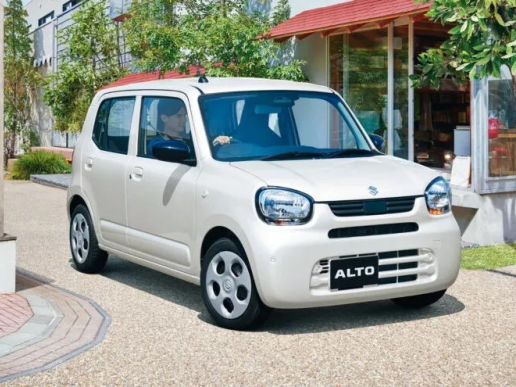
28.2km/L Efficiency! Refreshed 2025 Suzuki Alto Coming Soon to Japan
RobertJun 25, 2025

The 5 questions you must know before buying a Suzuki Jimny
JamesMar 17, 2026

Suzuki acquires Kanadevia solid-state battery business, the big ambition of the small car expert
WilliamMar 5, 2026

Subaru applies for a patent for an electric vehicle simulated manual transmission, electric STI may use this technology
MichaelFeb 5, 2026

Suzuki's first pure electric vehicle, the e Vitara, starts delivery in Japan, competing with BYD ATTO 3
JohnJan 30, 2026
View More
Pros
Cons