
Q
Is the Volvo XC40 a good car to buy?
 GamerZoneFunOct 17, 2025, 03:17 PM
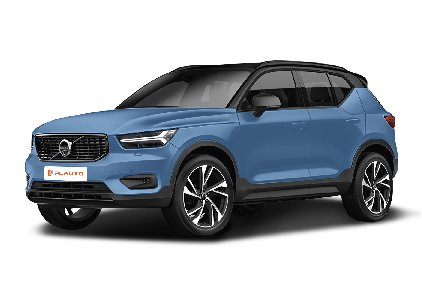
The Volvo XC40 is a luxury compact SUV that Malaysian buyers should definitely have on their radar. It really shines when it comes to safety, comfort, and tech features. The standard City Safety system is a big plus, effectively cutting down on collision risks – perfect for Malaysia's tricky urban driving conditions. Its size is just right too; it's nimble enough to zip through tight streets in KL and other cities, yet still offers decent space for passengers.
Under the hood, you've got the T4 and T5 petrol options, both paired with an 8-speed auto. They deliver smooth power and pretty good fuel economy. And if you're after something greener, there's a plug-in hybrid variant as well – so there's something to suit different needs.
Inside, it's classic Scandinavian minimalism done right. The materials are eco-friendly and the build quality feels top-notch. The standard 9-inch infotainment screen with Apple CarPlay and Android Auto keeps you connected, which Malaysian drivers definitely appreciate these days.
Volvo's got a solid dealer network here in Malaysia, which is reassuring for after-sales support. Throw in the 5-year unlimited mileage warranty and free servicing package, and ownership becomes that much more stress-free.
It's worth highlighting that the XC40 scored a full 5-star rating in ASEAN NCAP crash tests. That strong body structure and comprehensive suite of active and passive safety kit mean real peace of mind for Malaysian families. On top of all that, it holds its value well in the used car market – better than average for the class – so the long-term running costs stay reasonable.
Special Disclaimer: This content is published by users and does not represent the views or position of PCauto.
Related Q&A
Q
How reliable is the 2021 Volvo XC40?
The 2021 Volvo XC40 delivers solid reliability, built on Volvo's proven CMA platform. It offers mature powertrain options including T4 and T5 gasoline engines plus a plug-in hybrid variant. Owner feedback consistently reports low mechanical failure rates, with the standard City Safety system proving particularly effective at preventing collisions in real-world driving.
Independent evaluations show its electronic systems outperform segment averages in stability, though some owners note occasional infotainment screen lag - typically resolved with software updates.
Notably, the XC40 requires maintenance only every 15,000 km or 12 months, offering longer service intervals than German rivals for reduced upkeep costs. Volvo's 5-year factory warranty covers most critical components. One pro tip from experienced owners: regular checkups for the 48V mild-hybrid battery health are advisable, as with all vehicles using this technology.
For buyers prioritizing safety and Scandinavian design, the XC40 stands as an above-average choice in the luxury compact SUV class when it comes to dependable performance.
 AweDec 15, 2025
Q
Is the 2021 XC40 reliable?
The 2021 XC40 delivers solid reliability overall. Built on Volvo’s CMA platform, it features the proven Drive-E engine lineup with stable power delivery, paired with a smooth-shifting 8-speed automatic transmission that has a relatively low failure rate. While the infotainment system packs plenty of features, its intuitive logic and multiple software updates have improved stability. Safety remains its strong suit—standard City Safety tech including auto-braking and lane-keeping has been refined over generations.
For daily driving, the comfort-tuned chassis holds up well, with suspension components proving durable on rough roads. One minor gripe: some owners report occasional touchscreen lag, though software patches usually fix it. Volvo’s after-sales service is robust, with good maintenance access and parts availability.
If you’re cross-shopping compact luxury SUVs, compare factors like cabin layout, driving dynamics, or tech offerings to see what fits best. The XC40 stacks up well where dependable performance matters.
 VonDec 15, 2025
Q
Is there a recall on Volvo XC40 2021?
Regarding the recall information of the 2021 Volvo XC40, according to records worldwide, the model has been recalled due to some software issues or potential defects in components, such as updates to the airbag control module or battery management system. It is recommended to enter the vehicle identification number (VIN) through the Volvo official website or authorized dealers to check the specific recall status to ensure that the vehicle meets the latest safety standards. For car owners, it is very important to regularly follow recall notices, because even if the production meets the specifications, any technical problems discovered later may be repaired for free through recalls, improving driving safety. Volvo's after-sales service is usually efficient and transparent. If a recall is confirmed, only an appointment with a nearby dealer is needed to complete the repair. In addition, during daily maintenance, technicians can proactively inquire whether there are any unresolved recall items in the vehicle, and this information will also be synchronized to the owner's registered email or mobile phone. Other brands such as BMW and Mercedes Benz may also initiate recalls due to similar technical reasons, which is a routine process in the automotive industry to protect consumer rights, so there is no need to worry excessively.
 RonDec 15, 2025
Q
What is the difference between 2021 and 2022 XC40?
The key differences between the 2021 and 2022 XC40 models mainly come down to upgraded features and tech refinements. The 2022 version now comes standard with more advanced driver-assistance systems, including improved blind-spot monitoring and rear cross-traffic alert. The infotainment screen is larger with a smoother interface and faster response times.
Under the hood, the plug-in hybrid variant gets a slight bump in electric-only range, along with better energy recuperation. For aesthetics, the 2022 model adds two new paint options and subtle wheel design tweaks. On the safety front, the 360-degree camera—previously an optional extra—is now standard on select trims.
That said, both model years share the same chassis tuning and overall structure, so the driving experience feels nearly identical. For used-car shoppers on a budget, the 2021 model offers better value, while the 2022 edition is the way to go if you prioritize the latest tech. Maintenance costs are virtually the same across both years, and high parts commonality is a plus for long-term ownership.
 QonDec 15, 2025
Q
How much does a 2021 Volvo XC40 cost?
The 2021 Volvo XC40 is priced between approximately RM200,000 to RM250,000 depending on the chosen configuration. The final cost varies based on powertrain options (like T4 or T5) and additional features (such as premium audio or driver-assistance packages).
This model has gained popularity for its Scandinavian design, strong safety credentials, and practical interior layout. It comes standard with City Safety collision avoidance and Pilot Assist semi-autonomous driving tech. Buyers can opt for either a 1.5L turbocharged three-cylinder (T4) or a 2.0L turbo four-cylinder (T5), both paired with an 8-speed automatic transmission.
On the used-car market, prices typically dip 15%–30% below new, factoring in mileage, condition, and remaining warranty. Notably, the XC40 was Volvo’s first CMA-platform model, offering a plug-in hybrid variant (Recharge PHEV) before the all-electric XC40 Recharge—showcasing the brand’s shift toward electrification.
For the latest promotions (like free maintenance or low-interest financing), check with authorized dealers.
 PonDec 15, 2025
Q
Is the 2021 Volvo XC40 reliable?
The 2021 Volvo XC40 delivers solid reliability, featuring a proven 2.0L turbocharged engine paired with a smooth and durable 8-speed automatic transmission. This powertrain combo has earned a strong reputation for low failure rates in daily driving.
Safety remains Volvo's forte—the XC40 comes standard with the City Safety suite, including auto-braking and lane-keeping tech that’s been rigorously tested over the years. The cabin impresses with robust materials and ergonomic seats that hold up well against squeaks or loose trim over time.
A minor gripe? Some owners report occasional infotainment glitches, though software updates usually address them. Volvo’s service network is well-established, with maintenance recommended every 10,000 miles or 12 months—costs are mid-range for luxury brands.
If you’re cross-shopping compact luxury SUVs, the BMW X1 and Mercedes GLA are worth comparing, though the XC40 stands out for safety and eco-friendly materials. Always take a test drive to judge the driving dynamics and interior space firsthand.
 PhotoHunterCapturerDec 15, 2025
Q
What are the common problems with the 2021 XC40?
The 2021 XC40 is a solid luxury compact SUV, though some owners have reported a few common niggles. The infotainment system can occasionally freeze or go blank, but a software update usually sorts it out. A handful of drivers also mentioned slightly jerky gear shifts at low speeds – worth asking your dealer to check the transmission software during routine servicing.
While the cabin storage is cleverly designed, the center armrest box is on the small side, which might frustrate those who carry lots of daily essentials. Some early models had overly sensitive (or not sensitive enough) power tailgate sensors, though dealerships offer free recalibrations.
On the plus side, the City Safety system is genuinely brilliant at preventing low-speed fender benders. Volvo’s aftersales network is also reassuringly comprehensive for maintenance. If you’re looking at used examples, prioritize checking the battery health and infotainment software version – these electronics really impact day-to-day usability.
Most of these are minor quirks rather than dealbreakers. Stay on top of servicing and software updates, and the XC40 delivers its core promise: safe, composed driving with proper Scandinavian flair.
 StoryTellerNarratorDec 15, 2025
Q
How long will a 2021 Volvo XC40 last?
The 2021 Volvo XC40, when properly maintained and driven under normal conditions, can typically last between 200,000 to 300,000 kilometers—or even longer. Its actual lifespan depends on driving habits, road conditions, and maintenance frequency. Known for its rugged Scandinavian design and top-tier safety, the XC40 features Volvo’s proven Drive-E engine technology, which delivers solid durability. The body’s high-strength steel construction also resists corrosion and everyday wear effectively.
To maximize longevity, stick to the factory maintenance schedule—regular oil changes, filter replacements, and inspections of the transmission and AWD system (if equipped) are key. The electronics are another factor: Volvo’s architecture is rigorously tested, but keeping software updated ensures peak performance.
For urban commuters who stay on top of maintenance, the XC40 easily handles 10+ years of service. Its stable resale value in the used market further confirms its reliability. Owners curious about extra peace of mind should check with local dealers for extended warranty options—worth considering for long-term ownership.
 MemoryKeeperRecorderDec 15, 2025
Q
What is the price of XC40 2021?
The 2021 Volvo XC40's pricing varies depending on trim levels and configurations, with a starting price of around RM200,000 to RM250,000 for new models. Final pricing may fluctuate based on optional add-ons, ongoing promotions, or dealership policies.
As Volvo's compact SUV, the XC40 is well-regarded for its Scandinavian design and robust safety features, including the standard City Safety system. Under the hood, it offers two gasoline powertrains—the T4 and T5—both powered by a 2.0L turbocharged engine paired with an 8-speed automatic transmission, with available AWD on select variants.
In the used-car market, the XC40 holds its value reasonably well. A well-maintained pre-owned model typically ranges between RM150,000 and RM180,000, depending on mileage and service history.
Beyond pricing, owners often praise the XC40's ergonomic seats and advanced air purification system. Volvo's aftersales support is another strong point, backed by a 5-year unlimited-mileage warranty—factors worth considering for potential buyers.
 MindMapperPlannerDec 15, 2025
Q
How much is the 2021 XC40?
The 2021 Volvo XC40 has a new car price in the local market of approximately RM200000 to RM250000, which may vary depending on different configurations and optional parts. For example, the T5 R-Design high-end version may be more expensive than the entry-level version. This car is popular for its Nordic design style and solid safety features, with the City Safety system standard across the entire range. In terms of power, it offers two gasoline versions, T4 and T5, each equipped with a 2.0-liter turbocharged engine that outputs 197 horsepower and 247 horsepower. Competitors in the same class include the Mercedes Benz GLA and BMW X1, but the XC40 has more distinctive features in active safety technology and storage space design, such as a detachable garbage bin on the center console and a large capacity storage compartment on the door panel. In the second-hand car market, XC40 models aged 1-2 years are priced 15% -20% lower than new cars, but have a better resale value than some Japanese models. It is worth noting that before purchasing, it is recommended to confirm inventory car discounts or promotional plans with authorized dealers, and compare the loan interest rates of different financial institutions. Usually, the installment plan provided by the brand official will have lower interest rates. In terms of maintenance costs, the cost of regular maintenance every 10000 kilometers or 12 months is approximately RM800-1200, which is similar to that of German luxury brands.
 SoulSearcherSeekerDec 15, 2025
Popular Cars
Model Year
Car Compare
Car Photo
Related Models
 Cars
CarsLatest Q&A
Q
Is AMT similar to automatic?
There are significant differences between AMT transmissions and automatic transmissions (AT) in terms of core structure and driving experience. AMT is essentially an electronically automated version of a manual transmission, simulating manual clutch operation and gear shifting through a computerized control system while retaining the gear set structure of manual transmissions. As a result, it offers higher transmission efficiency, with fuel consumption approximately 8%-12% lower than AT, making it particularly suitable for highway or long-distance driving. However, it may exhibit jerking similar to manual transmissions during low-speed gear shifts, especially noticeable in congested traffic conditions.
AT transmissions rely on torque converters for power transfer, delivering smooth and seamless gear shifts that appeal to comfort-oriented users. However, their complex structure (incorporating planetary gear sets, hydraulic systems, etc.) results in higher maintenance costs. A single service may cost between 800 to 1,500 ringgit, whereas AMT only requires gear oil replacement at approximately 400 ringgit.
From a market perspective, AMT is predominantly used in budget vehicles or commercial models priced below 80,000 ringgit, while AT is typically featured in mid-to-high-end vehicles. Consumers should select based on actual needs: AMT suits those prioritizing fuel efficiency and low maintenance costs, while AT better serves those valuing comfort. Notably, recent advancements in AMT electronic control technology have significantly mitigated jerking issues, though test drives should still emphasize low-speed performance evaluation.
 AriaMar 26, 2026
Q
Which is better, DCT or AT?
DCT (Dual-Clutch Transmission) and AT (Automatic Transmission) each have their own advantages and disadvantages, and the choice should be based on personal driving needs. AT transmissions transfer power through a torque converter, offering excellent shift smoothness, making them suitable for urban commuting or novice drivers. However, they tend to have higher fuel consumption, and vehicles equipped with them are usually more expensive. DCT transmissions utilize a dual-clutch structure, featuring fast shift speeds and high power transmission efficiency, which provides a more direct driving experience—particularly suitable for users seeking a sporty feel. However, they may exhibit jerking at low speeds and have relatively high maintenance costs. If durability and comfort are priorities, AT is the more reliable choice; if power responsiveness and driving pleasure are preferred, wet DCT (such as Volkswagen DSG) performs better, though dry DCT models should be avoided in prolonged stop-and-go traffic conditions. Additionally, CVT transmissions excel in smoothness and fuel efficiency, making them ideal for daily commuting, but they lack driving excitement. It is recommended to test-drive before purchasing, as tuning varies significantly across brands, and real-world experience is more important than theoretical specifications.
 FlutteringMar 26, 2026
Q
Is Amt good or bad?
AMT gearboxes have a significant cost advantage in the local market, typically being around 5,000 Ringgit cheaper than models equipped with conventional automatic transmissions. Their fuel efficiency is comparable to manual transmissions, resulting in long-term fuel savings. Featuring a straightforward design, they achieve transmission efficiency exceeding 90% with relatively low maintenance costs, making them ideal for practicality-oriented consumers. However, their shifting logic contains inherent limitations: gear changes between 1st and 2nd cause 0.3-0.5 second power interruptions, while unintended upshifts on inclines may reduce engine speed by 15%-20%, compromising driving smoothness. For urban commuters or budget-conscious buyers, AMT offers excellent value, though those prioritizing premium driving dynamics should consider alternative transmission types. Some domestic models like the Perodua Axia employ enhanced AMT systems, where optimized shift programming has reduced gearshift shock by approximately 30%.
 RainbowsMar 26, 2026
Q
Which gives better mileage, CVT or AMT?
From the perspective of fuel economy, CVT transmissions generally perform better under urban driving conditions. Their continuously variable design allows the engine to consistently operate within the optimal speed range, significantly reducing fuel consumption during frequent starts and stops. Test data shows that their fuel consumption in urban driving conditions is 10% to 15% lower than that of comparable models. AMT transmissions, on the other hand, inherit the high transmission efficiency of manual transmissions, delivering fuel efficiency close to manual transmissions during high-speed cruising. This makes them particularly suitable for long-distance driving in large-displacement vehicles. However, due to power interruption during gear shifts, their overall fuel consumption may be 5% to 8% higher than CVTs.
The difference in fuel-saving characteristics between the two transmissions stems from their technical principles: CVTs achieve continuous variability through steel belts and pulleys, eliminating the fixed gear ratio limitations of traditional transmissions; AMTs simulate manual gear changes via electronic control systems while maintaining the mechanical efficiency of gear transmission. Notably, actual fuel consumption is also influenced by driving habits. Smooth acceleration and anticipatory deceleration can maximize the transmissions' fuel-saving potential. If the vehicle budget permits and urban commuting is the primary use, CVTs offer a more economical choice. For frequent highway driving with an emphasis on cost-effectiveness, AMTs are equally worth considering.
 RubyBlazeMar 26, 2026
Q
Which is cheaper, AMT or CVT?
In terms of gearbox cost, AMT is usually more economical than CVT. Essentially, AMT is a manual transmission equipped with an electronic control unit, featuring a simple structure and low maintenance costs. The unit price ranges from approximately 5,000 to 8,000 ringgit, making it suitable for budget-conscious consumers or those who prioritize long-term operating costs. CVT incurs higher manufacturing costs due to its precision steel belt transmission system and continuous variable transmission technology, with a unit price of about 7,000 to 10,000 ringgit. However, it delivers a smoother driving experience and superior fuel efficiency. The primary differences between the two lie in technical complexity: AMT retains the gear-shifting mechanism, resulting in noticeable shift shock; CVT achieves linear power output through stepless speed variation but requires periodic belt inspection and incurs higher maintenance expenses. For those prioritizing initial cost and basic transportation needs, AMT offers better value; if comfort and long-term fuel economy are priorities, CVT represents a more worthwhile investment. Note that actual prices may vary based on vehicle model, brand, and local supply chain factors.
 ShadowProwlMar 26, 2026
Related News

Volvo EX60 as the electric successor to the XC60, embodies the pragmatic approach of the brand’s transformation
MichaelJan 23, 2026

Will the Volvo EX60, equipped with Google Gemini AI, make Volvo's electric cars more popular?
AshleyJan 15, 2026

Volvo ES90 will be officially launched in Malaysia in the first quarter of 2026
JohnJan 5, 2026
Warning: Vehicle LiDAR Can Damage Your Phone Camera!
AshleyMay 19, 2025

Well-Planned Space: The Exceptional Practicality of the Volvo XC60
Kevin WongMay 16, 2025
View More
Pros
Cons