
Q
Is Toyota Veloz a 7 seater car?
 SapphireBlueOceanViewOct 22, 2025, 05:02 PM
Yep, the Toyota Veloz is indeed a 7-seater, packing a 2+3+2 seat layout that’s perfect for families or groups needing that extra seating. Built on Toyota’s DNGA platform, it’s got a roomy body, though let’s be real – that third row is best suited for kids or short jaunts; adults might find it a bit snug on longer rides. Over in Malaysia, the Veloz has built a solid fan base thanks to its reliability, practicality, and strong value for money. Under the hood, you’ll find a 1.5-liter Dual VVT-i engine paired with a CVT, which delivers pretty good fuel economy – ideal for city cruising. Safety-wise, it’s got your bases covered with ABS, EBD, and multiple airbags, giving you that extra peace of mind on the road. Need more cargo space? Just fold down the third row, and you’ve got yourself a decent-sized trunk. All in all, the Toyota Veloz is a solid family-friendly 7-seater SUV, and in markets like Malaysia where bigger families are common, its practicality and the Toyota nameplate make it a pretty compelling pick.
Special Disclaimer: This content is published by users and does not represent the views or position of PCauto.
Related Q&A
Q
Is the Toyota Veloz automatic?
Yep, the Toyota Veloz comes standard with an automatic transmission across all variants in the Malaysian market – specifically a 7-speed CVT that delivers smooth driving and decent fuel efficiency. Positioned as a family-friendly 7-seater MPV, it's built on the DNGA platform and powered by a 1.5L 2NR-VE Dual VVT-i naturally aspirated engine, churning out 106 hp and 138 Nm of torque. That makes it a solid fit for city commutes and family outings.
What's cool is that the Veloz's auto 'box also features a simulated shift function, letting you take manual control of the revs via paddle shifters for a bit more driving fun. For Malaysian buyers, automatics are a no-brainer in stop-and-go traffic, and Toyota's CVT tech has proven itself reliable in local conditions with relatively low maintenance costs.
Rivals like the Honda BR-V and Baojun 730 do offer auto options too, but the Veloz stands out with Toyota's strong brand reputation and standard safety kit like VSC (Vehicle Stability Control) across the range. And when it comes to used car value, Toyota autos generally hold their price well in Malaysia.
 HappyHyenaOct 22, 2025
Q
Which country made Toyota Veloz?
The Toyota Veloz is a seven-seater MPV built in Indonesia, standing as a key player in Toyota's Southeast Asian lineup. It's primarily targeted at markets like Indonesia and Malaysia across the ASEAN region. Based on Toyota's DNGA platform, the Veloz shares its roots with the Avanza but leans harder into a youthful, stylish vibe. Under the hood, you'll find options like a 1.5-liter naturally aspirated engine or a 1.3-liter unit, paired with advanced safety features including Toyota Safety Sense.
Over in Malaysia, the Veloz is typically imported from Indonesia. Its strong value for money and practical interior space have made it a hit with local families. It's worth noting how Toyota's Southeast Asian strategy emphasizes regional production – Indonesia serves as a manufacturing hub, churning out multiple models for neighboring countries. This approach helps keep costs down and allows for quicker market responsiveness.
In Malaysia, the Veloz goes head-to-head with rivals such as the Honda BR-V and Baojun 530. However, Toyota's solid brand reputation and extensive after-sales network give it an edge, helping it maintain consistent market performance. If you're thinking about picking up a Veloz, it's a good idea to keep an eye on the latest promotions at local dealerships. Also, comparing specs and warranty terms with other models in its class will help you make the best choice for your needs.
 HappyJaguarOct 22, 2025
Q
What is the alternative to the Veloz?
If you're in the market for an alternative to the Toyota Veloz, the Malaysian market offers several compelling 7-seater MPV or SUV options worth checking out. The Perodua Alza stands as its closest rival, sharing the same platform but with a more wallet-friendly price tag, along with a flexible 7-seat layout and efficient powertrain. The Honda BR-V is another solid pick, boasting a sportier exterior design and a reliable 1.5L engine—while third-row space is a bit tighter, it makes up for it with better handling dynamics.
Then there's the Mitsubishi Xpander, which turns heads with its unique styling and impressively spacious cabin, making it a top choice for practical-minded families. If you prefer the SUV look, the Baojun 530 or Chery Omoda E5 could fit the bill, offering similar passenger space but with a higher driving position.
All these models hover around the RM100k price range and come loaded with modern safety tech like ASA and ESC. Ultimately, your decision will boil down to design preferences, space needs, and brand loyalty. It’s worth noting that the Veloz’s hybrid variant shines when it comes to fuel efficiency—if saving at the pump is a top priority, you might want to hold off for more hybrid options to hit Malaysia’s shores.
 HappyLeopardOct 22, 2025
Q
How to take veloz fast?
If you want to boost the acceleration of your Toyota Veloz, there are a few angles to tackle this. First off, make sure the vehicle is in tip-top shape. Regularly swap out the engine oil with a good quality one and replace the air filter to keep that engine breathing and running efficiently. Also, check your tire pressure—under-inflated tires create more rolling resistance, which definitely puts a damper on acceleration.
Next, get smart with the Veloz's drive modes. If it's got a Sport mode, flipping that on should sharpen up the throttle response and tweak the gearbox logic, giving you a bit more zip off the line. Another easy win? Lighten the load. Ditching unnecessary stuff from the cabin can make the car feel noticeably more eager when you hit the gas.
For those who want to take it a step further, you could look into aftermarket upgrades like a performance intake or exhaust system, or even an ECU remap to unlock more engine output. But heads-up—these mods might void your factory warranty, so it’s best to have a pro mechanic handle them.
Let’s be real though, the Veloz is a family-focused MPV. Its 1.5L Dual VVT-i engine is all about fuel efficiency and smoothness, not raw speed. If you’re craving more power, you might want to check out some of Toyota’s sportier models instead.
And here in Malaysia’s hot weather, try not to rag it too hard for extended periods—you don’t want the engine overheating. Keep up with regular maintenance on the gearbox and cooling system too, to make sure the car stays reliable for the long haul.
 HappyTigerOct 22, 2025
Q
How much is the monthly installment for the Veloz?
When it comes to the monthly installment for the Veloz, the exact amount hinges on several factors: the vehicle's selling price, your down payment percentage, the loan tenure, and the interest rate packages offered by banks or financial institutions. Take Malaysia's market as an example – the Veloz typically retails between RM90,000 and RM110,000. If you put down a 10% deposit and opt for a 7-year loan, with current bank rates hovering around 2.5% to 3.5%, you're looking at a monthly payout roughly in the RM1,100 to RM1,400 ballpark.
For the most accurate figures, though, I’d strongly advise reaching out directly to Toyota’s authorized dealers or your bank. Promotions or special loan deals can often tweak those repayment numbers. Also, when weighing loan options, don’t just fixate on the monthly hit – keep an eye on the total interest you’ll fork out and the loan’s flexibility, like early repayment terms or the risk of fluctuating interest rates.
As a 7-seater family SUV, the Veloz packs a 1.5L Dual VVT-i engine paired with a 7-speed CVT, and it’s got solid fuel efficiency to boot. It’s a solid pick if you’re a family-focused buyer who prioritizes practicality and space. Before signing on the dotted line, shop around and compare loan plans from different banks, and make sure to assess your budget carefully to keep those monthly payments stress-free in the long run.
 HappyLionOct 22, 2025
Q
Does Veloz have auto hold?
As it stands, the Perodua Veloz doesn't come with an Auto Hold function. This feature is typically found on higher-spec trims or more premium models, designed to automatically keep the brakes engaged when you come to a temporary stop, so you don't have to keep your foot planted on the brake pedal. It's a real convenience boost, especially in stop-and-go traffic or when waiting at red lights.
Now, don't get me wrong, the Veloz focuses on family practicality and great value for money. It does come loaded with safety features like Hill-Start Assist and Electronic Stability Control. But Auto Hold? Yeah, that's not part of its standard or optional kit.
So, for Malaysian buyers who really have their heart set on Auto Hold, it might be worth casting an eye over other models in the same class or moving up a segment. Some Japanese or German brands, for instance, often include this feature in their mid-size SUVs or MPVs.
And hey, when you're checking out specs, always best to hit up the official owner's manual or chat with an authorized dealer to make sure you're getting the full lowdown. That way, you can pick the ride that's perfect for your needs.
 HappyZebraOct 22, 2025
Q
What is the fuel consumption of the Toyota Veloz at 100km?
According to official figures, the Toyota Veloz delivers around 6.1 to 6.3 liters per 100 kilometers in combined driving conditions. Of course, actual numbers can vary a bit depending on your driving style, the roads you take, and how the vehicle's spec'd out. This 1.5-liter naturally aspirated engine paired with a D-CVT gearbox makes for a pretty fuel-efficient 7-seater MPV – definitely a solid pick for Malaysian families.
It's worth keeping in mind that fuel economy can take a hit if you're cranking the AC non-stop, carrying heavy loads, or stuck in bumper-to-bumper traffic. To keep those consumption numbers in check, regular tire and engine maintenance is a good idea. Stacked up against its classmates, the Veloz sits somewhere above average for fuel efficiency, which makes it a smart option if you're doing a lot of highway miles. And with Malaysia's warm climate, using the right viscosity oil can help squeeze out even better fuel efficiency.
 HappyGiraffeOct 22, 2025
Q
How heavy is a Toyota Veloz?
According to official specs, the Toyota Veloz tips the scales at around 1,150 to 1,200 kilograms curb weight. Exact numbers can vary slightly depending on the trim level and configuration—like whether you opt for the 1.5-liter naturally aspirated engine paired with a CVT transmission in front-wheel drive, or go for the seven-seater layout. Positioned as a family-friendly multi-purpose vehicle, its weight is cleverly balanced to strike a chord between fuel efficiency and stability, making it a solid pick for both Malaysian city commutes and longer highway drives.
To dig a little deeper, a car's weight plays a big role in how it drives and sips fuel. The Veloz's lightweight design definitely helps with nimbleness, especially when zipping through traffic. Plus, that 1.5L engine's tuned to deliver good low-end torque, which really suits our local road conditions where you need that extra pull for quick overtakes or navigating busy streets.
When you're out shopping for one, besides checking the weight, Malaysian buyers should also keep an eye on the ground clearance—it's about 200mm on the Veloz—and how the suspension's set up. These things together make a big difference in how the car handles during the rainy season or on those rough country roads. Oh, and don't forget: keeping your tire pressure in check and avoiding overloading will go a long way in keeping your fuel consumption low and your ride safe.
HappyMuleOct 22, 2025Q
Is Toyota Veloz the same as Rush?
The Toyota Veloz and Rush are definitely platform-sharing siblings in the Malaysian market, but they’ve got clear differences when it comes to styling, trim levels, and target audiences. The Veloz rolls in from Toyota’s Indonesian production line, leaning into a sportier vibe with slightly higher-spec features—think LED headlights and a more polished interior. The Rush, on the other hand, sticks to that traditional, rugged SUV look and usually comes with a friendlier price tag.
Under the hood, both share the same 1.5L 2NR-VE engine and transmission setup, so you’re looking at pretty similar power delivery and fuel economy. But where they diverge is who they’re trying to attract: the Veloz seems tailor-made for younger families, while the Rush caters more to the practicality-first crowd. It’s worth mentioning that Toyota often tweaks specs for the Malaysian market based on local tastes—you might find more tech options up for grabs with the Veloz, for example.
If you’re torn between them, start by asking yourself what matters more: the sleeker, sportier design or the more utilitarian approach. And do yourself a favor—head to a dealership for a test drive to feel the chassis tuning difference. The Veloz typically leans harder into ride comfort with its suspension setup.
This "twin model" strategy is pretty common for Toyota in Southeast Asia, kind of like how the Alphard and Vellfire play off each other. It lets them cover different niches without starting from scratch each time, which keeps costs in check too.
 HappyDonkeyOct 22, 2025
Q
What is the top speed of the Toyota Veloz?
The Toyota Veloz tops out at around 170 km/h. Under the hood of this 7-seater MPV lies a 1.5-liter 2NR-VE Dual VVT-i engine, churning out 106PS and 138Nm of torque, paired with a D-CVT gearbox. For a family hauler, the power delivery is more than adequate. Let's be real, the Veloz is all about practicality and comfort – think generous cabin space and fuel efficiency – not straight-line speed. That 170 km/h max speed easily handles Malaysia's highway speed limits of 110 km/h.
A big plus is Toyota Safety Sense, which brings active safety features like pre-collision warning, lane departure alert, and automatic high beams. These come in clutch on the open road, giving you that extra peace of mind. For Malaysian buyers eyeing an MPV like the Veloz, focus on the things that matter daily: how flexible the space is, how comfy the ride is, and what the maintenance costs look like. At the end of the day, with our local roads and typical family usage, top speed just isn't a priority.
 StrongWillpowerResolveOct 22, 2025
Popular Cars
Model Year
Car Compare
Car Photo
Related Models
 Cars
CarsLatest Q&A
Q
Is AMT similar to automatic?
There are significant differences between AMT transmissions and automatic transmissions (AT) in terms of core structure and driving experience. AMT is essentially an electronically automated version of a manual transmission, simulating manual clutch operation and gear shifting through a computerized control system while retaining the gear set structure of manual transmissions. As a result, it offers higher transmission efficiency, with fuel consumption approximately 8%-12% lower than AT, making it particularly suitable for highway or long-distance driving. However, it may exhibit jerking similar to manual transmissions during low-speed gear shifts, especially noticeable in congested traffic conditions.
AT transmissions rely on torque converters for power transfer, delivering smooth and seamless gear shifts that appeal to comfort-oriented users. However, their complex structure (incorporating planetary gear sets, hydraulic systems, etc.) results in higher maintenance costs. A single service may cost between 800 to 1,500 ringgit, whereas AMT only requires gear oil replacement at approximately 400 ringgit.
From a market perspective, AMT is predominantly used in budget vehicles or commercial models priced below 80,000 ringgit, while AT is typically featured in mid-to-high-end vehicles. Consumers should select based on actual needs: AMT suits those prioritizing fuel efficiency and low maintenance costs, while AT better serves those valuing comfort. Notably, recent advancements in AMT electronic control technology have significantly mitigated jerking issues, though test drives should still emphasize low-speed performance evaluation.
 AriaMar 26, 2026
Q
Which is better, DCT or AT?
DCT (Dual-Clutch Transmission) and AT (Automatic Transmission) each have their own advantages and disadvantages, and the choice should be based on personal driving needs. AT transmissions transfer power through a torque converter, offering excellent shift smoothness, making them suitable for urban commuting or novice drivers. However, they tend to have higher fuel consumption, and vehicles equipped with them are usually more expensive. DCT transmissions utilize a dual-clutch structure, featuring fast shift speeds and high power transmission efficiency, which provides a more direct driving experience—particularly suitable for users seeking a sporty feel. However, they may exhibit jerking at low speeds and have relatively high maintenance costs. If durability and comfort are priorities, AT is the more reliable choice; if power responsiveness and driving pleasure are preferred, wet DCT (such as Volkswagen DSG) performs better, though dry DCT models should be avoided in prolonged stop-and-go traffic conditions. Additionally, CVT transmissions excel in smoothness and fuel efficiency, making them ideal for daily commuting, but they lack driving excitement. It is recommended to test-drive before purchasing, as tuning varies significantly across brands, and real-world experience is more important than theoretical specifications.
FlutteringMar 26, 2026Q
Is Amt good or bad?
AMT gearboxes have a significant cost advantage in the local market, typically being around 5,000 Ringgit cheaper than models equipped with conventional automatic transmissions. Their fuel efficiency is comparable to manual transmissions, resulting in long-term fuel savings. Featuring a straightforward design, they achieve transmission efficiency exceeding 90% with relatively low maintenance costs, making them ideal for practicality-oriented consumers. However, their shifting logic contains inherent limitations: gear changes between 1st and 2nd cause 0.3-0.5 second power interruptions, while unintended upshifts on inclines may reduce engine speed by 15%-20%, compromising driving smoothness. For urban commuters or budget-conscious buyers, AMT offers excellent value, though those prioritizing premium driving dynamics should consider alternative transmission types. Some domestic models like the Perodua Axia employ enhanced AMT systems, where optimized shift programming has reduced gearshift shock by approximately 30%.
 RainbowsMar 26, 2026
Q
Which gives better mileage, CVT or AMT?
From the perspective of fuel economy, CVT transmissions generally perform better under urban driving conditions. Their continuously variable design allows the engine to consistently operate within the optimal speed range, significantly reducing fuel consumption during frequent starts and stops. Test data shows that their fuel consumption in urban driving conditions is 10% to 15% lower than that of comparable models. AMT transmissions, on the other hand, inherit the high transmission efficiency of manual transmissions, delivering fuel efficiency close to manual transmissions during high-speed cruising. This makes them particularly suitable for long-distance driving in large-displacement vehicles. However, due to power interruption during gear shifts, their overall fuel consumption may be 5% to 8% higher than CVTs.
The difference in fuel-saving characteristics between the two transmissions stems from their technical principles: CVTs achieve continuous variability through steel belts and pulleys, eliminating the fixed gear ratio limitations of traditional transmissions; AMTs simulate manual gear changes via electronic control systems while maintaining the mechanical efficiency of gear transmission. Notably, actual fuel consumption is also influenced by driving habits. Smooth acceleration and anticipatory deceleration can maximize the transmissions' fuel-saving potential. If the vehicle budget permits and urban commuting is the primary use, CVTs offer a more economical choice. For frequent highway driving with an emphasis on cost-effectiveness, AMTs are equally worth considering.
 RubyBlazeMar 26, 2026
Q
Which is cheaper, AMT or CVT?
In terms of gearbox cost, AMT is usually more economical than CVT. Essentially, AMT is a manual transmission equipped with an electronic control unit, featuring a simple structure and low maintenance costs. The unit price ranges from approximately 5,000 to 8,000 ringgit, making it suitable for budget-conscious consumers or those who prioritize long-term operating costs. CVT incurs higher manufacturing costs due to its precision steel belt transmission system and continuous variable transmission technology, with a unit price of about 7,000 to 10,000 ringgit. However, it delivers a smoother driving experience and superior fuel efficiency. The primary differences between the two lie in technical complexity: AMT retains the gear-shifting mechanism, resulting in noticeable shift shock; CVT achieves linear power output through stepless speed variation but requires periodic belt inspection and incurs higher maintenance expenses. For those prioritizing initial cost and basic transportation needs, AMT offers better value; if comfort and long-term fuel economy are priorities, CVT represents a more worthwhile investment. Note that actual prices may vary based on vehicle model, brand, and local supply chain factors.
 ShadowProwlMar 26, 2026
Related News

Toyota will announce three new cars at IIMS 2026, including the hybrid version of Veloz
JohnJan 28, 2026
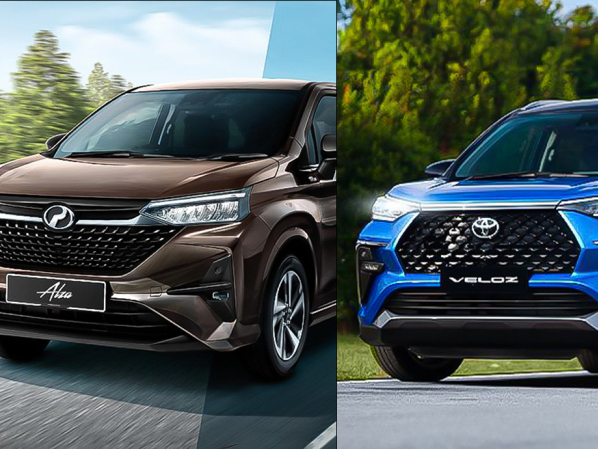
Toyota Veloz vs Alza: Which 7-Seater Is Right for You?
Kevin WongJul 15, 2025
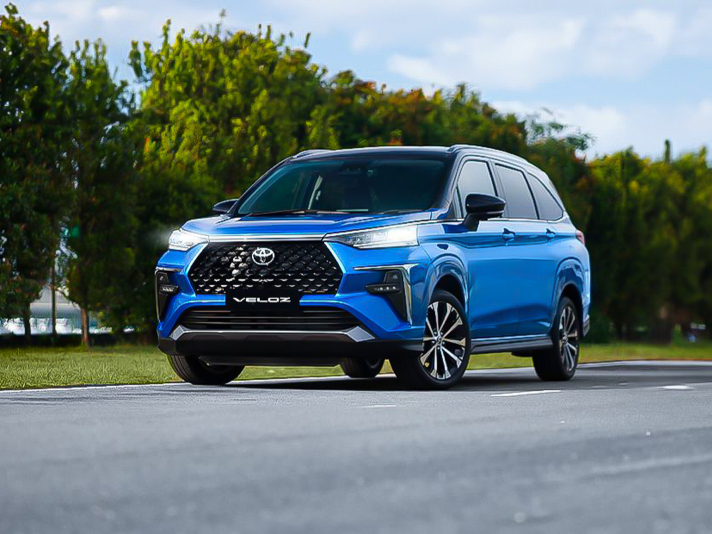
Toyota Veloz Interior Revealed: A 7-Seater Made for Malaysian Families
Kevin WongJul 14, 2025
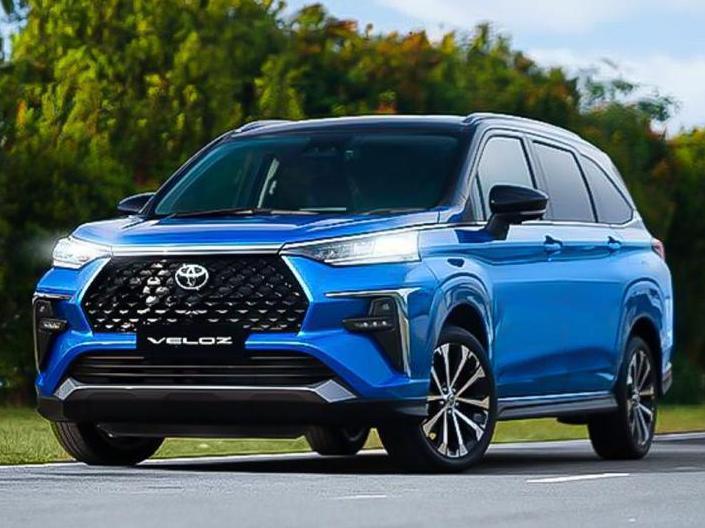
Style Meets Space: A Deep Dive into the Toyota Veloz
JamesApr 14, 2025
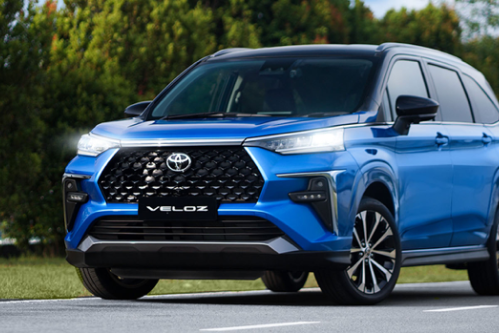
The Toyota Veloz is Priced at RM 95k in Malaysia with TSS, Wireless CarPlay etc.
LienMay 3, 2024
View More
Pros
Cons