
Q
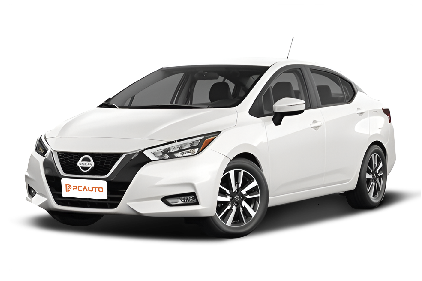
What are the benefits of Nissan Sunny?
 MercurySwiftFeb 16, 2026, 11:53 AM
The Nissan Sunny has quite a few advantages. In terms of safety, it comes standard with ABS anti-lock braking, vehicle stability control, lane departure warning system, etc. Some models also feature active braking, forward collision warning, lane change assist, etc., which can effectively reduce the risk of accidents. There are two airbags in the driver's and front passenger's seats inside the car, as well as ISO FIX child seat interfaces to ensure the safety of different passengers.
In terms of comfort features, it is equipped with a HUD head-up digital display, a Digital Multi - function Display instrument panel, a 220V/230V power supply, and a Keyless Operation door lock. The front - row air - conditioning in some models is automatic. Regarding the seats, the driver's seat has 6 - way manual adjustment, the front passenger's seat has 4 - way manual adjustment, and the rear seats can be folded down in a 60:40 ratio, allowing for flexible use of space.
In addition, its official combined fuel consumption is 5.1L/100km, indicating good fuel economy. Moreover, the engine has a maximum horsepower of 120PS, which can meet the power requirements for daily driving.
Special Disclaimer: This content is published by users and does not represent the views or position of PCauto.
Related Q&A
Q
How many km per liter is a Nissan Sunny?
The fuel consumption of the Nissan Sunny varies depending on the model year, engine displacement, and driving conditions. Generally, it consumes about 12 to 14 kilometers per liter (km/l) in urban driving, while on the highway, it can reach 16 to 18 km/l. The specific figures may vary due to driving habits, road conditions, and vehicle maintenance. As an economy sedan, the Nissan Sunny's fuel efficiency is moderate among similar models, making it suitable for daily commuting and family use.
If you want to further improve the fuel consumption, it is recommended to regularly maintain the vehicle. For example, replace the air filter, use the appropriate engine oil, and keep the tire pressure within the recommended range. Additionally, smooth driving, avoiding sudden acceleration and hard braking, can also significantly enhance fuel economy. In Malaysia, due to the hot climate, frequent use of the air - conditioning may have a certain impact on fuel consumption. Therefore, using the air - conditioning reasonably is also a little trick to save fuel.
If you are considering buying a used car, it is advisable to check the vehicle's maintenance records to ensure that the engine and transmission system are in good condition, thus maintaining optimal fuel efficiency.
 StormBreakerFeb 9, 2026
Q
Does the Nissan Sunny have ABS?
Yes, the Nissan Sunny models sold in the Malaysian market are indeed equipped with ABS (Anti-lock Braking System). This is an important safety feature that can prevent the wheels from locking up during emergency braking, helping the driver maintain control of the vehicle, especially on slippery roads. In addition to ABS, the Nissan Sunny may also be equipped with other basic safety features, such as EBD (Electronic Brakeforce Distribution) and dual airbags. The specific configurations may vary depending on the model year and version.
For Malaysian consumers, it's very important to choose a vehicle equipped with ABS. Since the local climate is rainy and slippery roads are quite common, ABS can significantly enhance driving safety. If you're considering buying a Nissan Sunny or other models, it's recommended to further check the official specifications or consult the dealer to confirm the specific safety configurations. You can also compare the safety performance of vehicles in the same class to make a more comprehensive car - buying decision.
 BronzeBeastFeb 9, 2026
Q
Is the Nissan Sunny fuel efficient?
As an economical sedan, the Nissan Sunny performs quite well in terms of fuel efficiency, making it suitable for the daily commuting needs of Malaysian consumers. It is equipped with a 1.5L naturally aspirated engine paired with a CVT transmission. According to official data, the combined fuel consumption is approximately 5.3 - 5.8L per 100km, which is above average among vehicles in the same class. Especially in congested urban traffic, the smoothness of the CVT transmission helps reduce fuel consumption during frequent stops and starts. If the driver maintains a gentle driving style, the actual fuel consumption can be close to the official figures.
It's worth noting that fuel economy is also affected by road conditions, maintenance status, and driving style. Regular maintenance, such as replacing the air filter and using engine oil with the appropriate viscosity, can further optimize fuel consumption. For Malaysian users with limited budgets who value practicality, the fuel costs and maintenance expenses of the Sunny are relatively affordable. If there are higher requirements for energy - saving, users can also look into hybrid models in the same class from other brands, but they need to comprehensively consider the vehicle purchase budget and technological maturity.
 TornadoTwistFeb 9, 2026
Q
Does the Nissan Sunny have airbags?
Some models of the Nissan Sunny in the Malaysian market are indeed equipped with airbags. The specific configurations vary depending on different years and versions. For example, newer models usually come standard with dual airbags for the driver and front - passenger, while older entry - level models may only have a single airbag. It is recommended that car owners confirm this through the “AIRBAG” logo on the vehicle's steering wheel or by referring to the user manual. As a common economy - class sedan in Malaysia, the safety configuration of the Sunny is at the mainstream level among Japanese cars in the same class. Besides airbags, it may also be equipped with basic safety systems such as ABS and EBD. It's worth noting that the Malaysian government has mandated dual airbags as a standard feature for new cars since 2018. Therefore, the safety performance of vehicles produced in recent years has been significantly improved. Consumers should also pay attention to this key configuration when purchasing used cars. For friends who want to learn more about automotive safety technology, they can follow the ASEAN NCAP's crash test reports, which will comprehensively evaluate multiple passive safety indicators, including the deployment timing of airbags and seatbelt pre - tensioners. These data are very valuable for Malaysian consumers.
 SilverStrikeFeb 9, 2026
Q
What is the mileage of the old Nissan Sunny?
The official combined fuel consumption of different models of the 2023 Nissan Sunny is 5.1L/100km, and the fuel type is gasoline. However, the actual mileage will be affected by various factors. For example, driving habits play a role. Frequent rapid acceleration and sudden braking will increase fuel consumption and reduce the mileage. On the contrary, smooth driving and reasonable gear - shifting can help improve fuel efficiency and increase the actual drivable mileage.
Road conditions are also crucial. In congested sections where the vehicle frequently starts and stops and the engine stays in idle mode for a long time, fuel consumption rises and the mileage decreases. While on smooth highways or in suburbs with good road conditions, the vehicle can maintain a stable speed, resulting in relatively lower fuel consumption and the actual mileage will be closer to the official data.
In addition, factors such as vehicle load and tire pressure can also have an impact on the actual mileage.
 VoidWalkerFeb 9, 2026
Q
How many gears does a Nissan Sunny have?
The Nissan Sunny models available in the Malaysian market are usually equipped with a CVT (Continuously Variable Transmission). This type of transmission uses a steel belt and conical pulleys to achieve continuous variable speed. It doesn't have fixed gears in the traditional sense, so it can be understood as "continuously variable" rather than having a fixed number of gears. However, in some driving modes, it can simulate the 7 - speed shifting logic of a traditional automatic transmission to enhance the driving pleasure.
It's worth noting that CVT technology can optimize fuel economy, which is suitable for the stop - and - go traffic conditions in Malaysian cities. Meanwhile, its smooth acceleration experience is also one of its advantages. If you're considering an earlier model of the Nissan Sunny (such as versions before 2010), it may be equipped with a 4 - speed automatic transmission. The specific configuration needs to be confirmed according to the vehicle's year and equipment.
It is recommended that car owners refer to the vehicle manual or check the transmission type through the chassis number. There may be differences in different market versions. In the hot climate of Malaysia, regularly changing the CVT fluid is particularly important for maintaining the performance of the transmission.
 ApexPredatorFeb 9, 2026
Q
How far can you go on a Nissan Sunny fuel tank?
The fuel tank capacity of the Nissan Sunny is approximately 41 liters. According to official data, its combined fuel consumption is about 6.5 liters per 100 kilometers. Therefore, when the tank is full, it can theoretically travel around 630 kilometers. The actual cruising range may vary depending on driving habits, road conditions, and vehicle maintenance status. In Malaysia, congested city roads may increase fuel consumption, while driving on highways is more fuel - efficient. It is recommended to regularly maintain the vehicle, such as checking tire pressure and replacing the air filter, to optimize fuel efficiency. Additionally, planning routes reasonably and avoiding rapid acceleration and hard braking can also help extend the driving distance. As an economical sedan, the Nissan Sunny is suitable for daily commuting and family use, and its reliable fuel economy gives it certain advantages in the Malaysian market.
 CrystalFangFeb 9, 2026
Q
Is the Nissan Sunny CVT?
Yes, the Nissan Sunny in the Malaysian market is indeed equipped with a CVT (Continuously Variable Transmission). This is an efficient and smooth transmission technology widely adopted by Nissan, aiming to improve fuel economy and driving comfort. The CVT achieves stepless speed changes through a steel belt and variable - diameter pulley sets. Compared with traditional automatic transmissions, it can adjust the gear ratio more flexibly, especially performing better in congested urban road conditions. In Malaysia, the CVT version of the Nissan Sunny is favored by many family users for its low maintenance cost and its suitability for daily commuting.
It should be noted that the driving experience of a CVT is slightly different from that of a traditional automatic transmission. During acceleration, the engine speed remains stable instead of changing in steps, so new owners may need a short period of adaptation. In addition, regularly replacing the special CVT transmission fluid is crucial for maintaining its long - term reliability. Nissan's authorized service centers in Malaysia all provide professional CVT maintenance services. It is recommended that owners follow the official maintenance manual to ensure optimal performance.
 LaserBeamFeb 9, 2026
Q
What is the safety rating of the Nissan Sunny?
As an economical and practical family sedan, the Nissan Sunny has attracted the attention of many consumers in the Malaysian market. Its safety performance is mainly based on the evaluation results of ASEAN NCAP. The 2019 model once received a 3-star safety rating (out of 5 stars) from this institution, showing an average performance. In the test, it scored 67.9% in the adult occupant protection project and 53.5% in the child occupant protection project. It is equipped with basic safety features such as dual airbags, ABS + EBD, and a body stability system (in some high - end models).
It's worth noting that the testing standards of ASEAN NCAP focus on the road conditions and vehicle - using environments in Southeast Asia, which are different from the focuses of the European Euro NCAP or the US IIHS. It is recommended to check the latest model's evaluation data on the official website before purchasing a car. For safety - conscious consumers, they can also learn about the performance of models in the same class, such as the Toyota Vios (5 stars in ASEAN NCAP) or the Honda City (4 stars in some model years). At the same time, it is a reminder to Malaysian car owners that even if the vehicle's active safety features are limited, correctly using seat belts, child safety seats, and maintaining a reasonable speed are still the key factors to improve driving safety.
 ShadowSneakFeb 9, 2026
Q
Is the Nissan Sunny spacious?
As an economy sedan, the Nissan Sunny can meet the daily needs of most Malaysian families in terms of space. Its body length is about 4.5 meters and the wheelbase is close to 2.6 meters. The rear - legroom is quite generous for adults of medium build. However, it may feel a bit cramped when three adults are sitting in the back. The trunk volume is about 490 liters, which is sufficient for carrying luggage during daily shopping or short - distance trips.
For consumers who are looking for more space, they can consider models in the same class, such as the Toyota Vios or the Honda City. These models have a slight edge in wheelbase and storage design. Nevertheless, with its high cost - performance ratio and reliable fuel economy, the Nissan Sunny remains a good choice for families on a tight budget.
In Malaysia's hot climate, it is recommended to choose a version equipped with rear air vents to enhance the riding comfort. Meanwhile, regular maintenance of the air - conditioning system can ensure good air circulation inside the car.
Overall, the space performance of the Nissan Sunny is above average among cars in the same class, making it suitable for small families or urban commuting.
 FlameWingAug 19, 2025
Popular Cars
Model Year
Car Compare
Car Photo
Related Models
 Cars
CarsLatest Q&A
Q
Is AMT similar to automatic?
There are significant differences between AMT transmissions and automatic transmissions (AT) in terms of core structure and driving experience. AMT is essentially an electronically automated version of a manual transmission, simulating manual clutch operation and gear shifting through a computerized control system while retaining the gear set structure of manual transmissions. As a result, it offers higher transmission efficiency, with fuel consumption approximately 8%-12% lower than AT, making it particularly suitable for highway or long-distance driving. However, it may exhibit jerking similar to manual transmissions during low-speed gear shifts, especially noticeable in congested traffic conditions.
AT transmissions rely on torque converters for power transfer, delivering smooth and seamless gear shifts that appeal to comfort-oriented users. However, their complex structure (incorporating planetary gear sets, hydraulic systems, etc.) results in higher maintenance costs. A single service may cost between 800 to 1,500 ringgit, whereas AMT only requires gear oil replacement at approximately 400 ringgit.
From a market perspective, AMT is predominantly used in budget vehicles or commercial models priced below 80,000 ringgit, while AT is typically featured in mid-to-high-end vehicles. Consumers should select based on actual needs: AMT suits those prioritizing fuel efficiency and low maintenance costs, while AT better serves those valuing comfort. Notably, recent advancements in AMT electronic control technology have significantly mitigated jerking issues, though test drives should still emphasize low-speed performance evaluation.
 AriaMar 26, 2026
Q
Which is better, DCT or AT?
DCT (Dual-Clutch Transmission) and AT (Automatic Transmission) each have their own advantages and disadvantages, and the choice should be based on personal driving needs. AT transmissions transfer power through a torque converter, offering excellent shift smoothness, making them suitable for urban commuting or novice drivers. However, they tend to have higher fuel consumption, and vehicles equipped with them are usually more expensive. DCT transmissions utilize a dual-clutch structure, featuring fast shift speeds and high power transmission efficiency, which provides a more direct driving experience—particularly suitable for users seeking a sporty feel. However, they may exhibit jerking at low speeds and have relatively high maintenance costs. If durability and comfort are priorities, AT is the more reliable choice; if power responsiveness and driving pleasure are preferred, wet DCT (such as Volkswagen DSG) performs better, though dry DCT models should be avoided in prolonged stop-and-go traffic conditions. Additionally, CVT transmissions excel in smoothness and fuel efficiency, making them ideal for daily commuting, but they lack driving excitement. It is recommended to test-drive before purchasing, as tuning varies significantly across brands, and real-world experience is more important than theoretical specifications.
 FlutteringMar 26, 2026
Q
Is Amt good or bad?
AMT gearboxes have a significant cost advantage in the local market, typically being around 5,000 Ringgit cheaper than models equipped with conventional automatic transmissions. Their fuel efficiency is comparable to manual transmissions, resulting in long-term fuel savings. Featuring a straightforward design, they achieve transmission efficiency exceeding 90% with relatively low maintenance costs, making them ideal for practicality-oriented consumers. However, their shifting logic contains inherent limitations: gear changes between 1st and 2nd cause 0.3-0.5 second power interruptions, while unintended upshifts on inclines may reduce engine speed by 15%-20%, compromising driving smoothness. For urban commuters or budget-conscious buyers, AMT offers excellent value, though those prioritizing premium driving dynamics should consider alternative transmission types. Some domestic models like the Perodua Axia employ enhanced AMT systems, where optimized shift programming has reduced gearshift shock by approximately 30%.
 RainbowsMar 26, 2026
Q
Which gives better mileage, CVT or AMT?
From the perspective of fuel economy, CVT transmissions generally perform better under urban driving conditions. Their continuously variable design allows the engine to consistently operate within the optimal speed range, significantly reducing fuel consumption during frequent starts and stops. Test data shows that their fuel consumption in urban driving conditions is 10% to 15% lower than that of comparable models. AMT transmissions, on the other hand, inherit the high transmission efficiency of manual transmissions, delivering fuel efficiency close to manual transmissions during high-speed cruising. This makes them particularly suitable for long-distance driving in large-displacement vehicles. However, due to power interruption during gear shifts, their overall fuel consumption may be 5% to 8% higher than CVTs.
The difference in fuel-saving characteristics between the two transmissions stems from their technical principles: CVTs achieve continuous variability through steel belts and pulleys, eliminating the fixed gear ratio limitations of traditional transmissions; AMTs simulate manual gear changes via electronic control systems while maintaining the mechanical efficiency of gear transmission. Notably, actual fuel consumption is also influenced by driving habits. Smooth acceleration and anticipatory deceleration can maximize the transmissions' fuel-saving potential. If the vehicle budget permits and urban commuting is the primary use, CVTs offer a more economical choice. For frequent highway driving with an emphasis on cost-effectiveness, AMTs are equally worth considering.
 RubyBlazeMar 26, 2026
Q
Which is cheaper, AMT or CVT?
In terms of gearbox cost, AMT is usually more economical than CVT. Essentially, AMT is a manual transmission equipped with an electronic control unit, featuring a simple structure and low maintenance costs. The unit price ranges from approximately 5,000 to 8,000 ringgit, making it suitable for budget-conscious consumers or those who prioritize long-term operating costs. CVT incurs higher manufacturing costs due to its precision steel belt transmission system and continuous variable transmission technology, with a unit price of about 7,000 to 10,000 ringgit. However, it delivers a smoother driving experience and superior fuel efficiency. The primary differences between the two lie in technical complexity: AMT retains the gear-shifting mechanism, resulting in noticeable shift shock; CVT achieves linear power output through stepless speed variation but requires periodic belt inspection and incurs higher maintenance expenses. For those prioritizing initial cost and basic transportation needs, AMT offers better value; if comfort and long-term fuel economy are priorities, CVT represents a more worthwhile investment. Note that actual prices may vary based on vehicle model, brand, and local supply chain factors.
 ShadowProwlMar 26, 2026
Related News

The third-generation Nissan Leaf officially debuts: from a hatchback car to a crossover SUV with a 622 km range
WilliamMar 11, 2026

1000km full-tank range! 2026 Nissan Serena e-Power officially launched in Malaysia
JohnMar 5, 2026

2026 Nissan March: A Rebirth or the End of the Road for the B-Segment Hatchback?
JamesMar 4, 2026

How much does it cost to own a used Nissan March in Malaysia?
LienFeb 10, 2026

From Fuel to All-Electric: Looking Back at Nissan March's 40-Year Journey
AshleyFeb 9, 2026
View More
Pros
Cons