
Q
What is the difference between CR-V 2023 and 2024?
 IceBreakerDec 08, 2025, 02:42 PM
The key differences between the 2023 and 2024 CR-V models mainly come down to upgraded features and refined details. The 2024 version typically steps up its game in smart tech and comfort—think an updated Honda Sensing safety suite, extra driver-assist functions, or a more responsive infotainment system. Exterior tweaks like a revised grille or fresh wheel designs might add a sleeker look, while the cabin could offer new material choices or color options.
Under the hood, both model years will likely share the same engine lineup, though the 2024 might squeeze out better fuel efficiency or smoother power delivery via software tweaks. If you’re eyeing the latest tech, the 2024 is worth a closer look. But the 2023 could be a smart pick for deals, given its outgoing status.
Just remember: Official specs rule. A dealership test-drive is your best bet to spot real-world differences. Also, check if Honda’s tweaked its warranty or free maintenance perks—those little things can sway your decision too.
Special Disclaimer: This content is published by users and does not represent the views or position of PCauto.
Related Q&A
Q
How long will a 2023 Honda CR-V last?
The 2023 Honda CR-V typically delivers a lifespan of 15 to 20 years or over 250,000 kilometers, depending on maintenance habits and driving conditions. It comes with a proven 1.5L turbocharged engine or a 2.0L hybrid system—both powertrains are known for their reliability, with the hybrid version reducing engine wear thanks to electric motor assistance.
Stick to regular maintenance every 6 months or 5,000 km, paying extra attention to CVT fluid changes and cooling system upkeep. In hotter climates, replace the cabin air filter more frequently. Over time, keep an eye on suspension bushings and other rubber components—if you're near the coast, an annual rustproofing treatment is smart.
Among its competitors, the CR-V holds its value well; even at 10 years old, used models often remain in solid shape. If it fits your budget, consider Honda’s extended warranty for better long-term coverage, especially for electronics. Just remember: rough roads will take a toll, so inspect the suspension more often if you regularly drive on uneven terrain.
 AdventureSeekThrillDec 8, 2025
Q
Is the 2023 Honda CR-V a good car?
The 2023 Honda CR-V is a well-rounded SUV that delivers excellent performance across the board. It’s widely praised for its spacious interior, comfort, and rock-solid reliability. Under the hood, the 1.5L turbocharged engine provides smooth power delivery and impressive fuel efficiency, making it a great choice for both daily commutes and long-distance drives.
Inside, the cabin is clean, functional, and built with high-quality materials. Tech features like the large touchscreen and Honda Sensing safety suite add convenience and peace of mind on the road. Where the CR-V really shines is passenger space—especially rear legroom and cargo capacity—which is a big win for families.
On top of that, the CR-V has always been a top pick in its class, thanks to strong resale value and reasonable maintenance costs. That makes it a smart long-term investment. If you’re looking for a practical, dependable SUV packed with features, the 2023 CR-V should definitely be on your shortlist.
 DazzlingSparkleDec 8, 2025
Q
What kind of engine does a 2023 Honda CR-V have?
The 2023 Honda CR-V offers two engine options tailored for different markets: a 1.5L turbocharged four-cylinder gasoline engine and a 2.0L hybrid system.
The 1.5T delivers around 190 horsepower and 243 Nm of torque, paired with a CVT for smooth power delivery and solid fuel efficiency—ideal for both city commutes and long-distance driving. Meanwhile, the hybrid variant combines a 2.0L Atkinson-cycle engine with dual electric motors, producing a combined 204 horsepower. It’s the go-to for eco-conscious buyers focused on maximizing mileage.
Both engines carry Honda’s reputation for reliability and tech. The 1.5T provides strong low-end torque, perfect for stop-and-go traffic, while the hybrid leverages EV mode in congestion to cut fuel consumption further. With VTEC variable valve timing and lift control, the CR-V optimizes performance and efficiency without compromising emissions standards. Maintenance costs remain reasonable, making it a practical yet tech-savvy family SUV.
 WanderPathExploreDec 8, 2025
Q
What are the common 2023 CR-V problems?
The 2023 CR-V remains a top-performing SUV overall, though some owners have reported minor issues worth noting. A few models may exhibit slight transmission hesitation during low-speed driving—this is often related to driving habits or software calibration. Regular maintenance and transmission software updates are recommended.
Some drivers have experienced occasional lag or unresponsiveness with the infotainment touchscreen, though restarting the system or installing the latest software usually resolves it. On the highway, road noise can be noticeable; upgrading to quieter tires or adding sound insulation helps.
The 1.5L turbocharged engine delivers strong performance, but if you frequently take short trips, keep an eye out for carbon buildup. Using genuine fuel additives during maintenance can mitigate this.
Where the CR-V really shines is cabin space and fuel efficiency—especially rear legroom and the hybrid variant’s economy. As for resale value, it holds up well in most markets, but stick to authorized service centers to preserve condition.
 FixerToolDec 8, 2025
Q
What should I pay for a 2023 Honda CR-V?
The 2023 Honda CR-V's price varies depending on trim levels and ongoing promotions, typically ranging between RM150k to RM200k for brand-new units. The final cost depends on your chosen variant—whether it's the base 2.0L naturally aspirated engine or the higher-spec 1.5L turbocharged version. For the most accurate pricing, I'd recommend checking with your nearest dealership, as regional offers and after-sales packages differ.
What makes the CR-V stand out? Roomy interior, bulletproof reliability, and Honda's solid safety tech—especially the Honda Sensing suite with adaptive cruise control and lane-keeping assist. It’s a family-friendly SUV that holds its value well over time, plus maintenance won’t break the bank.
If you're working with a tighter budget, the used market could be worth exploring—just be sure to get a pre-purchase inspection and review the service history carefully. No one wants a "bargain" that ends up costing more in repairs.
 HikerTrailDec 8, 2025
Q
Is the Honda CR-V 2023 a good car?
The 2023 Honda CR-V is a well-rounded SUV that delivers excellent overall performance, making it ideal for practicality-minded buyers. It retains the CR-V lineage's signature spaciousness, with extended wheelbase creating even more generous rear legroom. The 1,017-liter cargo capacity easily handles family trips.
Under the hood, the 1.5L turbocharged engine pumps out 193 hp and 243 Nm of torque, paired with a CVT transmission for smooth power delivery and decent fuel efficiency—rated at around 7.4L/100km. Safety is a strong suit, with Honda SENSING (including adaptive cruise control, lane-keeping assist, etc.) as standard across all trims. Its ASEAN NCAP 5-star rating backs up its crashworthiness.
Inside, the cabin follows Honda’s latest design language, featuring a 7-inch digital cluster and a 9-inch touchscreen with wireless Apple CarPlay—though the infotainment response could be snappier. The suspension leans toward comfort, soaking up rough roads effectively, while noise insulation sees noticeable improvement over the previous gen.
That said, rivals like the Toyota RAV4 offer hybrid variants for better fuel economy—worth cross-shopping if efficiency tops your list. Bottom line: The CR-V excels in space, safety, and resale value but may feel slightly behind some tech-loaded newcomers. A test drive is recommended to see if it clicks with your needs.
 FunnyJokeDec 8, 2025
Q
What is the factory warranty on a 2023 Honda CR-V?
The 2023 Honda CR-V comes with a factory warranty of 5 years or 150,000 kilometers (whichever comes first). This coverage applies to major mechanical components like the engine, transmission, and drivetrain, but keep in mind that wear-and-tear items such as brake pads, tires, and wiper blades typically aren’t included.
Some dealers may offer optional extended warranty plans for an additional cost, which can expand coverage or prolong the protection period. To maintain your warranty benefits and keep your CR-V running smoothly, it’s a good idea to stick with scheduled maintenance at authorized service centers.
Honda’s warranty package is pretty competitive—right up there with other mainstream brands—giving owners solid peace of mind. If you’re unsure what’s covered, just check with your local Honda dealer. They’ll walk you through the details and may even suggest tailored options based on how you use your vehicle.
 WittyRemarkDec 8, 2025
Q
What is the recall on a 2023 Honda CR-V?
The 2023 Honda CR-V faced global recalls due to potential safety concerns. Certain models were found to have a manufacturing defect in the front passenger airbag sensors, which could cause faulty readings and impair proper airbag deployment. Honda has addressed this by offering free replacements of the upgraded sensor components through authorized dealers.
Additionally, some vehicles had insufficient sealing in the rear camera wiring connectors, potentially causing image disruptions during rainy conditions—this was also covered under the recall. Owners can check their vehicle’s recall status by entering the VIN on Honda’s official website or by contacting their local dealer directly.
It’s worth noting that recalls are standard practice for manufacturers to ensure product accountability. Modern vehicles contain over 2,000 electronic components, and occasional part defects in complex supply chains are normal. Staying updated on recalls and completing repairs promptly maximizes driving safety. For those buying a used CR-V, always verify whether previous owners have addressed all recall items—these records are typically found in maintenance logs or dealer systems.
 PhoenixFireDec 8, 2025
Q
What is the most common problem with the Honda CR-V 2023?
The 2023 Honda CR-V remains a popular SUV choice with solid overall reliability. That said, some owners report occasional infotainment glitches – like screen freezes or blackouts, particularly when using CarPlay or extended navigation. A simple system reboot or software update usually does the trick.
A few drivers also notice slight turbo lag at low speeds with the 1.5L turbo engine, though this is typical for small-displacement turbos and doesn’t impact daily driving. On the plus side, the Honda Sensing suite performs reliably, with responsive automatic braking and lane-keeping assist. Just remember to keep the windshield camera and radar sensors clean for optimal function.
Pro tip: If you run into electrical gremlins, disconnecting the battery’s negative terminal for a reset often works wonders. Stick to the recommended 10,000-km/6-month maintenance schedule using low-ash oil, and the powertrain stays happy.
Bottom line? These minor quirks don’t overshadow the CR-V’s practicality. Its cabin space and fuel efficiency still lead the pack for family haulers.
 ShadowBladeDec 8, 2025
Q
How much should I pay for a 2023 Honda CR-V?
The 2023 Honda CR-V is priced between RM150k to RM200k depending on the variant and specs you go for. The entry-level 2.0L naturally aspirated version sits at the lower end, while the higher-spec 1.5L turbo or hybrid models will cost more. Your best bet is to check with local dealers for the latest prices and ongoing promotions—discounts and add-ons can vary by region.
This SUV delivers solid space, comfort, and fuel efficiency, especially the hybrid if you’re keen on saving at the pump. Safety’s a strong point too, with Honda Sensing as standard on most trims.
Looking at used units? Prices drop significantly, but watch out for condition and warranty coverage. Stick to reputable dealers or certified pre-owned programs. And remember: beyond the sticker price, factor in insurance, road tax, and maintenance—they all add up.
 HappyCricketDec 8, 2025
Popular Cars
Model Year
Car Compare
Car Photo
Related Models
 Cars
CarsLatest Q&A
Q
Is AMT similar to automatic?
There are significant differences between AMT transmissions and automatic transmissions (AT) in terms of core structure and driving experience. AMT is essentially an electronically automated version of a manual transmission, simulating manual clutch operation and gear shifting through a computerized control system while retaining the gear set structure of manual transmissions. As a result, it offers higher transmission efficiency, with fuel consumption approximately 8%-12% lower than AT, making it particularly suitable for highway or long-distance driving. However, it may exhibit jerking similar to manual transmissions during low-speed gear shifts, especially noticeable in congested traffic conditions.
AT transmissions rely on torque converters for power transfer, delivering smooth and seamless gear shifts that appeal to comfort-oriented users. However, their complex structure (incorporating planetary gear sets, hydraulic systems, etc.) results in higher maintenance costs. A single service may cost between 800 to 1,500 ringgit, whereas AMT only requires gear oil replacement at approximately 400 ringgit.
From a market perspective, AMT is predominantly used in budget vehicles or commercial models priced below 80,000 ringgit, while AT is typically featured in mid-to-high-end vehicles. Consumers should select based on actual needs: AMT suits those prioritizing fuel efficiency and low maintenance costs, while AT better serves those valuing comfort. Notably, recent advancements in AMT electronic control technology have significantly mitigated jerking issues, though test drives should still emphasize low-speed performance evaluation.
 AriaMar 26, 2026
Q
Which is better, DCT or AT?
DCT (Dual-Clutch Transmission) and AT (Automatic Transmission) each have their own advantages and disadvantages, and the choice should be based on personal driving needs. AT transmissions transfer power through a torque converter, offering excellent shift smoothness, making them suitable for urban commuting or novice drivers. However, they tend to have higher fuel consumption, and vehicles equipped with them are usually more expensive. DCT transmissions utilize a dual-clutch structure, featuring fast shift speeds and high power transmission efficiency, which provides a more direct driving experience—particularly suitable for users seeking a sporty feel. However, they may exhibit jerking at low speeds and have relatively high maintenance costs. If durability and comfort are priorities, AT is the more reliable choice; if power responsiveness and driving pleasure are preferred, wet DCT (such as Volkswagen DSG) performs better, though dry DCT models should be avoided in prolonged stop-and-go traffic conditions. Additionally, CVT transmissions excel in smoothness and fuel efficiency, making them ideal for daily commuting, but they lack driving excitement. It is recommended to test-drive before purchasing, as tuning varies significantly across brands, and real-world experience is more important than theoretical specifications.
FlutteringMar 26, 2026Q
Is Amt good or bad?
AMT gearboxes have a significant cost advantage in the local market, typically being around 5,000 Ringgit cheaper than models equipped with conventional automatic transmissions. Their fuel efficiency is comparable to manual transmissions, resulting in long-term fuel savings. Featuring a straightforward design, they achieve transmission efficiency exceeding 90% with relatively low maintenance costs, making them ideal for practicality-oriented consumers. However, their shifting logic contains inherent limitations: gear changes between 1st and 2nd cause 0.3-0.5 second power interruptions, while unintended upshifts on inclines may reduce engine speed by 15%-20%, compromising driving smoothness. For urban commuters or budget-conscious buyers, AMT offers excellent value, though those prioritizing premium driving dynamics should consider alternative transmission types. Some domestic models like the Perodua Axia employ enhanced AMT systems, where optimized shift programming has reduced gearshift shock by approximately 30%.
 RainbowsMar 26, 2026
Q
Which gives better mileage, CVT or AMT?
From the perspective of fuel economy, CVT transmissions generally perform better under urban driving conditions. Their continuously variable design allows the engine to consistently operate within the optimal speed range, significantly reducing fuel consumption during frequent starts and stops. Test data shows that their fuel consumption in urban driving conditions is 10% to 15% lower than that of comparable models. AMT transmissions, on the other hand, inherit the high transmission efficiency of manual transmissions, delivering fuel efficiency close to manual transmissions during high-speed cruising. This makes them particularly suitable for long-distance driving in large-displacement vehicles. However, due to power interruption during gear shifts, their overall fuel consumption may be 5% to 8% higher than CVTs.
The difference in fuel-saving characteristics between the two transmissions stems from their technical principles: CVTs achieve continuous variability through steel belts and pulleys, eliminating the fixed gear ratio limitations of traditional transmissions; AMTs simulate manual gear changes via electronic control systems while maintaining the mechanical efficiency of gear transmission. Notably, actual fuel consumption is also influenced by driving habits. Smooth acceleration and anticipatory deceleration can maximize the transmissions' fuel-saving potential. If the vehicle budget permits and urban commuting is the primary use, CVTs offer a more economical choice. For frequent highway driving with an emphasis on cost-effectiveness, AMTs are equally worth considering.
 RubyBlazeMar 26, 2026
Q
Which is cheaper, AMT or CVT?
In terms of gearbox cost, AMT is usually more economical than CVT. Essentially, AMT is a manual transmission equipped with an electronic control unit, featuring a simple structure and low maintenance costs. The unit price ranges from approximately 5,000 to 8,000 ringgit, making it suitable for budget-conscious consumers or those who prioritize long-term operating costs. CVT incurs higher manufacturing costs due to its precision steel belt transmission system and continuous variable transmission technology, with a unit price of about 7,000 to 10,000 ringgit. However, it delivers a smoother driving experience and superior fuel efficiency. The primary differences between the two lie in technical complexity: AMT retains the gear-shifting mechanism, resulting in noticeable shift shock; CVT achieves linear power output through stepless speed variation but requires periodic belt inspection and incurs higher maintenance expenses. For those prioritizing initial cost and basic transportation needs, AMT offers better value; if comfort and long-term fuel economy are priorities, CVT represents a more worthwhile investment. Note that actual prices may vary based on vehicle model, brand, and local supply chain factors.
 ShadowProwlMar 26, 2026
Related News

Jaecoo J7 VS Honda CR-V, which is the most worthwhile C-Segment SUV to buy
JamesNov 7, 2025
HAVAL H6 HEV Test Drive: A Budget-Friendly Alternative to CR-V e:HEV
WilliamJun 25, 2025
Honda CR-V: 1.5L Turbo or 2.0L Hybrid - Which One Is Right for You?
JamesJun 18, 2025
Smart Choice: Honda CR-V - Unbeatable Value, Worry-Free Driving
MichaelApr 11, 2025
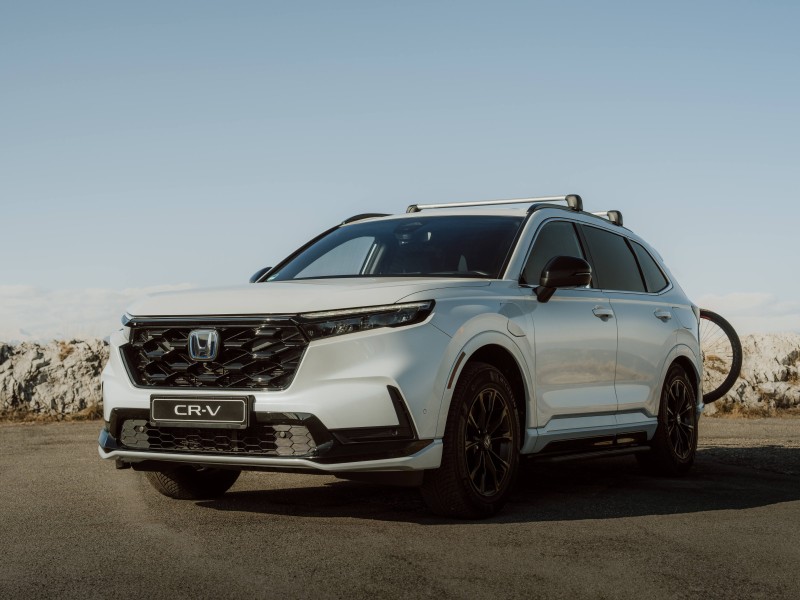
CR-V 30th Anniversary Edition Debuts in Europe: Camp-Ready Interior Takes Center Stage!
JamesApr 9, 2025
View More
Pros
Cons