
Q
What is the fuel consumption of Omoda C9?
 CheeryLaughterBrightenMay 14, 2025, 11:44 AM
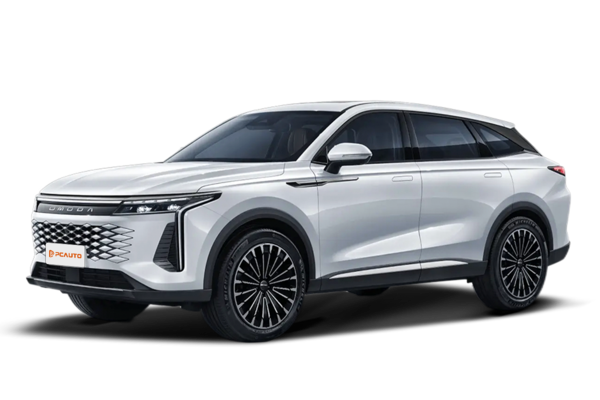
The Omoda C9 is available in both 2WD and AWD versions, equipped with a 2.0L turbocharged four-cylinder gasoline engine paired with an 8-speed automatic transmission. The official data of fuel consumption is 8.5L/100km. However, actual fuel consumption can vary depending on several factors such as driving style, road conditions, vehicle load, and environmental circumstances.
Aggressive acceleration, frequent braking, or driving in heavy traffic typically result in higher fuel consumption than the official figures. On the other hand, smooth driving, maintaining appropriate speeds, and approporiate use of air conditioner can help improve fuel efficiency. For a more accurate understanding of real-world fuel consumption, it's helpful to refer to owner feedback or professional automotive reviews.
Special Disclaimer: This content is published by users and does not represent the views or position of PCauto.
Related Q&A
Q
Which segment is the Omoda C9 in?
The Omoda C9 belongs to the D-segment vehicle category. In terms of dimensions, it measures 4,775 mm in length, 1,920 mm in width, 1,671 mm in height, with a wheelbase of 2,800 mm - specifications that qualify it as a D-class vehicle. Such large dimension not only create a more spacious interior space for enhanced occupant comfort, but also give the vehicle a more substantial and sophisticated exterior presence. D-class vehicles typically represent elevated standards of quality and performance. The Omoda C9 shows this segment's advantages through its comprehensive safety package including eight airbags and multiple active safety systems, with premium comfort features such as power-adjustable seats and an expansive touchscreen display. These features align perfectly with D-segment positioning, delivering a high-end driving experience to consumers.
 SilentWhisperMay 13, 2025
Q
Is the Omoda C9 an electric vehicle?
The Omoda C9 is not an electric vehicle. It runs on gasoline, powered by a 2.0-liter turbocharged four-cylinder petrol engine. This engine delivers a maximum output of 261 PS and peak torque of 400 N·m, paired with an 8-speed automatic transmission. The model offers two drivetrain options: front-wheel drive (2WD) and all-wheel drive (4WD).
For those who prefer traditional internal combustion engines, this powertrain configuration achieves an excellent balance between performance and driving dynamics. While electric vehicles are gaining popularity, the Omoda C9 is a good choice for consumers who still value the reliability and power delivery characteristics of gasoline engines.
 RainbowMay 13, 2025
Q
What's the size of the wheels of Omoda C9?
The Omoda C9 is equipped with 20-inch alloy wheels fitted with 245/50R20 tires on both front and rear axles. This tire specification is relatively common - the number 245 indicates the tire width in millimeters (with wider tires generally providing greater contact area and improved grip), while 50 represents the aspect ratio (the tire's sidewall height as a percentage of its width, with lower values indicating a "lower profile" tire that typically enhances handling at a slight compromise to ride comfort). The "R" denotes radial tire construction, and 20 signifies the 20-inch wheel diameter.
The larger wheel size significantly enhances the vehicle's visual appeal, giving it a more athletic and substantial appearance. Furthermore, properly specified tires play a crucial role in various performance aspects including handling, braking, and driving stability, enabling the vehicle to adapt to diverse road conditions and driving requirements.
 RippleMay 13, 2025
Q
What's the size of the engine of the Omoda C9?
The Omoda C9 is powered by a 2.0-liter engine, specifically the 2.0TGDI 400T model, adopting turbocharged intake and an inline four-cylinder configuration. This engine delivers a maximum power output of 192 kW and peak torque of 400 N·m, delivering an impressive 261 horsepower. Its robust power delivery ensures excellent performance whether accelerating in urban driving or overtaking on highways.
Paired with an 8-speed automatic transmission, the powertrain provides smooth gear shifts that further enhance the driving experience. This engine specification gives the Omoda C9 competitive advantages in its segment, effectively meeting drivers' demands for dynamic performance.
 GoldieMay 13, 2025
Q
What's the trunk capacity of the Omoda 9?
The trunk capacity of the Omoda 9 is 660L, which adequately meets the demands of daily commuting and family use. Whether for routine shopping, loading luggage, or transporting sports equipment, it provides high convenience. Such trunk capacity not only facilitates travel but also enhances the vehicle's practicality. The rear seats of the Omoda 9 support a 60/40 split-folding function, allowing partial or complete folding to expand cargo space when transporting bulky items like furniture or bicycles. This design offers greater flexibility to accommodate diverse loading scenarios.
 CascadeMay 13, 2025
Q
What is the Ancap rating of the Omoda C9?
At present, there is no specific ANCAP rating information about the Omoda C9. However, judging from the vehicle's configuration, it is well-equipped with comprehensive safety systems, including standard ABS anti-lock brakes, electronic stability control, lane change assist, lane departure warning, autonomous emergency braking, and eight airbags (driver, front passenger, front side, front/rear curtain, and knee airbags), along with ISOFIX child seat anchors.
Typically, vehicles with such comprehensive safety configurations have a good chance of achieving good ratings in ANCAP and similar safety assessments. For the most accurate Omoda C9 ANCAP rating, it's recommended to pay attention to official announcements from ANCAP.
 FlutterMay 13, 2025
Q
What color is the Chery Omoda C9?
Sorry, there is no information about the color of the Chery Omoda C9, so I can't provide an accurate answer. Generally, there is a wide variety of color options for vehicles. Common basic colors include black, white, and gray. Black appears calm and dignified, white is simple and clean with high visibility at night, while gray is understated and dirt-resistant. There are also some distinctive colors, such as red, which shows vitality and passion, and blue, which exudes a sense of technology. If you'd like to learn about the specific color options for the Chery Omoda C9, I recommend visiting your local Chery dealership or checking Chery's official website and social media channels for detailed information on the model's available colors.
 WhisperingMay 13, 2025
Q
What is the range capability of Omoda C9?
The range capability of the Omoda C9 varies across different versions. For the gasoline-powered model with a 65L fuel tank, while official range figures haven't been specified, practical estimates suggest approximately 500-700 km under mixed driving conditions based on the fuel consumption characteristics of its 2.0T turbocharged engine.
The plug-in hybrid variant offers a combined range of 1,500 km with up to 240 km of pure electric range. This performance level can meet requirements for both daily urban commuting and long-distance travel. The gasoline version suits users concerned about charging infrastructure availability, while the PHEV model addresses range anxiety while delivering energy efficiency - allowing buyers to select their preferred version according to individual needs and usage patterns.
ForestMay 13, 2025Q
What engine is the Omoda C9 equipped with?
The Omoda C9 is equipped with a 2.0L four-cylinder turbocharged gasoline engine with a displacement of 1998 mL. The engine delivers a maximum horsepower of 261 PS (192 kW) and a peak torque of 400 N·m, adopting an inline (Inline-L) cylinder configuration. This powertrain provides powerful output, enabling easy acceleration in urban driving and effortless overtaking on highways. Paired with an 8-speed automatic transmission, it ensures efficient power delivery while offering smooth gear shifts for enhanced driving comfort. Both two-wheel drive and four-wheel drive variants adopt this engine platform, catering to diverse consumer needs for vehicle performance and usage scenario.
 SparkleMay 13, 2025
Q
What is the fuel efficiency of the Omoda C9?
At present, there is no official data about the fuel economy of the Omoda C9. However, the Omoda C9 is equipped with a 2.0L four-cylinder turbocharged gasoline engine paired with an 8-speed automatic transmission. Generally speaking, the fuel efficiency of such a powertrain configuration is influenced by various factors, such as driving habits, road conditions, and vehicle load. If the driving style is smooth, with a little of sudden acceleration or braking, and the vehicle is primarily driven on well-maintained roads, its fuel efficiency may be better; conversely, aggressive driving with frequent stops and starts will negatively impact fuel efficiency. Vehicles with different drivetrain configurations also vary in curb weight, which further affects fuel efficiency. The 2WD model weighs 1,786 kg, while the AWD model weighs 1,876 kg. The relatively heavier AWD variant may theoretically consume more fuel.
 EmeraldMay 13, 2025
Popular Cars
Model Year
Car Compare
Car Photo
Related Models
 Cars
CarsLatest Q&A
Q
Is AMT similar to automatic?
There are significant differences between AMT transmissions and automatic transmissions (AT) in terms of core structure and driving experience. AMT is essentially an electronically automated version of a manual transmission, simulating manual clutch operation and gear shifting through a computerized control system while retaining the gear set structure of manual transmissions. As a result, it offers higher transmission efficiency, with fuel consumption approximately 8%-12% lower than AT, making it particularly suitable for highway or long-distance driving. However, it may exhibit jerking similar to manual transmissions during low-speed gear shifts, especially noticeable in congested traffic conditions.
AT transmissions rely on torque converters for power transfer, delivering smooth and seamless gear shifts that appeal to comfort-oriented users. However, their complex structure (incorporating planetary gear sets, hydraulic systems, etc.) results in higher maintenance costs. A single service may cost between 800 to 1,500 ringgit, whereas AMT only requires gear oil replacement at approximately 400 ringgit.
From a market perspective, AMT is predominantly used in budget vehicles or commercial models priced below 80,000 ringgit, while AT is typically featured in mid-to-high-end vehicles. Consumers should select based on actual needs: AMT suits those prioritizing fuel efficiency and low maintenance costs, while AT better serves those valuing comfort. Notably, recent advancements in AMT electronic control technology have significantly mitigated jerking issues, though test drives should still emphasize low-speed performance evaluation.
 AriaMar 26, 2026
Q
Which is better, DCT or AT?
DCT (Dual-Clutch Transmission) and AT (Automatic Transmission) each have their own advantages and disadvantages, and the choice should be based on personal driving needs. AT transmissions transfer power through a torque converter, offering excellent shift smoothness, making them suitable for urban commuting or novice drivers. However, they tend to have higher fuel consumption, and vehicles equipped with them are usually more expensive. DCT transmissions utilize a dual-clutch structure, featuring fast shift speeds and high power transmission efficiency, which provides a more direct driving experience—particularly suitable for users seeking a sporty feel. However, they may exhibit jerking at low speeds and have relatively high maintenance costs. If durability and comfort are priorities, AT is the more reliable choice; if power responsiveness and driving pleasure are preferred, wet DCT (such as Volkswagen DSG) performs better, though dry DCT models should be avoided in prolonged stop-and-go traffic conditions. Additionally, CVT transmissions excel in smoothness and fuel efficiency, making them ideal for daily commuting, but they lack driving excitement. It is recommended to test-drive before purchasing, as tuning varies significantly across brands, and real-world experience is more important than theoretical specifications.
FlutteringMar 26, 2026Q
Is Amt good or bad?
AMT gearboxes have a significant cost advantage in the local market, typically being around 5,000 Ringgit cheaper than models equipped with conventional automatic transmissions. Their fuel efficiency is comparable to manual transmissions, resulting in long-term fuel savings. Featuring a straightforward design, they achieve transmission efficiency exceeding 90% with relatively low maintenance costs, making them ideal for practicality-oriented consumers. However, their shifting logic contains inherent limitations: gear changes between 1st and 2nd cause 0.3-0.5 second power interruptions, while unintended upshifts on inclines may reduce engine speed by 15%-20%, compromising driving smoothness. For urban commuters or budget-conscious buyers, AMT offers excellent value, though those prioritizing premium driving dynamics should consider alternative transmission types. Some domestic models like the Perodua Axia employ enhanced AMT systems, where optimized shift programming has reduced gearshift shock by approximately 30%.
 RainbowsMar 26, 2026
Q
Which gives better mileage, CVT or AMT?
From the perspective of fuel economy, CVT transmissions generally perform better under urban driving conditions. Their continuously variable design allows the engine to consistently operate within the optimal speed range, significantly reducing fuel consumption during frequent starts and stops. Test data shows that their fuel consumption in urban driving conditions is 10% to 15% lower than that of comparable models. AMT transmissions, on the other hand, inherit the high transmission efficiency of manual transmissions, delivering fuel efficiency close to manual transmissions during high-speed cruising. This makes them particularly suitable for long-distance driving in large-displacement vehicles. However, due to power interruption during gear shifts, their overall fuel consumption may be 5% to 8% higher than CVTs.
The difference in fuel-saving characteristics between the two transmissions stems from their technical principles: CVTs achieve continuous variability through steel belts and pulleys, eliminating the fixed gear ratio limitations of traditional transmissions; AMTs simulate manual gear changes via electronic control systems while maintaining the mechanical efficiency of gear transmission. Notably, actual fuel consumption is also influenced by driving habits. Smooth acceleration and anticipatory deceleration can maximize the transmissions' fuel-saving potential. If the vehicle budget permits and urban commuting is the primary use, CVTs offer a more economical choice. For frequent highway driving with an emphasis on cost-effectiveness, AMTs are equally worth considering.
 RubyBlazeMar 26, 2026
Q
Which is cheaper, AMT or CVT?
In terms of gearbox cost, AMT is usually more economical than CVT. Essentially, AMT is a manual transmission equipped with an electronic control unit, featuring a simple structure and low maintenance costs. The unit price ranges from approximately 5,000 to 8,000 ringgit, making it suitable for budget-conscious consumers or those who prioritize long-term operating costs. CVT incurs higher manufacturing costs due to its precision steel belt transmission system and continuous variable transmission technology, with a unit price of about 7,000 to 10,000 ringgit. However, it delivers a smoother driving experience and superior fuel efficiency. The primary differences between the two lie in technical complexity: AMT retains the gear-shifting mechanism, resulting in noticeable shift shock; CVT achieves linear power output through stepless speed variation but requires periodic belt inspection and incurs higher maintenance expenses. For those prioritizing initial cost and basic transportation needs, AMT offers better value; if comfort and long-term fuel economy are priorities, CVT represents a more worthwhile investment. Note that actual prices may vary based on vehicle model, brand, and local supply chain factors.
 ShadowProwlMar 26, 2026
Related News

Omoda C9 PHEV officially launched in Malaysia, 537PS, price RM208,800
WilliamMar 19, 2026

Chery Tiggo 7 Pro What Are The Problems You Should Know Before Buying
RobertMar 20, 2026

Before buying the Chery Omoda 5, you must know some issues
Kevin WongFeb 23, 2026

Chery Tiggo 8 vs Mazda CX-8: Is the Tiggo 8 reliable?
WilliamJan 27, 2026

Chery's first electric pickup truck Rely R08 EV will soon be launched in China
RobertJan 27, 2026
View More
Pros
Cons