
Chery Tiggo 8 vs Mazda CX-8: Is the Tiggo 8 reliable?
 WilliamJan 27, 2026, 06:05 PM
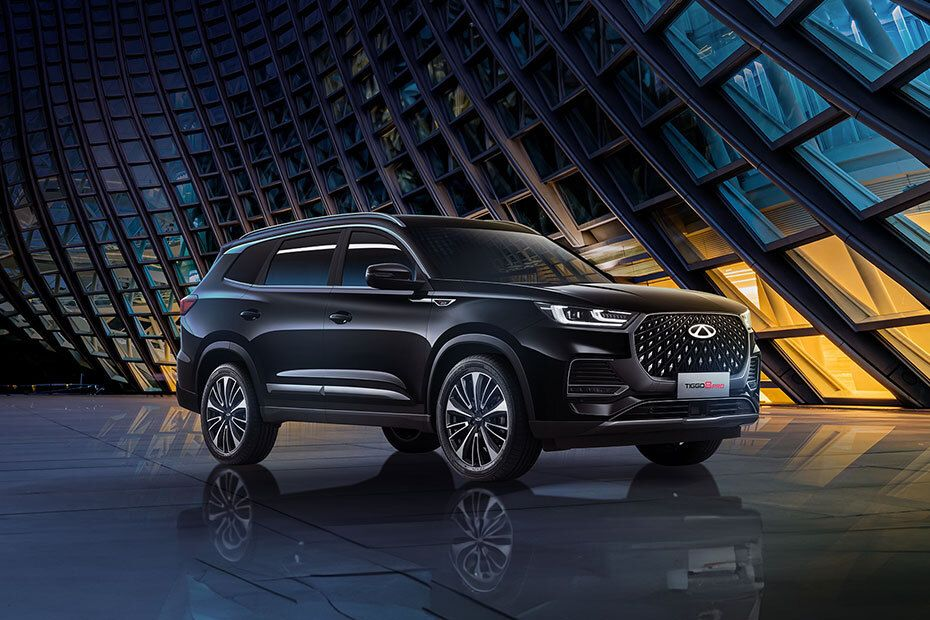
【PCauto】The Chery Tiggo 8 has carved a niche in the seven-seat mid-size SUV market with its feature-rich offering and competitive pricing. For family buyers, its natural rival is the established and respected Mazda CX-8.
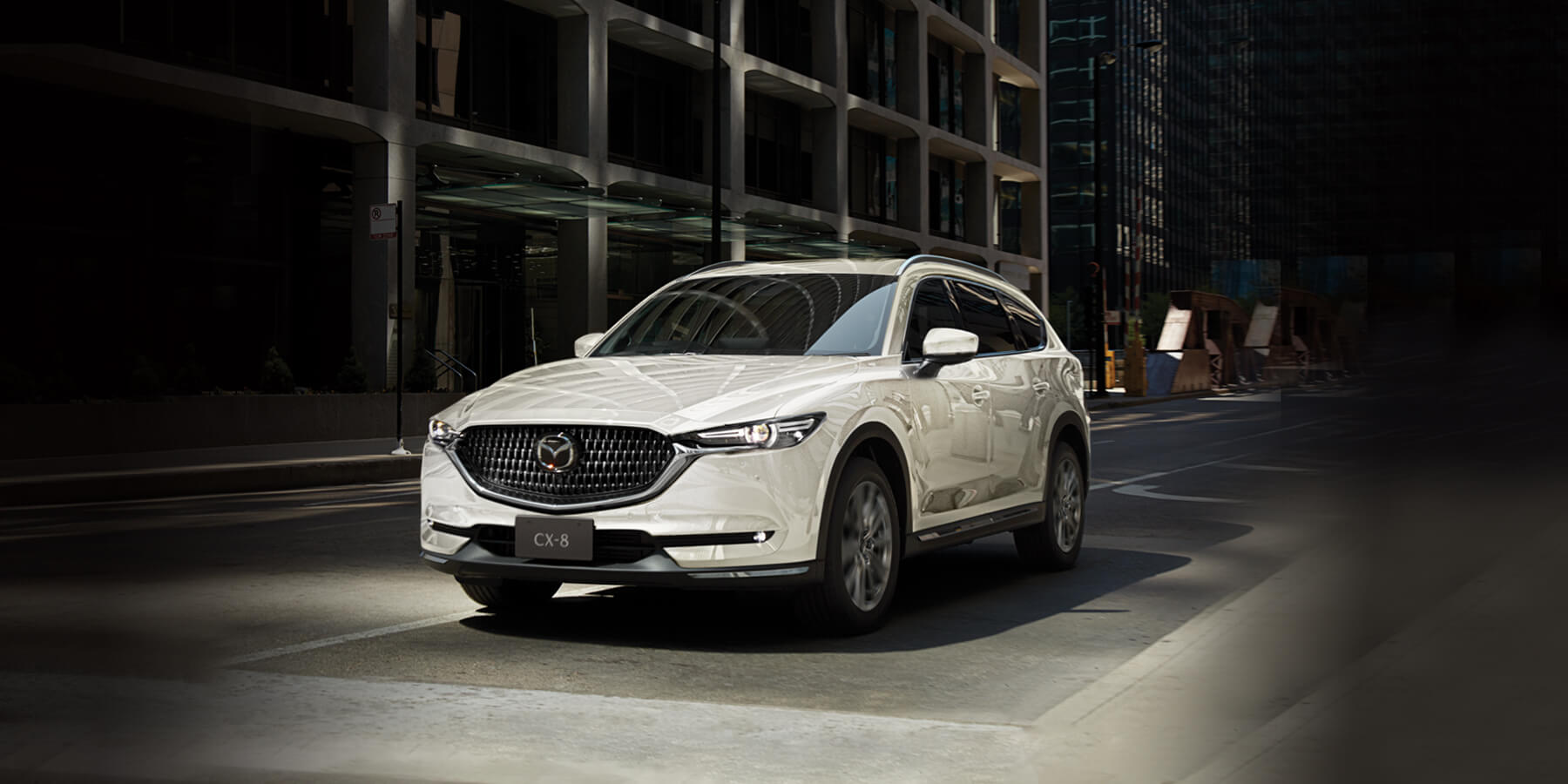
From a positioning perspective, the targets of these two cars are very similar, both emphasizing 7-seater layouts, catering to family travel needs, and focusing on practicality. However, differences arise precisely from this point.
This pits the newcomer, boasting packed features and attractive pricing, against the established model, renowned for its mature driving feel and predictable ownership experience. The question is not complicated, yet it is very practical: Would you rather pay for visible cost-effectiveness or for proven reliability?
Chery Tiggo 8 and Mazda CX-8 Exterior Styles
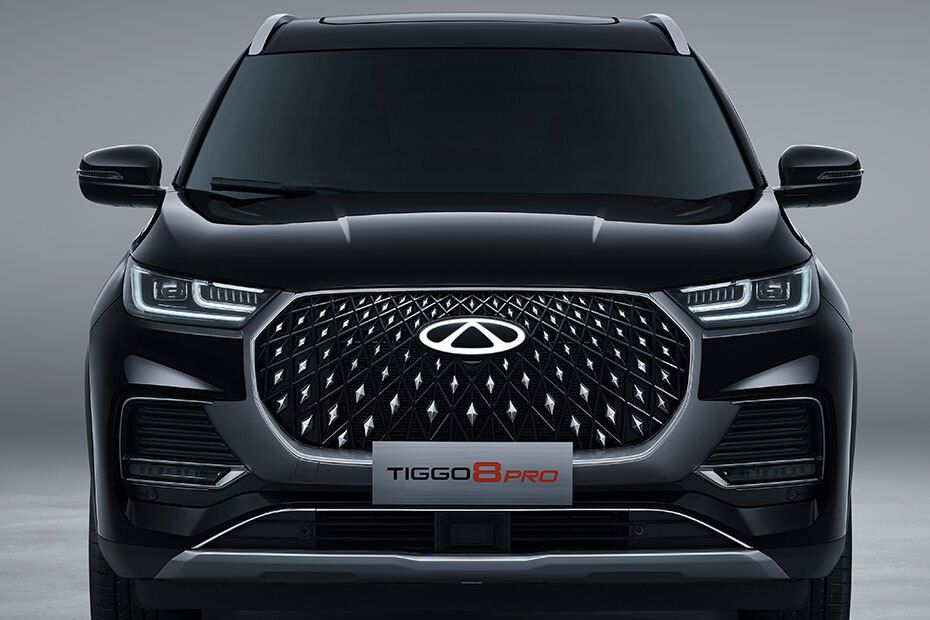
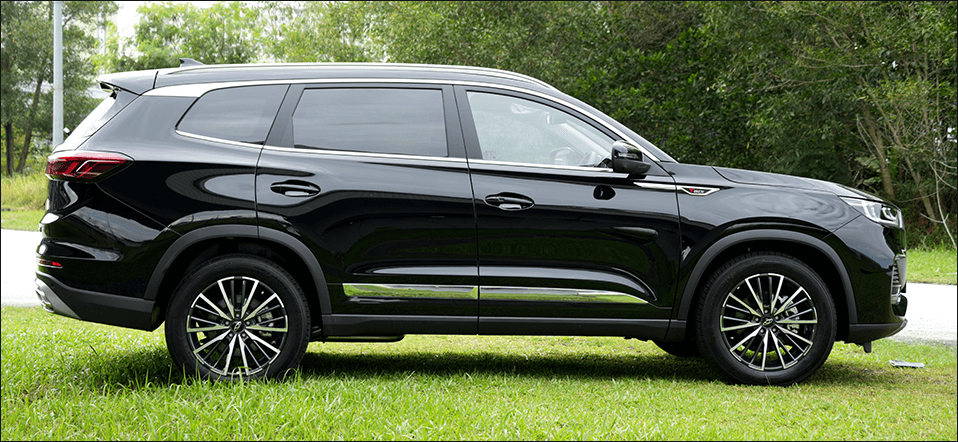
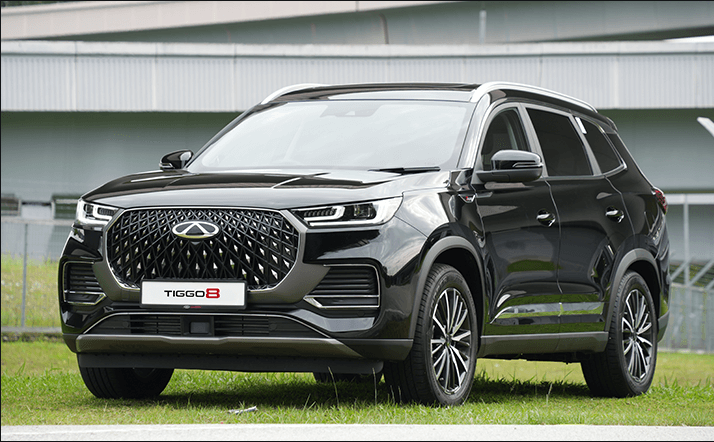
As a newcomer to Southeast Asia, the Chery Tiggo 8 makes a deliberate visual statement. Its broad, muscular stance and large grille give it a substantial, weighty presence that commands attention.
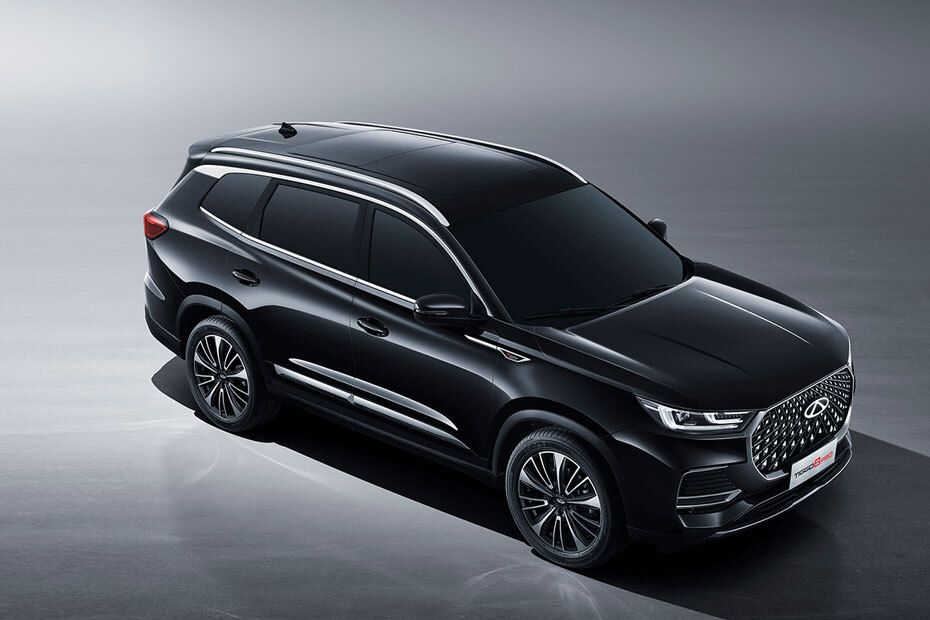
Details like the full LED lighting package and 19-inch wheels further amplify its road presence, while the sunroof adds a touch of premium appeal. This strategy—using substantial proportions and a high specification level to convey value—is a signature move for Chinese brands, focusing on tangible offerings over traditional luxury prestige.
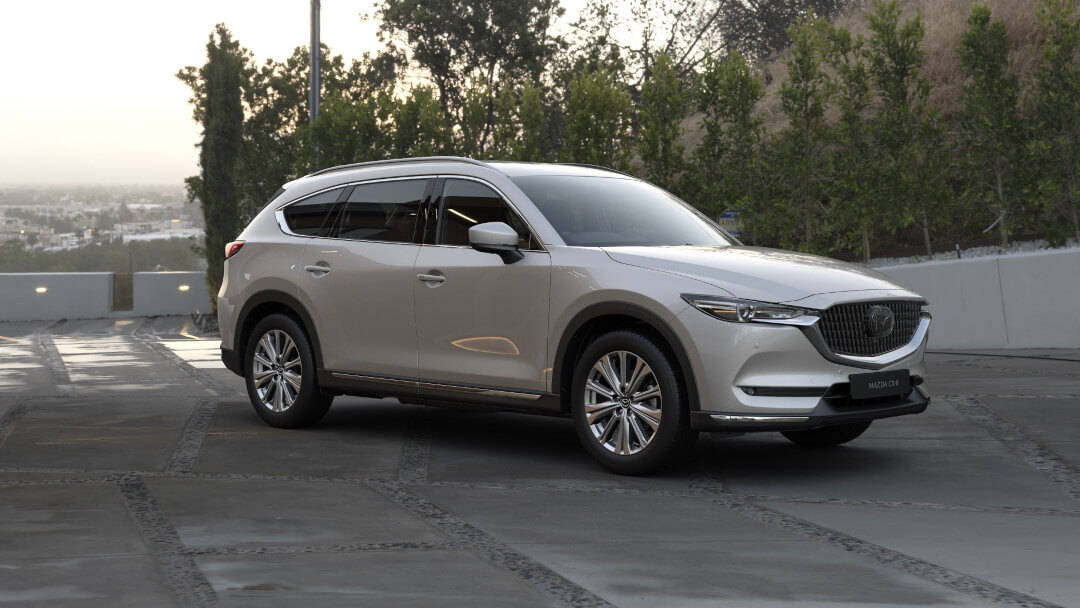
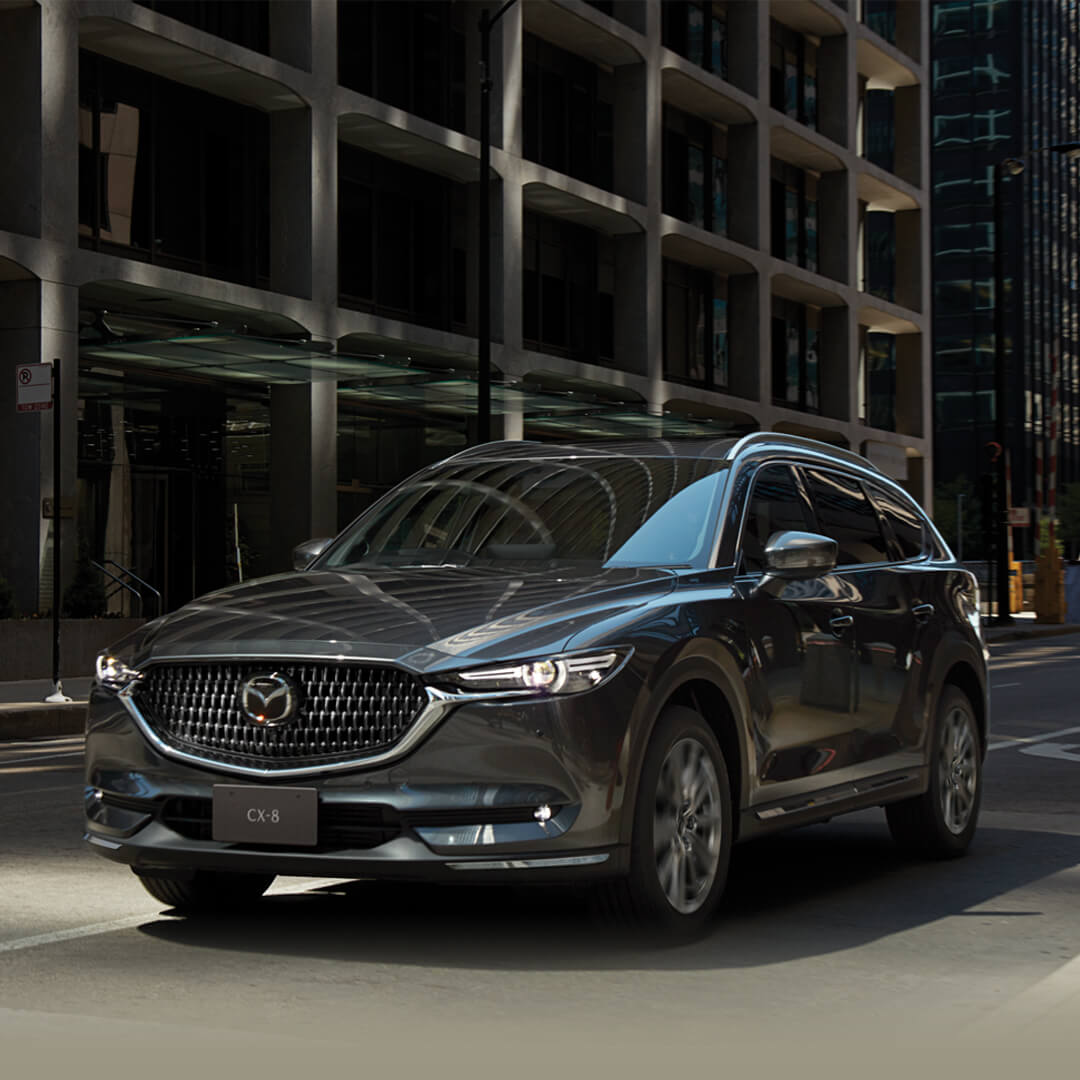
In contrast, the Mazda CX-8 makes a more subdued first impression. Its elongated, low-slung silhouette adheres to Mazda's consistent KODO design language, trading ostentation for a clear, brand-specific identity.
The CX-8 does not rely on exaggerated grilles or aggressive light assemblies to draw attention. The LED lights and wheel design primarily serve the overall proportions rather than standing out as focal points.
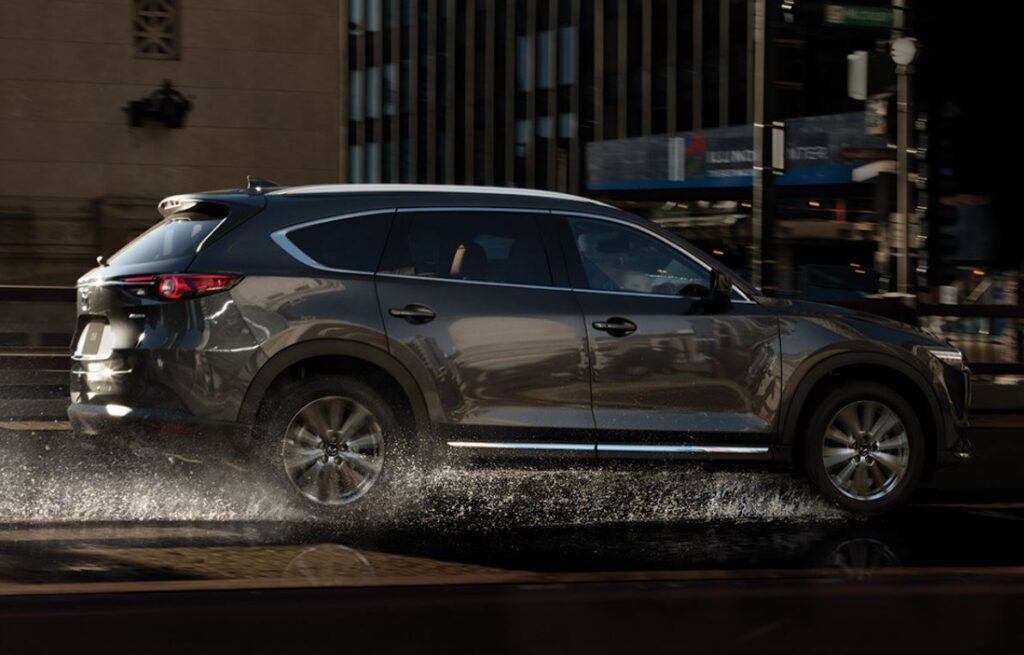
Its impression is that the exterior is not designed to "win at first glance," but rather requires you to look several times to gradually appreciate its restrained and balanced sense of refinement.
What are the differences in spatial performance between Tiggo 8 and CX-8?
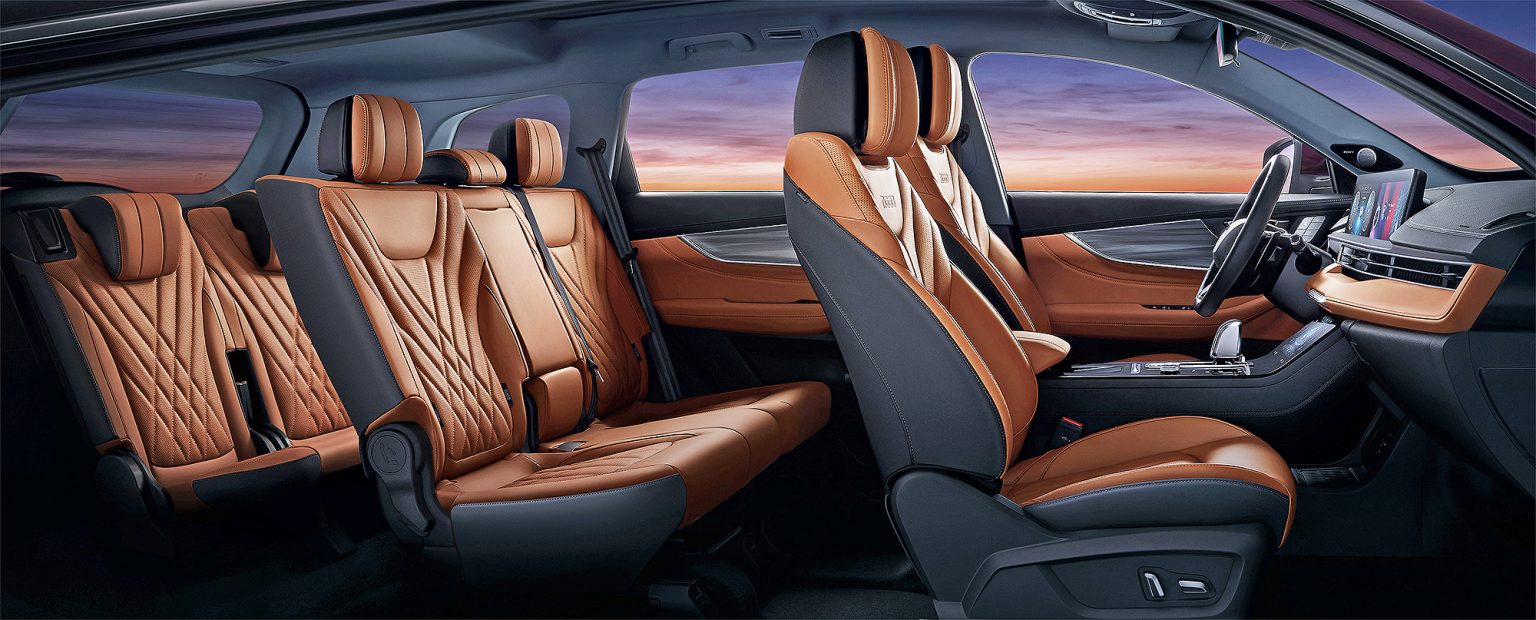
The Tiggo 8’s spatial philosophy is unambiguous.
With a length of 4722 mm, a wheelbase of 2710 mm, and a flexible 7-seat layout, it is clearly designed for multi-child families and high-frequency usage scenarios.
Even with all seven seats occupied, the 193-litre boot capacity can still meet basic storage needs, and the "5+2" layout has been pushed to its limits as much as possible.
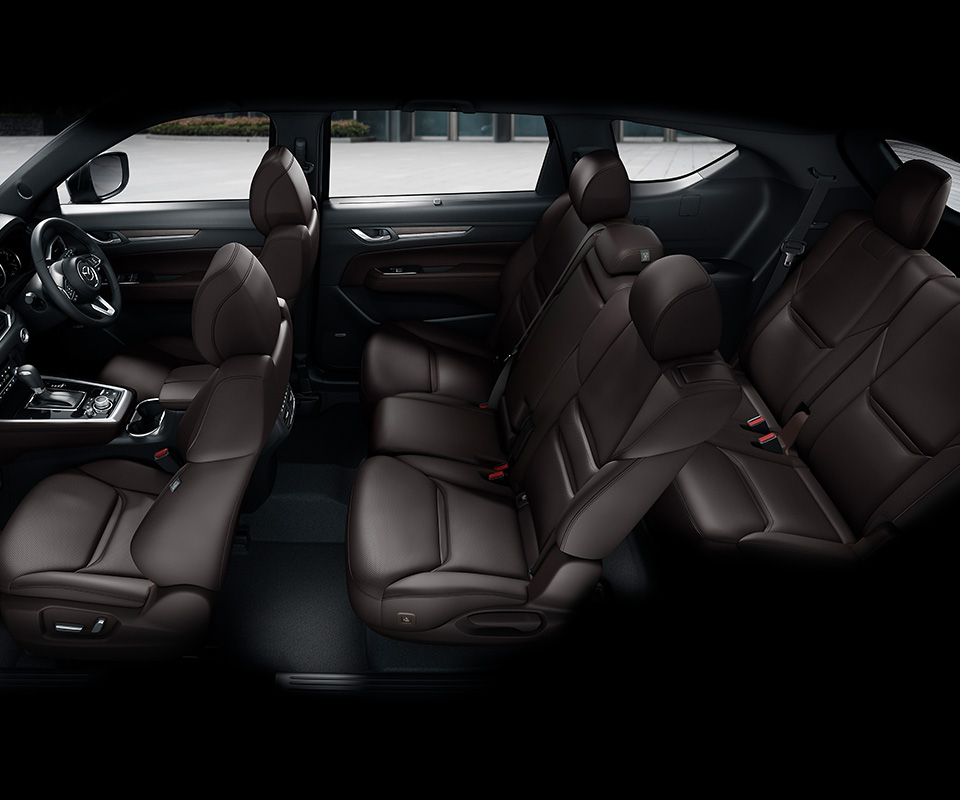
The CX-8 prioritizes front- and second-row occupant comfort. Its long and narrow structure provides better spatial comfort in the driver’s seat and the second row, but the third row feels more like an emergency option rather than being for long-term comfort.
The difference is one of priority: space is the Tiggo 8’s headline act, while for the CX-8, it is one component of a broader focus on comfort and driving dynamics.
Interior Differences Between Tiggo 8 and CX-8
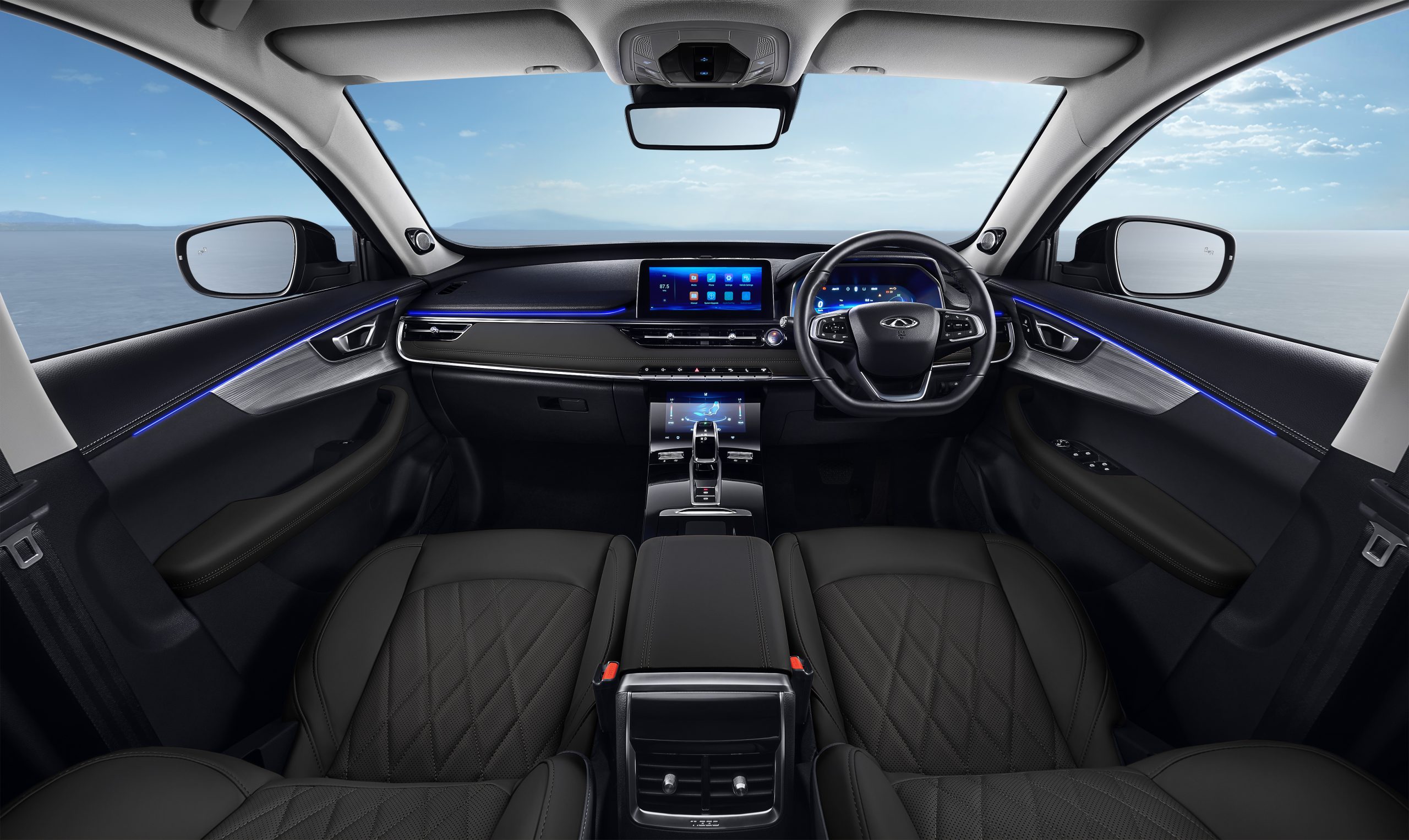
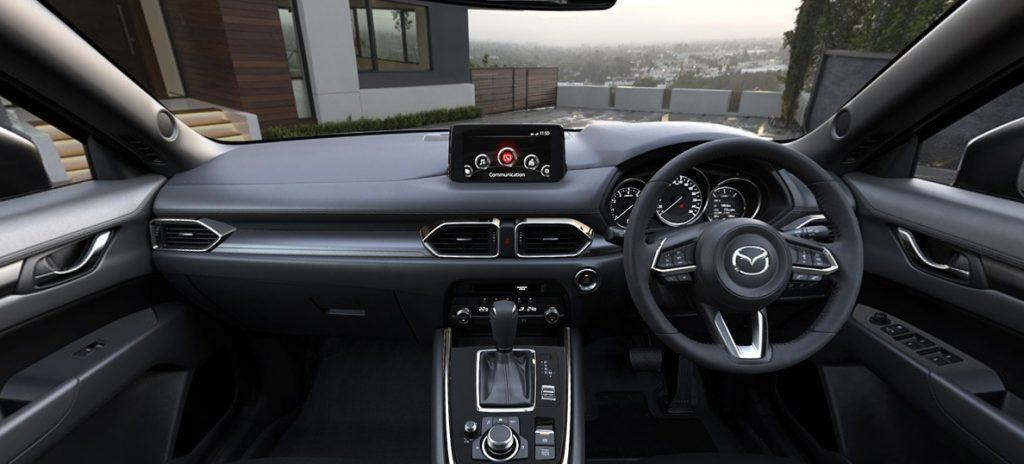
The Chery Tiggo 8’s interior philosophy is straightforward: blanket the cabin with features for every conceivable scenario.
A large digital dashboard dominates the cabin, augmented by a head-up display that projects key data into the driver's sightline. Paired with a premium Sony sound system and deeply integrated software, this ecosystem puts navigation, media, and vehicle controls immediately and intuitively at hand, minimizing daily compromise.
The Mazda CX-8 takes a fundamentally different approach.
The screen size is not large and adheres to a non-touch design, with knobs and physical buttons still being the core operation method. Mazda prioritises operational certainty and intuitive consistency over sheer information density.
Leather wrapping, solid wood panels, and button tactile feedback are all about the tactile experience and the stability of long-term use. The CX-8 does not pursue having more functions but deliberately controls complexity to avoid creating distractions during driving.
Tiggo 8 Offers Three Powertrain Options
Currently, the main version of the Tiggo 8 being promoted is the 2.0T variant, while the 1.6T and PHEV plug-in hybrid versions have also been added to the lineup.
The 1.6T turbocharged engine delivers 197 PS and 290 Nm. Although it is not aggressively powerful, it is friendlier in terms of cost, fuel consumption, and taxes. It is considered one of the most cost-effective choices in the Tiggo 8 lineup.
The 2.0T version, on the other hand, increases output to about 256 PS and 390 Nm, providing direct power response and ample reserve, making it better suited for family users who have higher demands for acceleration performance.
As for the PHEV plug-in hybrid version, the system's combined output is approximately 275 PS and 365 Nm, supporting about 90 km of pure electric range. It is clearly designed to address the cost of daily commuting and provides the quietness of electric driving.
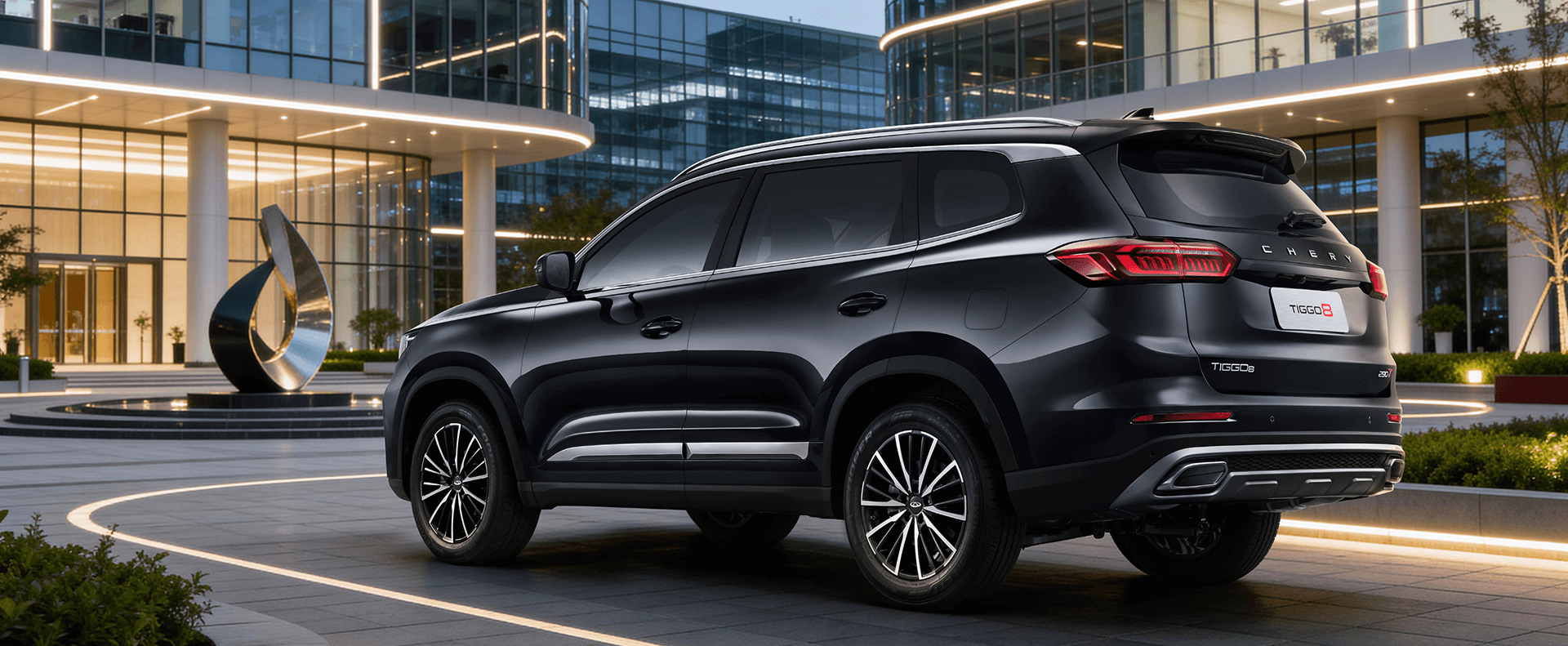
On the road, the 2.0T feels energetic with quick throttle response and clear power delivery at low to mid-range rpm. Whether starting in the city, changing lanes, or driving with a full load, it gives the driver a sense that "this car still has power in reserve."
The 1.6T is more rational, while the PHEV further emphasizes Tiggo 8's family orientation.
However, this power focus has trade-offs.
The chassis tuning is on the firm side, and road noise isolation isn't a strong point. The brakes have a somewhat long pedal travel that requires a moment to get used to—conscious trade-offs in a package that prioritizes powertrain response.
CX-8: Various Power Options, but Always One Consistent Character
The Mazda CX-8 also offers multiple powertrain options, but they all ultimately point to the same driving logic:
2.5L naturally aspirated Skyactiv-G, approximately 192 PS / 258 Nm
2.5L Turbo Skyactiv-G, approximately 228 PS / 420 Nm, equipped with AWD
2.2L Skyactiv-D Diesel, approximately 188 PS / 450 Nm
No matter which one, it does not pursue instantaneous acceleration, but emphasizes smooth and linear output.
Coupled with Mazda's 6-speed automatic transmission (Skyactiv-Drive) and G-Vectoring Control Plus (GVC Plus), the driving experience of the CX-8 always remains consistent: steady progression, natural transitions, and easy control.
Reliability and Long-Term Use: Where Does Trust Come From?
For the Southeast Asian market, the Tiggo 8 is indeed not as well-known as the CX-8.
However, it is not an untested experimental product. In the Chinese market, the Tiggo 8 has already undergone years of high-intensity real-world usage. Its 1.6T and 2.0T power systems are not cutting-edge, but they are sufficiently mature and have been repeatedly refined.
Common feedback points to areas like infotainment system stability, occasional software quirks, and potential for interior or chassis noises over time. While not major faults, they can affect long-term satisfaction, partly explaining Chery’s proactive after-sales and warranty policies.
 As for the Mazda CX-8, its long-term reputation has almost gone to the other extreme.
Its technology is not new, but precisely because of this, the user experience is highly predictable. There is no complex architecture, no radical software integration, and it almost never requires "re-adapting" to its usage logic.
The long-term impression of the CX-8 has never been about how astonishing it is, but rather how seldom it surprises people.
If any infringement occurs, please contact us for deletion










Popular Cars
Model Year
Car Compare
Car Photo