
Q
What is the Monthly Installment of Porsche Cayenne? See Here!
 MusicianJul 30, 2025, 09:59 AM
Regarding the monthly installment amount of the Porsche Cayenne in Malaysia, the specific figure depends on factors such as the vehicle model configuration, loan term, down - payment ratio, and bank interest rate. Taking the base version of the Cayenne as an example, if you choose an 80% loan amount and a 5 - year repayment period, the monthly installment is approximately between RM8,000 and RM10,000. For the actual amount, you need to consult the authorized Porsche dealers in Malaysia or the partner banks for the latest promotion packages. Some dealers may offer low - interest rates or flexible repayment plans.
It's also worth noting that as a luxury SUV, the maintenance cost of the Cayenne should also be taken into account. The Porsche Centres in Malaysia offer regular maintenance packages. It is recommended that car owners understand the labor costs and spare - parts prices in advance. Meanwhile, the advanced chassis technology and hybrid system (if selected) equipped on this car can adapt to the local rainy climate and urban road conditions. The standard - equipped PASM (Porsche Active Suspension Management) system can improve driving stability. If your budget allows, you can also opt for the rear - wheel steering system to enhance flexibility. Although these technological configurations may increase the vehicle purchase cost, they can significantly improve the long - term driving experience.
Special Disclaimer: This content is published by users and does not represent the views or position of PCauto.
Related Q&A
Q
Is a Porsche Cayenne good for long drive?
The Porsche Cayenne stands out as a luxury SUV that truly excels on long drives, making it a perfect fit for Malaysia's roads and climate. Under the hood, its efficient turbocharged engine paired with the 8-speed Tiptronic S transmission delivers smooth power delivery and decent fuel economy, keeping things quiet and comfortable even when cruising at highway speeds. The standard air suspension system automatically adjusts damping based on road conditions, taking long-distance comfort up another notch.
What really helps on those extended journeys is the Cayenne's ergonomic seat design, which minimizes fatigue during hours behind the wheel. Throw in advanced driver assists like adaptive cruise control and lane-keeping, and it's clear this SUV is built to reduce the strain of long drives. For Malaysian drivers, the Cayenne's air-con system is a beast—blasting cold air fast enough to tackle our tropical heat with ease. The generous fuel tank also means fewer stops at the pump, which is a big plus on those highway stretches.
Space-wise, the Cayenne doesn't disappoint either. Rear legroom and boot capacity are class-leading, easily swallowing all the luggage for a family trip. If you're watching fuel costs, the hybrid variant ups the efficiency game even more. Sure, luxury car maintenance isn't cheap, but Porsche's service network in Malaysia is solid, giving owners peace of mind. All things considered, if you're someone who regularly hits the North-South Expressway, the Cayenne is definitely worth a spot on your shortlist.
 GentleSpiritSootherOct 15, 2025
Q
When did Porsche stop making Cayenne?
The Porsche Cayenne, the brand's luxury SUV, is still in production and going strong. The current iteration is the third generation (codenamed PO536), which received a mid - cycle refresh in 2023. This update brought with it a revised plug - in hybrid system and a brand - new interior design. In the Malaysian market, the Cayenne has long been a top pick among high - performance SUVs. Local buyers can choose from a variety of powertrains, including the 3.0T V6, 2.9T twin - turbo V6, and the range - topping 4.0T V8. For those who desire a sportier look, the Coupe variant is also available. Porsche is steadily ramping up its electrification efforts in Southeast Asia, and Malaysian customers should keep an eye on the Cayenne E - Hybrid. With an electric - only range of 80 kilometers (WLTP), it's well suited for daily city driving. Thanks to the Malaysian government's ongoing tax incentives for hybrid vehicles, these electrified versions are highly cost - effective. For the latest specs and pricing, it's always best to check directly with official Porsche channels.
 WanderingSoulJourneyerOct 15, 2025
Q
What engine is in the Cayenne 2025?
The 2025 Porsche Cayenne hits the Malaysian market with a solid lineup of powertrains to suit different tastes. There's the efficient 3.0-liter V6 turbo kicking out 353 horsepower, a beefier 2.9-liter V6 twin-turbo in the Cayenne S good for 474 horses, and at the top of the heap, the 4.0-liter V8 twin-turbo in the Cayenne Turbo GT that cranks out a whopping 631 hp. Then there are the plug-in hybrid options, like the Cayenne E-Hybrid, which pair either a 2.0-liter or 3.0-liter engine with an electric motor for a greener drive. These PHEVs offer around 40-60 km of all-electric range, making them pretty ideal for Malaysian city commutes. All these engines are mated to an 8-speed Tiptronic S transmission, ensuring smooth shifts and decent fuel economy. What's cool about Porsche's engine tech here is how it balances performance and efficiency. The V8, for example, uses cylinder deactivation, automatically switching to four-cylinder mode under light loads to save fuel. And the hybrids, of course, let you cruise on pure electric to cut down on emissions. For Malaysian buyers, it really comes down to daily needs. If you're often hitting the highway or crave that sporty feel, the V6 or V8 versions are the way to go. But if you're big on eco-friendliness and fuel efficiency, the hybrid models should be right up your alley.
 SparklingDewAdmirerOct 15, 2025
Q
What is the battery in the Porsche Cayenne 2025?
The 2025 Porsche Cayenne is expected to come equipped with advanced lithium-ion battery packs, though exact specs will likely vary depending on the trim—think base, plug-in hybrid, or high-performance models. Your standard gas-powered Cayenne will stick with the tried-and-true 12V AGM battery, but the plug-in hybrid variants are where things get interesting, packing higher-voltage lithium-ion units to power that electric motor.
Now, a heads-up for Malaysian drivers: our tropical heat can be tough on batteries. The high temps tend to speed up electrolyte evaporation, so make it a habit to check your battery's condition regularly. And when it comes time for replacements, stick with Porsche OEM parts—trust me, compatibility is key here.
Porsche's smart energy management system is a solid plus too; it optimizes charging and discharging to help squeeze more life out of that battery. If you're eyeing the hybrid, expect a bump in all-electric range compared to the previous gen, but remember, real-world numbers will hinge on local road conditions and how you drive—stop-and-go city traffic versus highway cruising makes a big difference.
For battery care, avoid leaving the car parked for super long stretches until it's drained; that's a quick way to kill a battery. And don't sleep on those preventive checks at your Porsche service center—their diagnostic tools can catch issues before they turn into headaches. Keep these tips in mind, and your Cayenne's battery should stay in the game for the long haul.
 GlowingOrbCollectorOct 15, 2025
Q
Will there be a 2025 Porsche Cayman?
From what we're hearing, Porsche is indeed gearing up to launch an all-new Cayman in 2025 as part of its broader electrification strategy. Word on the street is this new model will likely ditch the combustion engine in favor of a pure electric powertrain, staying true to the 718 lineage's sports car DNA while cranking up the performance and tech to meet global demand for high-performance electric sports cars.
For Malaysian enthusiasts, there's a good chance this EV Cayman will make its way here through official channels. However, we'll have to wait for Porsche Asia Pacific to confirm exact launch timings and local specifications.
What's really exciting is that Porsche isn't starting from scratch with EVs. They've already racked up plenty of experience with the Taycan and the upcoming electric Macan, so expectations are high for this electric Cayman – especially when it comes to range figures and fast-charging capabilities, which could be pretty impressive.
Malaysian buyers should keep an eye on updates from their local Porsche centers. It's also worth watching how government EV policies shape up – things like import tax breaks or improvements to charging infrastructure could have a real impact on both the car's final price tag and how practical it is to live with.
 ShimmeringLightsWatcherOct 15, 2025
Q
What's the fastest 2025 Porsche?
The fastest Porsche model of 2025 is the all-new Taycan Turbo S. This pure electric sports car, armed with its potent dual-motor all-wheel-drive setup, cranks out a whopping 1,000 horsepower in overboost mode. It rockets from 0-100 km/h in a mere 2.3 seconds and tops out at 320 km/h, making it Porsche's quickest production car to date.
Under the skin, the Taycan Turbo S packs an advanced 800V high-voltage battery system. It's not just about brute force, though – this thing supports 270 kW fast charging, meaning you can get around 400 km of range in just 15 minutes. Perfect for those long hauls up and down Malaysia's North-South Expressway.
What's really impressive is how Porsche's EV tech innovation lets it deliver mind-blowing performance without sacrificing everyday usability. Take the adaptive air suspension, for example – it automatically adjusts to the road conditions, ensuring a comfortable ride no matter what Malaysian roads throw at it.
For speed-craving Malaysian Porsche fans, the Taycan Turbo S isn't just a statement of Porsche's performance prowess in the electric age; it's a glimpse into the future of supercars. And to sweeten the deal, Porsche Centre Malaysia offers exclusive charging networks and after-sales service, so owners can hit the road with total peace of mind.
 WhisperingWindsListenerOct 15, 2025
Q
What's the cost of a 2025 Porsche?
Porsche hasn't officially announced their 2025 model prices for Malaysia just yet, but we can get a ballpark figure by looking at the 2024 lineup. For example, the entry-level Macan is expected to start around RM400,000, while the 911 Carrera will likely push north of RM900,000. Of course, the final number will dance around a bit depending on the specific trim, the options you tick, and even currency exchange rates.
Let's not forget, in Malaysia, imported car prices typically bundle in duties, sales tax, and registration fees – these can add a pretty penny to the sticker price. If you're seriously considering one, your best bet is to keep an eye on Porsche Malaysia's official website or hook up with an authorized dealer to get the most accurate quote.
Porsche's reputation is built on that legendary driving feel and top-notch interiors. Whether you're looking at the SUVs like the Cayenne and Macan, the iconic 911 sports cars, or even the all-electric Taycan, they all blend cutting-edge tech with that timeless Porsche design language. Malaysia's tropical weather and mixed road conditions can be tough on cars, but Porsche's all-wheel-drive systems and adaptive suspension setups handle it like a champ. Plus, their after-sales service network covers all the major cities, so you can have peace of mind knowing support is there when you need it.
 HiddenCoveDiscovererOct 15, 2025
Q
How much should I pay for a 2025 Porsche Cayenne?
Pricing for the 2025 Porsche Cayenne in Malaysia is expected to vary depending on configuration and optional extras. Looking at the current Cayenne, which starts roughly between RM600,000 and RM700,000 before any added options, the new model might see slight adjustments due to exchange rates, import duties, and equipment upgrades. Your best bet for the latest figures is to reach out directly to authorized Porsche dealers in Malaysia, like Porsche Centre Kuala Lumpur or Johor Bahru. With luxury cars, custom options—think wheels, interior materials, or driver assistance systems—can really swing the final price tag, so dealerships will have the most accurate breakdown for your build.
A big factor keeping Cayenne prices on the higher side in Malaysia is the import duty structure, which can add up to 30-50% to the car's cost when you factor in tariffs, consumption tax, and sales tax. If you're planning to hold onto your Cayenne for the long haul, it's worth checking out Porsche Malaysia's official warranty coverage—typically 5 years with unlimited mileage—and their service packages. These can be smart investments to help manage long-term maintenance costs.
Sure, rivals like the BMW X5 or Mercedes-Benz GLE might come in with slightly lower price tags in the Malaysian market, but Porsche's brand cachet and the sheer driving dynamics it delivers remain the Cayenne's stand-out strengths.
 SecretGardenGazerOct 15, 2025
Q
What transmission is in the 2025 Porsche Cayenne?
The 2025 Porsche Cayenne offers Malaysian buyers a variety of transmission options, each tailored to specific models and powertrains. The base Cayenne and Cayenne S are expected to feature the refined 8-speed Tiptronic S automatic transmission, celebrated for its smooth shifts and quick reflexes—striking that perfect balance between daily comfort and spirited performance. Step up to the high-performance Cayenne Turbo GT, and you'll likely find the more aggressive 8-speed PDK dual-clutch gearbox under the hood, engineered specifically for handling massive torque and delivering lightning-fast shift times. For the plug-in hybrids, like the Cayenne E-Hybrid, Porsche fits an 8-speed automatic transmission specially tuned for the hybrid system, maximizing the synergy between electric and combustion power for optimal efficiency.
For Malaysian consumers, Porsche's transmission tech doesn't just prioritize driving thrills; it's also built to withstand our tropical climate. Think beefed-up cooling systems and enhanced sealing to keep things running smoothly when the mercury rises. If you're in the market, pick based on your driving style: the Tiptronic S is your go-to for relaxed, comfortable commutes, while the PDK will appeal to those craving that track-inspired edge. And regardless of which you choose, all transmissions come with Porsche's "Sport Response" mode, giving you an instant boost in power delivery—perfect for attacking Malaysia's twisty backroads or cruising confidently on the highway.
 ButterflyFlightChaserOct 15, 2025
Q
What is the range of the 2025 Cayenne Hybrid?
The 2025 Cayenne Hybrid is expected to deliver an all-electric range of 60 to 80 kilometers, though actual figures may vary based on driving conditions, battery state, and vehicle specifications. This plug-in hybrid model pairs a 3.0-liter V6 turbocharged engine with an electric motor, churning out a combined system output of around 460 horsepower—making it equally adept at city commutes and longer journeys. For Malaysian buyers, its fuel efficiency translates to noticeable savings at the pump, especially handy for navigating traffic-heavy cities like Kuala Lumpur. What’s notable is that plug-in hybrids in Malaysia qualify for tax incentives, including import duty and sales tax exemptions, plus subsidies for home charging installation. If you’re mostly doing short trips, lean into electric mode to maximize savings, and keeping up with high-voltage battery maintenance will help extend its lifespan. These luxury plug-in hybrid SUVs hold up well in tropical climates, but it’s wise to keep the battery around 50% charge if you’re leaving it parked for extended periods.
 WildflowerMeadowLoverOct 15, 2025
Popular Cars
Model Year
Car Compare
Car Photo
Related Models
 Cars
CarsLatest Q&A
Q
Is AMT similar to automatic?
There are significant differences between AMT transmissions and automatic transmissions (AT) in terms of core structure and driving experience. AMT is essentially an electronically automated version of a manual transmission, simulating manual clutch operation and gear shifting through a computerized control system while retaining the gear set structure of manual transmissions. As a result, it offers higher transmission efficiency, with fuel consumption approximately 8%-12% lower than AT, making it particularly suitable for highway or long-distance driving. However, it may exhibit jerking similar to manual transmissions during low-speed gear shifts, especially noticeable in congested traffic conditions.
AT transmissions rely on torque converters for power transfer, delivering smooth and seamless gear shifts that appeal to comfort-oriented users. However, their complex structure (incorporating planetary gear sets, hydraulic systems, etc.) results in higher maintenance costs. A single service may cost between 800 to 1,500 ringgit, whereas AMT only requires gear oil replacement at approximately 400 ringgit.
From a market perspective, AMT is predominantly used in budget vehicles or commercial models priced below 80,000 ringgit, while AT is typically featured in mid-to-high-end vehicles. Consumers should select based on actual needs: AMT suits those prioritizing fuel efficiency and low maintenance costs, while AT better serves those valuing comfort. Notably, recent advancements in AMT electronic control technology have significantly mitigated jerking issues, though test drives should still emphasize low-speed performance evaluation.
 AriaMar 26, 2026
Q
Which is better, DCT or AT?
DCT (Dual-Clutch Transmission) and AT (Automatic Transmission) each have their own advantages and disadvantages, and the choice should be based on personal driving needs. AT transmissions transfer power through a torque converter, offering excellent shift smoothness, making them suitable for urban commuting or novice drivers. However, they tend to have higher fuel consumption, and vehicles equipped with them are usually more expensive. DCT transmissions utilize a dual-clutch structure, featuring fast shift speeds and high power transmission efficiency, which provides a more direct driving experience—particularly suitable for users seeking a sporty feel. However, they may exhibit jerking at low speeds and have relatively high maintenance costs. If durability and comfort are priorities, AT is the more reliable choice; if power responsiveness and driving pleasure are preferred, wet DCT (such as Volkswagen DSG) performs better, though dry DCT models should be avoided in prolonged stop-and-go traffic conditions. Additionally, CVT transmissions excel in smoothness and fuel efficiency, making them ideal for daily commuting, but they lack driving excitement. It is recommended to test-drive before purchasing, as tuning varies significantly across brands, and real-world experience is more important than theoretical specifications.
FlutteringMar 26, 2026Q
Is Amt good or bad?
AMT gearboxes have a significant cost advantage in the local market, typically being around 5,000 Ringgit cheaper than models equipped with conventional automatic transmissions. Their fuel efficiency is comparable to manual transmissions, resulting in long-term fuel savings. Featuring a straightforward design, they achieve transmission efficiency exceeding 90% with relatively low maintenance costs, making them ideal for practicality-oriented consumers. However, their shifting logic contains inherent limitations: gear changes between 1st and 2nd cause 0.3-0.5 second power interruptions, while unintended upshifts on inclines may reduce engine speed by 15%-20%, compromising driving smoothness. For urban commuters or budget-conscious buyers, AMT offers excellent value, though those prioritizing premium driving dynamics should consider alternative transmission types. Some domestic models like the Perodua Axia employ enhanced AMT systems, where optimized shift programming has reduced gearshift shock by approximately 30%.
 RainbowsMar 26, 2026
Q
Which gives better mileage, CVT or AMT?
From the perspective of fuel economy, CVT transmissions generally perform better under urban driving conditions. Their continuously variable design allows the engine to consistently operate within the optimal speed range, significantly reducing fuel consumption during frequent starts and stops. Test data shows that their fuel consumption in urban driving conditions is 10% to 15% lower than that of comparable models. AMT transmissions, on the other hand, inherit the high transmission efficiency of manual transmissions, delivering fuel efficiency close to manual transmissions during high-speed cruising. This makes them particularly suitable for long-distance driving in large-displacement vehicles. However, due to power interruption during gear shifts, their overall fuel consumption may be 5% to 8% higher than CVTs.
The difference in fuel-saving characteristics between the two transmissions stems from their technical principles: CVTs achieve continuous variability through steel belts and pulleys, eliminating the fixed gear ratio limitations of traditional transmissions; AMTs simulate manual gear changes via electronic control systems while maintaining the mechanical efficiency of gear transmission. Notably, actual fuel consumption is also influenced by driving habits. Smooth acceleration and anticipatory deceleration can maximize the transmissions' fuel-saving potential. If the vehicle budget permits and urban commuting is the primary use, CVTs offer a more economical choice. For frequent highway driving with an emphasis on cost-effectiveness, AMTs are equally worth considering.
 RubyBlazeMar 26, 2026
Q
Which is cheaper, AMT or CVT?
In terms of gearbox cost, AMT is usually more economical than CVT. Essentially, AMT is a manual transmission equipped with an electronic control unit, featuring a simple structure and low maintenance costs. The unit price ranges from approximately 5,000 to 8,000 ringgit, making it suitable for budget-conscious consumers or those who prioritize long-term operating costs. CVT incurs higher manufacturing costs due to its precision steel belt transmission system and continuous variable transmission technology, with a unit price of about 7,000 to 10,000 ringgit. However, it delivers a smoother driving experience and superior fuel efficiency. The primary differences between the two lie in technical complexity: AMT retains the gear-shifting mechanism, resulting in noticeable shift shock; CVT achieves linear power output through stepless speed variation but requires periodic belt inspection and incurs higher maintenance expenses. For those prioritizing initial cost and basic transportation needs, AMT offers better value; if comfort and long-term fuel economy are priorities, CVT represents a more worthwhile investment. Note that actual prices may vary based on vehicle model, brand, and local supply chain factors.
 ShadowProwlMar 26, 2026
Related News

Porsche Cayenne S Electric released, offering 653 kilometers WLTP range and wireless charging feature
WilliamMar 11, 2026

A price difference of RM500,000, Zeekr 7X or Porsche Cayenne S E-Hybrid?
RobertFeb 9, 2026

Porsche launches wireless charging technology, while Tesla announces the cancellation of Cybertruck-related development
MichaelSep 11, 2025

Porsche Cayenne EV will offer wireless charging functionality, eliminating the need for heavy charging cables
JamesSep 5, 2025
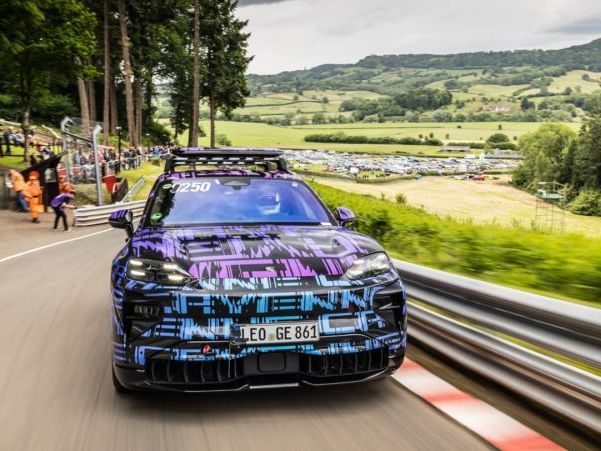
Porsche Tests Second-Gen Cayenne Electric, Aims to Rival Model X
JohnJul 16, 2025
View More
Pros
Cons