
Q
What is the size of Iriz?
 SingerVoiceHarmonyMay 19, 2025, 10:26 AM
The Proton Iriz is classified as a B-segment hatchback, with slight variations in length and height across different variants while maintaining same size of width and wheelbase. It features a uniform width of 1,722mm and wheelbase of 2,555mm across all models.
Regarding length, some variants like the 2023 Iriz 1.3 Standard CVT and 2021 Iriz 1.3 Standard CVT, their length is 3,945mm, while the length of 2023 Iriz 1.6 Active CVT is extended to 3,965mm.
Height measurements are different: the height of 2023 Iriz 1.3 Standard CVT and 2021 Iriz 1.3 Standard CVT is 1,554mm, the height of 2023 Iriz 1.6 Executive CVT is 1,564mm, and the height of the 2023 Iriz 1.6 Active CVT is 1,574mm.
These dimensions make Proton Iriz suitable for urban commuting while still providing comfortable cabin space for daily driving.
Special Disclaimer: This content is published by users and does not represent the views or position of PCauto.
Related Q&A
Q
What is the fuel consumption of 2021 Proton Iriz?
The fuel efficiency of the 2021 Proton Iriz varies by engine configuration. Models equipped with the 1.3-liter VVT engine deliver an average combined fuel consumption of around 5.6 liters per 100 kilometers, while the 1.6-liter VVT version comes in at approximately 5.8 liters per 100 kilometers. Actual fuel usage may fluctuate slightly depending on driving habits, road conditions, and vehicle maintenance status. This car features Proton's Efficient Dynamics technology, including lightweight body design and low-rolling-resistance tires, which help improve fuel economy. For Malaysian consumers, the Iriz's fuel efficiency ranks above average among its class of hatchbacks, making it suitable for city commuting. To further reduce fuel consumption, it's advisable to maintain a steady speed, avoid sudden acceleration and hard braking, and regularly replace the air filter and spark plugs. It's worth noting that fuel efficiency test data is typically based on ideal laboratory conditions, and real-world driving may vary due to factors like weather and traffic conditions. Therefore, owners can track their actual fuel consumption under personal driving conditions by recording fuel refills and mileage driven.
 LavenderFieldOct 29, 2025
Q
What is the fuel consumption per 100km of Proton Iriz?
The official combined fuel consumption figures for different versions of the Proton Iriz show some variation. The 1.3-liter version has an official combined fuel consumption of 6.6 to 6.9 L/100km, while the 1.6-liter version ranges from 7.4 to 8.36 L/100km. However, the actual fuel consumption of a vehicle may fluctuate due to factors such as driving habits, road conditions, and vehicle load.
For instance, aggressive acceleration, hard braking, and frequent stop-and-go driving can lead to increased fuel consumption. Additionally, driving for extended periods in congested conditions, where the engine is idling or operating at low speeds, can also cause fuel efficiency to drop. Excessive vehicle load, such as carrying numerous items or a full passenger capacity, similarly results in greater fuel usage.
Understanding these influencing factors can help drivers maintain good driving habits and manage vehicle load effectively, thereby reducing actual fuel consumption.
 HappyShrimpMay 23, 2025
Q
What are the fuel consumptions of Iriz and Persona?
The fuel consumptions of Proton Iriz and Persona primarily depend on engine configuration and driving conditions, though official test data provides general reference ranges.
The Iriz is equipped with 1.3L and 1.6L VVT naturally aspirated engines. The 1.3L manual variant achieves approximately 14 km/L (city) to 18 km/L (highway) under standard test conditions, with the automatic version being 1-2 km/L lower. The 1.6L version consumes about 10% more fuel.
The Persona is equipped with a 1.6L engine, delivering combined fuel economy of about 15-16 km/L for manual transmission and 14-15 km/L for CVT variants. Its heavier body results in slightly lower fuel efficiency compared to the Iriz.
In real-world driving, fuel consumption may worsen by 20% in heavy traffic conditions, while steady-speed cruising on highways like the North-South Expressway may approach official figures.
Owners are advised to maintain proper tire pressure (190-210 kPa), avoid aggressive acceleration, and utilize cruise control to optimize fuel economy. These models deliver average fuel efficiency for their class in Malaysia, with regular maintenance (including throttle body cleaning and spark plug replacement) being crucial for sustaining optimal performance.
 JoyfulHeartMay 19, 2025
Q
What is the fuel consumption of Iriz 2018?
The fuel consumption of the 2018 Proton Iriz varies depending on engine and transmission configurations. The 1.3L manual version has a combined fuel economy of approximately 5.5L/100km (about 18.2km/L), while the 1.3L CVT automatic version averages around 5.9L/100km (about 17km/L). As for the 1.6L engine variants, the manual transmission model consumes about 6.1L/100km (approximately 16.4km/L), with the CVT automatic version at roughly 6.5L/100km (about 15.4km/L).
Actual driving fuel efficiency is influenced by multiple factors, including traffic conditions (such as higher consumption in congested Kuala Lumpur urban areas), driving habits (aggressive acceleration or high-speed driving increases fuel usage), and vehicle maintenance condition (cleanliness of air filters and spark plugs, proper tire pressure).
To optimize fuel economy, we recommend maintaining smooth throttle control, utilizing Eco mode (if equipped), and performing regular maintenance. Proper driving techniques can help your Iriz achieve closer-to-official fuel consumption figures while also extending its engine lifespan.
 DesignerArtCreationMay 19, 2025
Q
What's the color of Proton Iriz?
The Proton Iriz offers a variety of color options in Malaysia, including standard colors such as Snow White, Silver, Graphite Grey, Ruby Red, and Marine Blue. Some variants even have the combination of two colors, like Solid Black paired with Pearl White. All paints utilize high-quality coatings designed for Malaysia's hot and humid climate, ensuring long-term color retention without fading.
When selecting a color, buyers may consider not only personal preference but also factors like resale value and maintenance costs. Lighter colors such as white and silver are popular choices in Malaysia as they absorb less heat during summer months and show minor scratches less noticeably. Meanwhile, darker colors like black or red offer a more dynamic appearance but are more sensitive to sun exposure and dust.
 LivelySpiritMay 19, 2025
Q
Is Iriz equipped with a turbocharged engine?
The Proton Iriz is not available with a turbocharged engine option, as the entire lineup is equipped with naturally aspirated engines with either 1.3L or 1.6L displacement. While the Iriz lacks turbocharging technology, its engines perform well in fuel efficiency and daily urban driving. The linear power output of these naturally aspirated engines is particularly suitable for Malaysia's frequent stop-and-go traffic conditions.
For consumers seeking more powerful performance, Proton offers other models like the X50 or X70, both equipped with 1.5L turbocharged engines that provide stronger acceleration. Proton has not announced any plans to introduce a turbocharged version of the Iriz, but any future developments would typically be released through official channels.
For budget-conscious owners prioritizing practicality, the naturally aspirated Iriz is an attractive choice, offering advantages in maintenance costs and fuel efficiency.
 ModelPoseCharmMay 19, 2025
Q
What are the different variants of Iriz?
The Proton Iriz is available in multiple variants. In engine displacement, there are 1.3L and 1.6L options.
The 2023 Proton Iriz 1.3 Standard CVT is priced at RM 42,800 with an official combined fuel consumption of 6.9L/100km and a maximum engine output of 95PS.
The 2023 lineup also includes two 1.6L versions: the 1.6 Executive CVT and 1.6 Active CVT, priced at RM 50,300 and RM 57,300 respectively. Both are equipped with a 109PS engine with official combined fuel economy of 7.4L/100km.
These variants differ in configurations. For example, the 1.3 Standard CVT provides 4 airbags, while both 1.6L versions offer 6 airbags. Additional features are also different - the 1.6 Active CVT includes voice-controlled air conditioning, while some models are equipped with front parking sensors and reverse cameras. Buyers can choose according to their budget and requirements.
 CreatorIdeaInnovationMay 19, 2025
Q
What is the safety rating of Proton Iriz?
The Proton Iriz achieved an impressive 5-star safety rating in the 2014 ASEAN New Car Assessment Program (ASEAN NCAP) testing - a remarkable accomplishment for a B-segment hatchback. This rating shows the Iriz's high standards in body structure rigidity, crash protection, and active/passive safety features. The model is equipped with key safety technologies including dual airbags (upgraded to six airbags in higher trims), ABS anti-lock braking system, EBD electronic brake-force distribution, and ESC electronic stability control.
Notably, the Iriz scored 14.93 out of 16 points in adult occupant protection and 42.45 out of 49 points in child occupant protection - outstanding results in its vehicle class that make it particularly suitable for safety-conscious consumers in Malaysia. While the 2023 model hasn't undergone renewed testing, subsequent Proton models like the X50 and X70 have maintained these high safety standards, proving the brand's persistent commitment to safety performance.
For budget-minded consumers in Malaysia seeking premium safety features, the Iriz is a popular choice.
 HappySmileMay 19, 2025
Q
What type of engine is the Proton Iriz equipped with?
The Proton Iriz mainly adopts naturally aspirated engines, available in 1.3L and 1.6L displacements.
The 1.3L engine has a displacement of 1,332 mL, delivering maximum power of 95 PS (70 kW) at 5,750 rpm and peak torque of 120 N·m at 4,000 rpm, with an inline 4-cylinder configuration.
The 1.6L engine features 1,597 mL displacement, producing 109 PS (80 kW) maximum power at 5,750 rpm and 150 N·m peak torque at 4,000 rpm, also in an inline 4-cylinder arrangement.
These two engine options cater to different driver needs - the smaller displacement suits economical daily driving, while the larger engine provides enhanced performance for power-oriented drivers.
 LeafyBranchMay 19, 2025
Q
What is the fuel consumption of the Iriz 1.3 manual transmission?
The Iriz 1.3 manual transmission model, officially named the 2019 Proton Iriz 1.3 VVT Standard MT, has an official combined fuel consumption of 6.7L/100km. This B-segment vehicle measures 3,945mm in length, 1,722mm in width, and 1,554mm in height, with a wheelbase of 2,555mm and a curb weight of 1,132kg. It is equipped with a naturally aspirated 4-cylinder engine delivering maximum power of 95PS (70kW).
Its front suspension features MacPherson struts, complemented by ventilated disc brakes. It runs on 175/65 R14 tires all around. Safety features include ABS anti-lock braking and electronic stability control. The cabin offers mostly manual-adjustment seats and a single-zone manual air conditioning system. Understanding these specifications will help you better know this model's fuel efficiency and overall performance.
 NatureBeautyMay 19, 2025
Popular Cars
Model Year
Car Compare
Car Photo
Related Models
 Cars
CarsLatest Q&A
Q
Is AMT similar to automatic?
There are significant differences between AMT transmissions and automatic transmissions (AT) in terms of core structure and driving experience. AMT is essentially an electronically automated version of a manual transmission, simulating manual clutch operation and gear shifting through a computerized control system while retaining the gear set structure of manual transmissions. As a result, it offers higher transmission efficiency, with fuel consumption approximately 8%-12% lower than AT, making it particularly suitable for highway or long-distance driving. However, it may exhibit jerking similar to manual transmissions during low-speed gear shifts, especially noticeable in congested traffic conditions.
AT transmissions rely on torque converters for power transfer, delivering smooth and seamless gear shifts that appeal to comfort-oriented users. However, their complex structure (incorporating planetary gear sets, hydraulic systems, etc.) results in higher maintenance costs. A single service may cost between 800 to 1,500 ringgit, whereas AMT only requires gear oil replacement at approximately 400 ringgit.
From a market perspective, AMT is predominantly used in budget vehicles or commercial models priced below 80,000 ringgit, while AT is typically featured in mid-to-high-end vehicles. Consumers should select based on actual needs: AMT suits those prioritizing fuel efficiency and low maintenance costs, while AT better serves those valuing comfort. Notably, recent advancements in AMT electronic control technology have significantly mitigated jerking issues, though test drives should still emphasize low-speed performance evaluation.
 AriaMar 26, 2026
Q
Which is better, DCT or AT?
DCT (Dual-Clutch Transmission) and AT (Automatic Transmission) each have their own advantages and disadvantages, and the choice should be based on personal driving needs. AT transmissions transfer power through a torque converter, offering excellent shift smoothness, making them suitable for urban commuting or novice drivers. However, they tend to have higher fuel consumption, and vehicles equipped with them are usually more expensive. DCT transmissions utilize a dual-clutch structure, featuring fast shift speeds and high power transmission efficiency, which provides a more direct driving experience—particularly suitable for users seeking a sporty feel. However, they may exhibit jerking at low speeds and have relatively high maintenance costs. If durability and comfort are priorities, AT is the more reliable choice; if power responsiveness and driving pleasure are preferred, wet DCT (such as Volkswagen DSG) performs better, though dry DCT models should be avoided in prolonged stop-and-go traffic conditions. Additionally, CVT transmissions excel in smoothness and fuel efficiency, making them ideal for daily commuting, but they lack driving excitement. It is recommended to test-drive before purchasing, as tuning varies significantly across brands, and real-world experience is more important than theoretical specifications.
 FlutteringMar 26, 2026
Q
Is Amt good or bad?
AMT gearboxes have a significant cost advantage in the local market, typically being around 5,000 Ringgit cheaper than models equipped with conventional automatic transmissions. Their fuel efficiency is comparable to manual transmissions, resulting in long-term fuel savings. Featuring a straightforward design, they achieve transmission efficiency exceeding 90% with relatively low maintenance costs, making them ideal for practicality-oriented consumers. However, their shifting logic contains inherent limitations: gear changes between 1st and 2nd cause 0.3-0.5 second power interruptions, while unintended upshifts on inclines may reduce engine speed by 15%-20%, compromising driving smoothness. For urban commuters or budget-conscious buyers, AMT offers excellent value, though those prioritizing premium driving dynamics should consider alternative transmission types. Some domestic models like the Perodua Axia employ enhanced AMT systems, where optimized shift programming has reduced gearshift shock by approximately 30%.
 RainbowsMar 26, 2026
Q
Which gives better mileage, CVT or AMT?
From the perspective of fuel economy, CVT transmissions generally perform better under urban driving conditions. Their continuously variable design allows the engine to consistently operate within the optimal speed range, significantly reducing fuel consumption during frequent starts and stops. Test data shows that their fuel consumption in urban driving conditions is 10% to 15% lower than that of comparable models. AMT transmissions, on the other hand, inherit the high transmission efficiency of manual transmissions, delivering fuel efficiency close to manual transmissions during high-speed cruising. This makes them particularly suitable for long-distance driving in large-displacement vehicles. However, due to power interruption during gear shifts, their overall fuel consumption may be 5% to 8% higher than CVTs.
The difference in fuel-saving characteristics between the two transmissions stems from their technical principles: CVTs achieve continuous variability through steel belts and pulleys, eliminating the fixed gear ratio limitations of traditional transmissions; AMTs simulate manual gear changes via electronic control systems while maintaining the mechanical efficiency of gear transmission. Notably, actual fuel consumption is also influenced by driving habits. Smooth acceleration and anticipatory deceleration can maximize the transmissions' fuel-saving potential. If the vehicle budget permits and urban commuting is the primary use, CVTs offer a more economical choice. For frequent highway driving with an emphasis on cost-effectiveness, AMTs are equally worth considering.
 RubyBlazeMar 26, 2026
Q
Which is cheaper, AMT or CVT?
In terms of gearbox cost, AMT is usually more economical than CVT. Essentially, AMT is a manual transmission equipped with an electronic control unit, featuring a simple structure and low maintenance costs. The unit price ranges from approximately 5,000 to 8,000 ringgit, making it suitable for budget-conscious consumers or those who prioritize long-term operating costs. CVT incurs higher manufacturing costs due to its precision steel belt transmission system and continuous variable transmission technology, with a unit price of about 7,000 to 10,000 ringgit. However, it delivers a smoother driving experience and superior fuel efficiency. The primary differences between the two lie in technical complexity: AMT retains the gear-shifting mechanism, resulting in noticeable shift shock; CVT achieves linear power output through stepless speed variation but requires periodic belt inspection and incurs higher maintenance expenses. For those prioritizing initial cost and basic transportation needs, AMT offers better value; if comfort and long-term fuel economy are priorities, CVT represents a more worthwhile investment. Note that actual prices may vary based on vehicle model, brand, and local supply chain factors.
 ShadowProwlMar 26, 2026
Related News

Perodua Myvi's competitor Proton Iriz officially discontinued, ending its 11-year sales journey
JohnSep 11, 2025
Proton Iriz Interior Design Revealed: Economical and Well-Equipped
RobertJul 24, 2025
Proton Iriz Buying Guide: Captivating Consumers with Stylish Design and Abundant Features
LienApr 21, 2025
Proton Recorded Sales of 13,918 Vehicles in March, Marking a Significant MOM Increase of 23.9%
AshleyApr 10, 2025
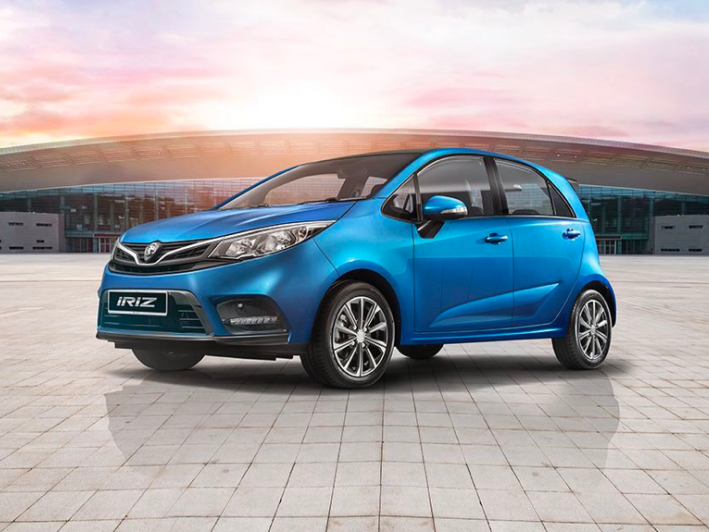
The Proton Iriz starts at RM 42,800, with two engines, both paired with a CVT gearbox.
LienJun 20, 2024
View More
Pros
Cons