
Q
What is the Toyota Raize called in the US?
 MerrySnowflakeJul 29, 2025, 11:53 AM
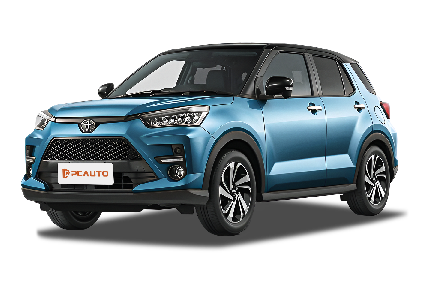
The Toyota Raize is also known as the Toyota Raize in the U.S. market. This vehicle is positioned as a Class B car, measuring 4,370mm in length, 1,710mm in width, and 1,605mm in height, with a wheelbase of 2,525mm, offering good spatial practicality. There are engines with different displacements to choose from, such as the 1.0L Turbo and 1.2L. For example, the 1.0L Turbo engine has a maximum horsepower of 98PS, and the 1.2L engine has a maximum horsepower of 88PS, which can meet the different power requirements of various consumers. In terms of configuration, it comes standard with safety systems like ABS anti - lock braking, active braking, and forward collision warning. There are also practical features such as a multi - function steering wheel and a 220V/230V power supply. Thanks to these features, it attracts numerous consumers in markets including the U.S., providing consumers with diverse travel options.
Special Disclaimer: This content is published by users and does not represent the views or position of PCauto.
Related Q&A
Q
Are all Toyota Raize turbocharged?
Not all Toyota Raize models are turbocharged. The Toyota Raize comes in different powertrain versions. Among them, the 1.0L Turbo CVT model is equipped with a turbocharged engine. The intake type is Turbo, and the engine has a maximum horsepower of 98PS. However, there are also 1.2L models, including the 1.2L E CVT, 1.2L E MT, and 1.2L G CVT. These models have a displacement of 1198mL and are powered by naturally aspirated engines with a maximum horsepower of 88PS.
A turbocharged engine can provide greater power output with the same displacement, enhancing the vehicle's acceleration performance. On the other hand, a naturally aspirated engine features a simple structure, good stability, and low cost. It has a linear power output and can also meet the needs in daily driving.
 CloeJul 29, 2025
Q
Is Toyota Raize keyless?
Yes, some models of the Toyota Raize in the Malaysian market are equipped with the Keyless Entry system. It specifically depends on the selected configuration level. Higher - spec versions usually come with this convenient feature, allowing car owners to unlock the doors or start the engine via the buttons on the door handles without taking out the keys. This compact SUV is also fitted with the Push Start function. When used in conjunction with the Keyless system, it can significantly enhance the daily convenience of using the vehicle.
For Malaysian consumers, such configurations are particularly useful in hot weather or when their hands are full. At the same time, the Raize maintains the Toyota models' consistent durability and low - fuel - consumption characteristics. Its 1.0L turbocharged engine is suitable for local road conditions. It should be noted that there may be configuration differences among different model years. It is recommended to confirm the latest specifications with authorized dealers before purchasing a car.
Similar technologies are also offered by competing models in the same class, such as the Honda HR - V and the Daihatsu Rocky. However, Toyota has an edge in terms of local after - sales network coverage and vehicle resale value. If your budget allows, choosing the version with the keyless system can provide a more modern driving experience, especially for urban users who often need to commute for short distances.
 IvyJul 29, 2025
Q
Is the Toyota Raize a luxury car?
The Toyota Raize isn't a luxury car. It's positioned as a compact SUV, targeting the economical, practical, and youth - oriented market. It's suitable for Malaysian consumers with limited budgets but a preference for fashionable designs. The Raize is equipped with a 1.0 - liter turbocharged or a 1.2 - liter naturally aspirated engine, emphasizing fuel economy and urban driving flexibility. In terms of configuration, it offers basic technologies like a touch screen and a rear - view camera, but lacks high - end features commonly found in luxury cars, such as leather seats, premium audio systems, or intelligent driving assistance.
In the Malaysian market, its price range is similar to that of the Perodua Ativa, making it an affordable model. Luxury cars usually refer to high - end products from brands like Lexus and Mercedes, which come with more powerful engines, exquisite interiors, and brand premiums. If you want to know about its competitors in the same class, you can refer to the Honda HR - V or the Mazda CX - 3. They offer a more near - luxury experience in some configurations, but their prices are relatively higher. Consumers who choose the Raize value cost - effectiveness and Toyota's reputation for durability more than luxury features.
 OnyxJul 29, 2025
Q
Does Toyota Raize Equip with Lane Assist?
Yes, the Toyota Raize is equipped with the Lane Assist system on some high-end models. This feature is usually included in the Toyota Safety Sense (TSS) active safety package. It monitors the lane lines through a camera and provides steering wheel correction or warnings when the vehicle drifts out of the lane, helping the driver keep the vehicle centered in the lane. It should be noted that the specific configuration may vary depending on the year and model version. It is recommended that Malaysian consumers confirm with local dealers before purchasing or refer to the official specification sheet.
Lane Assist is part of the ADAS (Advanced Driver - Assistance Systems). This kind of technology has gradually become popular in the Malaysian market in recent years. In addition to Toyota, other brands such as Honda and Mazda also offer similar functions, but the implementation methods may vary slightly. For example, some systems only provide warnings, while others actively intervene in steering. For owners who often drive long-distance, this kind of feature can effectively reduce fatigue, but it should be noted that it is not fully autonomous driving, and the driver still needs to maintain control of the vehicle.
 LilyJul 29, 2025
Q
What is the safety rating of the Toyota Raize?
The safety rating of the Toyota Raize performs well in the Southeast Asian market. Its base - model vehicle received a 4 - star rating (out of 5) in the ASEAN NCAP test, mainly thanks to the standard basic safety features such as dual airbags, ABS anti - lock braking system, and vehicle stability control system. If the high - end version adds side airbags and other configurations, it is expected to be upgraded to a 5 - star rating.
For Malaysian consumers, the Raize's active safety features, such as the Pre - Collision System (PCS) and Lane Departure Warning (LDW), are at the mainstream level in the B - SUV segment. However, it should be noted that the test results are based on the ASEAN NCAP standard, which differs from the test items of the European Euro NCAP or the Japanese JNCAP.
Malaysian car owners can consider the differences in safety - configuration versions according to their own needs when making a purchase. For example, users who often drive long - distance are recommended to choose models equipped with adaptive cruise control. At the same time, it is advisable to visit authorized dealers to experience the demonstration of the vehicle's safety functions to have a more comprehensive understanding of the vehicle's protection performance.
FlameJul 29, 2025Q
Is Toyota Raize a Hybrid Model?
Currently, all versions of the Toyota Raize available in the Malaysian market are pure fuel-powered models, and no Hybrid version has been launched. This vehicle is equipped with a 1.0L turbocharged engine or a 1.2L naturally aspirated engine, targeting the economical and practical small SUV market. For Malaysian consumers who are interested in hybrid technology, Toyota also offers other popular hybrid models in the local market, such as the Corolla Cross Hybrid or the Yaris Cross Hybrid. These models adopt Toyota's mature THS II hybrid system, which can significantly improve fuel efficiency and reduce emissions. In recent years, the Malaysian government has been encouraging the popularization of hybrid and electric vehicles through policies like tax exemptions. Therefore, if a hybrid version of the Raize is launched in the future, it may attract more local users who care about environmental protection and fuel consumption. It should be noted that although hybrid technology can save fuel, the purchase cost is usually higher than that of the fuel-powered version. It is recommended that consumers make a choice based on their actual budget and vehicle-using needs. Meanwhile, they can also pay attention to the actual test reports of hybrid technology by Malaysian automotive media to get more comprehensive reference information.
WaveJul 29, 2025Q
What is the difference between Toyota Ativa and Raize?
The Toyota Ativa and Raize are essentially the same model with different names in different markets. The Ativa is the exclusive name for Toyota in the Malaysian market, while the Raize is the common name in the international market. Both are built on the DNGA platform and share core technologies and designs. In the Malaysian market, the Ativa has undergone some adaptation adjustments to meet local needs. For example, the suspension is tuned to better suit tropical road conditions, and it may offer configuration options that match the preferences of Malaysian consumers, such as ventilated seats or extra storage space.
In terms of power, both are equipped with a 1.0 - liter turbocharged three - cylinder engine paired with a CVT transmission. However, the ECU tuning of the Ativa may take into account the fuel quality and climate conditions in Malaysia. In terms of appearance, the Ativa continues the compact SUV design of the Raize, but there may be slight differences in the front grille or wheel styles to enhance local recognition.
It's worth noting that this "twin - model" strategy is quite common in the automotive industry, aiming to improve market acceptance through localization optimization. For example, the Proton X50 and Geely Binyue also have a similar relationship. For Malaysian consumers, choosing the Ativa means enjoying comprehensive after - sales support from Toyota's national dealer network. On the other hand, parallel - imported Raizes may face differences in warranty and parts supply. It is recommended to carefully compare the configuration lists and after - sales service terms before purchasing a car.
 SkyeJul 29, 2025
Q
Will Toyota Raize be Introduced in Malaysia?
Currently, it hasn't been officially confirmed whether Toyota Raize will be introduced into the Malaysian market. However, considering its popularity in other Southeast Asian countries and Toyota's product layout in Malaysia, there's a possibility of its introduction in the future. As a compact SUV targeting the young market, Raize has performed well in markets like Indonesia and Thailand, thanks to its stylish appearance, fuel efficiency, and Toyota's reputation for reliability. If it enters the Malaysian market, it may compete with models such as Honda HR-V and Proton X50. The demand for compact SUVs among Malaysian consumers has been continuously increasing. Coupled with the advantage of local assembly by Toyota UMW, Raize will be more price - competitive if it's locally produced. It should be noted that the Malaysian market has a greater preference for hybrid vehicles. If Raize can offer a hybrid version, it will better align with the local trend. It is recommended to follow the official website of Toyota Malaysia or local auto show information, as new vehicle introductions are usually officially announced through these channels. For consumers with a limited budget who still want Toyota's quality, they can first look into the currently available Toyota Rush or second - hand C - HR models as transitional options.
 ExplorerJul 29, 2025
Q
Is Toyota Raize automatic?
Yes, the Toyota Raize available in the Malaysian market comes with an automatic transmission. Specifically, it is equipped with a D-CVT continuously variable transmission. This type of transmission combines the smoothness of a traditional CVT with the driving feel of simulated gear shifts. It is suitable for city commuting and boasts excellent fuel economy. As a compact SUV under the Toyota brand, the Raize is targeted at the younger demographic. The combination of its 1.0-liter turbocharged engine and automatic transmission strikes a good balance between power and fuel consumption, making it a great fit for the stop-and-go traffic conditions in Malaysia.
It's worth noting that automatic transmissions are quite popular in the Malaysian market because they are easy to operate and well - suited for congested roads. Moreover, the Raize's D - CVT also offers a sport mode, which can enhance the acceleration response. When considering models in the same class, the Honda HR - V and Nissan Kicks are also common choices with automatic transmissions. However, the Toyota Raize has a certain edge in terms of cost - effectiveness, thanks to its more affordable price and warranty policy.
It is recommended that you take a test drive at an authorized dealer before purchasing a car to see if the transmission tuning meets your personal driving habits.
 FearlessJul 29, 2025
Q
How many litres does the Toyota Raize's fuel tank hold?
The fuel tank capacity of the Toyota Raize is 36 liters. This small SUV has gained popularity in the Malaysian market for its economic practicality and stylish design. Its fuel tank design takes into account the needs of daily commuting and short-distance trips. Paired with a 1.0-liter turbocharged or a 1.2-liter naturally aspirated engine, it can offer a combined fuel consumption of about 15 to 18 kilometers per liter, and the full-tank range can reach around 500 to 600 kilometers.
For Malaysian users, it's necessary to pay attention to the choice of fuel. It is recommended to use RON95 gasoline to balance economy and engine performance. At the same time, regularly checking the tightness of the fuel tank cap can prevent evaporation losses. If you're going on a long-distance drive, you can flexibly plan your stops at gas stations based on its minimum turning radius of 7.4 meters.
In the same class, models like the Honda HR-V or the Proton X50 have a fuel tank capacity of about 40 to 45 liters. However, thanks to its lighter vehicle weight and efficient power tuning, the Raize still remains competitive in terms of fuel economy. Owners can further optimize the actual fuel consumption through reasonable driving habits.
GlimmerrJul 29, 2025Popular Cars
Model Year
Car Compare
Car Photo
Related Models
 Cars
CarsLatest Q&A
Q
Is AMT similar to automatic?
There are significant differences between AMT transmissions and automatic transmissions (AT) in terms of core structure and driving experience. AMT is essentially an electronically automated version of a manual transmission, simulating manual clutch operation and gear shifting through a computerized control system while retaining the gear set structure of manual transmissions. As a result, it offers higher transmission efficiency, with fuel consumption approximately 8%-12% lower than AT, making it particularly suitable for highway or long-distance driving. However, it may exhibit jerking similar to manual transmissions during low-speed gear shifts, especially noticeable in congested traffic conditions.
AT transmissions rely on torque converters for power transfer, delivering smooth and seamless gear shifts that appeal to comfort-oriented users. However, their complex structure (incorporating planetary gear sets, hydraulic systems, etc.) results in higher maintenance costs. A single service may cost between 800 to 1,500 ringgit, whereas AMT only requires gear oil replacement at approximately 400 ringgit.
From a market perspective, AMT is predominantly used in budget vehicles or commercial models priced below 80,000 ringgit, while AT is typically featured in mid-to-high-end vehicles. Consumers should select based on actual needs: AMT suits those prioritizing fuel efficiency and low maintenance costs, while AT better serves those valuing comfort. Notably, recent advancements in AMT electronic control technology have significantly mitigated jerking issues, though test drives should still emphasize low-speed performance evaluation.
 AriaMar 26, 2026
Q
Which is better, DCT or AT?
DCT (Dual-Clutch Transmission) and AT (Automatic Transmission) each have their own advantages and disadvantages, and the choice should be based on personal driving needs. AT transmissions transfer power through a torque converter, offering excellent shift smoothness, making them suitable for urban commuting or novice drivers. However, they tend to have higher fuel consumption, and vehicles equipped with them are usually more expensive. DCT transmissions utilize a dual-clutch structure, featuring fast shift speeds and high power transmission efficiency, which provides a more direct driving experience—particularly suitable for users seeking a sporty feel. However, they may exhibit jerking at low speeds and have relatively high maintenance costs. If durability and comfort are priorities, AT is the more reliable choice; if power responsiveness and driving pleasure are preferred, wet DCT (such as Volkswagen DSG) performs better, though dry DCT models should be avoided in prolonged stop-and-go traffic conditions. Additionally, CVT transmissions excel in smoothness and fuel efficiency, making them ideal for daily commuting, but they lack driving excitement. It is recommended to test-drive before purchasing, as tuning varies significantly across brands, and real-world experience is more important than theoretical specifications.
FlutteringMar 26, 2026Q
Is Amt good or bad?
AMT gearboxes have a significant cost advantage in the local market, typically being around 5,000 Ringgit cheaper than models equipped with conventional automatic transmissions. Their fuel efficiency is comparable to manual transmissions, resulting in long-term fuel savings. Featuring a straightforward design, they achieve transmission efficiency exceeding 90% with relatively low maintenance costs, making them ideal for practicality-oriented consumers. However, their shifting logic contains inherent limitations: gear changes between 1st and 2nd cause 0.3-0.5 second power interruptions, while unintended upshifts on inclines may reduce engine speed by 15%-20%, compromising driving smoothness. For urban commuters or budget-conscious buyers, AMT offers excellent value, though those prioritizing premium driving dynamics should consider alternative transmission types. Some domestic models like the Perodua Axia employ enhanced AMT systems, where optimized shift programming has reduced gearshift shock by approximately 30%.
 RainbowsMar 26, 2026
Q
Which gives better mileage, CVT or AMT?
From the perspective of fuel economy, CVT transmissions generally perform better under urban driving conditions. Their continuously variable design allows the engine to consistently operate within the optimal speed range, significantly reducing fuel consumption during frequent starts and stops. Test data shows that their fuel consumption in urban driving conditions is 10% to 15% lower than that of comparable models. AMT transmissions, on the other hand, inherit the high transmission efficiency of manual transmissions, delivering fuel efficiency close to manual transmissions during high-speed cruising. This makes them particularly suitable for long-distance driving in large-displacement vehicles. However, due to power interruption during gear shifts, their overall fuel consumption may be 5% to 8% higher than CVTs.
The difference in fuel-saving characteristics between the two transmissions stems from their technical principles: CVTs achieve continuous variability through steel belts and pulleys, eliminating the fixed gear ratio limitations of traditional transmissions; AMTs simulate manual gear changes via electronic control systems while maintaining the mechanical efficiency of gear transmission. Notably, actual fuel consumption is also influenced by driving habits. Smooth acceleration and anticipatory deceleration can maximize the transmissions' fuel-saving potential. If the vehicle budget permits and urban commuting is the primary use, CVTs offer a more economical choice. For frequent highway driving with an emphasis on cost-effectiveness, AMTs are equally worth considering.
 RubyBlazeMar 26, 2026
Q
Which is cheaper, AMT or CVT?
In terms of gearbox cost, AMT is usually more economical than CVT. Essentially, AMT is a manual transmission equipped with an electronic control unit, featuring a simple structure and low maintenance costs. The unit price ranges from approximately 5,000 to 8,000 ringgit, making it suitable for budget-conscious consumers or those who prioritize long-term operating costs. CVT incurs higher manufacturing costs due to its precision steel belt transmission system and continuous variable transmission technology, with a unit price of about 7,000 to 10,000 ringgit. However, it delivers a smoother driving experience and superior fuel efficiency. The primary differences between the two lie in technical complexity: AMT retains the gear-shifting mechanism, resulting in noticeable shift shock; CVT achieves linear power output through stepless speed variation but requires periodic belt inspection and incurs higher maintenance expenses. For those prioritizing initial cost and basic transportation needs, AMT offers better value; if comfort and long-term fuel economy are priorities, CVT represents a more worthwhile investment. Note that actual prices may vary based on vehicle model, brand, and local supply chain factors.
 ShadowProwlMar 26, 2026
Related News

Toyota Raize: When will this smart and compact SUV be available in Malaysia?
AshleyDec 2, 2025

Toyota may launch the Tundra TRD Hammer high-performance off-road pickup in the future
RobertMar 23, 2026

Toyota Land Cruiser Buying Guide: From LC300 to LC70, which versions are worth buying? Are the maintenance costs for used ones high?
JohnMar 17, 2026

Toyota Crown Sedan and Lexus ES price difference? What are their differences?
WilliamMar 13, 2026

Toyota Land Cruiser FJ confirmed to launch in Thailand on March 21, expected to start from RM137k
WilliamMar 12, 2026
View More
Pros
Cons