
Q
When to change transmission fluid 2020 Hyundai Sonata?
 EmeraldGreenForestGlowNov 28, 2025, 04:21 PM
For the 2020 Hyundai Sonata's transmission fluid change interval, stick to the official maintenance manual's recommendation: every 60,000 to 80,000 km or 4-5 years, whichever comes first. Adjust based on driving conditions—if you’re often stuck in traffic or do frequent short trips, consider shortening it to 40,000-50,000 km to protect the transmission.
The Sonata’s automatic transmission is picky about fluid cleanliness, so always use the specified SP-IV or equivalent fluid for peak performance. If you notice rough shifts, delays, or weird noises, get the fluid checked ASAP.
Remember, this fluid isn’t just for lubrication—it handles hydraulic pressure and cooling too. Skipping changes can lead to oxidation, debris buildup, and even damage to sensitive parts like the valve body. That’s why regular maintenance is a must.
Pro tip: Swap the filter (if equipped) and opt for a flush with specialized equipment to ensure a thorough job. Since transmission specs can vary by model year, double-check with a Hyundai service center before buying parts.
Special Disclaimer: This content is published by users and does not represent the views or position of PCauto.
Related Q&A
Q
What is the factory warranty on a 2020 Hyundai Sonata?
The 2020 Hyundai Sonata typically comes with a factory warranty of 5 years or 100,000 kilometers (whichever comes first), covering manufacturing defects and material flaws. The powertrain may even have extended coverage—though it's always best to check with your local dealer for the latest terms.
Honestly, Hyundai’s warranty is one of the more competitive in the industry, especially compared to Japanese rivals. The longer coverage shows the brand’s confidence in its build quality and helps owners save on maintenance down the road. Plus, they throw in 24/7 roadside assistance, which is a lifesaver in emergencies.
Just keep in mind: normal wear-and-tear items like tires and brake pads aren’t covered. And to keep the warranty valid, you’ll need to stick to the service schedule at authorized centers. My advice? Read the warranty booklet carefully when you buy the car and hold onto all service records—it’ll save you headaches later.
 CherryBlossomBreezeNov 28, 2025
Q
Are there any recalls on a 2020 Hyundai Sonata?
Regarding the recall information of the 2020 Hyundai Sonata, this model has been recalled multiple times worldwide due to potential safety hazards, including fuel pump module failure that may cause engine stalling during driving, welding defects in seat belt pre tensioners that affect protection effectiveness, and software logic errors in the intelligent cruise control system that may cause unexpected acceleration. Car owners can check the specific recall status on the brand's official website by entering the vehicle identification number (VIN). It is worth noting that modern cars usually notify affected car owners through registered mail or text messages. It is recommended to regularly check if contact information is updated to ensure timely receipt of notifications. For second-hand car buyers, they can confirm whether the recall project has been completed by checking the vehicle maintenance records. Unfinished recall services can be handled free of charge at authorized service centers. If any malfunction lights or abnormal situations are found on the dashboard during daily driving, it is necessary to contact after-sales inspection as soon as possible. This proactive recall mechanism reflects the manufacturer's emphasis on safety responsibility and is also a common quality improvement method in the automotive industry.
 SparklingDewdropDreamsNov 28, 2025
Q
What is the transmission problem on a 2020 Hyundai Sonata?
The 2020 Hyundai Sonata's transmission issues primarily involve its 7-speed dual-clutch transmission (DCT). Some owners report occasional jerky or delayed shifts during low-speed driving, which typically relates to either the transmission control module (TCM) software calibration or clutch break-in period. Hyundai has released technical updates for certain vehicles to improve shift smoothness.
It's worth noting that DCTs often exhibit these behaviors in stop-and-go traffic—this isn't unique to the Sonata. Many brands' dual-clutch systems require an adaptation phase early on. However, if you encounter severe symptoms like grinding noises or failure to engage gears, visit a dealership immediately, as these may indicate hydraulic or sensor failures.
Regular maintenance is key: always use the specified transmission fluid, especially in hot climates where heat can accelerate fluid breakdown. For used-car shoppers, get a professional inspection to check transmission health and verify any open recalls. Hyundai's been relatively flexible with transmission warranties lately—some out-of-coverage cases have even received goodwill repairs.
 QuirkyStyleUniqueNov 28, 2025
Q
What is the safety rating of the 2020 Sonata?
The 2020 Hyundai Sonata delivers outstanding safety performance, earning the "Top Safety Pick+" rating from the IIHS (Insurance Institute for Highway Safety) and a five-star overall safety score in NHTSA (National Highway Traffic Safety Administration) tests. Its standard Hyundai SmartSense suite includes forward collision warning, automatic emergency braking, lane keeping assist, and adaptive cruise control. Higher trims add advanced features like blind-spot monitoring and rear cross-traffic alert.
What’s worth mentioning is its high-strength steel body structure, which significantly improves crash protection. If safety is a top priority for you, it’s helpful to look into the testing standards of IIHS and NHTSA—they focus on different crash scenarios. For example, IIHS’s passenger-side small overlap front test is particularly rigorous.
With advancing technology, many new cars now come with even more advanced safety systems, like pedestrian and cyclist detection, which could also be a factor in your decision-making.
 LovelyMemoriesCherishNov 28, 2025
Q
Is there a recall on the 2020 Hyundai Sonata?
Regarding the recall information of the 2020 Hyundai Sonata, this model has indeed issued recall notices in multiple markets worldwide due to potential safety issues, including electric parking brake system modules that may experience short circuits, the risk of stalling during driving due to fuel pump failures, and the possibility of damage to connecting rod bearings due to insufficient rust prevention technology in some vehicles. It is recommended that car owners check the specific recall status on the brand's official website or authorized service center through the vehicle identification number. Modern cars usually notify affected car owners through registered mail or text messages, and provide free maintenance services. Even if they do not receive notification, they can actively schedule a test. For second-hand car buyers, they can check whether the relevant recall and repair have been completed through the repair records. It is worth noting that regular attention to recall information is an important part of vehicle maintenance, and hidden dangers such as electronic or fuel systems occasionally occur in other brand models. Keeping an eye on manufacturer announcements can effectively improve driving safety. The simplest way to confirm whether your car is within the recall scope is to bring the car key to a nearby dealer for quick inquiry.while avoiding robotic phrasing.)
 SweetRemembranceMemoryNov 28, 2025
Q
What is the fuel consumption of Hyundai Sonata 2020?
The 2020 Hyundai Sonata's fuel efficiency varies depending on engine configuration and driving conditions. The 2.5L naturally aspirated four-cylinder engine delivers a combined fuel consumption of approximately 7.8–8.1L/100km, while the more economical 1.6L turbocharged version averages around 6.7–7.2L/100km. Real-world figures may differ based on road conditions, driving habits, and maintenance status.
Featuring Hyundai's Smartstream technology, the Sonata optimizes combustion efficiency and reduces friction to improve fuel economy. It also offers selectable drive modes, with Eco mode further enhancing efficiency. For more accurate estimates, check owner forums or test-drive the vehicle yourself.
While hybrid models typically offer better mileage, the 2020 Sonata didn't introduce a hybrid variant in this market. To maximize efficiency, maintain smooth acceleration, proper tire pressure, and regular servicing—including air filter and spark plug replacements—to keep fuel consumption in check.
 SapphireBlueOceanViewNov 28, 2025
Q
Does a 2020 Hyundai Sonata have a turbo?
The 2020 Hyundai Sonata does offer a turbocharged engine option – a 1.6-liter turbocharged four-cylinder that delivers 180 horsepower and 265 Nm of torque, paired with an 8-speed automatic transmission. This powertrain strikes a nice balance between fuel efficiency and driving excitement, making it a solid choice for performance-minded buyers.
For those who prefer something different, there's also a 2.5-liter naturally aspirated engine available. Hyundai's engine tech is well-refined, and the turbocharging here does a great job of boosting power output from the smaller displacement while keeping fuel consumption in check—whether you're navigating city streets or cruising on the highway.
Just remember, turbo engines need a bit more attention when it comes to maintenance, especially oil changes and cooling system care, to ensure they stay reliable in the long run. As a midsize sedan, the Sonata delivers a comfortable ride and decent handling, working well for both family trips and daily commutes.
 WalkerzzNov 28, 2025
Q
What are common problems with the 2020 Sonata?
The 2020 Sonata delivers solid overall reliability, but there are a few common issues worth noting. Some owners report premature 12V battery drain—particularly with frequent use of the smart key's remote start feature. We'd recommend periodic battery health checks to avoid being stranded.
Another watch-out is the sunroof; a handful of drivers experienced rattles or clogged drainage channels after prolonged use, especially in rainy regions. Regular cleaning of the tracks and drainage holes helps prevent this.
While the smart cruise control works well in most scenarios, it can occasionally misread complex road situations, so staying alert is still crucial. Maintenance-wise, parts availability is good, and service costs are mid-pack for the segment.
Hyundai's made noticeable NVH improvements—the 2020 Sonata's cabin is significantly quieter than its predecessor. That said, some owners note pronounced tire noise at highway speeds; swapping to premium tires could help.
Bottom line: Stick to the scheduled maintenance, and this sedan should treat you right.
 LavenderHazeMysteryNov 28, 2025
Q
What generation is the 2020 Hyundai Sonata?
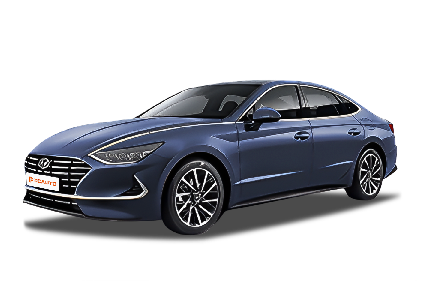
The 2020 Hyundai Sonata represents the eighth generation of this model, which first debuted in 2019. It adopts Hyundai's latest "Sensuous Sportiness" design language, featuring a more dynamic and stylish look—think the signature full-width LED daytime running lights and a sleek fastback silhouette.
Built on Hyundai's all-new third-generation platform, the eighth-gen Sonata boasts improved body rigidity while shedding weight, enhancing both handling and safety. Under the hood, buyers can choose from multiple engine options depending on the market, including a 2.0L naturally aspirated, a 1.6L turbocharged, and a 2.5L naturally aspirated unit, with some variants even offering a hybrid powertrain.
Inside, the cabin gets a cleaner, more tech-forward design with a fully digital instrument cluster and a large touchscreen infotainment system supporting Apple CarPlay and Android Auto. This generation also introduces advanced driver-assistance features like Highway Driving Assist and Remote Smart Parking Assist.
Space is another area where the Sonata improves, thanks to a longer wheelbase that liberates extra rear legroom. The trunk offers 462 liters of cargo space, making it a practical choice. As Hyundai's flagship midsize sedan, the Sonata has always been praised for its value and well-rounded performance—and with its design and tech upgrades, the eighth-gen model only sharpens its competitive edge.
 ToughFighterStrengthNov 28, 2025
Q
How many miles does a 2020 Hyundai Sonata get?
**2020 Hyundai Sonata Fuel Efficiency Overview**
The 2020 Hyundai Sonata's fuel economy varies by trim and drivetrain. The standard 2.5L four-cylinder engine delivers an EPA-estimated 28–32 MPG combined (25–28 city / 36–38 highway). Meanwhile, the hybrid model pushes efficiency further, achieving up to 45–50 MPG combined. Real-world numbers may differ based on driving habits and conditions.
As a midsize sedan, the Sonata balances sleek styling with practical cabin space, plus tech like adaptive cruise control and lane-keeping assist for added safety and comfort.
*Note:* EPA ratings assume ideal conditions—factors like climate, fuel quality, and maintenance can impact actual performance. Stick to recommended service schedules and premium fuel (if required) for optimal results.
 FlutteringButterflyKissNov 28, 2025
Popular Cars
Model Year
Car Compare
Car Photo
Related Models
 Cars
CarsLatest Q&A
Q
Is AMT similar to automatic?
There are significant differences between AMT transmissions and automatic transmissions (AT) in terms of core structure and driving experience. AMT is essentially an electronically automated version of a manual transmission, simulating manual clutch operation and gear shifting through a computerized control system while retaining the gear set structure of manual transmissions. As a result, it offers higher transmission efficiency, with fuel consumption approximately 8%-12% lower than AT, making it particularly suitable for highway or long-distance driving. However, it may exhibit jerking similar to manual transmissions during low-speed gear shifts, especially noticeable in congested traffic conditions.
AT transmissions rely on torque converters for power transfer, delivering smooth and seamless gear shifts that appeal to comfort-oriented users. However, their complex structure (incorporating planetary gear sets, hydraulic systems, etc.) results in higher maintenance costs. A single service may cost between 800 to 1,500 ringgit, whereas AMT only requires gear oil replacement at approximately 400 ringgit.
From a market perspective, AMT is predominantly used in budget vehicles or commercial models priced below 80,000 ringgit, while AT is typically featured in mid-to-high-end vehicles. Consumers should select based on actual needs: AMT suits those prioritizing fuel efficiency and low maintenance costs, while AT better serves those valuing comfort. Notably, recent advancements in AMT electronic control technology have significantly mitigated jerking issues, though test drives should still emphasize low-speed performance evaluation.
 AriaMar 26, 2026
Q
Which is better, DCT or AT?
DCT (Dual-Clutch Transmission) and AT (Automatic Transmission) each have their own advantages and disadvantages, and the choice should be based on personal driving needs. AT transmissions transfer power through a torque converter, offering excellent shift smoothness, making them suitable for urban commuting or novice drivers. However, they tend to have higher fuel consumption, and vehicles equipped with them are usually more expensive. DCT transmissions utilize a dual-clutch structure, featuring fast shift speeds and high power transmission efficiency, which provides a more direct driving experience—particularly suitable for users seeking a sporty feel. However, they may exhibit jerking at low speeds and have relatively high maintenance costs. If durability and comfort are priorities, AT is the more reliable choice; if power responsiveness and driving pleasure are preferred, wet DCT (such as Volkswagen DSG) performs better, though dry DCT models should be avoided in prolonged stop-and-go traffic conditions. Additionally, CVT transmissions excel in smoothness and fuel efficiency, making them ideal for daily commuting, but they lack driving excitement. It is recommended to test-drive before purchasing, as tuning varies significantly across brands, and real-world experience is more important than theoretical specifications.
 FlutteringMar 26, 2026
Q
Is Amt good or bad?
AMT gearboxes have a significant cost advantage in the local market, typically being around 5,000 Ringgit cheaper than models equipped with conventional automatic transmissions. Their fuel efficiency is comparable to manual transmissions, resulting in long-term fuel savings. Featuring a straightforward design, they achieve transmission efficiency exceeding 90% with relatively low maintenance costs, making them ideal for practicality-oriented consumers. However, their shifting logic contains inherent limitations: gear changes between 1st and 2nd cause 0.3-0.5 second power interruptions, while unintended upshifts on inclines may reduce engine speed by 15%-20%, compromising driving smoothness. For urban commuters or budget-conscious buyers, AMT offers excellent value, though those prioritizing premium driving dynamics should consider alternative transmission types. Some domestic models like the Perodua Axia employ enhanced AMT systems, where optimized shift programming has reduced gearshift shock by approximately 30%.
 RainbowsMar 26, 2026
Q
Which gives better mileage, CVT or AMT?
From the perspective of fuel economy, CVT transmissions generally perform better under urban driving conditions. Their continuously variable design allows the engine to consistently operate within the optimal speed range, significantly reducing fuel consumption during frequent starts and stops. Test data shows that their fuel consumption in urban driving conditions is 10% to 15% lower than that of comparable models. AMT transmissions, on the other hand, inherit the high transmission efficiency of manual transmissions, delivering fuel efficiency close to manual transmissions during high-speed cruising. This makes them particularly suitable for long-distance driving in large-displacement vehicles. However, due to power interruption during gear shifts, their overall fuel consumption may be 5% to 8% higher than CVTs.
The difference in fuel-saving characteristics between the two transmissions stems from their technical principles: CVTs achieve continuous variability through steel belts and pulleys, eliminating the fixed gear ratio limitations of traditional transmissions; AMTs simulate manual gear changes via electronic control systems while maintaining the mechanical efficiency of gear transmission. Notably, actual fuel consumption is also influenced by driving habits. Smooth acceleration and anticipatory deceleration can maximize the transmissions' fuel-saving potential. If the vehicle budget permits and urban commuting is the primary use, CVTs offer a more economical choice. For frequent highway driving with an emphasis on cost-effectiveness, AMTs are equally worth considering.
 RubyBlazeMar 26, 2026
Q
Which is cheaper, AMT or CVT?
In terms of gearbox cost, AMT is usually more economical than CVT. Essentially, AMT is a manual transmission equipped with an electronic control unit, featuring a simple structure and low maintenance costs. The unit price ranges from approximately 5,000 to 8,000 ringgit, making it suitable for budget-conscious consumers or those who prioritize long-term operating costs. CVT incurs higher manufacturing costs due to its precision steel belt transmission system and continuous variable transmission technology, with a unit price of about 7,000 to 10,000 ringgit. However, it delivers a smoother driving experience and superior fuel efficiency. The primary differences between the two lie in technical complexity: AMT retains the gear-shifting mechanism, resulting in noticeable shift shock; CVT achieves linear power output through stepless speed variation but requires periodic belt inspection and incurs higher maintenance expenses. For those prioritizing initial cost and basic transportation needs, AMT offers better value; if comfort and long-term fuel economy are priorities, CVT represents a more worthwhile investment. Note that actual prices may vary based on vehicle model, brand, and local supply chain factors.
 ShadowProwlMar 26, 2026
Related News

Revolutionizing Hybrids: Hyundai’s New System vs. Toyota's Hybrid System
Kevin WongApr 22, 2025

Malaysia Hyundai Staria 2026 model optimized 10-seater layout, central console upgraded
Kevin WongJan 28, 2026

Hyundai STARIA Electric Version Unveiled: Spacious MPV, Southeast Asian Families Should Look Forward to it!
WilliamJan 12, 2026

2026 Toyota HiLux receives five-star ANCAP safety rating in ANCAP
MichaelDec 12, 2025

In Malaysia, which sliding door MPVs are available?
MichaelOct 30, 2025
View More
Pros
Cons